Month: November 2020

  • Talking Turkey

    Talking Turkey


    Meleagris. It’s the gobble genus; gobble being the native language of America’s fine feathered friend, the turkey. It’s not clear if there will be an official Presidential pardon this year, but the social media is stuffed with recipes for turkey alternatives. Good luck hunting a bird under 10 pounds in the grocery aisles.

    I’ve always sided with Ben Franklin’s spirited defense of turkey written in a letter to his daughter in 1784.  The turkey is “a true original native of America” and “a bird of courage that would not hesitate to attack a grenadier of the British Guards who should presume to invade his farm yard with a red coat on.”

    I can vouch for that. The back road from the Cokesbury parsonage led to a T with stop signs. My car had paint chips missing above the bumper due to the wild turkey that would launch an attack as soon as I slowed to a stop. It was as if I’d invaded his stomping grounds.

    There are turkey tracks across my landscape. Turkey is the centerpiece of my family thanksgiving. A bird big enough to fill the plates of family, neighbors, and often strangers. The wish bone is a prize, and the wish making and bone breaking a sibling ritual.

    Our living room in the desert north of Tucson is the place of origin of a church, now St. Marks UMC,  but between its hatching and its final settling in, the community roosted in a turkey shed.  The Meleagris were replaced with Methodists for a season. I remember wondering if we’d ever outgrow the teasing of being “turkeys”. The Holy Spirit occasionally appears in my dreams as a feathered being that’s not a dove.

    Manifest destiny isn’t a healthy theology for either native peoples or native birds. I try my hand at role reversal in a children’s play I write at Rough Rock on the Navajo Reservation. I remember their delight when Turkey Lurkey corrals the cowboys and banishes the BIA. Not great literature, but very good medicine.

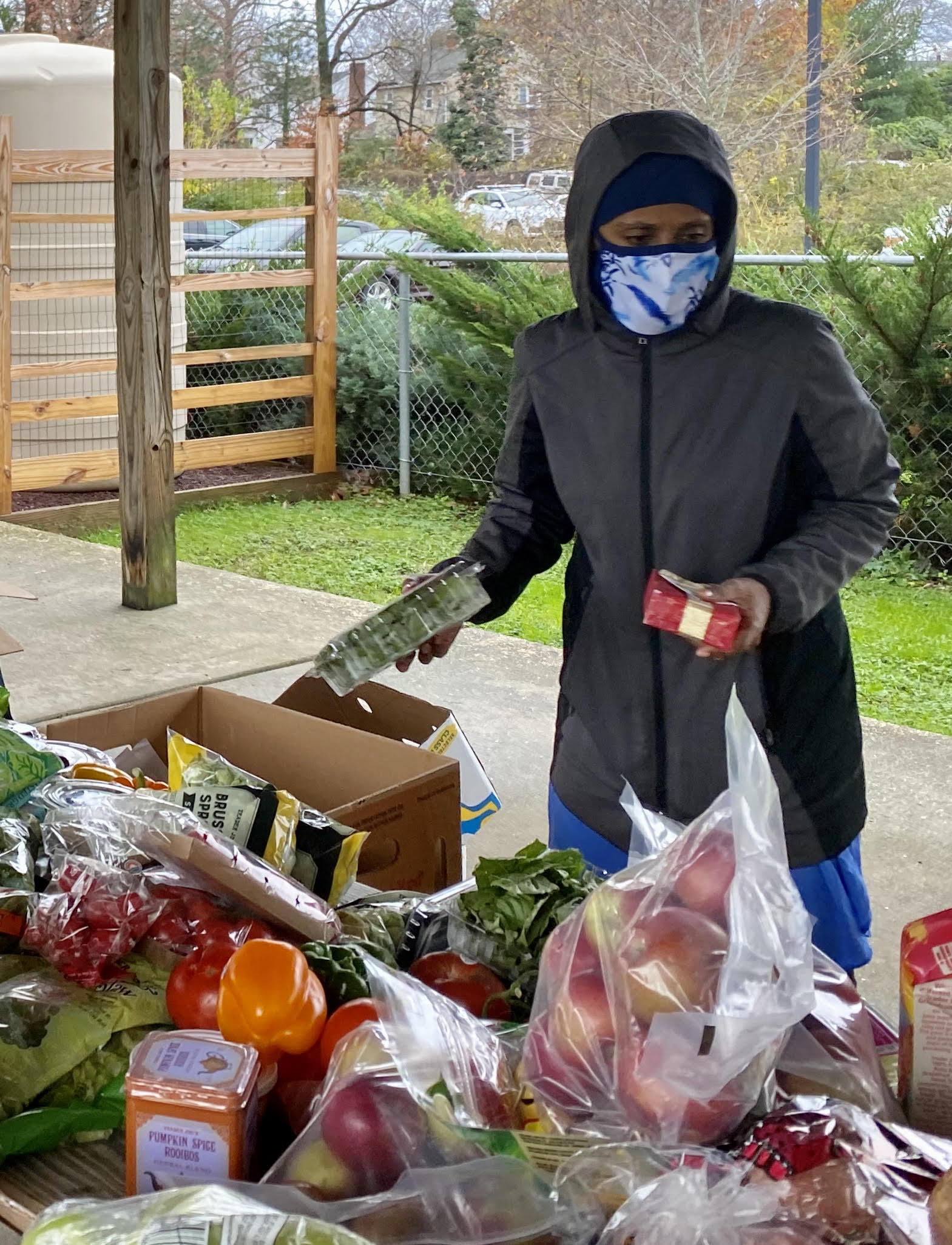
    This Covid season of caution has affected my relationship of Lions and Turkeys. I did not help pack Thanksgiving boxes; I just donated food. We quarantine because I want Bill and Daniel and Jess at our family table next year. I didn’t watch kids carry groceries into their neighbors, full of pride. But turkey was on the menu, cooked by Bellevue volunteers and food boxes were still faithfully packed to overflowing, then carried to cars along with Thanksgiving cards made by children.

    I look at the thanks giving that rests on my kitchen table: sliced turkey, organic potatoes, broccoli, celery, and bananas, all from local farmers. If talking turkey means telling the truth and the whole truth, so help us, God, Franklin was right. We can survive if we serve others. We can thrive if we trust and share. Courage is what America needs now.


  • Spoon Fed

    Spoon Fed


    We’re spoon fed at the start and at the finish, if justice and mercy have any say in the way the world turns.  Human life requires feeding in its beginning and to its end.  Somebody has to feed us or we wouldn’t be here. To be spoon fed should be celebrated but it’s a sign of vulnerability. It means we’re either too young or too infirm to feed ourselves, and yet a spoon is a revelation of a holy human relationship. To stretch out a spoon is to extend a table of hospitality in God’s name, and in my household of faith, for Christ’s sake.  Good spoon work requires remembering how we’ve been fed and blessing the hands that have fed us by feeding others. Memorial and thanksgiving form the centerpiece in this table of sacramental life. We need help, however, in our table manners.  We need daily reminders of how to say grace.

    We also need lessons on how to bless, not bite the hand that feeds us.  My best teacher of table manners was my mother’s mother, Flora.  At the age of 106, she’d moved from feeding to being fed.  She’s been the daily bread source of our young lives. She cooked plain, not fancy, until her late 80s. She moved from the stove to setting the table in her 90s.

    I’ve framed her final lesson. My older sister’s kitchen is filled with the noisy sounds and smells of a 3-generation thanksgiving dinner.  My oldest sister, Sandy Lee Mace, inherited our grandma’s care and cooking DNA. Brucilla Campbell, my younger sister adds the global and gourmet sense to dining. Wilson Cloudchamber, youngest of the Murray girls, is a true believer in organic life.

    I’m missing all of the above, so I do as I’m told:  feed Grandma. Turkey is now beyond Grandma’s ability or interest.  Long after other tastes have departed, the sense of bitter and sweet remains, so she’s having desert.  I spoon feed her ice cream, my attention elsewhere, until she stops the spoon. She traces the spoon to my fingers, then kisses my hand. She then returns to the ice cream.

    A gesture of gratitude. To kiss the hand that feeds you. To feed others as you have been fed-with a grateful heart. This is what Thanksgiving means. This is Eucharist. We are spoon fed, start to finish.

    Stirring Women


    We are stirred by a sense

       as common as spoons.

       Amen.


    We are capable

       of cupping God.

       So be it.


    We believe in the destiny of dining.

    We ladle grace like gravy

       over the bread of life.


    In a hard-to-handle time

       we are good at getting to the bottom,

       gripped in Necessity’s hand.


    We invent perpetual motion

       from a rounded shape

       and a hungry sound.


    Few if any

        are born to the taste of silver.

    Most acquire stainless steel.


    We inspect tear spots.

       and expect tarnish.  

    We polish tea spoons

       and offer sympathy

       with just a trace of acid.


    Let others sharpen their wits,

    pare away distinctions,

    separate the jointedness of time.


    We are spoon fed, start to finish.

    Stir, lift, and blend mercy

       served warm.


    Let us be good and godly as spoons.

       Amen.[i]


    [i] Heather Murray Elkins © 1987, revised 2005. Worshiping Women (Abingdon), 1995. All rights reserved.

  • Blessed is She who Believes

    Blessed is She who Believes


    Our back deck is now bedecked with a tomato plant that’s over 12 feet high. As a very novice gardener, I’d prepared for the three small plants I’d purchased with a reasonable support system. Two of them behaved nicely, reaching a modest height, producing medium sized fruit. One reached the end of its lattice and threw a green tendril skyward, latching onto a passing bee or sparrow, then letting go to land deckside up.


    I pinched back the pert yellow blossoms, as advised, but they seem to have resurrected themselves by morning. Perhaps that explains the name, “Nightshade”. I now count 7 new little tomatoes arranging themselves in the leaves and I worry about the odds of frost.


    Jack’s Magic Beans come to mind. Perhaps I should collect the seeds and store them in a safe place. Such extravagance, the green generative force of a single Solanum lycopersicum.


    But generative power is not limited to the ability to reproduce. There’s another kind of creativity I had the privilege to witness; a procreativity I was invited to participate in.


    It started with a tomato plant, a very tall plant on a porch. We’d just moved in next door, starting married life and two graduate degree program at Duke. We’d not met our neighbor, but I noticed that the plant was too tall for its pot. It kept falling over. I didn’t know it was a tomato plant; there weren’t any tomatoes, but I keep picking it up when it takes a header. It’s the only plant on the porch, and so it must matter to our unknown neighbor.


    On the fourth rescue, the neighbor arrives, a tall woman, with an extraordinarily warm voice and wide smile. She introduces herself and the plant. Her name is Helen and the plant is Sarah. I knew we were in the Bible belt when she explains that Sarah is apparently barren, but there’s always hope.


    I’m cheered up by the prospect of a down to earth neighbor with a sense of humor. I rattle on about the drama/trauma of being an Appalachian exile, literally just off the Navajo reservation, starting studies at Duke, the Harvard of the South. I don’t mention how newly married or how financially limited we are. I think Helen could see that for herself.


    I tell Bill we have a wonderful neighbor; she’s kind, funny, and she asks me to keep my eye on Sarah while I study.


    Imagine my surprise when I fill out my work/study forms and I’m called to meet the Dean of the Duke Chapel. When I enter his office, plush with plum colored carpet, and lined with books in high walnut shelves, Helen is sitting to the right of the Dean and smiling. Did I want to work as the Religious and Arts intern for the Chapel?


    Helen. Helen Crotwell. Associate Minister to Duke University. She of the tomato plant named Sarah. Generative within and beyond the structures of higher education and ministry. Her creativity and courage took her into civil rights work and peace work achievement, employee labor unions, and better wages, a center for Women’s Studies, an ecumenical network of chaplains, and of course, religion and the arts.


    My most singular memory of her “conceivability” was her work on the “Red Mass”, a yearly worship service designed for and inclusive of every judge in the state of North Carolina. It was her liturgical vision of peace and justice embracing in every small town and steepled courts in Carolina’s cities.


    This green life extravagance, this ability to originate can threaten those who rely on externalized authority.  Three months after I’ve left Duke Chapel for a WV parish I learn that the Dean of the Chapel has decreed that Helen is to be replaced by someone of junior rank and experience.


    Helen not only survives the forcible uprooting; she thrives as a pastor, is appointed Superintendent and then, shortly before her death, is nominated as a candidate for the UMC episcopacy.


    The antonym for generative is not “barren”; it’s consumptive. The opposite of a generative life is a consuming lifestyle or a wasteful heart.  “Don’t be afraid”, I tell my brave tomatoes, “Bloom and grow. You will not be forgotten.”


  • The Grist Mills of God

    The Grist Mills of God


    The stories I tell of an Apple Pi Inn are actually housed in the” Kanawha Hotel”; that’s its proper name on the National Registry. It began as a three-story, hand-hewn log structure built by Manlove Beauchamp in 1800 near a landing on the Little Kanawha River. It’s believed to be the oldest building in Wirt County, WV. Its documented past includes the white settlers’ period (1784) as a cabin, then a tavern, then a “hotel” that housed travelers until the early 1920s. Its style is called “vernacular architecture”. That seems a fitting description for the Apple Pi Inn: the use of local materials and knowledge with no “professional” oversight.


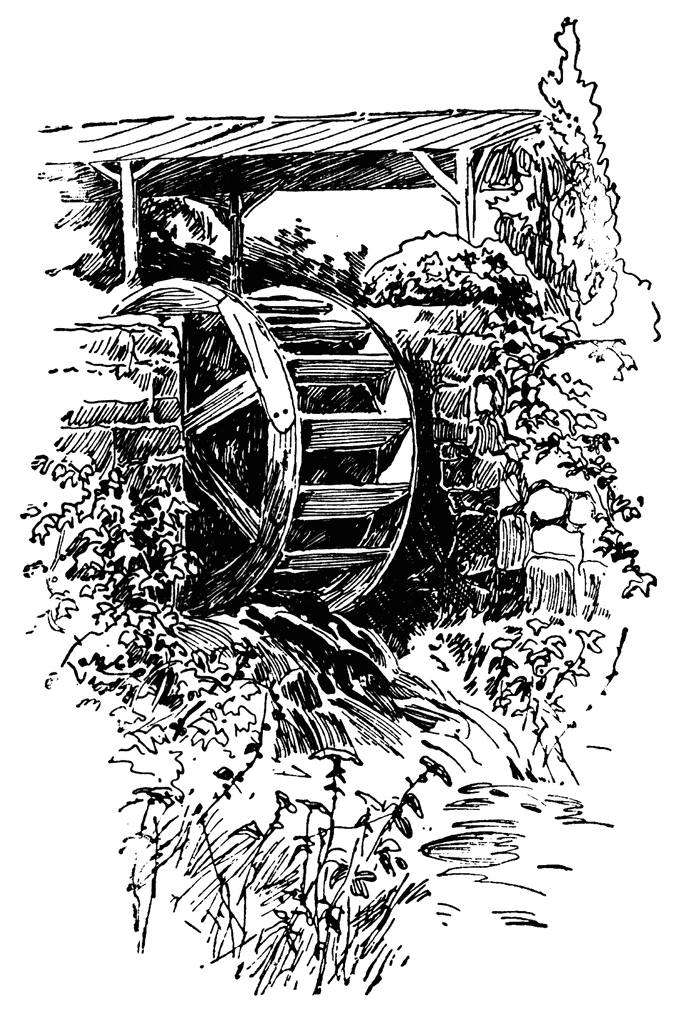
    The focus on local materials and knowhow is critical when it comes to survival. The Registry states: “As a stimulus to the milling industry, and to provide a more convenient way of getting bread stuff, the Beauchamps (brothers and father) made a wooden dam across the river…A structure to be used for milling purposes was built at the southern end of the dam. In it machinery was installed in such a way as to obtain the power created by the fall of the river water as it was diverted above the dam. With that power, the milling machinery was turned, and the stone burrs ground the corn into meal and the wheat into flour as the grains were passed through between them.”


    Down by the old mill stream was a water wheel, and stone burrs or millstones to create grist, the grain that’s separated from its chaff to produce flour or meal. Bread is a staple of life, grainy glue for community. Bread stabilizes life, so a grist mill requires life sustaining knowhow.


    This is why I’ve been following the bread crumbs back to a particular phrase used during my rearing: “The gristmills of God grind slowly, but always exceedingly fine.”

    It’s the wisdom saying that was used to sustain us when we encountered bare-naked evil or whenever the whirlwinds of chaos threatened to overwhelm.


    I know my maternal grandparents said it, since they’d reared us, but how did they acquire it as part of their local knowhow?  I try tracing the line back to its source. It survives as a “saying” only because someone writes it down. Its author is an unknown poet cited by Sextus Empiricus, a Greek philosopher and physician of the 2nd or 3rd c.  “The millstones of the gods grind late, but they grind fine.”


    I borrow one of Bill’s books on the history of skepticism to make sense of Sextus.  I get grist for the mill from his treatise, Against the Dogmatists. My summary: Don’t be dogmatic. Tranquility will follow suspension of judgment only if you do not grasp it. Freedom from the anxiety that an unanswerable question causes comes by refusing the question after carefully considering the contradictory answers.


    I’m still working hard, however, over grasping the meaning of God’s grist mills. The question the proverb raises is beginning to feel like a millstone. I learn Sextus’ writings, including this quote, were rediscovered in the 16th century. The phrase became a favorite of the Protestant Reformation, thanks to the reformer, Erasmus, and the Germans.  I track it into English through George Herbert in his collection of proverbs in 1652 “God’s mill grinds slow but sure.”


    The gods become God’s, but slow and late match up, as do small and fine, if you’re thinking about grinding grain. Henry Wadsworth Longfellow provides the clearest clue to its presence in my ancestors’ vernacular with his translation of a German poem:

    “The grist mills of God grind slowly, yet they grind exceeding small;

    Though with patience He stands waiting, with exactness grinds He all”


    Perhaps this is the schoolroom recitation that got ground down to my grands’ version of God’s inevitable justice that “grinds slowly but exceedingly fine.” Several old McGuffey Readers reside in the schoolroom of the Apple Pi Inn.


    The trail of grit ends here. I’m left with the task of separating wheat from chaff in this season of famine, this drought of wisdom. How can this national grinding away of life, liberty and the common good be evidence of God? Perhaps I’m turning into a skeptic in the modern sense of the word.  I certainly resonate with a quote from Plutarch’s On the Delay of Divine Vengeance: “Thus, I do not see what use there is in those mills of the gods said to grind so late as to render punishment hard to be recognized, and to make wickedness fearless.”


    As the results of this election grind on, setting people and things in opposition, I’m recalled to my senses. I go to the kitchen to open a new package of flour to make an apple pie, my one cooking skill retrieved during pandemic quarantine.  I read the label: organic wheat flour, organic malted barley flour. Contains: Wheat.


    “Truly, I tell you, unless a grain of wheat falls on the ground and dies, it remains only a single grain, but if it dies, it yields a rich harvest. ” (John 12:24)


    Trust the grinding. It will be exceedingly fine.