Category: Apple Pi Inn

  • The Grist Mills of God

    The Grist Mills of God


    The stories I tell of an Apple Pi Inn are actually housed in the” Kanawha Hotel”; that’s its proper name on the National Registry. It began as a three-story, hand-hewn log structure built by Manlove Beauchamp in 1800 near a landing on the Little Kanawha River. It’s believed to be the oldest building in Wirt County, WV. Its documented past includes the white settlers’ period (1784) as a cabin, then a tavern, then a “hotel” that housed travelers until the early 1920s. Its style is called “vernacular architecture”. That seems a fitting description for the Apple Pi Inn: the use of local materials and knowledge with no “professional” oversight.


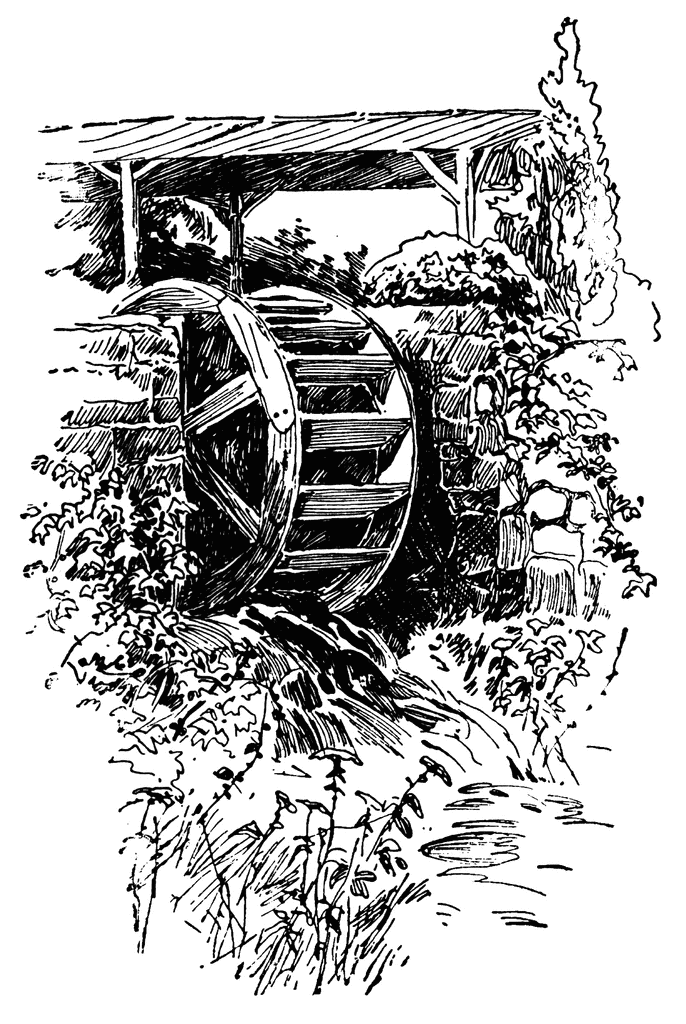
    The focus on local materials and knowhow is critical when it comes to survival. The Registry states: “As a stimulus to the milling industry, and to provide a more convenient way of getting bread stuff, the Beauchamps (brothers and father) made a wooden dam across the river…A structure to be used for milling purposes was built at the southern end of the dam. In it machinery was installed in such a way as to obtain the power created by the fall of the river water as it was diverted above the dam. With that power, the milling machinery was turned, and the stone burrs ground the corn into meal and the wheat into flour as the grains were passed through between them.”


    Down by the old mill stream was a water wheel, and stone burrs or millstones to create grist, the grain that’s separated from its chaff to produce flour or meal. Bread is a staple of life, grainy glue for community. Bread stabilizes life, so a grist mill requires life sustaining knowhow.


    This is why I’ve been following the bread crumbs back to a particular phrase used during my rearing: “The gristmills of God grind slowly, but always exceedingly fine.”

    It’s the wisdom saying that was used to sustain us when we encountered bare-naked evil or whenever the whirlwinds of chaos threatened to overwhelm.


    I know my maternal grandparents said it, since they’d reared us, but how did they acquire it as part of their local knowhow?  I try tracing the line back to its source. It survives as a “saying” only because someone writes it down. Its author is an unknown poet cited by Sextus Empiricus, a Greek philosopher and physician of the 2nd or 3rd c.  “The millstones of the gods grind late, but they grind fine.”


    I borrow one of Bill’s books on the history of skepticism to make sense of Sextus.  I get grist for the mill from his treatise, Against the Dogmatists. My summary: Don’t be dogmatic. Tranquility will follow suspension of judgment only if you do not grasp it. Freedom from the anxiety that an unanswerable question causes comes by refusing the question after carefully considering the contradictory answers.


    I’m still working hard, however, over grasping the meaning of God’s grist mills. The question the proverb raises is beginning to feel like a millstone. I learn Sextus’ writings, including this quote, were rediscovered in the 16th century. The phrase became a favorite of the Protestant Reformation, thanks to the reformer, Erasmus, and the Germans.  I track it into English through George Herbert in his collection of proverbs in 1652 “God’s mill grinds slow but sure.”


    The gods become God’s, but slow and late match up, as do small and fine, if you’re thinking about grinding grain. Henry Wadsworth Longfellow provides the clearest clue to its presence in my ancestors’ vernacular with his translation of a German poem:

    “The grist mills of God grind slowly, yet they grind exceeding small;

    Though with patience He stands waiting, with exactness grinds He all”


    Perhaps this is the schoolroom recitation that got ground down to my grands’ version of God’s inevitable justice that “grinds slowly but exceedingly fine.” Several old McGuffey Readers reside in the schoolroom of the Apple Pi Inn.


    The trail of grit ends here. I’m left with the task of separating wheat from chaff in this season of famine, this drought of wisdom. How can this national grinding away of life, liberty and the common good be evidence of God? Perhaps I’m turning into a skeptic in the modern sense of the word.  I certainly resonate with a quote from Plutarch’s On the Delay of Divine Vengeance: “Thus, I do not see what use there is in those mills of the gods said to grind so late as to render punishment hard to be recognized, and to make wickedness fearless.”


    As the results of this election grind on, setting people and things in opposition, I’m recalled to my senses. I go to the kitchen to open a new package of flour to make an apple pie, my one cooking skill retrieved during pandemic quarantine.  I read the label: organic wheat flour, organic malted barley flour. Contains: Wheat.


    “Truly, I tell you, unless a grain of wheat falls on the ground and dies, it remains only a single grain, but if it dies, it yields a rich harvest. ” (John 12:24)


    Trust the grinding. It will be exceedingly fine.
  • Holy Days at the Apple Pi Inn: July and Founding Fathers

    Holy Days at the Apple Pi Inn: July and Founding Fathers

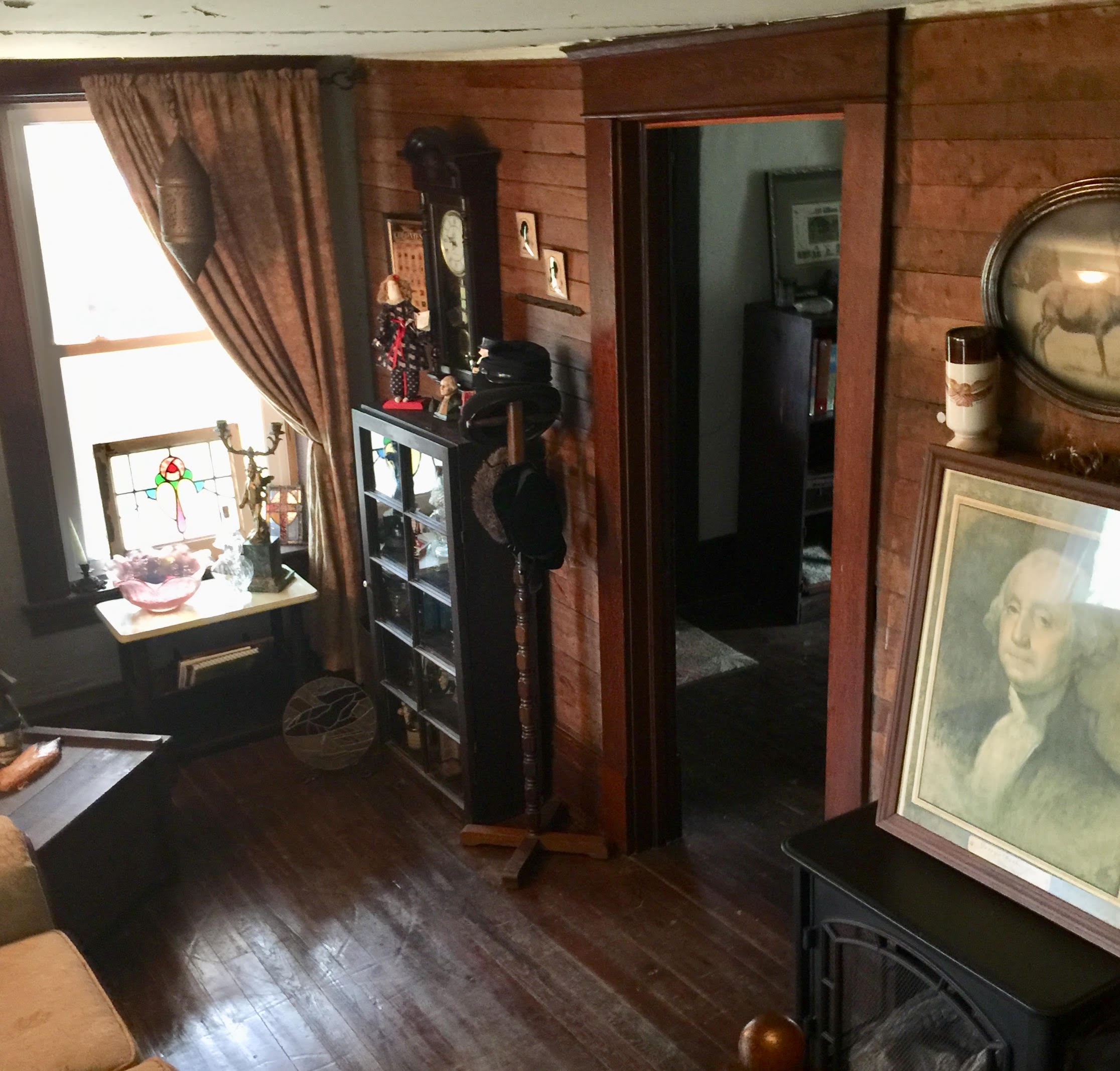
    What connection is there between the origin myth of a nation and character of the founding “father”?  It was a question to consider in July as i I stir up 217 years of dusty memory of our repair of this Inn.  An old print of George Washington hangs in what we are calling “the parlor”. The old wire had rusted, and a new discovery was made when I turned it over. On the back was recorded the name of the framer.  (I note that once Elizabeth WV was prosperous enough to have a jeweler who also framed art) The name and signature of the teacher and the signatures of the 5th and 6th graders in 1933 were neatly arranged in rows.
    The print hangs in the part of the Inn built the year after Washington died in 1799. This territory was part of Virginia then, and it was here the future father of our country learned some hard lessons about failed diplomacy, broken treaties and military readiness during the French and Indian Wars.
    I study the nearly illegible names and wonder what origin stories they learned about this nation and its founding father.  Did they know he owned slaves?  Did they learn that he refused to be king, that he believed in the Constitution and the potential of a self-governing people? Did they realize what a gift he gave a new nation by voluntarily leaving the high office he held?
     Did they honor July as the month to celebrate independence from tyrants?  Did they know that July was the month named in honor of the dictator perpetuo, Julius Caesar, by the Roman Senate after his death in 44 BC?
    That’s a conundrum. Why would you name a month, a public way to tell time, for a dictator?  It was a Senate conspiracy that led to Caesar’s downfall.  I follow the question down the rabbit hole of Wikipedia to recover the information that July was originally called, “Quintilis” meaning “fifth” and it was part of Rome’s earliest calendar attributed to Romulus, one of the twin brothers credited with creating Rome.
     That city, nation, empire’s origin story included fratricide. Romulus kills Remus to become the Founding Father of Rome. (Some of this mixed motive fascination is personal. American Express, whose icon is a Roman centurion, has been been used far too often for Inn repair.)
    George Washington. Julius Caesar. Romulus. July. What lessons should we be learning? How should we tell time? I return to the language of the founding document. “We, the people of the United States, in order to form a more perfect union, establish justice, ensure domestic tranquility, provide for the common defense, promote the general welfare, and secure the blessings of liberty to ourselves and our posterity, do ordain and establish this Constitution for the United States of America”
     I rehang the old print with a hope and a prayer.
  • Holy Days in the Apple Pi Inn: The First Sunday

    Holy Days in the Apple Pi Inn: The First Sunday


    If you are a United Methodist clergy person under appointment, the first Sunday in July is often the first day of the rest of your life, or at least your life until you’re appointed elsewhere. The First Sunday is your formal introduction to a new community/church/ministry/parsonage/school and all the other support relationships such as dentists, doctors, plumbers, and farmers’ markets and good barbers.

    That “firstness” was our shared experience of ministry and marriage since 1978. Bill and I shared “firsts” as pastors until we traded Almost Heaven for the Garden State. That marked my transition from pastor to pastor’s wife. My work at Drew was rarely recognized as “ministry” in the 10 small congregations who needed someone to work with the children, the choir, the UMW and so on.

    This was the First Sunday in 36 years when we are not being introduced to a new community of faith. Bill celebrated this First Sunday by sitting on a porch drinking coffee and reading the Sunday paper, (although he made an appearance at this Sunday evening Bible Study.)

    I debated the choice of the two UMC churches I’ve attended during my sabbatical. Pisgah (pronounced Pisgee by the folks who know best) is a small country church with a talent for evangelizing visitors and a gifted Sunday School teacher for the “old folks”. They were having their First Sunday with a new pastor so I make my way to the town church in Elizabeth whose pastor is very Wesleyan when it comes to the Table.

    His gift for presiding reveals the real Presence too often concealed by bad theology or poor table manners. I can participate in the under sung praise songs that the young adults prefer, knowing there will be prayers from the early church, a Trinitarian thanksgiving and at least one traditional hymn that everyone knows by heart. I go looking for Mystery in the midst of the ordinary as a participant, not a leader of worship.

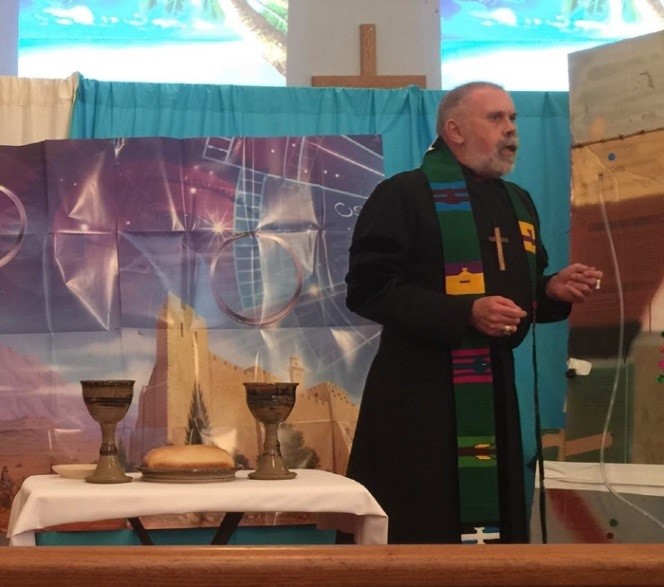
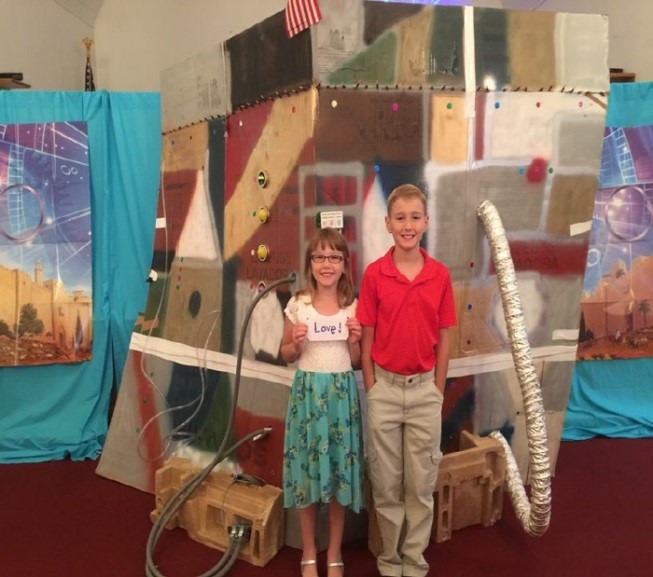
    The surprise/mystery is waiting in the sanctuary. The altar/table has been transformed into a Time Machine. It’s not a Cokesbury made-to-order VBS poster, but a three dimensional hand-made creation. I double-check my guess about what the creation is with the two little girls in the pew in front. A time machine, it is.

    I encounter the second mystery on the small table covered with white linen. Christ’s table is waiting. I think about Augustine’s insight into the time and space mystery of Sacrament: ” remembering into the future”. That is the reality of Reality. Christ’s table is the real time machine. As it was in the beginning, is now, and ever shall be, world without end. This is the First Sunday of the rest of our lives.


  • Holy Days in the Apple Pi Inn: The Fourth of July

    Holy Days in the Apple Pi Inn: The Fourth of July


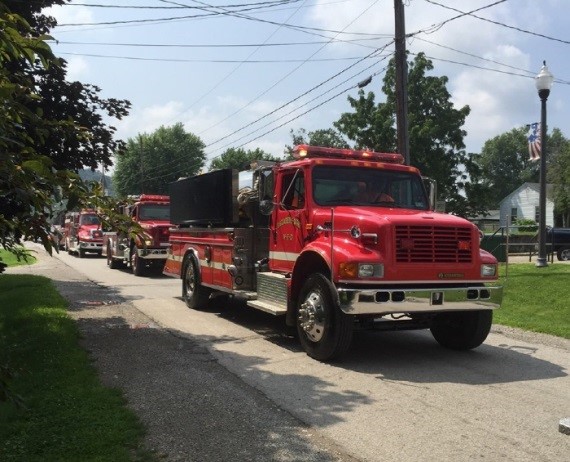
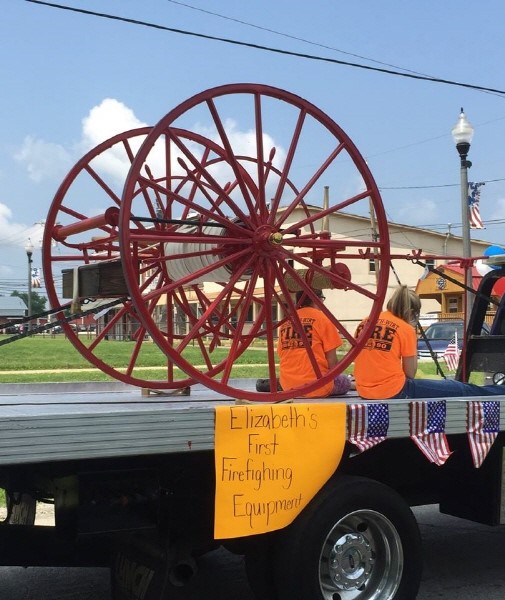
    Fire is the essence of the Fourth. This day in Elizabeth begins with the parade, a tradition that persists in face of erosion of the public square. In this place the parade itself marks the public square, circling the courthouse twice for good measure. Fire and those who fight it keep the heartbeat of the county going. Fire engines lead the way and the children who ride inside the cab toss smiles and candy to those who wait on the sidewalks.. There are old cars, and a newly crowned princess. The new recruits in the marching band make a fine showing until the drum major turns right as the firetrucks go left. They catch up again at the corner and fall in behind Smoky the Bear.

    Eight well-polished fire engines are announced by sirens that disturb as well as reassure. It reminds me of one of Bishop William Boyd Grove’s sermons heard years ago. The paradox of the siren’s sound is the paradox of prayer. We hear it and know it means trouble. “Lord, have mercy!” We pray for whoever needs both help and mercy. We hear the siren again and then we pray, “Lord, have mercy.” knowing that help is already on the way.

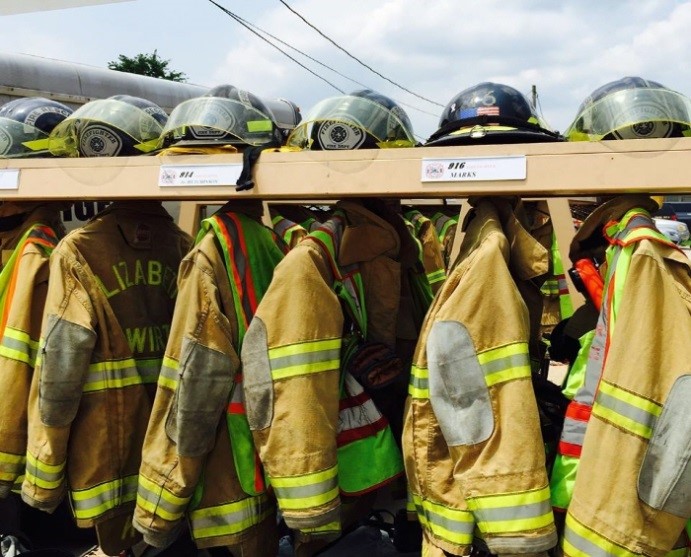
    The trucks are red, the T-shirts orange, the color of fire. These volunteers begin their training early. It’s an equal opportunity opportunity for the young in a community that’s short on jobs. Dedication and discipline are the bottom line, not educational or economic advantages. Volunteer Fire Departments makes it possible to live in small communities with a sense of safety. It helps to know your Good Samaritan lives next door.

    After the parade is over, there’s homemade ice cream, pies and cakes, hot dogs, and hot gospel groups, as well as the chance to win door prizes. When night falls, the fire lights up the sky, with fireworks that signal the end of the holiday. When this new station, built by volunteer labor, is completed, and the weight bearing beams that form its cruciform structure is concealed by brick and mortar, this community will remember where to find its heart.


  • Holy Days in the Apple Pi Inn: Half Way Day

    Holy Days in the Apple Pi Inn: Half Way Day


    Thursday, July 2, is Half Way Day in this year, 2015. Half a year come and gone. Half a loaf, half a glass, half a chance. The half way mark on a life can trigger a sense of encouragement or depression, or often a mixture of both. The “miles to go before I sleep” are shorter; the list of “promises to keep” is longer. How do we learn to number our days, so that, as the psalmist writes, “we may gain a heart of wisdom”? (Ps 90:12)

    I make a list of things done and things undone, and in this, the sins of omission seem heaviest as I contemplate the calendar. So much to do; so little time. I decide to revisit what was seen as essential at the first half of the year: the bathroom. I never underestimate water. Indoor plumbing is still a near miracle in my experience of old parsonages. I contemplate the regal toilet, marvel at the accessible shower, the handy gas heater, the original logs, and the sink that actually drains. My sister Sandy and her husband Roy Lee have helped to turn a disaster zone into a delight. The only problem we haven’t figured out is what to do with the stained glass door outside entrance. We forgot to lock it when we held a planning meeting for a mission project, and the new Baptist minister made his entrance through that door. He grinned when I asked if approaching the “throne of grace” required humility so all was well in the end.

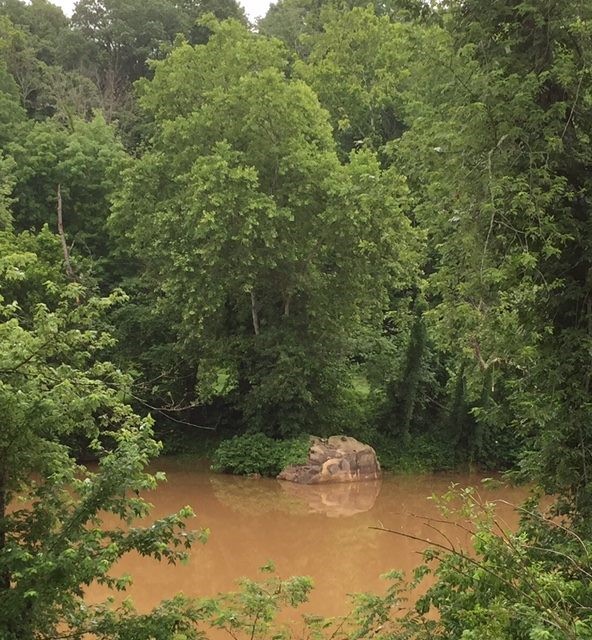
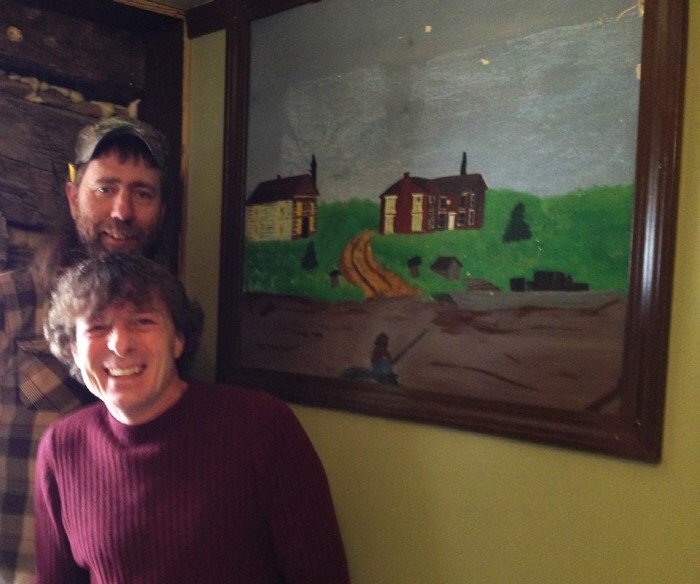
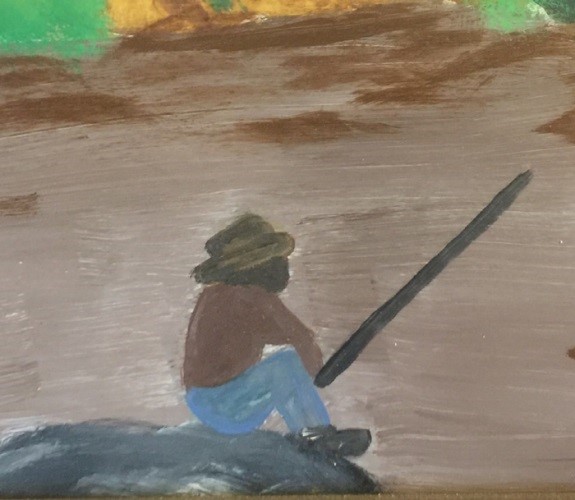
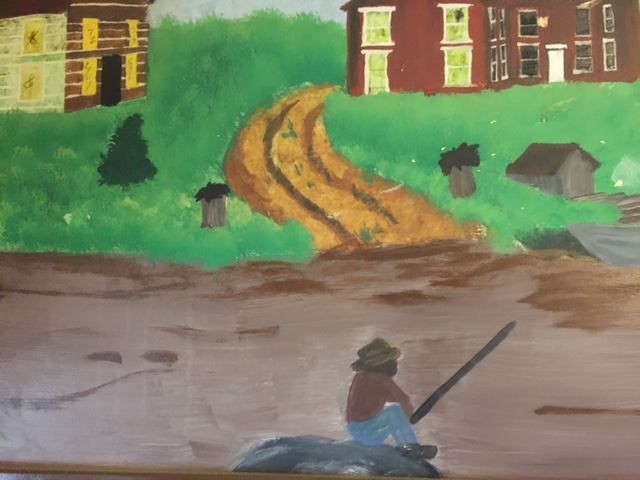
    We (meaning Billy, Darrell and Chuck) preserved a piece of folk art on the wall. It was literally painted on the wall by a homeless artist that Mother housed years ago. It’s his vision of the early days of Elizabeth with the 3 story log “hotel”, and the now-museum brick house. Included is the rock and a fisherman across the river where the ferry used to run.

    It took a lot of “figurin’” to replace old drywall and save that painting. Billy the artist, Chuck the can-do guy, Darrell, the get it right man. I don’t know how many hours it took them to save that little piece of visual history that isn’t good art. On this Half Way Day, however, it is worth every minute it cost.

    Here’s a high water mark on this Half Way Day, a way to tell time in a gospel fashion. When people ask, “Why is this here?” I say, “It’s a sign that the kingdom of heaven is coming near.” Someday, when the sun is too hot, the day too long, the hope too thin, there’ll be a voice that says, “Follow me. It’s time to go fishing.” (Mt. 17-19)

    — with Billy Jean.

  • Holy Days in the Apple Pi Inn: An Anniversary of a Promise

    Holy Days in the Apple Pi Inn: An Anniversary of a Promise


    An anniversary is a way of telling time (returning annually); it’s a word inherited from Latin through Middle English to arrive in the 21st century. Year (annus) + Past Particle of “to turn” (versus). There are anniversaries of weddings, wars, births, deaths, and every human activity that a community wishes to remember, a time “to turn” to as the years pass.

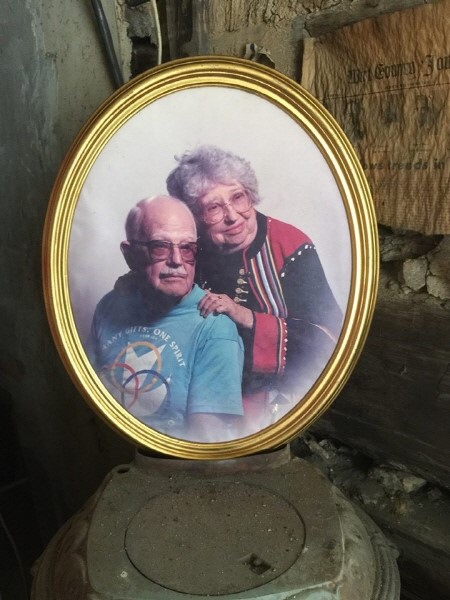
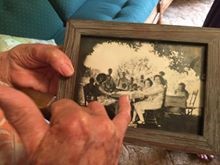
    Today I turn to the memory of wedding promises made over 70 years ago. Those promises directly connect to my being, since those words changed the legal, spiritual, social reality for those two people I call “parents”. I study their picture that rests in the Judge’s Room of the Inn on an old potbellied stove.* Did they know what they were saying those long years ago? The nation was at war; their minister an Army base chaplain; all the men were in uniform, ready to be deployed. Did they believe their promises would keep?

    Wedding vows are one of the few examples left of performative language: words that do what they say. The authority to “pronounce” the result of promises used to be more limited and less controversial. Judges, magistrates, and clergy would pronounce and the counting of anniversaries would begin. The Supreme Court opened the door and widened the wedding aisle this summer. Their decision created an anniversary that will be celebrated for years to come by communities wise enough to recognize the power of promises worth keeping.

    ” Will you love, comfort, honor, keep in sickness and in health, and forsaking all others, be faithful…as long as you both shall live.”

    I have spent this year sorting out what inherited bits and pieces of my parents’ promises to keep. What can be given away or thrown out? What is the rule of thumb that helps us to handle “tradition”? Every day can’t be an anniversary. Some memories should be forgotten. Surely it’s a safe bet to trash the odds and ends of coloring books stored a child’s set of plastic drawers stored in a shed.


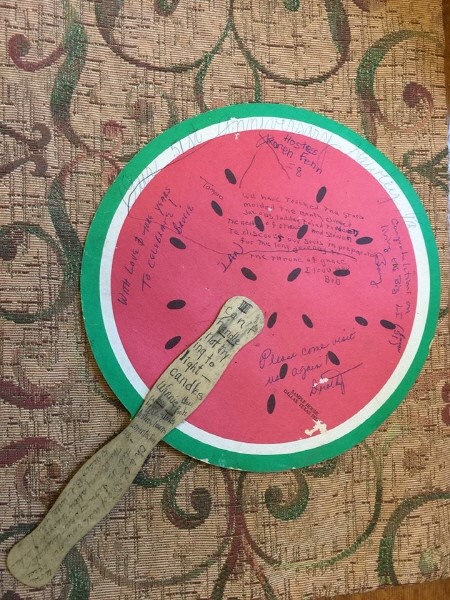
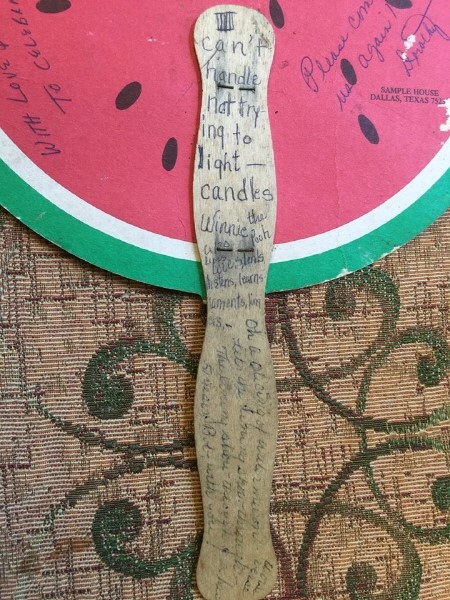
    It’s only my fondness for fans and watermelon that saved this relic of their 51st anniversary promises. I retrieved it from the trash and turn it over to find, written on the fan’s handle in my mother’s hand:
    “I can’t handle not trying to light candles. Winne the Pooh who lives, loves, lends, listens, learns, laments. . .” (Her last word is illegible.)

    Written in the left-handed block print my father had to learn when his right hand was severed by a hay baler is the following:

    “We have touched the stars,
    molded the earth, climbed
    Jacob’s ladder, tried to meet
    the needs of others, and striven
    to discover our souls in preparation
    for the long journey to
    the throne of grace.
    I love you. Bob. “

    Happy anniversary to all who keep such promises.

    *It took me 10 years to notice my father is wearing a Drew Theological School Orientation t-shirt in this photo.

  • Holy Days in the Apple Pi Inn: Honoring Fathers

    Holy Days in the Apple Pi Inn: Honoring Fathers


    The day to honor fathers is coming to a close. From handmade cards, to expensive tools, from home cooked meals to high end dining we search for ways to honor paternity. Honoring our fathers is a learned skill. The marketplace works hard to add price tags to the sound of children, young and grown, blessing those who fathered them.
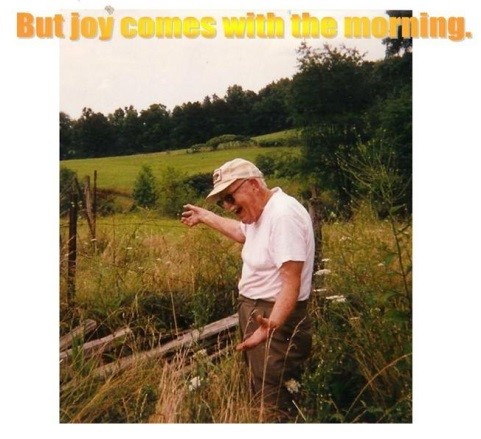
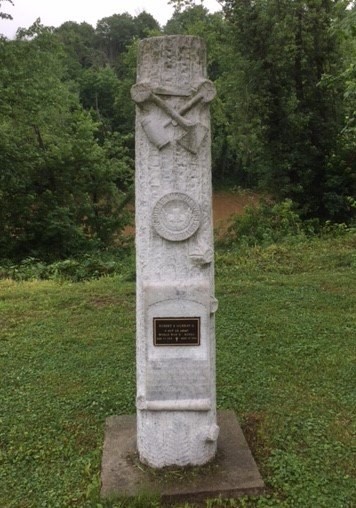
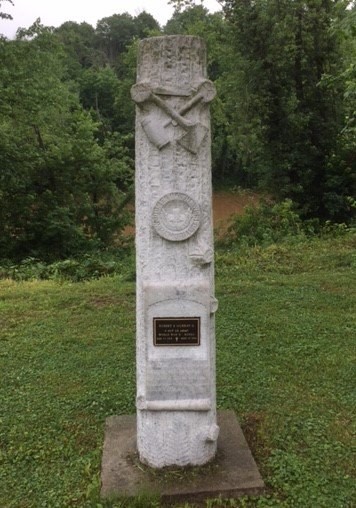
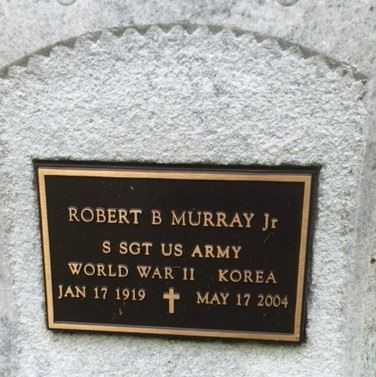
    How do we honor those to whom honor is due? If the words “good” and “father” belong together, you are blessed. So, how to remember and share the blessing? I sit on the back porch swing as the sun sets and study one memorial to our father. It is impressive, a monument in stone that witnesses to Robert Murray’s work in forestry, and the CCC, his lessons in ecology, his charter membership in the Resource, Conservation and Development Council for WV, and his bone-deep love of nature that he shared with his only brother, Bill.

    Visitors to the Inn compliment his daughters on how we’ve honored him. Sometimes I just nod, sometimes I confess that it isn’t exactly what it seems. It doesn’t mark his grave; it wasn’t his, originally. Our mother discovered it on sale, in Texas, a “returned” monument, so to speak. Somehow she talked a trucker into driving this 1,800 lb. stone tree from Texas to Elizabeth for free. I often wondered what my father thought of his future memorial, but he never said. The bronze plaque listing his service to his country was added after his death.

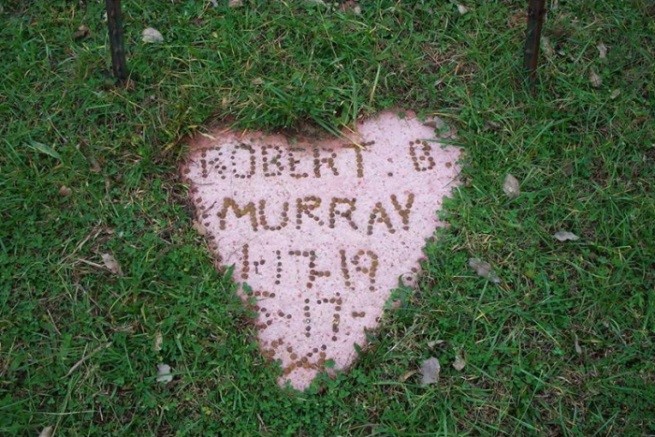
    His grave is not in town; it’s in the apple orchard on the Spring Creek farm. It’s where he asked us to put his ashes, and in WV, you can still pick your own resting place on ground that you know and love. This memorial is not impressive; it looks like the work of a child. It’s not high and lifted up; it’s so low to the ground you can mow over it. Ashes, then a crudely shaped heart made out of concrete, with a name spelled out in marbles made in WV. They shine when the early morning sun reaches them.

    Two different ways to honor. Two different spaces. Two holy human places. How do we honor those to whom honor is due? I know I’ve reached the time when I have to choose. Keep the Inn, my mother’s dream or the Spring Creek farm, my father’s legacy? The time to choose is coming, but tonight I just sit and swing.

  • Holy Days in the Apple Pi Inn: West by God Virginia Day

    Holy Days in the Apple Pi Inn: West by God Virginia Day

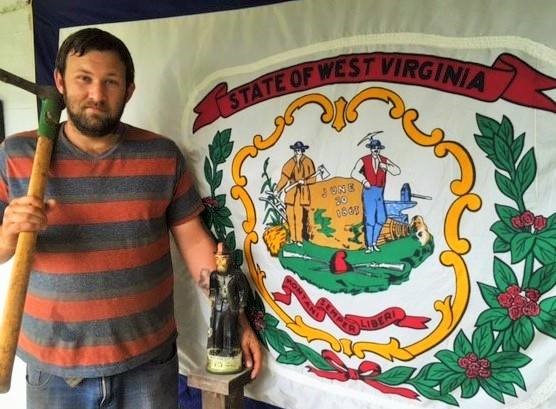
    June 20, 1863, President Lincoln signed a bill that authorized a new state in the Union: West Virginia. It was an action taken in the middle of a Civil War; its critics claimed it was unconstitutional. We seceded from the South, Confederate states who had already seceded. Some scholars insist that it was the Northern investors who were to blame or praise, wanting to side with the Union in return for control of the railroads, timber, mining, gas and oil. Some make the argument that the western part of Virginia had always been at economic and political odds with the Virginia establishment of church and state sanctioned slavery.

    It’s often overlooked that the first proposed constitution supported the Union with the condition that no blacks could reside in the state. Lincoln refused to sign until that condition was removed. The State Motto leaves the question of motivation open: Mountaineers are always free.

    My mother’s interpretation was a theo-poetic argument for Providence and freedom. It began with “In 1862 Abe Lincoln was mighty blue. . .” Her story/history would name the terrible losses at Antietam and claim that the offer of the economic and political resources of western Virginia convicted President Lincoln to issue the Emancipation Proclamation and create a new state. Anyone who came to visit the old Inn heard her recite that history at the front door, and if they disagreed, they were wise to keep their differences to themselves. I once had to rescue a Confederate re-enactor who’d come to the door to ask for water. She’d literally backed him into the corner, using her schoolteacher voice and finger to rebuke him for betraying the Union.


    The story/history of this Inn is rooted in the name and origin story of this state. Ephraim Bee was father-in- law to Mary Jane Bee who purchased the Inn after the death of her Confederate husband Josiah. Four of Ephraim’s sons served in the Civil War. Two fought for the North and two for the South. Ephraim was a blacksmith, an inn-keeper, a magistrate, and one of the First Legislators of the state. His fifth daughter was born on the day that Lincoln signed the state bill, so he named her West Virginia Bee. Little wonder we grew up saying, “West by God Virginia.”

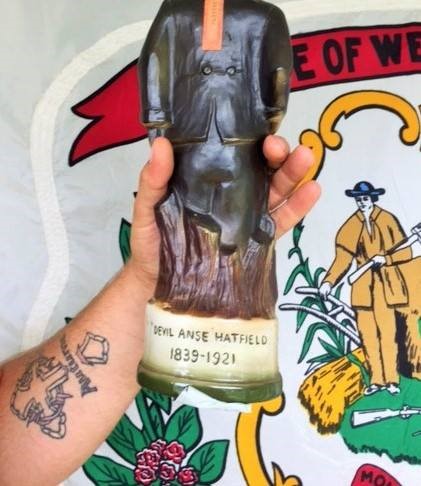
    What makes for a more perfect union in these days of stress and struggle? Hospitality, Humor, Honesty, and Humanity are the 4-Hs that can make this state great. I appreciate the presence in this old structure of mountaineers like Billy Jean LaCourse, descendent of the McCoys, who creates art and order in every corner he brightens, and Joey Hatfield, rural king of the meadow, mower, and weed whip. I treasure the strong women who make a way out of no way, women who refuse to let the dreams of freedom and public education die, women who stand at the locked down gates of tomorrow and declare: Mountaineers are always free!

    — with Katie Baters.


  • Holy Days in the Apple Pi Inn: Flag Day

    Holy Days in the Apple Pi Inn: Flag Day


    That the flag of the United States shall be of
    thirteen stripes of alternate red and white,
    with a union of thirteen stars of white in a blue field,
    representing the new constellation.

    It began with a resolution from the Continental Congress, June 14 1777. It took a hundred years to raise that flag as a celebration and children were the first to see it done. According to the CUS Department of Veterans, Flag Day programs were held all over the nation by the late 1800s. The purpose: making Americans of immigrant children; wrapping them in the flag, so to speak. That flag wrapping resolution was a different story/history for First Nations children.

    New York City has a claim to one of the earliest recorded celebrations: June 14, 1889, in a free kindergarten for the poor. What could helping the children of the poor and honoring the flag mean? What new constellations, what bright stars might be revealed in Camden or Clarksburg or any city in this nation if children never went to bed hungry?

    The Congress of 1949 and President “I’m From Missouri. Show Me” Harry Truman turned local customs of flag celebrations into national law: Flag Day. It’s hard to remember what those early lessons of citizenship meant. The flag covers everything from caskets to Kleenex these days. It’s a product in danger of being overexposed. Perhaps it’s time for the flag to be redeemed, in the Hebrew sense of that word. To redeem: to purchase back that which has been sold into slavery.

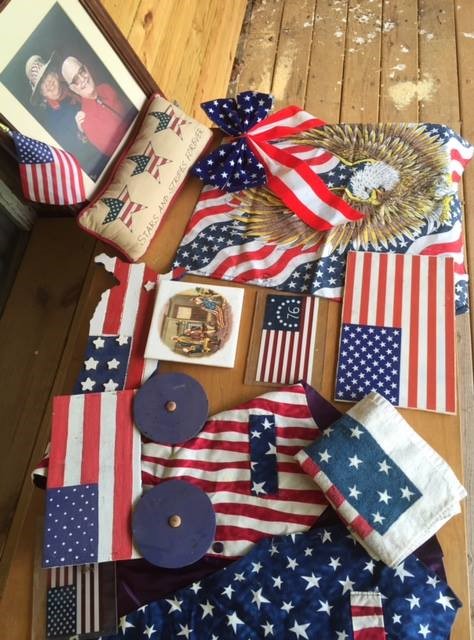
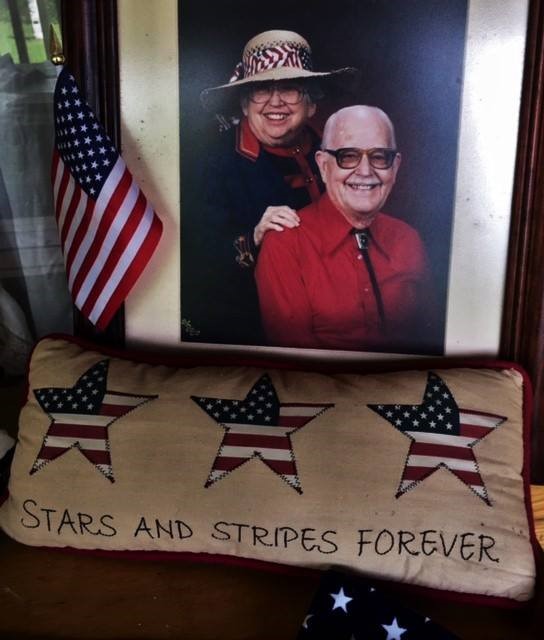
    I rummage through a box in the Teachers’ Room in the old Inn filled to overflowing with the red, white, and blue . I know I should get rid of this musty stuff, but tonight I place a picture of two teachers in its midst. They taught countless children about liberty and law, honor and self-respect. They knew a thing or two about how to raise a flag.


  • Holy Days at the Apple Pi Inn: A Stitch in Time

    Holy Days at the Apple Pi Inn: A Stitch in Time


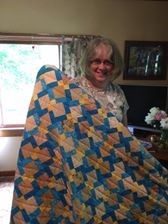
    June is unraveling as I look for the places in this old structure where repair is not an option but the question of survival. Foundation? Wiring? Siding? What can last another season? What needs saving now? I study the old quilts folded in drawers and envy those who could bind pieces of life together with a needle and thread. A stitch in time saves nine, but which “stitch” is the saving one?

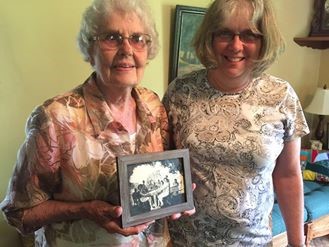
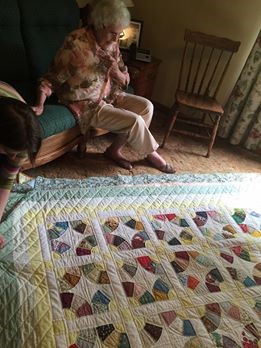
    Best to turn my attention to those who know about piecing life together. I visit Reberta and Lois, mother and daughter, retired teachers and artists of cloth. They hosted two of my students this summer and shared sharp wit and needle wisdom that they inherited from their mother’s mother’s hands.

    Here is a tie that binds time together. Here a construction of the gospel that wears well over time.

    The Quilters

    Blessed be the tie that binds:
    the heart
    the kindred mind
    the joy
    the inward pain
    the hope
    to meet again.

    They are were always:

    frontier followers
    pioneers in Jesus
    quilters of the call.

    They gather

    night and noon
    scraps of shadows
    snippets of light.

    They gossip for God
    stitch story skin
    quilt with gutstring
    unravel the tangles of shame.

    They trace the grace
    newly born
    freshly wed
    children’s children
    treasured dead.

    They bear but thimbles.
    They wear their needles bare.

    Quilters of the Call
    piece
    the four-square gospel,
    CrossXstitch

    truth in time.

    Copyright Heather Murray Elkins, 1985, Revised 2016. All rights reserved.