Category: Uncategorized

  • Bearing Up

    Dreaming in Delaware: Bearing up
    Low Sunday may be an out dated practice of Christians thanks to the impact of the pandemic. Churches that cautiously opened their doors on Easter to celebrate the rolling away of the stone may see their attendance go up. Absence may make the heart grow fonder, even when it’s the Sunday after the resurrection and the choir is still RIP.
    I appreciate the old tradition of the Risus paschalis – the Easter laugh,” as the early theologians such as John Chrysostom described it. God gets the best of the devil through the incarnation and ruins death’s punch line by raising Jesus from the dead. We observed Holy Hilarity Sunday in several churches, and were blessed with some amazing stand-up comedians, usually grandmothers.
    My one contribution came from my sister,  Wilson Cloudchamber. It’s a show and tell kind of humor. You show them the carved figurine and ask them what hymn goes with it. The blank look never fails. Even with a few hints like it’s a bear, they’re still stuck. After I hum a few bars the light goes on for those who know the tune.

    So, on this God knows I need a little humor Sunday, I offer you, “Gladly, the cross-eyed bear”. May it be so.

  • Crossings

    Of the many objects I’ve been drawn to over a lifetime, a cross is not one. I’ve sung songs about, admired the art of, told stories about, folded palms to make, and prayed in the presence of, but I’ve not collected crosses. I gift them, handing them on if one presented itself to my keeping.

    I’ve not explored my psychology in any depth, although I’ve devoted a goodly amount of time to cross theologies. A cross, with body and without, feels too awe full and awful, too numinous for close proximity.

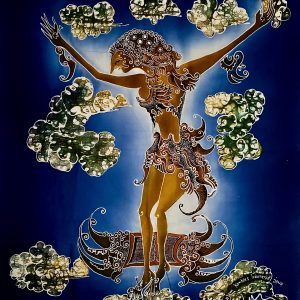
    The events of the last two weeks prompted a search for this tangible symbol of human violence and paradoxically holy resistance and resurrection. It was a gift too precious to give away, a cloth crucifixion crafted by an artist in Indonesia, hand delivered by a Drew alumni, missionary, and friend, Ron Weinbaum.

    Packed among my vestments, the gift rests, and I unfold it as gently as if, as it does hold a beloved body. I hear in the background the sound of women, reporting the news of the violent death of women. There were more than three crosses in Jerusalem. The cross was the Roman Empire’s invention for crowd control. It took time. It was public assault as well as personal torture. An assault weapon does not take three hours to kill; 3 shots per second, yet the loved ones of those lost hang suspended in public agony for years.

    I smooth the royal blue of the sky and sea, gently touch the green islands beneath the wounded feet. There is no cross; the body is suspended by nails against the deep blue of sky and clouds of island green. I know that I don’t know what it all means, just as I don’t know enough of what I should know about those Asian American women whose lives were so violently ended. My vision has been blurred by staring too long into a Western sun.

    What I know is that the cloth is a Javanese Batik, created by Pendetta Aris Kristian Widodo, using a technique that’s over 1,000 years old. Aris creates the concept and lays out the design.  A team of Muslim Javanese artisans completes the work. This image of treeless crucifixion was made in the teak forest outside of Yogyakarta near the famous Borobudur Buddhist Temple. What I do know is the artist has reformed my vision of the cross with this Javanese gospel of dying yet rising life.

    Now hung, this Indonesian crucifixion covers the door that leads to the world outside. How long? I do not know. Perhaps she will tell me. I touch her hand, and pray, “Christe eleison. Mercy, have mercy.”

    See: http://www.facebook.com/ron.weinbaum.9/videos/10156562517855787


  • Cabin Fever

        Dreaming in Delaware: Cabin Fever
    It’s as contagious as a virus. In some cases, you can see the scratch marks where those who suffer have tried to climb the walls. In my case, it’s a compulsion to make “to do” lists. I have the 4 am lists, written in the near dark, and impossible to read come morning. There’s the back-of-the-bill-envelop collection and there’s the mid-afternoon mental list I draw up so I don’t succumb to a nap. I avoid the Reminders app on my phone, which seems apt since it’s Nation Data Privacy Day.
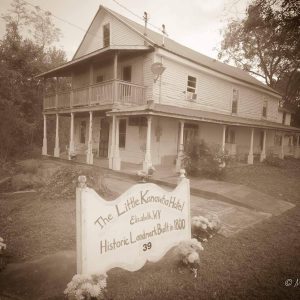
    To bring the fever down, I collect my texts of tasks and check off the ones I’ve completed. I unearth an old spiral notebook that has to-dos dating back to 1995. The educational ones are history; the church lists obscure; the repair list for the old Inn in WV catches my attention, one item in particular. In block letters, all caps, I’ve written: FIRM THE FOUNDATION!!
    That’s a tough task. That “to do” took us over 20 years, and my father had worked on it for ten years before we tried our hand at it. The corner I-beam of the old log cabin closest to the river had rotted out. You could feel the bounce in the floor boards, and that bounce could bring the whole structure down.
    Concrete was our father’s solution to firming foundations of all kinds, but by the time the Inn passed into my “to do” list, the holding wall had tipped sideways, exposing the 20” wide hand carved beams to further decay. There’s no future when the foundation crumbles. How to build back better is a challenge. “Why even try?” is a question even more important.
    The words of a young poet, Hallie Knight, are like a spring tonic for me as she urges us to recognize the depth of decay and the work still needed “To Rebuild”.
    “The windows break, one by one,
    Under the weight of wrongs, the structure strains,
    Until one day fire catches,
    And only the foundation of good intentions remains.”
    Any good intention needs know-how, and in this case, an Amish carpenter and a home-grown jack of all trades, figure out how to firm the old Inn’s foundation. The rot and the worn-out has to be carefully removed. Not every tradition, preserved like concrete, not every custom set in stone, not every I-beam of our structures should be saved.
    This is not a solitary “to do” list. Repairing the support structures of democracy be it the Constitution ratified in 1787 or an old Inn started in 1800 will be:
    “A job led by all, not by one,
    We work long days turn long nights.
    The creation of our hands
    Proving more than surface level acknowledgment of rights.”
    The rot is removed, the debris cleared away. Boards that are on the level replace all that was slip-sliding away. The good news is: the rest of the foundation is firm. The good news is: the original I-beams will bear the weight of a beloved community for years to come. The good news, as this high school poet reminds us:
    “The past is not buried
    But underlies
    What we have transformed
    Before our eyes.”
    I feel better already.
  • Feeling the Burns

    Feeling the Burns

    This is the season my Scottish genes begin to sound their pipes. Our Murray ancestors hang on the walls of memory and hallways in the old Inn. The Murray clan history, traced by our Uncle Bill, provides the names of those who left bonnie Scotland to arrive in Almost Heaven.

    The name Murray is believed to derive from Gaelic word “moireabh” meaning seaward or seaboard. The wistful goodbye of a Scotsman framed in enamel preserves the economic desperation of men who went to sea and war because they were landless.

    We can claim linage back to a castle with a private army, and John Murray, the first Duke of Atholl. but I learned my lesson about when to tell tales. Daniel was nearly 4 when I introduced him to the Scottish side of the family tree. I thought he’d appreciate hearing about the fierce Scots who fought in WWI, and their nickname and the Duke of Atholl and Blair castle.

    I forgot that the “th” sound takes time to develop so it was a shock to hear him loudly announce to the other children in Sunday School that he had a Duke of Asshole and Ladies of Hell in his family.

    The family storyline is filled with accounts of armed struggle and civil war, brothers against brothers, fathers against sons. There’s even a contest over the Murray motto: a mermaid holding a mirror and comb with the words “Tout Prest”, (Quite Ready), or a bare-chested man holding a key and a dagger under the words “Furth Fortune and Fill the Fetters”.

    Not a promising legacy for peace as we face a new year. Even the understated tone of R. Chambers, the Scot Murray historian (1841) points out the problem.  “Sir Alexander Murray of Stanhope was one of those men, who, of some talent and insight, are so little under the government of human prudence and good temper that they prove rather a trouble than a benefit to their fellow creatures.”

    I don’t need to read old histories to see what happens when we are “so little under the government of human prudence and good temper”. It will take more than Hogmanay cakes to sweeten this transition of power. I find comfort in the Robert Burns song we sing as one year ends and another begins.

    The ‘auld lang syne’ roughly translates as ‘for old times’ sake’, and the song is about preserving friendship as we look back over the events of a hard year and ahead to a restoration of peace.

    Should auld acquaintance be forgot,
    And never brought to mind?
    Should auld acquaintance be forgot,
    And auld lang syne.

    Chorus:
    For auld lang syne, my jo, (dear)
    For auld lang syne,
    We’ll tak a cup o’ kindness yet,
    For auld lang syne,

    We twa hae paidl’d i’ the burn,
    Frae mornin’ sun till dine;
    But seas between us braid hae roar’d
    Sin auld lang syne.

    And there’s a hand, my trusty fiere!
    And gie’s a hand o’ thine!
    And we’ll tak a right guid willy waught,
    For auld lang syne.

    It helps to know a “right guid willy waught” means to drink deeply of the cup of kindness and loyalty. So, this year, come midnight, we’ll recover the Scottish tradition of standing in a circle holding hands. At the final verse (‘And there’s a hand, my trusty friend’) we’ll cross our arms so that our left hand holds the hand of the person on the right, and our right hand holds the person’s hand on our left as we sing”

    “For auld lang syne, my dears. For auld lang syne.”

  • Simeon

    Simeon


    Simeon

    The congregation is seated. An old man walks slowly, painfully, up the aisle toward the altar. He pauses frequently to search the faces of the congregation. When he reaches the front, he turns to the altar and begins:

    “Hear, O Israel, the Lord your God is One. And you shall love the Lord your God with all your heart and soul and mind and strength. Hear, O Israel, the Lord your God is One!”

    He turns and searches the faces again and then sits down

    Today. Perhaps, today. Let the morning begin!

    Simeon is here with old expectations in place.

    See, my feet have grooved the stone. My hands oil the wood.

    A hundred thousand faces have been searched and passed over.

    No scholar or soldier, no prince, priest or thief matches the name.

    I hold the word “messiah” like an empty victory wreath,

    looking for the runner with salvation in his stride.

    Zealots crowd the streets, claim the title, dream of crowns.

    The market place mutters under its breath,

    naming one son and then another for the throne.

    But here, here in the shadow of the Holy,

    I wait for the King.

    He winces, leans over, then straightens.


    The shadow of the Holy. My shadow of death.

    I cling with fierce hands to the edge of my life.

    You have promised, Holy One!

    Do not forget me or deny the one prayer I possess.

    With these eyes I will see your salvation.

    With these hands I will bless the one who comes in your name.


    Simeon. The voice of the tempter mixes with your prayer.

    I see you! You in the shadows! You whisper my doubts.


    “Why you among many?

    There have been others who hungered for sight of the Word.

    Does your faith surpass Isaiah’s light?

    Did Jeremiah deserve his lonely watch in the night?

    Why you? Why now?

    Amos died thirsty, calling for the waters of justice.

    Hosea’s heart was broken as Israel died in Assyria’s arms.”


    He bends over suddenly. then slowly straightens.


    Bless the pain.

    Sharp truth…purges doubt.

    One memory hangs behind each breath.

    Crucifying weight.

    One son the Lord gave me.

    One son they took away.


    He stands.

    With these hands in this place

    I once offered him up to the glory of God.

    With these hands. these sad hands,

    I lifted him down from a torturer’s tree.


    He dreamed of Jerusalem’s freedom.

    But his vision turned violent, and broke his life on its edge.

    Adonai!

    I nail you again to your promise.

    You emptied my heart, stripped clean my hands.

    You let them take my son. Send now your own!


    Remember your promise!

    No high priest will say it, no teacher, no scribe.

    I, Simeon, will see and name the holy one of God.

    I will see! You have promised.

    I will touch your salvation, and cradle your name.


    He sits, exhausted.

    Sit down, you old fool.

    God is not deaf.

    A whisper will serve, even silence will do.

    Death, seal my eyes open,

    strengthen these hands that reach for God’s son!

    I will see our salvation

    I will hold freedom in these hands.


    He turns his face, closes his eyes. A young gift with a small child enters with an older man behind her. The man speaks to her softly and then moves ahead of her, coming toward the altar.

    Simeon opens his eyes, sees him, looks away, then looks again.


    Almost…yet…no.  I hear the name stir but it won’t come to birth.


    Simeon rises as Joseph approaches. Simeon goes to him and touches his face.


    A good man, with faith carved in your face, trust planed in your eyes.

    Rooted in the House of Jesse, yet lacking…

    Why have you come?

    What are you seeking? An answer? A sign?


    Joseph:” We have a son. The law requires a first-born…”


    Simeon looks down the aisle.

    Where? Let me see!


    Mary comes toward the altar carrying Jesus. Simeon goes to meet her and lifts the child from her arms.


    How could salvation come in such a small way?

    Yes. I remember. A little child shall lead them

     He turns toward the altar, holding up the baby.


    “Lord, let now your servant depart in peace, according to your Word;

    for my eyes have seen your salvation which you have prepared in the presence of all people,

    a light for revelation to the Gentiles, and for glory to your people Israel.”


    He turns toward the people.

    Israel, O Israel, the Holy One places Emmanuel in our hands.

    He will lift the broken-hearted, and strengthen the weak.

    But those of peace less power will stumble and fall against his name.

    Hear, O Israel, the Lord your God, has come.


    He hands the baby back to Mary.

    Bind him close. Love him strong.

    You will not keep him long.

    The sword that pierces him first passes through you.


    He touches Joseph’s shoulder.

    Teach him well.

    What he learns from you, others will name when they pray.


    He gestures for them to leave and sits again.


    Abba.

    Abba.


    Simeon bows his head and leans back in his seat, whispering:


    Amen.

    Heather Murray Elkins, copyrightÓ August 1980. All rights reserved.


  • Guided by the Spirit

    Guided by the Spirit

    Guided by the Spirit
    One gift of this Sunday’s reading is the assurance that there’s a point to patience. Simeon waits and waits and waits and then salvation arrives, a vulnerable Child.
    Simeon’s lyric benediction is now embedded in daily prayer services, but early in my ministry I was drawn to the sharp-edged prose he delivers  to Mary after the praise.
    “This child is destined for the falling and the rising of many in Israel, and to be a sign that will be opposed so that the inner thoughts of many will be revealed—“
    Preaching the prophets can be like swallowing a two-edged sword. The pastoral temptation to “First-Person-It” sets a congregation on guard. I decide to borrow a medieval tradition of mystery plays to present a series of monologues, Amos, Hosea, the Isaiahs, Jeremiah, and last but not the least, Simeon.
    Hebrew scripture was rarely invoked in powerful and poetic ways in my experience of traditional, primarily white, congregations. As a young assistant minister, and the church’s first woman pastor, I decide we need a gifted actor, accustomed to the cadences of Shakespeare.
    God provides. Sandra Presar, speech teacher and member of First Church is married to the head of the theatre department at WV Wesleyan. Chuck Presar is pressed into a prophetic role.
    His deep cadences of justice and mercy rise in the sanctuaries of the Methodists, Baptist, Presbyterian and finally the chapel at Wesleyan.  It’s a witness prepared in the presence of all peoples.
    God willing, it’s also a light for revelation as well as a cautionary “sign that will be opposed so that the inner thoughts of many will be revealed—“
    Wait for it.
  • Blood of truth

    Blood of truth


    Spring cleaning for retired teachers involves a lot of paperwork.  My files are stacked knee-deep in the attic, and every day I ascend to this upper room with hopes of reducing the paper weight.  It’s such slow going I consider opening the windows and pitching whole boxes into the recycling bin 2 floors below.

    A wise pastor’s wife, Donna Light, once gave me good advice that I’ve failed to follow. “If you move a box three times and don’t open it, don’t open it! Give it away.”

    My curiosity gets the better of me. I’ll quickly scan and then discard, I say. What actually happens is I drown in inky memories, pulled under by a textual undertow. I’m swept away in the outgoing  jtide of scribblings and scraps, undated prayers and forgettable sermons. Beached at the end of the day, I descend, with little to show to the trash keepers.

    Here’s one undated prayer of thanksgiving that floats on today’s surface. It’s based on my reading of the prayer-book of Serapion of Thmuis, a 4th century Egyptian bishop. It was assigned during my graduate days at Drew.

    This prayer over a cup filled with the blood of truth offered as medicine for sin imprinted on my memory, and resurfaced years later in a communion prayer.

    The blood of truth. Medicine for sin, not for censure or reproach.

    I still need this. Back it goes in the files and out to whoever else may need its blessing.

    +++

    Holy and blessed is the mighty savior

    You raised up for us,

    Jesus, Mary’s child,

    who opens the way of salvation,

    and leads us home.

    Healing the sick, feeding the hungry,

    defending the defenseless,

    Christ crosses boundaries

    teaching us how to live and forgive.

    By the mystery of his incarnation, death, and resurrection

    Christ is with us at Table, in Word, and by the Spirit

    as we proclaim the mystery of love and faith…

    Christ has died. Christ is risen. Christ will come again.

    God of compassion,

    let your holy Word come upon this bread and cup

    that it may become the blood of Truth;

    and may all who communicate

    receive this medicine for life

    for the healing of every sickness,

    for the strengthening of all virtue,

    not for censure or reproach.

    We invoke You, the uncreated,

    through the Only-begotten, in the Holy Spirit.

    I stretch out a hand and pray that your hand of Truth

    may be stretched out

    and blessing given to this people

    for the sake of your loving kindness.

    God of compassion and mystery,

    may your hand of piety and power,

    sound discipline and all holiness bless us,

    and continually preserve us to perfection

    through your only-begotten Jesus Christ,

    in the Holy Spirit, both now and to all ages of ages. Amen.  [i]

    Now with the confidence of the forgiven, let us sing.


    [i] Based on the Euchologion of Serapion


  • An Epiphany of Stars 2016

    An Epiphany of Stars 2016

    A Ritual for the Feminist Studies of Liturgy Seminar[i]

    All are invited to take a seat in the circle. The basket of stars and candle are in the center. The convener will greet everyone by inviting them to say, “I am (name) and I am here.”  After a silence, the Disney Song “When You Wish Upon a Star” is played. The group is then invited to select whatever word or words in the song that resonated with them and say them aloud several times.

    [ii]When you wish upon a star

    Makes no difference who you are

    Anything your heart desires

    Will come to you

    If your heart is in your dream

    No request is too extreme

    When you wish upon a star

    As dreamers do

    Fate is kind

    She brings to those to love

    The sweet fulfillment of

    Their secret longing

    Like a bolt out of the blue

    Fate steps in and sees you through

    When you wish upon a star

    Your dreams come true.[iii]

    The basket of stars is uncovered and each person takes a star. When all have received, the Ritualizer invites the gathering to lift up their stars and recite the following in unison:

    Star Light, Star Bright.

    First star I see tonight

    I Wish I may

    I Wish I might

    Have the wish I wish tonight.[iv]

    Ritualizer:

    The great question that has never been answered, and which I have not yet been able to answer, despite my thirty years of research into the feminine soul, is “What does a woman want?” Freud [v]

    What do you want to share? What would you wish to say? You are invited to respond to Freud’s question by lifting your star and sharing a wish/want.  After several minutes, the first Reader begins:

    Reader One:

    Star Light, Star Bright [vi]

    Star, that gives a gracious dole,

    What am I to choose?

    Oh, will it be a shriven soul,

    Or little buckled shoes?


    Shall I wish a wedding-ring

    Bright and thin and round,

    Or plead you send me covering-

    A newly spaded mound?


    Gentle beam, shall I implore

    Gold, or sailing ships,

    Or beg I hate forevermore

    A pair of lying lips?


    Swing you low or high away

    Burn you hot or dim:

    My only wish I dare not say-

    Lest you grant me him.

                                                         Dorothy Parker

    Reader Two:

    When you wish upon a star,

    Science knows they’re very far.

    Even at the speed of light,

    Your wish will not arrive tonight.

    When you wish upon a star,

    Hope will get it just so far.

    The years it takes to draw it nigh

    Are doubled for a quick reply.[vii]

                                                                 William Elkins

    Reader Three:

    Why is this the Lone Star state?

    The history of the Texas Lone Star is a story of manifest destiny and the American dream.

    (It is also a narrative of invasion and colonization.)

    It has become a symbol of struggle for independence and resistance.

    (See the Siege of Bexar 1835, the battle for the Alamo in 1836, and the Mexican American War in 1846.) 

    There is more than one side, more than one history, and certainly more than one story,

    but there’s only one star, golden five-pointed on a field of azure blue.

    Gov. Rick Perry reminded his hearers of the history on the unveiling of the Texas stamped quarter in 2004, “Its continued presence today reminds people that Texans are a different breed, set apart by their unyielding desire for freedom.”[viii]

    An Epiphany of Stars


    Where are we now?

    Did we miss a turn or tarry?

    Fate proves unkind.

    We search for sanctuary.

    We’ve lost our way

    in a star-crossed state of mind.

    Every road leads back to Rome

    and white as bone

    white as bone the star

    on the Lone Gunman throne.


    Perhaps the fault lies not in stars.

    but in our rusty creeds,

    our alien hearts.

    It makes a difference, who you are.

    We are a breed apart,

    star-marred illegals,

     immigrants who bear

    rare mystery in dusty hands.

    Any request is too extreme.

    from far too foreign lands.

    Our dream was just a dream.

    It makes no difference who you are.


    Which side are you on

    in this war of shooting stars?

    Don’t call the law,

    Draw a blue line in the sand.

    Thin-skinned men of tin

    openly carry death in both hands.

    Chose well. Be wise.

    In this Empire of Stars

    it makes a difference whose you are.


    What oath to swear?

    Which law to break?

    The 6th or the 2nd?

    You can’t plead the 5th.

    It takes true grit

    to bare

                                   sins and not arms,

    for Christ’s sake.


    But if you insist

    on dancing with stars

    your secret longing will unlock

    the somewhere of all rainbows,

    an endless inner fire,

    .

    Like bolts of azure blue

    10,000 points of light,

    Unfurl a milky way within

    an ecstasy of night.


    Without a rhyme or reason

    you burn with holy fire.

    under the sheen

     over the seasons

    unyielding

     so yielding

     all yielding

    desire.


    Take a risk. Make a wish.

    No silver bullets,

    Just open-carry stars.

                                                                 Heather Murray Elkins ©2016

    Ritualizer:

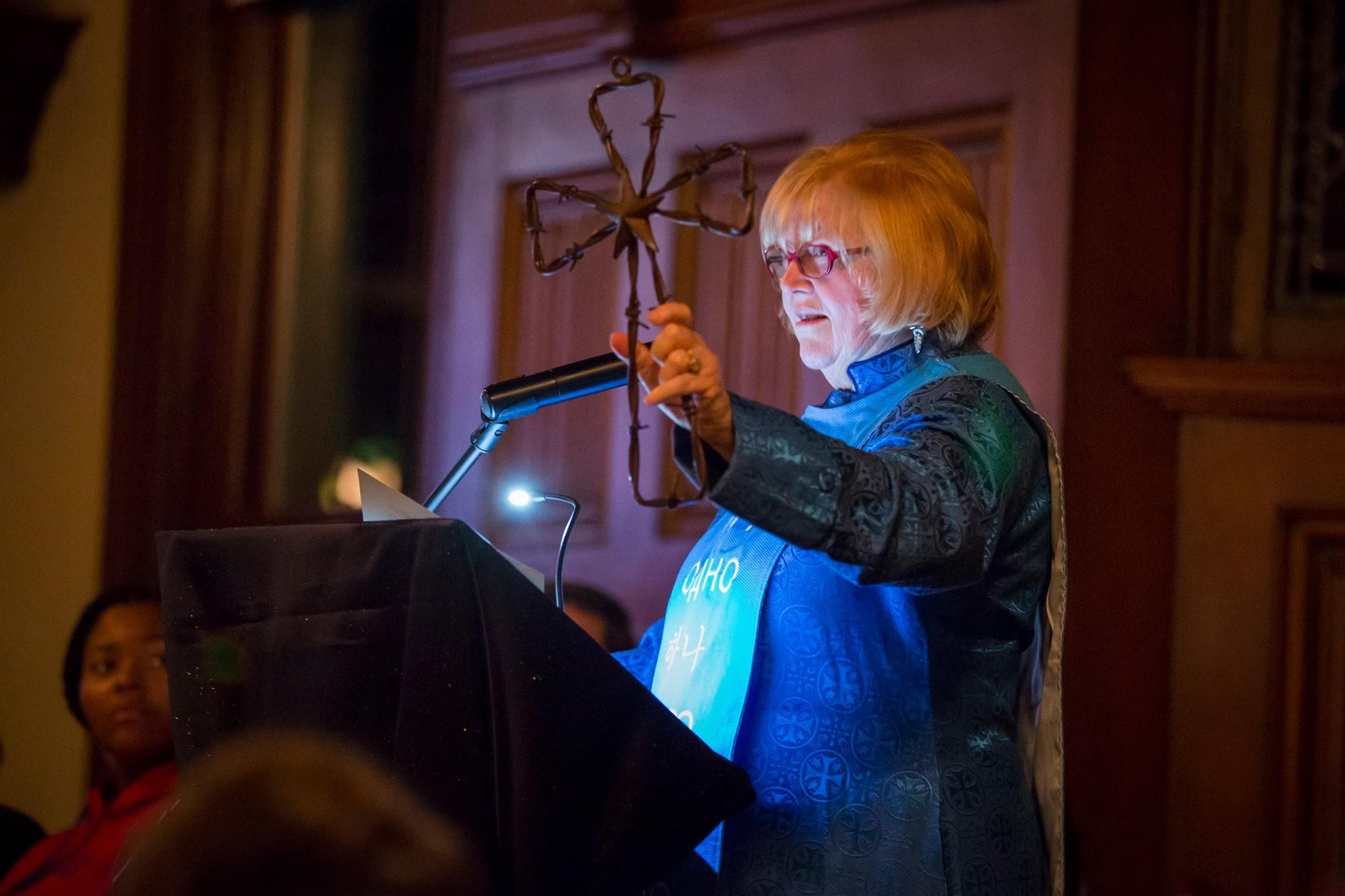
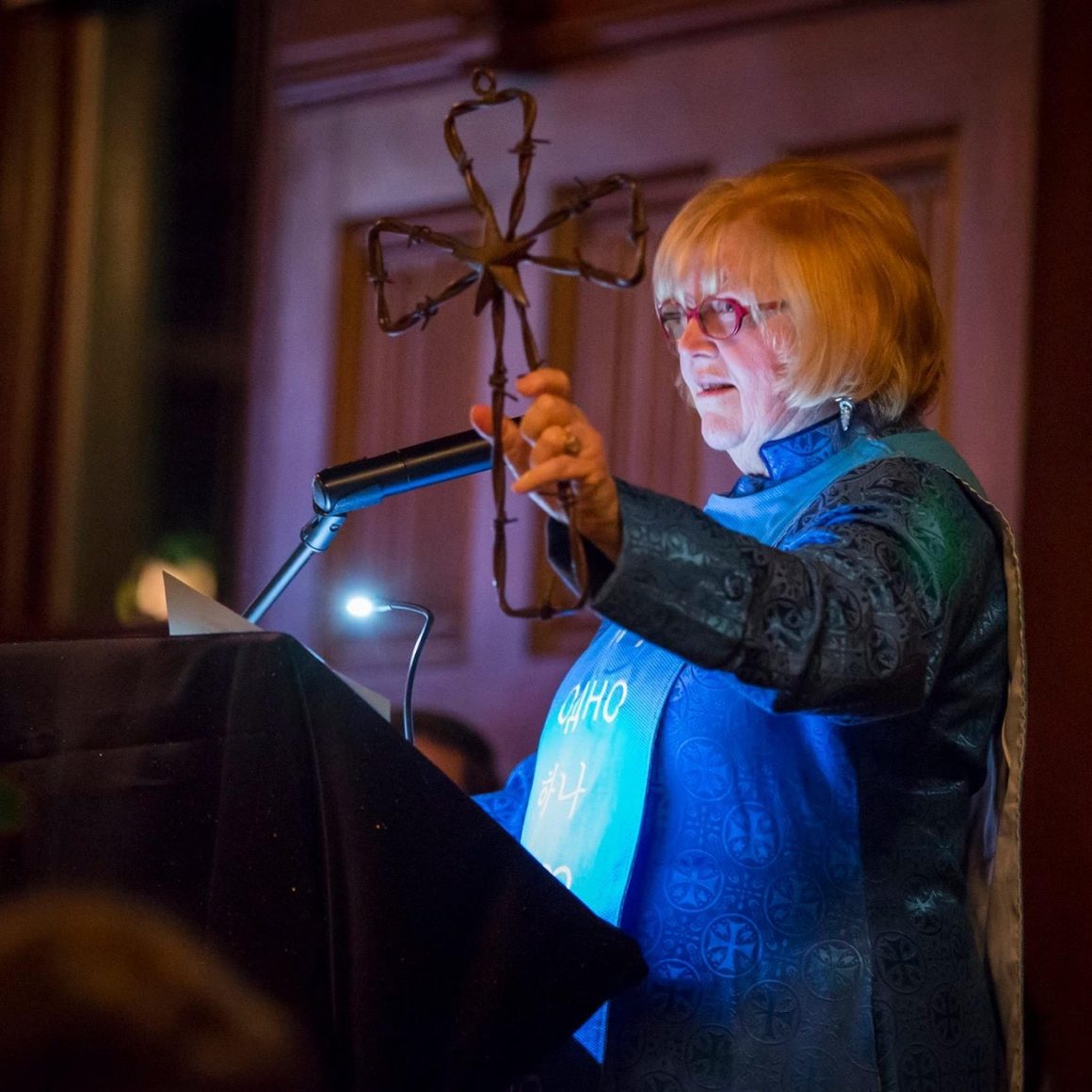
    Behold, a lone star. (A cross made of barbed wire, bearing a star is revealed.)

    And one answer to the question of what wo/men want is this song.[ix]

    We who believe in Freedom can not rest until it comes.


    [i] I composed this annual Epiphany ritual as an act of voiced resistance to meeting in a state that approved open carry guns in schools and worship spaces and a city that defeated an Equal Rights law for LGBTQ citizens.

    [ii] The song, “When you wish upon a star,” was written by Leigh Harline and Ned Washington and first sung by Cliff Edwards as Jiminy Cricket in Pinocchio, by Walt Disney, 1940. It is considered the signature song of Disney’s corporation.

    [iii] This has become a Christmas/Epiphany song in Sweden, Norway and Denmark referring to the Star of Bethlehem.

    [iv] This is an American rhyme, documented in the late 19th century. Its Roud Folk Song Index is 16339.

    [v] Sigmund Freud: Life and Work, Ernest Jones, 1953.

    [vi] “Star Light, Star Bright” by Dorothy Parker,(www.Poem Hunter.com)

    [vii] This rhyme was composed by my partner, William Wesley, who believes that science is essential to the work of prayer.

    [viii] Adapted from the History of the Texas Lone Star by Phyllis Mckenzie (www.utexas.edu)

    [ix]  Ella’s Song, Lyrics and music by Bernice Johnson Reagon, sung by Sweet Honey in the Rock