Category: Apple Pi Inn

  • Holy Days in the Apple Pi Inn: Maundy Thursday

    “Jesus, knowing that the Father had given all things into his hands, and that he had come from God and was going to God, got up from the table, took off his outer robe, and tied a towel around himself. Then he poured water into a basin and began to wash the disciples’ feet and to wipe them with the towel that was tied around him. “John 13:3-5

    There’s a towel hanging in Mary Jane Bee’s kitchen. She was my great great grandmother who owned this hotel (now Apple Pi Inn) from 1875 to 1883. It started out as a cloth calendar, a means of telling time. It tells more than that, but I’ll let my Mother fill in some of the details. On the back of the frame she wrote, “Embroidered by Winifred Eleanor (Bee) Hoyt Murray. I used an old calendar’s illustration (1984) but when it was readied, the glass broke. In May 1986, Floyd of Roberts’ store cut a glass for it. Bob Murray helped put it in the frame on June 2, 1986 which his grandson Murray Mace had painted the week before.”

    This is what I know: my mother embroidered a cloth calendar that many women used as dish towels after the year was over. What I don’t know is why. Was it because she loved the dogwood blossoms? Was the prayer one she needed to see every day? Did she know it was written by Reinhold Niebuhr? Did my father tell her he learned it as a soldier during World War II and the Korean War? It was in the Federal Council of Churches prayer book provided for army chaplains and servicemen in 1944. Did she find the calendar/towel at the Salvation Army? Did those who read it on the kitchen wall know they were in the company of AA and all prayer warriors who fight against addiction? This is one prayer they frame in their hearts.

    I don’t know the answer to these questions. But what I do know is that I wouldn’t name this calendar/towel the “Serenity Prayer”. This kind of language is risky business. Be careful what you pray for. A towel is what I have to tie around myself if I want to follow Jesus? This is the only vestment of ministry I will be measured by: a towel? Even harder to admit for those of us who are addicted to being in charge, those of us who need to be needed, is the towel’s dirty Not-Secret: Someone else will have to wash our feet.

    So there it hangs: the hardest prayer, the tie that binds.

    God, grant me the serenity to accept the things I cannot change; 
    Courage to change the things I can;
    And the wisdom to know the difference.
    Do I hear an Amen?

    Holy One, embroider this prayer on my heart.

  • Holy Days in the Apple Pi Inn: Palm Sunday

    Holy Days in the Apple Pi Inn: Palm Sunday

    Palm Sunday is often Parade Sunday in small churches with a strong Sunday school tradition. This is one time that kids can be heard as well as seen, according to the scriptures. Real palm branches aren’t required; green paper works just fine as long as it’s being waved about by children who are actually encouraged to run up and down the aisles and make loud noises. Children in parades are the holy stuff of Palm Sunday, along with a lot of singing, sometimes dancing, and definitely the sound of clapping hands. Not even grumpy grownups can resist a great Palm Parade.

    But why a parade, aside from the fact that there’s one in the scripture lesson for this Sunday? Someone special was coming. Someone who made a difference between down and up. Someone who changed a loss into a win. An ordinary somebody who’d become extraordinarily important to their friends, their neighbors, their hometown, and not to stretch the point, the entire nation.

    That’s what made the first Palm Parade different from all the others. Somebody who was SOMEBODY was coming to town. Every corner, every window, every sidewalk would be decorated. There would be banners, and signs, and definitely ribbons. There would be clapping and waving and definitely dancing in the streets.

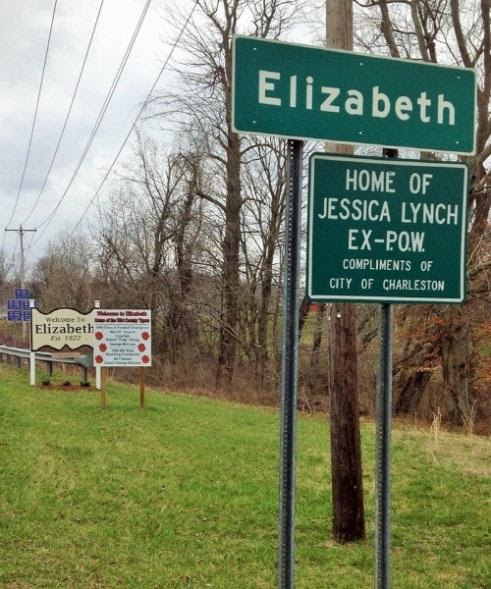
    I saw that kind of parade once: the Wirt County homecoming parade for Jessica Lynch, July 22, 2003. She was an American soldier, POW/MIA, a national icon, but in her own words, “I’m just a country girl at heart.” A country girl who dreamed of being a kindergarten teacher and enlisted in the Army so she could afford go to school. In the years since her rescue, Jessica finished her first college degree, did her teacher training in the same elementary school she attended as a child in Wirt County, and is a teacher. That’s a West by God Virginia tradition: serve your country and get an education. In the years since that parade she has continued to educate her community about service, and struggle, truth and virtue. I pass the road sign with her name on it and remember her friend, Lori Ann Piestewa, a fallen hero, a Hopi warrior. I remember her because Jessica doesn’t let us forget Lori Ann or any of the others who continue to put themselves in harm’s way in a war that isn’t over.

    I think about the yellow ribbon that I took down after the parade that day. I keep it with my Easter things. Wasn’t he was just a country boy? He spoke a truth that the Powers That Be didn’t like. He loved the little children, all the children of the world. He offered his life, not for a nation, but for us, all of us, red and yellow, black, and white. He shows us the truth that lasts, the truth that takes a lifetime to learn: love is stronger than death. That’s the lesson. That’s why we call him, “Teacher”.

  • Holy Days in the Apple Pi Inn: Spring Cleaning

    Holy Days in the Apple Pi Inn: Spring Cleaning

    Cleaning up is not a task limited to or initiated by a season in my experience. Spring Cleaning, however, seems to be inscribed in some corner of a rural chromosome or perhaps immersed in the sacramental memory of baptism. The first day of spring arrives, and an impulse to engage in obligatory and repetitive gestures of cleansing begin to surface. I’m good at suppressing those urges until early summer, but this maddening March weather changed everything.

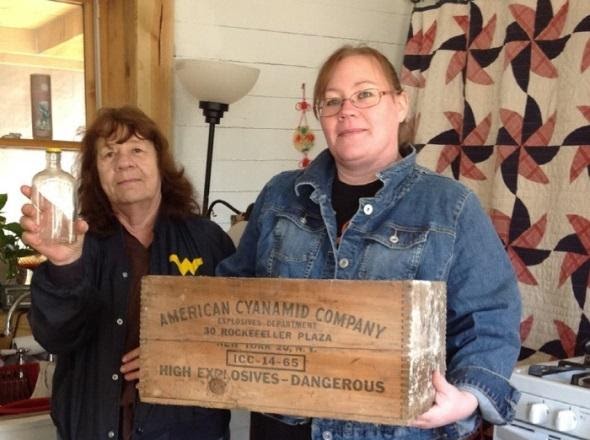
    The tin roof on the country kitchen had outlived its usefulness. Built shortly after the end of the Civil War, it sagged like an old feather mattress over the antique stove and the assorted relics of forgotten sinners stored in the kitchen. (Note the Glasgow whiskey bottle and a packing box of explosives held by Libby and Melissa.) This structure had been built to keep the cook and the heat in the kitchen, out of the main house. Now it serves as a collection site for whatever was left over by whoever left it behind. It is a perfect staging ground for a conversation about “bricolage: a limited, heterogeneous repertoire of inherited bits and pieces.”(Levi-Strauss, The Savage Mind)


    The clearing/cleaning of this building was at the bottom of a long list of salvific action. It shot to the top when the replacement tarp gave way. My hope for a leisurely Antique Roadshow adventure was soaked under a torrent of melted snow. A call for help brought neighbors. Spring cleaning became a communal act of salvation and cleansing. “O my God,” was the constant refrain, but it was uttered with a wide range of tone and expression. “What is it?” was usually answered with a “Better save it,” and even the old joke about Prince Albert in a can held a great sense of timing.

    Of course, a new roof and sunny weather doesn’t solve the problem of what to do with the stuff that’s now drying out on the porch. But it’s only the first day of spring. I have until June 21, the first day of summer, to sort that out.

  • Holy Days in the Apple Pi Inn: St. Patrick’s Day

    Holy Days in the Apple Pi Inn: St. Patrick’s Day


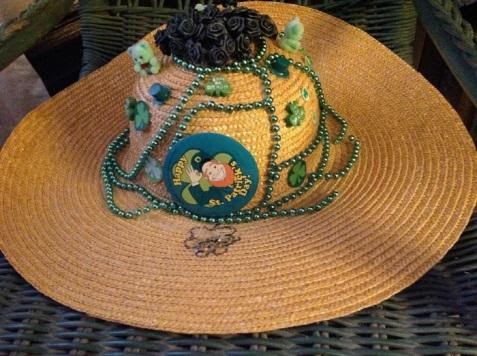
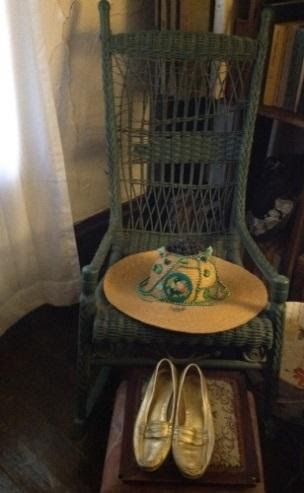
    There’s an old green rocker in the corner of the Apple Pi Inn that is good at telling time. Today it says, “Here’s your hat, St. Pat. What’s your hurry?” It invites you to sit awhile and smile at the tiny green teddy bears, the sparkling beads, the hat-tipping leprechaun and the bright eyed saint who knew how to see the mystery of Trinity in the green green fields of home. 

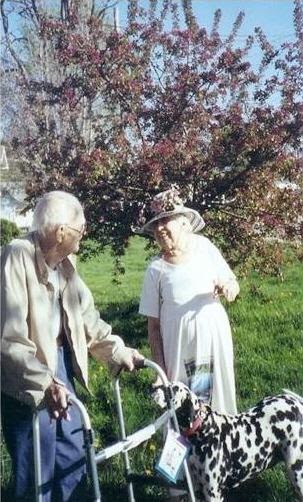
    This is my Mother’s last hat, decorated by a friend, for the “wearing of the green” to church, or the bank, or wherever there were children. It hung on a clothesline that stretched down the hall, waiting for its day to arrive. It was in good company, with more than forty others that she owned, hung in chronological order, from the 4th of July one with 16 American flags to her Valentine Day’s headgear of cupids armed with charms and arrows.(There was even an Earth Day hat decorated with fast food trash that made you want to recycle it.) The St. Pat hat was waiting its turn to be worn, admired, grinned at, talked about, and photographed with its wearer, a 93 year old talkative elf.

    But there’s a time to keep and a time to lose. March 9th 2012 was her last day this side of forever. Her four closest friends donned one of her hats to walk as honorary pallbearers, and placed the St. Patrick hat on her coffin. If you look closely at the picture of the chair you’ll also see the gold shoes she claimed she’d wear when she danced her first jig in heaven. 


    Christ be with me, Christ within me 
    Christ behind me, Christ before me
    Christ beside me, Christ to win me
    Christ to comfort and restore me.


  • Holy Days in the Apple Pi Inn: Super Pi Day

    Holy Days in the Apple Pi Inn: Super Pi Day


    What time is it? 3/14/15 9:26:53
    Month. Day. Year. Hours. Minutes. Seconds.
    I look in the round face of time hanging on the wall.
    I study all the geometric shapes that fill the chairs.
    I note the sounds that spill across the coffee cups.
    I trace the faces, count the fingers that set the table.
    It’s time to consider the ratio
    between the diameter and the circumference
    of a circle.
    If no building could stand,
    no bridge sustain,
    no construction endure
    without the precision of PI
    (be it apple, or cherry or peach)
    will this circle be unbroken?


    Only if 
    only as
    the ratio between the diameter
    and the circumference of the heart
    keeps expanding.

    Heather Murray Elkins, copyright 3/14/15


  • Holy Days at the Apple Pi Inn: Johnny Appleseed Day

    Holy Days at the Apple Pi Inn: Johnny Appleseed Day


    Is there any way to remember into the future?  Yes. Plant trees now. From Kenya to Kentucky, this is a holy human action that roots us in the present and branches out to a future only God can see.


    Here is an Appleseed service that can be part of an entire worship event, or as a ritual on its own.  Invite children to carry in baskets of apples at the beginning, and lead the group in singing the first verse known as the Appleseed Grace.  Distribute the apples at the conclusion of the litany, or give apples after people receive communion.


    Leader: A sower went out to sow.

    Sing:

    “Oh, the Lord is good to me,

    and so I thank the Lord,

    for giving me the things I need;

    The sun and the rain and the apple seed.

    The Lord is good to me.”
     

    People: Keep us as the apple of your eye.

                 Hide us in the shadow of your wings.

    Leader: You can count the seeds in an apple,

    People: but who can count the apples in a seed? 


    Reader 1:

    Apple Facts and Seed Stories

    The Apple is a fruit of the tree, Pyrus Malus. It’s usually grown in temperate regions, and introduced to America from England in 1629. It’s become a classic image of excellence in education and A “is for apple” is posted in countless classrooms in this country for almost two centuries. An apple for a teacher was once a way for a student to say “Thank you” but apple-polishing is not advised by one’s peers, unless of course you’re talking about iphones or computers.


    The connection between eyes and apples and pupils is also a traditional one.  Hear the words of the psalmist: “Keep me as the apple of your eye…”  In the nineteenth century “apple of your eye” also meant “pupil”. The pupil of one’s eye was named from the Latin word, “pupilla”. When Romans looked into someone’s eyes they saw a tiny reflection of themselves, like a child, so seeing one’s self was always a learning experience. To see eye to eye is to see as we are seen, the Apostle Paul writes. We are made in the image of God, and we are seen as the pupil, in the apple of God’s eye.

    Sing:

    “Oh, and every seed I sow,

    Will grow into a tree.

    And someday there’ll be apples there,

    for everyone in the world to share.

    Oh, the Lord is good to me. “


    Apple Theology:

    Traditionally scholars have translated the fruit of “the knowledge of good and evil” as an apple. Biblical botanists think the fruit was probably a pomegranate, an apricot or a fig. Who connected apples and snakes? Hard to tell, but in medieval days, red was the mythological color for sexuality.


    I earned an A in Apple theology my second year in seminary, but the lesson was learned down on the farm. Reading week in institutions of higher education is still geared to a largely forgotten agricultural calendar, but it gave me the excuse to head for the hills of West Virginia.  I arrived in time to help with picking, pealing, canning, freezing apples.  The old apple tree beside the farmhouse had survived a fiery trial when the house was destroyed.  Its apples weren’t large, but made good pies.  It was the stuff of legend; claims to kinship with Johnny Appleseed were part of the mythmaking mischief of my Grandfather, A.E. Hoyt.   The apple orchard by the barn had been planted in honor of my parents’ 25th anniversary, although the fruit fed more deer than humans. It’s also where we sowed my dad’s ashes when it came time for his planting.


    I pulled up a chair beside Grandma’s rocker that was in the shade and we peeled and sliced through most of the morning.  I regaled her with stories of my misfit days at a southern bastion of righteousness.  She mainly listened.  I seem to have gotten the talkative genes from my grandfather’s side.  In the middle of a long pause, she suddenly said, “It wasn’t an apple.”  It didn’t exactly make sense since we were surrounded with apples, but you can say whatever whenever it strikes your fancy if you’re past 90.

    Since I’d been telling stories about my Old Testament class, perhaps what she’s doing is exegesis, scripture interpretation.  “You mean, it wasn’t an apple in the Garden of Eden?” “Right.  It wasn’t an apple.”


    It wasn’t, at least according to scriptural sources, but I had to go to seminary to learn that it was probably a fig, or a pomegranate.   How did she arrive at her conviction?

    “Why wasn’t it an apple?” “Because you can trust an apple.”  That’s certainly a bottom line.  God, Mother, and apple pie suddenly has a context.  My curiosity gets stronger than a sense of discretion. What did she think it was, since it couldn’t be an apple?


    “A banana,” she said with a perfectly straight face. I managed to put my paring knife down before I collapsed in hysterical laughter.  Visions of Mae West and the Marx Brothers cavorting in the orchard! I finally catch my breath when she bushwhacks me again.  “How else do you explain the fall of Man?”


    Leader: You can count the seeds in an apple,

    People: but who can count the apples in a seed? 


    Reader 2:

    “An apple a day keeps the doctor away.” This folk wisdom contains some of the apple’s attributes as a healthy food. They lack fat, sodium and cholesterol. They’re packed with nutrients such as thiamine, riboflavin, and phosphorous. They are now known to be fortified with quercetin, a flavonoid that may help prevent cancers of the lungs, skin, and colon. Fiber. Iron. Natural sweeteners. Calcium. But in case you need a little sugar you can have: apple betty, apple butter, apple cider, apple cobbler, apple crisp, apple cake, apple compote, apple dumplings, apple fritters, apple juice, apple jack, apple pie, pudding, and preserves. You can medicate yourself with baked, bleached, cooked, crab, dried, fried, candied, caramel, stewed or plain fresh apples. Just what the doctor ordered.

    Sing

    Oh, the earth is good to me,

    And so I thank the earth,

    For giving me the things I need

    The sun and the rain and the apple seed,

    The earth is good to me.


    Sowing Seeds

    A sower went out to sow.  Farming’s tough. Being land-based in a culture that commutes or “on-lines” for a living is hard to sustain. Staying rooted in a socially tornado time is tough. Farming is an industry that regularly suffers from “acts of God”: tornados, droughts, frost, floods. Add agrobusiness, unforgiving banks    It is rough, and tough, and folks whose Apple plugs in will ever understand how addictive digging in the dirt can be.


    So what’s the good news in this story about seeds? It’s all good seed.  The trustworthiness of God is underlined in that one small fact: all the seed is good, capable for bringing a new creation to light and life.  There are no bad seeds in this story.A sower went out to sow…


    But folks who farm might ask a question about God’s intentions when they get to the rocky soil.  He should have known better? You don’t normally sow wild oats, or hybrid corn in some stranger’s field.  You sow what you know, your own ground.  So why did the sower throw good seed on hard ground. Hope is easily sprouted, but hard to harvest. Why risk the very source of your survival? Why throw good seed on stone hard ground?


    I once asked an old WV farmer who answered to the name “Grandpa Cabbagehead” why the sower threw perfectly good seed on stony soil.  He asked me a question as a way of answering. “How long do you plan to be farming?”  “That,” he said, “is the right question to ask.”


    How long do you plan to be farming? A seed encounters a rock. Spouts roots, creeps into cracks, struggles for room, dies. What happens to the rock?  One very small piece is cracked open.  It’s the first step in a rock becoming soil. That sower was sowing for the future that may be a long time coming, but she’s making room for a harvest that someone will see.


    Reader 3:

    Apples don’t normally escape from orchards and grow in the wild.  An unexpected presence can usually be explained by the bees, except of course, for the ones planted by humans like the real-life legend named John Chapman, best known as Johnny Appleseed.

    There’s an old poem, one verse of which runs:

    “And if they inquire whence came such trees,

    Where not a bough once swayed in the breeze,
    The reply still comes as they travel on,
    “Those trees were planted by Appleseed John.”


    Apples require several years to reach bearing age. Very fruitful trees are slower to come into fruit than trees that bear normally. Prepare the soil in fall for a spring planting. For fertilizing good news, see Luke 13: 6-9. Aged manure is advised. If you want to prune an apple tree you need to prune when you first plant it and then repeat yearly. Thin out weak and tangled branches to let sunlight into the center. You’ll need to go easy on the old-timers if they haven’t been tended to in some time.  Don’t try to force an old tree into a new shape, but you can prune it along the lines it’s been growing into over the years.


    Reader 4: 

    If you ever wonder if the Creator likes variety, make a list of apples: Akane, Ben Davis, Cortland, Dolgo Crab, Empire, Golden Delicious, Granny Smith, Gravenstein, Grimes Golden, Jonagold, Liberty, Limbertwig, Macoun, McIntosh, Newtown Pippin, Northern Spy, Red Delicious, Rome Beauty, Shockley, Spartan, Stayman, Winesap, and last, but not least, the Yellow Delicious, courtesy of West by God Virginia and Johnny Appleseed.

    Sing:

    “Oh, the Lord is good to me,

    and so I thank the Lord,

    for giving me the things I need;

    The sun and the rain and the apple seed.

    The Lord is good to me.”
     

  • Holy Days in the Apple Pi Inn: Ash Wednesday

    I found a rusty horseshoe buried at the bottom of a storage box on the second floor. It once was nailed on the north wall of the long dining room. Perhaps it came from the days when this Inn/Hotel needed stables or once cars arrived, it might have been used for a game of horseshoes. What I remember is that it was nailed up wrong, with all the luck running out. Perhaps that’s why it was relegated to obscurity. Somebody lacked horsesense, and lack of horse sense can serve to remind us of our human failings on this frozen Ash Wednesday. As Luther writes: “So man’s will is like a beast standing between two riders. If God rides, it wills and goes where God wills: as the Psalm says, ‘I am become as a beast before thee, and I am ever with thee.”


    On the Slavery of the Will

    I suffer from nostalgia
    for a horse drawn age
    when human hearts
    could count
    on being mounted.

    Divinity driven
    thoroughly bred
    outlaws once
    could be corralled.

    By the light
    of the medieval moon
    God or the Devil
    would croon,
    “Back in the saddle again.”

    Better to be spurred
    by absolutes,
    than harnessed by ambition
    or made to chaff at bits
    without a destiny in hand.

    Ghost ridden by our godless state
    our head strong heart less age
    stampedes toward the sunset
    where four tall horseman wait.

    And yet and yet
    along the way
    a change of mount is tied.

    A bared back rider waits
    to draw us with the spirit’s tether
    and harness hearts to holy need.

    Light is the reign
    and firm the seat
    to mount such change
    in metaphor in deed.

  • Holy Days in the Apple Pi Inn: Presidents’ Day

    Holy Days in the Apple Pi Inn: Presidents’ Day


    How do you tell time in a structure that extends over two centuries? If I follow Paul Ricoeur’s advice that the only human time is narrated time, then the question is, where to begin, develop or end the story? It appears I need both memory and imagination for “an actual memory consists in the presence to the mind of an image—an icon—presenting an absent thing, namely an event which occurred earlier, that is before we evoke it, declare it, or tell a story about it.” (Memory, Narrativity, Self and the Challenge to Think God. p4)

    What comes to mind are the three questions once used to determine mental competence. “Do you know what year it is? Do you know who is president?” (I’ve forgotten the third question, which isn’t a good sign.)

    What year is it? Who is president?


    The first story/structure embedded in this Inn is a three -storied log cabin built in 1800, the year after George Washington died. He’d surveyed in this area when it was a colony called Virginia, and that was the state he was laid to rest. His picture now hangs in what used to be a parlor.
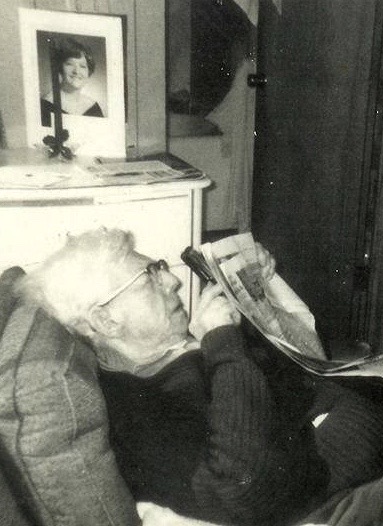
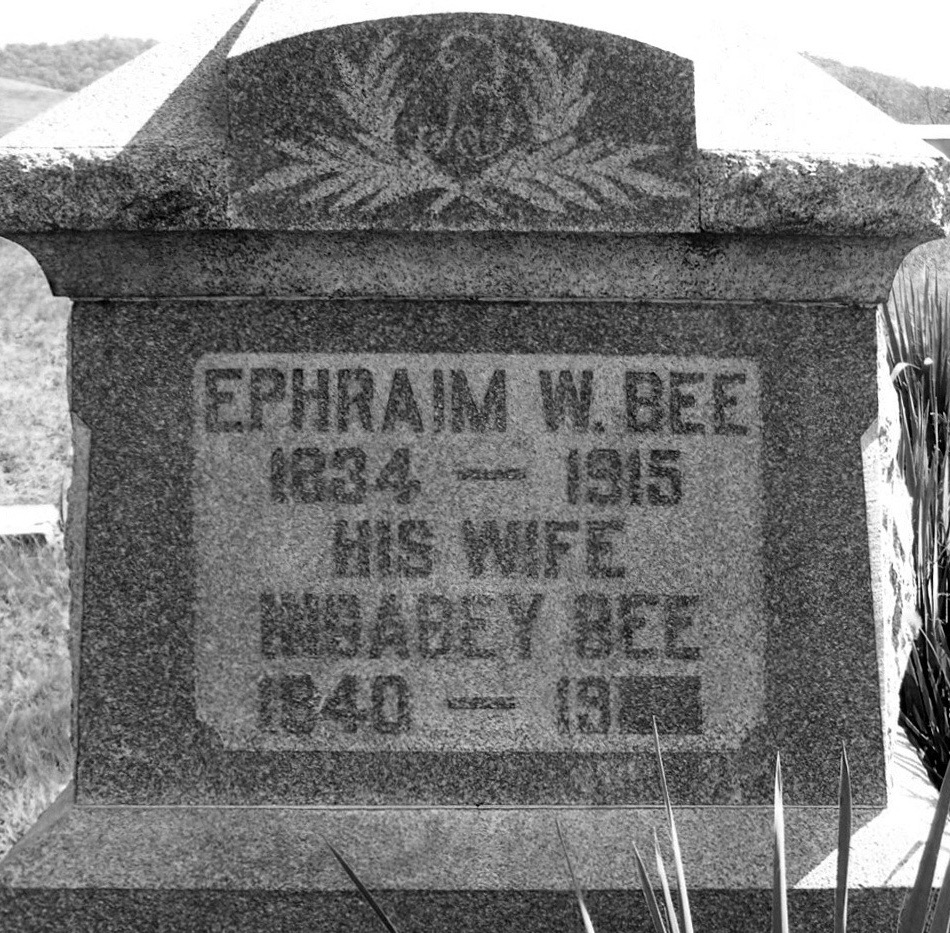
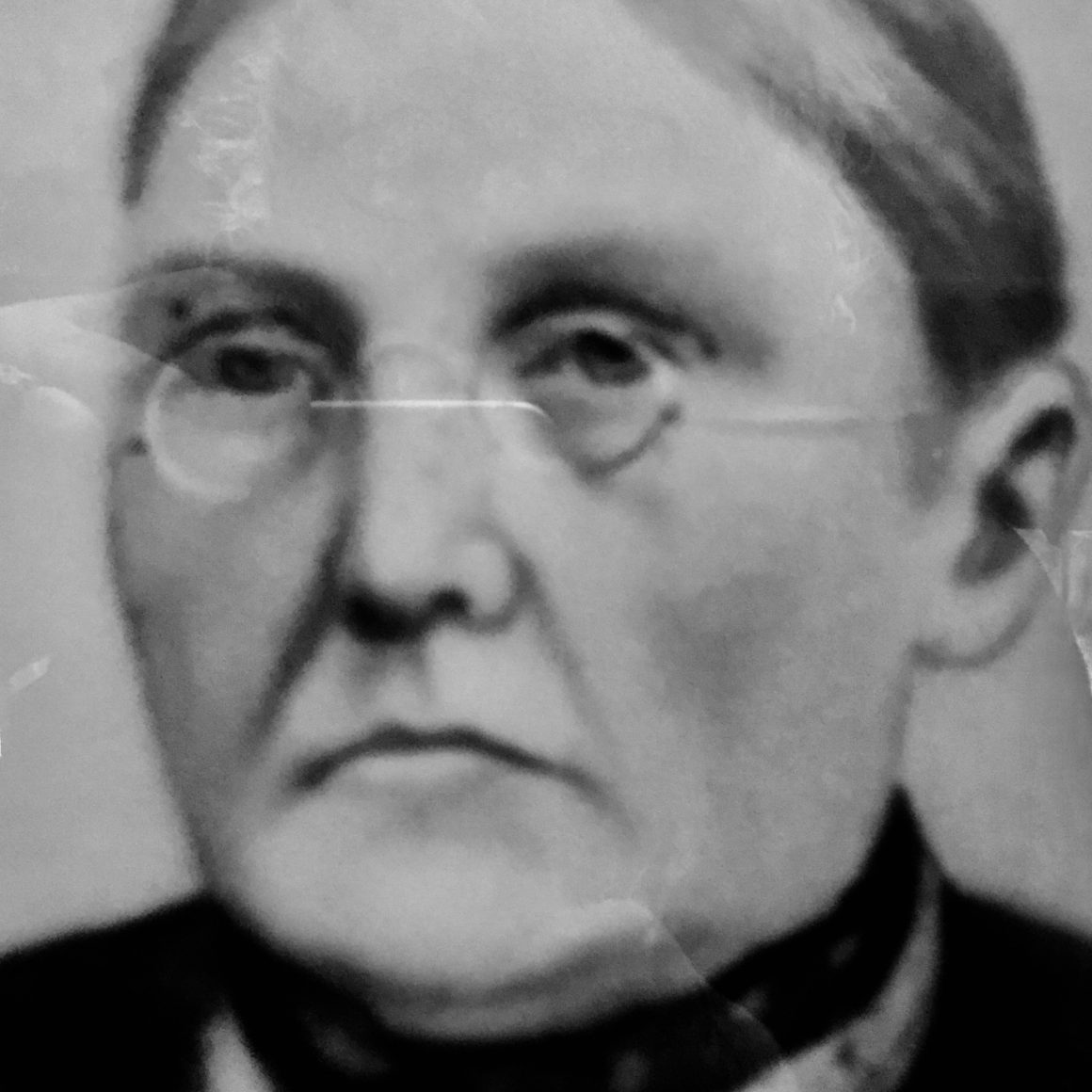
    The other end of the Inn is linked to the second icon of national memory: Abraham Lincoln. It was built the year after Lincoln was assassinated, 1866. It intersects the story of presidents and my presence in the story. Mary Jane Bee, my great, great, grandmother, was a widow with five children to raise after the War. She purchased the Kanawha Hotel for $400 dollars. (Her father-in-law, Ephraim Bee named one of his daughters, West Virginia, to celebrate Lincoln’s declaration of statehood.)

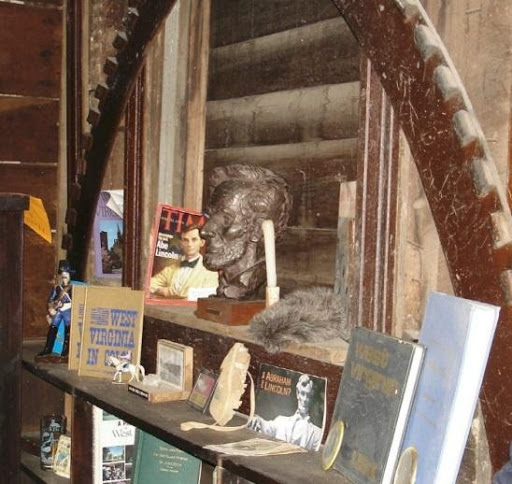
    So what time is it in a structure that began in one state and ends in another? Washington presides at one end, and Lincoln at the other. My mother used this space to teach history like it was a storybook. Any man, woman, or child who came within her reach took a tour of a nation. Copies of the constitution, the Bill of Rights, the Emancipation Proclamation, WV statehood papers, maps, flags, souvenirs from every state and pictures of presidents and their first ladies filled every shelf and corner.

    I’ve packed away most this history, leaving the bust of Lincoln and the picture of George in place. We’re in the now or never repair cycle. It seems fitting that this rescue mission is during Obama’s presidency. “When in the course of human events…” “We, the people”…”Mountaineers are always free.” “With malice toward none, with charity for all…” “Angels of our better nature…”

    What time is it? Presidents’ Day, of course

  • Log Cabin

    Log Cabin

    This is a season of journeys on earth as well as heaven: Gabriel to Mary, Mary to Elizabeth, Mary and Joseph to Bethlehem, shepherds to the manger, wise men from the East, the flight to Egypt.  Journeys require preparation even if it’s only putting on shoes and heading out the door.  You may not know your destination, or have clear directions; you only know you’re on the way.  

    Some journeys require time travel. This is one of those. It started with an old newspaper clipping from the Parkersburg News, Sunday May 26th, 1968.  It was a story about my grandfather, A.E. Hoyt. It was actually more than one story; one can still sense the reporter’s dilemma: what to do with all the stories? The houses he built? The early gas station he opened? His work in Paris during WW I? The stories spill across the page but the one that transports me to another time is his account of Ephraim W. Bee, his great grandfather and the Underground Railroad

    “He ran a tavern for stagecoaches, which was also a stop on the Underground Railroad, and he and my grandfather, Josiah who was wounded at the Battle of Bull Run, dug caves back into the limestone rock of Jacoes’ Hill behind into the tavern.”

    That clipping triggers a process of packing. I’m assembling scraps of history and snippets of story to piece together directions to a place in my past called The Beehive in Doddridge County. Ephraim’s extended family worked at the Inn as a new state is formed that sides with the Union. Ephraim even names one of his daughters, West Virginia, to honor the creation of the new state. My grandfather expands his story.

    “One night, great-grandfather told a colored man who had been helping him, that there were two women and three children in a wagon under some hay and for him to come help them get into the caves. One of the women was his wife and they had a happy reunion there in the limestone cave on Jacoes’ Hill.”

    Josiah and his wife Mary Jane move to Wirt County after the War. When he’s killed in an oil field accident, she purchases an inn, called the Kanawha Hotel. It begins as a three-story log cabin in 1800 and expands to meet the needs of booming early oil field, and all the river commerce that flows through the mountains. Mary Jane is an Innkeeper for 13 years. One of her daughters, Emma, meets and marries a guest at the hotel, and my grandfather’s life story begins.

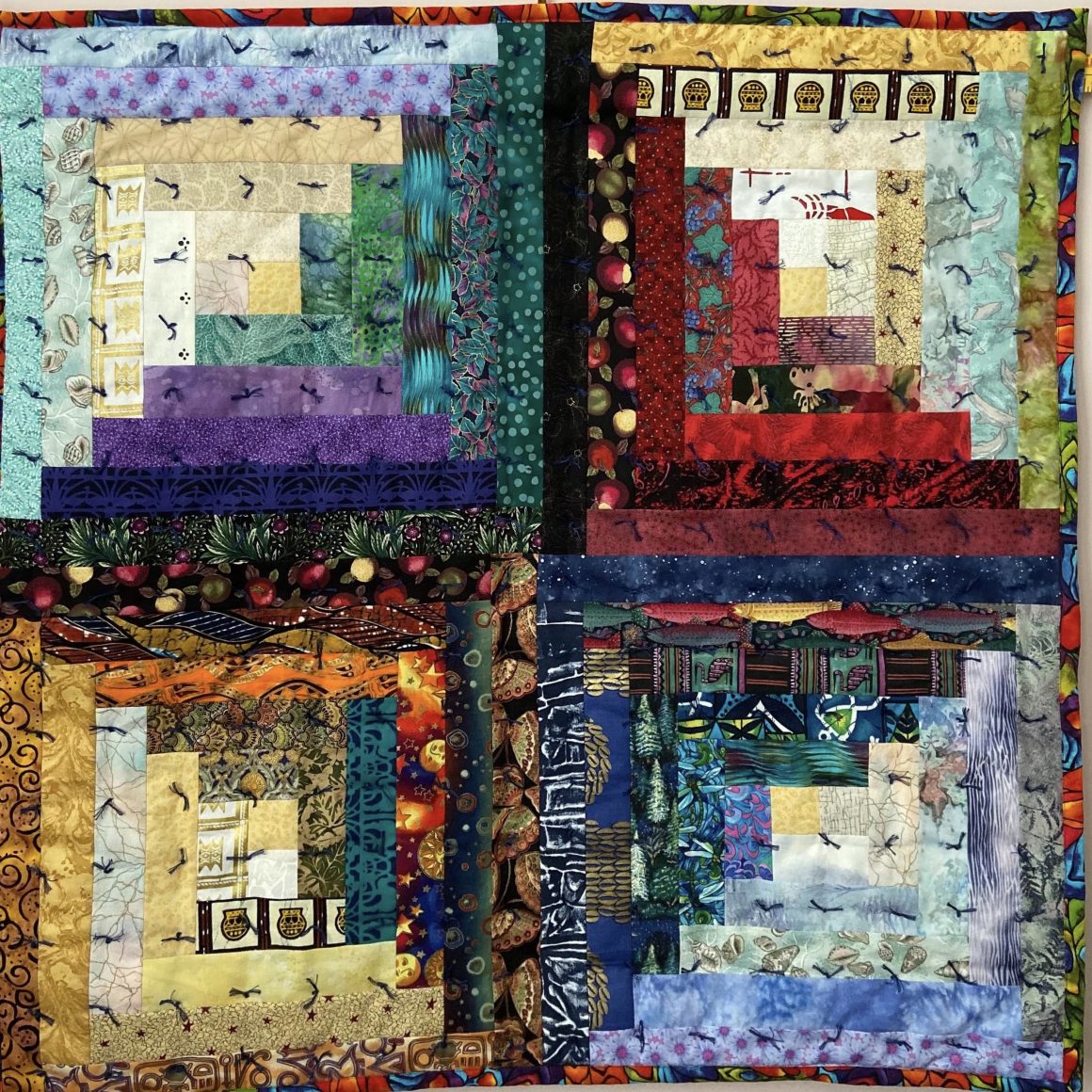
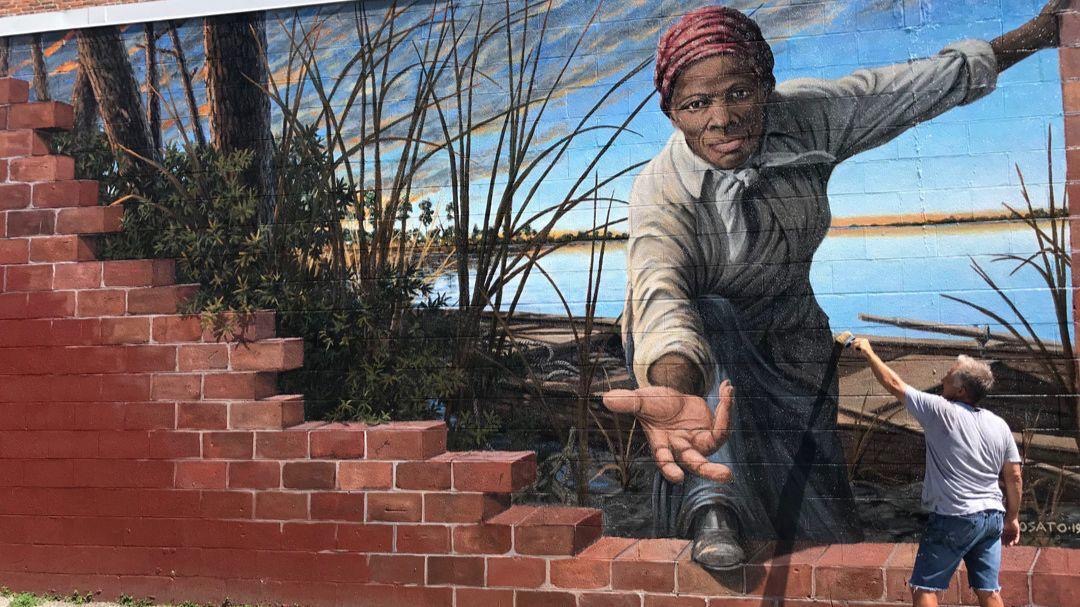
    After her children are grown, the Inn is sold; the family scatters; time passes; stories and structures are forgotten. How those pieces get reassembled and I end up as a keeper of this Inn is another matter. What I want to stitch together now in this season of Advent is a log cabin quilt pattern that holds my grandfather’s story of the Underground Railroad, and one of its conductor’s, the woman named Moses, Harriet Tubman.

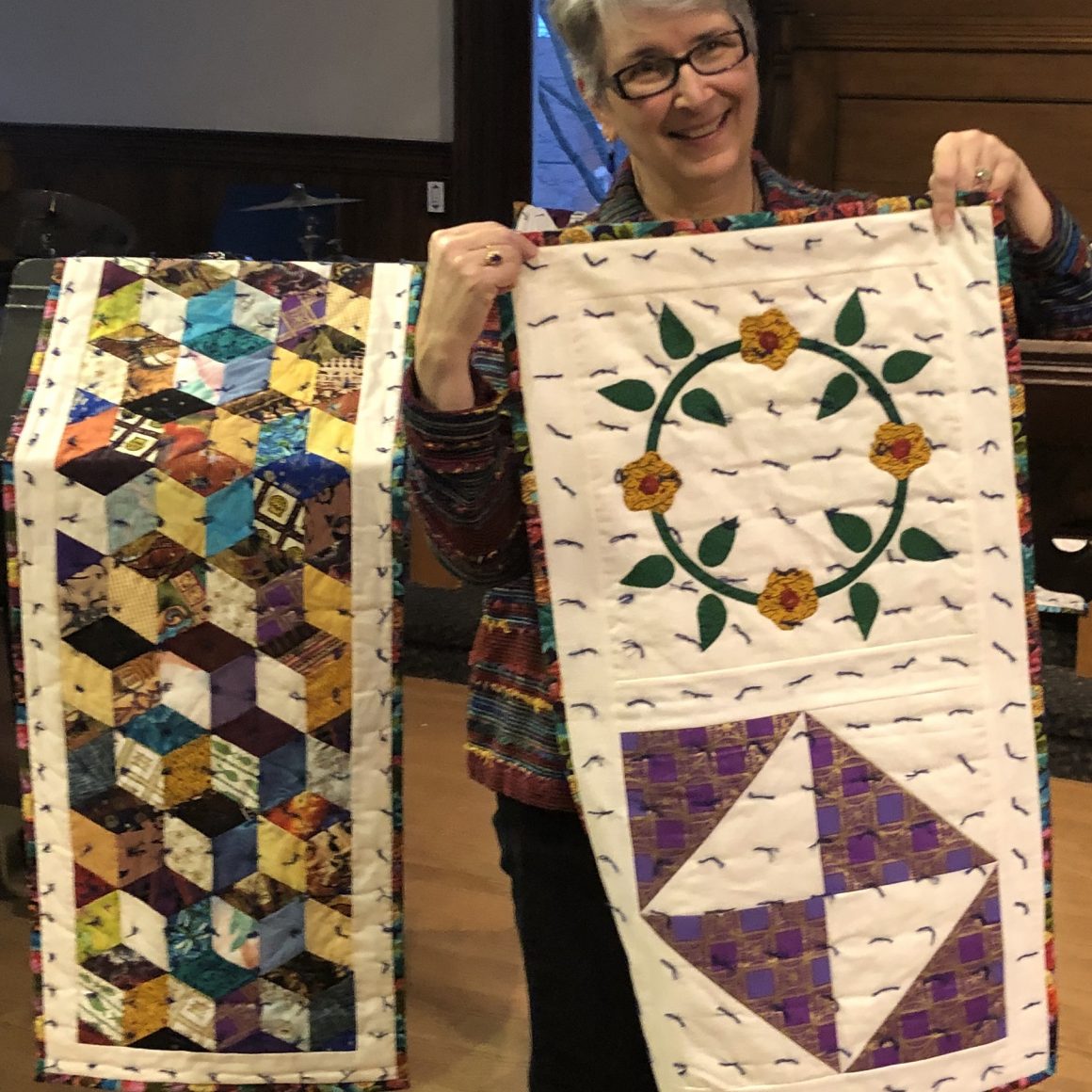
    Advent journeys require courage, and hope, and community. Those who travel need directions, and some used encoded quilts in their journey to freedom. Hidden in Plain View, by Jacqueline Tobin and Raymond Dobard recount a recovered history made by enslaved men and women that were used as signposts as part of the Underground Railroad. Colleen Hintz, a liturgical artist and activist, has recreated these quilts as paraments, and uses them to provide directions, particularly for those who’ve forgotten, or have never been taught the history of slavery in a nation that lost its way.

    It’s easy to lose your way on this hard walk toward freedom for all and not some. I note again the date of the newspaper clipping, 1968, and my grandfather’s description of a “colored man”. I didn’t include that he told the reporter the man’s name was “Sambo”. What the reporter doesn’t include because my grandfather didn’t say is that he’d helped form the first KKK chapter of Parkersburg. That information was edited out of our family story when we were children. It was later redacted to include the rationale that it was just about immigration, and Catholics, as if that made it more moral or forgivable.

    What I want to ask A.E all these years later is why he told the story of his great-grandfather’s Inn and the Underground Railroad in an interview in May 1968? Martin Luther King, Jr. had been assassinated in April. I study his picture on the ancestors’ wall and wonder. Was he trying to cover his tracks or find his way home?

    I need Advent hope and courage for this journey of remembering, repentance, and restitution.  Is it possible to believe that there will be peace from our uncivil wars? Is there any hope one nation under God, and not Caesar? I begin gathering my pieces to quilt together for the journey. The powerful invitation of Harriet painted on a city wall in Washington.   Colleen’s log cabin hanging.

    As Colleen explains, “The log cabin pattern was the safe house. The color yellow in the center was not the norm for log cabin quilts. Red was. Red signified heart and hearth and home. Yellow signified safe beacon.” 

    Safety on the journey to freedom.  Safety for someone, anyone escaping slavery or imprisonment.  Knowing, trusting when they see the yellow in the center that they are welcome.  She reminds me that there are many ways to configure the quilt blocks. She’s chosen to make them into a cross.

    “A stitch in time saves nine.”  May this stitch be in time. A safe house in Almost Heaven. I want these old log walls in the Apple Pi Inn to mean what the log cabin quilt pattern once meant. I need help telling the story to those of us who may have forgotten, those who’ve never heard or any who have lost their way.

  • Holy Days in the Apple Pi Inn: Ghost Stories

    Holy Days in the Apple Pi Inn: Ghost Stories

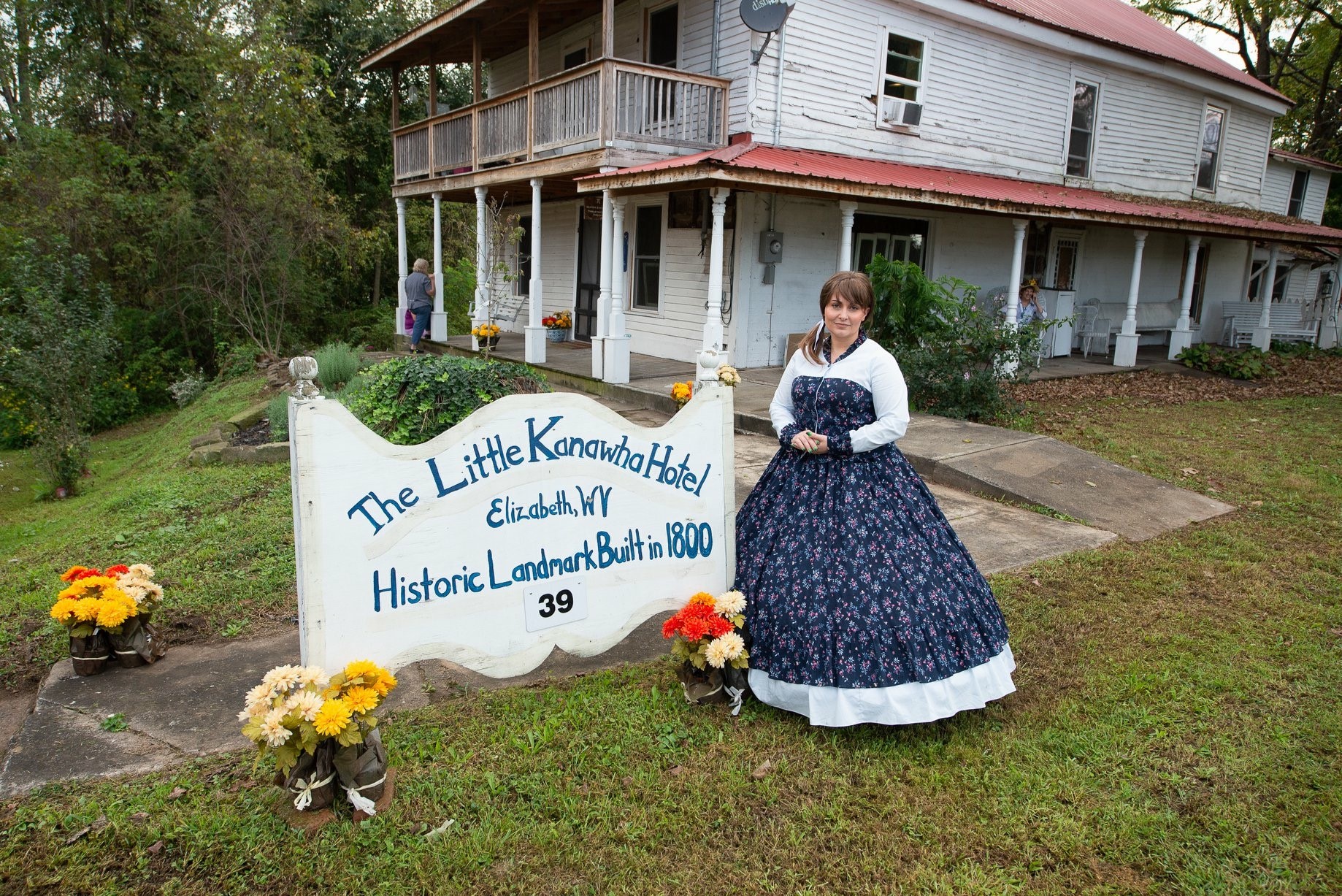
    Some old stories can haunt us for generations. Some old structures can house a ghostly presence evident to some, if not all. There is at least one ghost in the Little Kanawha Hotel.  One of the reasons we renamed it the Apple Pi Inn is to make our resident ghost feel more at home.

    Our ghostly presence seems to be a young woman who’s waiting for someone. She’s has been seen, sensed standing at the head of the stairs or looking out the window in Room 2.  There are those who swear to having heard her softly sighing or singing. I’ve not had the privilege of an introduction, but I love a mystery. 

    There’s also a haunting story that reminds me of our ghost. It’s from our great grandmother, Mary Rebecca, who fell in love with a red-headed soldier who went to fight for the Union and the new state of West Virginia.

    She waited for him for three years, watching every day for news or a letter. She waited, like our sad ghost waits, sometimes singing, often sighing.  After three years without a word, she gave in and agreed to marry the older widower her father preferred. On her wedding day, after the ceremony, her father gave her all the red-headed soldier’s letters that he’d hidden from her for three long years.  

    Our grandmother, Flora, Mary Rebecca’s third daughter, lived the last five years of her 106 years in this old inn. Her mother’s bed now rests in the room where she died.

    Grandma Flora told us the story about her mother, and red-headed soldier that she loved and waited for so faithfully. She said her ma told her that she took the letters that her father had hidden, went to the outhouse to read and cry over the words she’d never received. She then put them in the fireplace and picked up what was left of her heart and went on.

    That’s what so many women had to do, and their stories haunt the places that hold their memories. The Pioneer Day is hosted by the little county seat in hopes that life will go on so that the entire town won’t become a village of ghosts. This year we decided to put our ghost and the Mary Rebecca’s heart-breaking story together. We invited a lively lovely ghost to welcome all visitors to the Inn on Pioneer Day with a song and a story.  It was a haunting kind of hospitality. 

    If you’re in this neck of the woods, come by. She’s waiting for company.