Blog

  • The Lamb

    The longest night is coming and it will be longer than we remember, expect, or imagine.

    Sadness has already overtaken us like unforgiving weather.

    The flow of unwept tears and the deluge of floodwaters frighten us all.

    What hope or peace is possible, given how weary we are, soul and body?

    Pull up your chair to the edge of the chasm and I will tell you a story.


    After the first frost, when the nights are growing longer, Navajo families gather in their hogans and the elders would begin their stories. This is a true story about stories.

    I was there, teaching in the 4 corners area, nearly fifty years ago. The stories told between the first frost and the first thunderstorm are origin stories, stories that help a people remember into the future. Tonight, I tell you one of our stories, we who follow the One whose name is Beloved. It is a story for the long nights as we wait for the rising of the sun.

    It’s not an ideal setting for a Christmas play.  A narrow space between a wall of concrete block and the first row of benches serve as the stage. The lighting in the concrete block chapel is simple: on or off. To get there, I have to walk across the open yard of Moundsville Maximum Security state prison, built in the 1800s to hold 400 men. There are over 800 men incarcerated there now, with little to pass the hard time. Thinking back now, crossing that yard with the prison chaplain, without guards, was a fool’s journey.

    Even the costumes were foolish: a football jersey, burlap and twine, scrappy blankets, prison uniforms worn inside out, upside down. The prison regulations prevent me from bringing in “good” costumes.  The cast’s uneven, to say the least. One actor claims a masters.  One cannot read, and has to learn his part, line by line, recited by a buddy two cells down. Less than ideal, more eloquent than words could convey, this is real life, hard time drama.

    A blanket with holes is a cause for complaint. A ragged shepherd’s cloak, however, is a good thing. A prison yard is a desolate place, spare of grass, and grace.  A prison yard is an ideal Bethlehem scene with greying walls of stone, hard ground, and the smell of occupation. No need to imagine a cast of Roman guards.  They remain in place on the walls, keeping watch over their flock by day and by night.

    “In the beginning was the Word . .,” and that’s the problem.  I can’t find a Christmas script that fit.  What works in a Hallmark Christmas Eve does not work here.  A maximum-security prison is world on its own, needing a language as brutal and sophisticated as its own life, or, as one of the guards explains it, “My perception is your reality.” or as the sign on the exit door reads “This is prison, not Burger King. We do not do things your way.”

    From an assignment in sophomore English I recover “The Second Shepherd’s Play”, a medieval genre named, aptly enough, a mystery play.  Composed in a time when shepherds stood one step above slavery and one foot outside the law, it’s got a familiar ring to men who recite a number before they say their name.  The rhymed couplets are a bit much, though the yard rap works its own charm on the lines.  We decide to call our version, The Second to None Shepherds’ Play.

    I tell them the story.  They listen.  I tell it again. They question, turn it over, check its strength, then, they tell me what they know.  I listen.  Word by word we reconstruct this “make believe” so it belongs to their rough place, their hard time.

    One prisoner is so taken by this “make believe” that he insists on changing the end of the story.   He plays the thief who steals the lamb, disguising himself as a woman in labor.  His disguise works until the shepherds recognize the cry of the lamb, hidden under his makeshift skirt/shirt. Only the arrival of a very pregnant Mary and Joseph saves him from hanging.

    In the original version, the thief disappears as soon as he’s set free, leaving the shepherds to honor the new-born messiah. This particular prisoner insists on a rewrite.  He wants to return the lamb himself to honor the child.  He demands to be allowed to kneel beside the shepherds, not run away.  He refuses to be left “out in the cold’.  When I press for a reason, he says. “This king, this kid doesn’t mind a thief hangin’ round.”

    We need a prop, a lamb small enough to hide under a shirt, yet big enough to resemble an animal.  The theft of this creation is the heart of the play.  I give the assignment like a mission impossible.  Required: one lamb, no questions asked, no prisoners taken.

    It’s ready for inspection the following week. The lead shepherd lays it on the table in the visitation room for inspection and waits for a verdict.  I’m properly amazed.  The lamb consists of: a cardboard box covered with cotton balls (medical supplies?)  ears and tail from a pillow case; a head made from a navy-blue stocking cap (the donor risked temperatures below freezing every day, all day in the yard) and four white socks for legs.

    The socks catch my attention.  They’re brand new.  Prisoners are issued new socks twice a year.  Four prisoners, non-performers, had each donated one sock, so that no one would be short both socks of their pair.

    Every time I cross the yard, I look at the clusters of men in the yard and wonder which four wore one “holy” sock.   The men name the prop, “Chops” and made jokes about its pieced-together appearance.  As weeks of rehearsal pass, I notice they each take turns holding the lamb while others rehearse.  These are grown men, guilty of terrible crimes.  They had stories I don’t want to know.  But the telltale action gives them away, they’re children again, sitting alone, rocking and hugging a long-lost toy.

    Speaking of children and Christmas no child is ever permitted in this violent space.  No doll is allowed through these gates of hell. What do we do about the baby Jesus?

    We practice with an empty manger (cardboard box, shoe-polished sides), but the absence oppresses.  I try to encourage them to imagine. After all, what color skin should Jesus have? The absence of the Beloved Child seems to make the story into a lie, a collapse of “make believe” to reveal there is no Emmanuel, no God with us.

    The answer to our theodicy problem is off the wall.  In the last rehearsal “Mary” looks at the lamb held in the arms of a proudly penitent thief and walks into the chaplain’s office. “He/She” reenters the chapel with something wrapped in a towel. The rehearsal takes on the tension of a “mysterium”, a sacrament.  When the time come, Mary lifts the cloth. A crucifix is cradled in the manger. No one says a word. For the longest time, no one says a thing. then, the men say they’re done rehearsing.

    That night, I wonder how the story will end as we, the cast, the chaplain, and I walk across the open yard past 800 men. Only 40 will be allowed into the small chapel, while others pressed around the windows to look in. As the climax of this curious Christmas story approaches, I study the faces of the congregation. The blanket is lifted, that awful, awe-full power of the story of the lamb of God is revealed in a landscape of trauma, and violence, and loss.   There is silence, and then the soloist begins to sing. It’s not the song we practiced. It’s not Silent Night, but this “Through many dangers, toils and snares, I have already come. T’is grace that brought me safe thus far, and grace will lead me home, “

    “Yet any who did accept the Word, who believed in that Name, were empowered to become children of God, children born not of natural descent, nor urge of flesh nor human will, but born of God. And the Word became flesh and stayed for a little while among us…John 1:12-13
  • Matters of Mothering

    Dreaming in Delaware: Matters of Mothering
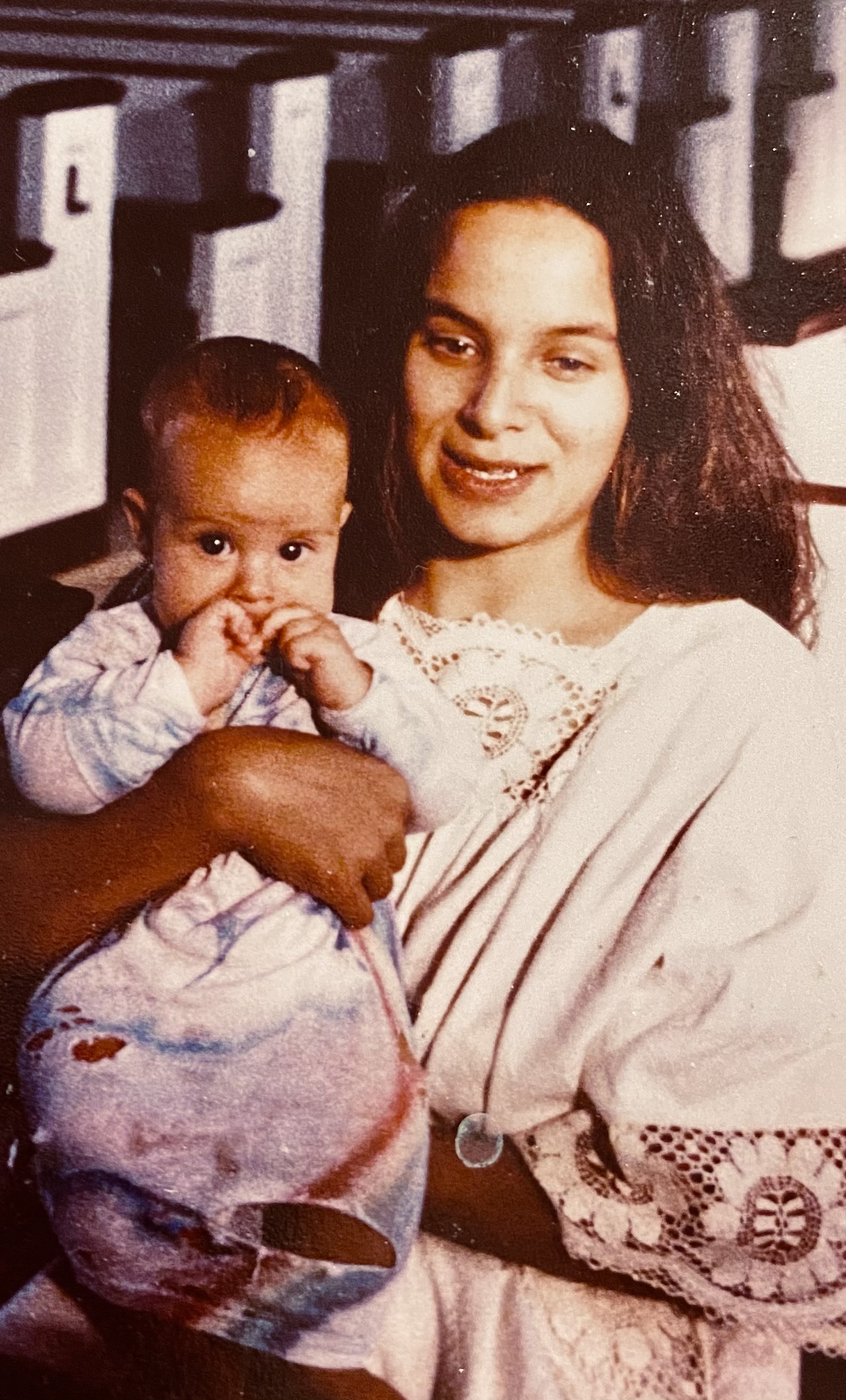
    We’ve known for almost 9 months but I’m still not ready.  I’d packed, finished my work on the staff at Duke Chapel, gotten ordained and arrive at our first pastoral appointment in Almost Heaven. I’m eight months pregnant. It made sense to us; Bill will write his doctoral thesis, and help with child care as I serve as an associate pastor, charged with primary care of the young, the old, and whatever other comes my way.
    It makes little to nonsense to the congregation. A member of the PPR puts it plain: “You’re either going to be a good pastor and a poor mother, or a good mother and a poor pastor.”
    Harry Light, the new senior pastor doesn’t agree, or this story would have ended differently. I also discover the blessed truth of the connection in Donna Light, clergy wife, school nurse, mother of five. She knows what good mothering means.
    We have a cherry wood bed ready for our new-born, handed down from my mother’s mother’s mother, Mary Rebecca Vaughan. But there’s little else. Parsonages don’t normally provide children’s furniture, and there are never enough closets.
    Donna advises me to tackle itineracy head on. Moving is going to be in our DNA so I buy an old steamer trunk and she and her daughter Holly decorate it for Daniel Marney Elkins. It will be big enough to store his clothes, his blankets, and his toys. There’s even enough space for him to crawl into and play hide and seek.
    If memory serves, Sarah Carr, Deaconess, Church and Community Miracle Worker, provides the muse: The Runaway Bunny. I love seeing Margaret Wise Brown’s book transform an old steamer trunk into something else, even though I have mixed feelings about its theme. You’d have to know my mother to know what I mean.
    In the end, the mothering offered by others, some men and some women, changes the sense of my pastoral scene. Parenting and pastoring are not either/or. Good enough counts on both counts. And over the years I resolve my hermeneutic suspicion of the home bunny story as the plain truth of Psalm 139 settles into my aging bones:
    “Where could I run from your Spirit?
    Where could I flee from your presence?
    If I ascend to heaven, you are there!
    If I make my bed in Death, you are there!
    If I take the wings of the morning
    and dwell in the uttermost parts of the sea,
    even there your hand will lead me,
    and your right hand hold me fast.”
    Even here, even now, when I awake,
    you are still with me and I am still with you
  • Bearing Up

    Dreaming in Delaware: Bearing up
    Low Sunday may be an out dated practice of Christians thanks to the impact of the pandemic. Churches that cautiously opened their doors on Easter to celebrate the rolling away of the stone may see their attendance go up. Absence may make the heart grow fonder, even when it’s the Sunday after the resurrection and the choir is still RIP.
    I appreciate the old tradition of the Risus paschalis – the Easter laugh,” as the early theologians such as John Chrysostom described it. God gets the best of the devil through the incarnation and ruins death’s punch line by raising Jesus from the dead. We observed Holy Hilarity Sunday in several churches, and were blessed with some amazing stand-up comedians, usually grandmothers.
    My one contribution came from my sister,  Wilson Cloudchamber. It’s a show and tell kind of humor. You show them the carved figurine and ask them what hymn goes with it. The blank look never fails. Even with a few hints like it’s a bear, they’re still stuck. After I hum a few bars the light goes on for those who know the tune.

    So, on this God knows I need a little humor Sunday, I offer you, “Gladly, the cross-eyed bear”. May it be so.

  • Crossings

    Of the many objects I’ve been drawn to over a lifetime, a cross is not one. I’ve sung songs about, admired the art of, told stories about, folded palms to make, and prayed in the presence of, but I’ve not collected crosses. I gift them, handing them on if one presented itself to my keeping.

    I’ve not explored my psychology in any depth, although I’ve devoted a goodly amount of time to cross theologies. A cross, with body and without, feels too awe full and awful, too numinous for close proximity.

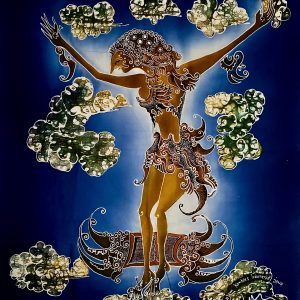
    The events of the last two weeks prompted a search for this tangible symbol of human violence and paradoxically holy resistance and resurrection. It was a gift too precious to give away, a cloth crucifixion crafted by an artist in Indonesia, hand delivered by a Drew alumni, missionary, and friend, Ron Weinbaum.

    Packed among my vestments, the gift rests, and I unfold it as gently as if, as it does hold a beloved body. I hear in the background the sound of women, reporting the news of the violent death of women. There were more than three crosses in Jerusalem. The cross was the Roman Empire’s invention for crowd control. It took time. It was public assault as well as personal torture. An assault weapon does not take three hours to kill; 3 shots per second, yet the loved ones of those lost hang suspended in public agony for years.

    I smooth the royal blue of the sky and sea, gently touch the green islands beneath the wounded feet. There is no cross; the body is suspended by nails against the deep blue of sky and clouds of island green. I know that I don’t know what it all means, just as I don’t know enough of what I should know about those Asian American women whose lives were so violently ended. My vision has been blurred by staring too long into a Western sun.

    What I know is that the cloth is a Javanese Batik, created by Pendetta Aris Kristian Widodo, using a technique that’s over 1,000 years old. Aris creates the concept and lays out the design.  A team of Muslim Javanese artisans completes the work. This image of treeless crucifixion was made in the teak forest outside of Yogyakarta near the famous Borobudur Buddhist Temple. What I do know is the artist has reformed my vision of the cross with this Javanese gospel of dying yet rising life.

    Now hung, this Indonesian crucifixion covers the door that leads to the world outside. How long? I do not know. Perhaps she will tell me. I touch her hand, and pray, “Christe eleison. Mercy, have mercy.”

    See: http://www.facebook.com/ron.weinbaum.9/videos/10156562517855787


  • Only What’s Possible

    Dreaming in Delaware: Only What’s Possible.
    Dust and ashes have been traced into my forehead and my fingertips since seminary days at Duke Chapel. Skin-deep signs of repentance and mortality utter what words can’t express, yet I find the sounds of a poet are inscribed in my memory’s marrow:
    Life is real! Life is earnest!
    And the grave is not its goal;
    Dust thou art, to dust returnest,
    Was not spoken of the soul.”
    We hear our grandma reciting this as she works in the kitchen or the yard. I discover the source of “A Psalm of Life” in the 6th grade, but by then, Longfellow’s stanza shaped my theology of Lent.
    It is a season of reflection, a realization of life marked by mortality, but not defeated by despair or death. We are signed with the ashes of a cross, dusted with our own suffering, but…but…and here’s where the mystery of sacrament shines through the smudging: we are buried with Christ in baptism and we rise to new life.
    Water and the Spirit. Tears mixed with the Oil of Gladness. Ashes of Palms and Psalms of Life. This is the holy stuff of our Lenten preparation. We’re keeping it real. Reality is human mortality. Bill can’t manage stairs any longer. That means both full baths are out of reach. A newly recovered old doorway makes the half-bath sink our only option for getting spruced up.
    Since I was raised with the recognition that indoor plumbing isn’t in the Bill of Rights, I have “possibility skills”. What we need, we have: A Possible Bath.
    It requires a basin, or an enamel pan, warm water, hand towels, and soap you can trust.
    The process is simple. Warm water in basin/pan. Apply soap. First, you wash down as far as possible. Next, up as far as possible.
    Finally, you wash “possible”.
    You can do it yourself, but it’s certainly better, not worse, to share these possibilities. Richer or poorer, in sickness and in health, we are cleansed in life-giving water, and blessed with the oil of gladness. We can’t wash away our mortality, or deny its reality but we can celebrate that its dusty end is not our goal.
    Eternity is God’s sense of what’s humanly possible

  • All That is Possible

    Dust and ashes have been traced into my forehead and my fingertips since seminary days at Duke Chapel. Skin-deep signs of repentance and mortality utter what words can’t express yet I find the sounds of a poet are inscribed in my memory’s marrow.
    “Life is real! Life is earnest!
    And the grave is not its goal;
    Dust thou art, to dust returnest,
    Was not spoken of the soul.”
    We hear our grandma reciting this as she works in the kitchen or the yard. I discover the source of “A Psalm of Life” in the 6th grade, but by then, this one stanza of Longfellow shapes my theology of Lent. It is a season of reflection, a realization of life marked by mortality, but not defeated by despair or death. We are signed with the ashes of a cross, dusted with our own suffering, but…but…and here’s where the mystery of sacrament shines through the smudging: we are buried with Christ in baptism and we rise to new life.
    Water and the Spirit. Tears mixed with the Oil of Gladness. Ashes of Palms and Psalms of Life. This is the holy stuff of our Lenten preparation. We’re keeping it real. Reality is human mortality. Bill can’t manage stairs any longer. That means both full baths are out of reach. A newly recovered old doorway makes the half-bath sink our only option for getting spruced up.
    Since I was raised with the recognition that indoor plumbing isn’t in the Bill of Rights, I have possibility skills. What we need, we have: A Possible Bath. It requires a basin, or an enamel pan, warm water, hand towels, and soap you can trust.
    The process is simple. Water in basin/pan. Soap and water. First, you wash down as far as possible. Next, up as far as possible. Finally, you wash “possible”.
    You can do it yourself. It’s possible, but it’s certainly better, not worse, to share these possibilities. Richer or poorer, in sickness and in health, we are cleansed in life-giving water, and blessed with the oil of gladness. We can’t wash away our mortality, or deny its reality but we can celebrate that its dusty end is not our goal. Eternity is God’s sense of what’s humanly possible.

  • Cabin Fever

        Dreaming in Delaware: Cabin Fever
    It’s as contagious as a virus. In some cases, you can see the scratch marks where those who suffer have tried to climb the walls. In my case, it’s a compulsion to make “to do” lists. I have the 4 am lists, written in the near dark, and impossible to read come morning. There’s the back-of-the-bill-envelop collection and there’s the mid-afternoon mental list I draw up so I don’t succumb to a nap. I avoid the Reminders app on my phone, which seems apt since it’s Nation Data Privacy Day.
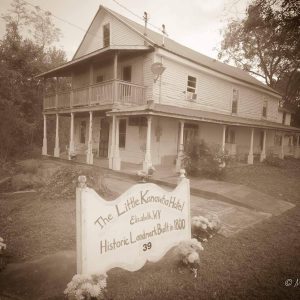
    To bring the fever down, I collect my texts of tasks and check off the ones I’ve completed. I unearth an old spiral notebook that has to-dos dating back to 1995. The educational ones are history; the church lists obscure; the repair list for the old Inn in WV catches my attention, one item in particular. In block letters, all caps, I’ve written: FIRM THE FOUNDATION!!
    That’s a tough task. That “to do” took us over 20 years, and my father had worked on it for ten years before we tried our hand at it. The corner I-beam of the old log cabin closest to the river had rotted out. You could feel the bounce in the floor boards, and that bounce could bring the whole structure down.
    Concrete was our father’s solution to firming foundations of all kinds, but by the time the Inn passed into my “to do” list, the holding wall had tipped sideways, exposing the 20” wide hand carved beams to further decay. There’s no future when the foundation crumbles. How to build back better is a challenge. “Why even try?” is a question even more important.
    The words of a young poet, Hallie Knight, are like a spring tonic for me as she urges us to recognize the depth of decay and the work still needed “To Rebuild”.
    “The windows break, one by one,
    Under the weight of wrongs, the structure strains,
    Until one day fire catches,
    And only the foundation of good intentions remains.”
    Any good intention needs know-how, and in this case, an Amish carpenter and a home-grown jack of all trades, figure out how to firm the old Inn’s foundation. The rot and the worn-out has to be carefully removed. Not every tradition, preserved like concrete, not every custom set in stone, not every I-beam of our structures should be saved.
    This is not a solitary “to do” list. Repairing the support structures of democracy be it the Constitution ratified in 1787 or an old Inn started in 1800 will be:
    “A job led by all, not by one,
    We work long days turn long nights.
    The creation of our hands
    Proving more than surface level acknowledgment of rights.”
    The rot is removed, the debris cleared away. Boards that are on the level replace all that was slip-sliding away. The good news is: the rest of the foundation is firm. The good news is: the original I-beams will bear the weight of a beloved community for years to come. The good news, as this high school poet reminds us:
    “The past is not buried
    But underlies
    What we have transformed
    Before our eyes.”
    I feel better already.
  • Feeling the Burns

    Feeling the Burns

    This is the season my Scottish genes begin to sound their pipes. Our Murray ancestors hang on the walls of memory and hallways in the old Inn. The Murray clan history, traced by our Uncle Bill, provides the names of those who left bonnie Scotland to arrive in Almost Heaven.

    The name Murray is believed to derive from Gaelic word “moireabh” meaning seaward or seaboard. The wistful goodbye of a Scotsman framed in enamel preserves the economic desperation of men who went to sea and war because they were landless.

    We can claim linage back to a castle with a private army, and John Murray, the first Duke of Atholl. but I learned my lesson about when to tell tales. Daniel was nearly 4 when I introduced him to the Scottish side of the family tree. I thought he’d appreciate hearing about the fierce Scots who fought in WWI, and their nickname and the Duke of Atholl and Blair castle.

    I forgot that the “th” sound takes time to develop so it was a shock to hear him loudly announce to the other children in Sunday School that he had a Duke of Asshole and Ladies of Hell in his family.

    The family storyline is filled with accounts of armed struggle and civil war, brothers against brothers, fathers against sons. There’s even a contest over the Murray motto: a mermaid holding a mirror and comb with the words “Tout Prest”, (Quite Ready), or a bare-chested man holding a key and a dagger under the words “Furth Fortune and Fill the Fetters”.

    Not a promising legacy for peace as we face a new year. Even the understated tone of R. Chambers, the Scot Murray historian (1841) points out the problem.  “Sir Alexander Murray of Stanhope was one of those men, who, of some talent and insight, are so little under the government of human prudence and good temper that they prove rather a trouble than a benefit to their fellow creatures.”

    I don’t need to read old histories to see what happens when we are “so little under the government of human prudence and good temper”. It will take more than Hogmanay cakes to sweeten this transition of power. I find comfort in the Robert Burns song we sing as one year ends and another begins.

    The ‘auld lang syne’ roughly translates as ‘for old times’ sake’, and the song is about preserving friendship as we look back over the events of a hard year and ahead to a restoration of peace.

    Should auld acquaintance be forgot,
    And never brought to mind?
    Should auld acquaintance be forgot,
    And auld lang syne.

    Chorus:
    For auld lang syne, my jo, (dear)
    For auld lang syne,
    We’ll tak a cup o’ kindness yet,
    For auld lang syne,

    We twa hae paidl’d i’ the burn,
    Frae mornin’ sun till dine;
    But seas between us braid hae roar’d
    Sin auld lang syne.

    And there’s a hand, my trusty fiere!
    And gie’s a hand o’ thine!
    And we’ll tak a right guid willy waught,
    For auld lang syne.

    It helps to know a “right guid willy waught” means to drink deeply of the cup of kindness and loyalty. So, this year, come midnight, we’ll recover the Scottish tradition of standing in a circle holding hands. At the final verse (‘And there’s a hand, my trusty friend’) we’ll cross our arms so that our left hand holds the hand of the person on the right, and our right hand holds the person’s hand on our left as we sing”

    “For auld lang syne, my dears. For auld lang syne.”

  • Simeon

    Simeon


    Simeon

    The congregation is seated. An old man walks slowly, painfully, up the aisle toward the altar. He pauses frequently to search the faces of the congregation. When he reaches the front, he turns to the altar and begins:

    “Hear, O Israel, the Lord your God is One. And you shall love the Lord your God with all your heart and soul and mind and strength. Hear, O Israel, the Lord your God is One!”

    He turns and searches the faces again and then sits down

    Today. Perhaps, today. Let the morning begin!

    Simeon is here with old expectations in place.

    See, my feet have grooved the stone. My hands oil the wood.

    A hundred thousand faces have been searched and passed over.

    No scholar or soldier, no prince, priest or thief matches the name.

    I hold the word “messiah” like an empty victory wreath,

    looking for the runner with salvation in his stride.

    Zealots crowd the streets, claim the title, dream of crowns.

    The market place mutters under its breath,

    naming one son and then another for the throne.

    But here, here in the shadow of the Holy,

    I wait for the King.

    He winces, leans over, then straightens.


    The shadow of the Holy. My shadow of death.

    I cling with fierce hands to the edge of my life.

    You have promised, Holy One!

    Do not forget me or deny the one prayer I possess.

    With these eyes I will see your salvation.

    With these hands I will bless the one who comes in your name.


    Simeon. The voice of the tempter mixes with your prayer.

    I see you! You in the shadows! You whisper my doubts.


    “Why you among many?

    There have been others who hungered for sight of the Word.

    Does your faith surpass Isaiah’s light?

    Did Jeremiah deserve his lonely watch in the night?

    Why you? Why now?

    Amos died thirsty, calling for the waters of justice.

    Hosea’s heart was broken as Israel died in Assyria’s arms.”


    He bends over suddenly. then slowly straightens.


    Bless the pain.

    Sharp truth…purges doubt.

    One memory hangs behind each breath.

    Crucifying weight.

    One son the Lord gave me.

    One son they took away.


    He stands.

    With these hands in this place

    I once offered him up to the glory of God.

    With these hands. these sad hands,

    I lifted him down from a torturer’s tree.


    He dreamed of Jerusalem’s freedom.

    But his vision turned violent, and broke his life on its edge.

    Adonai!

    I nail you again to your promise.

    You emptied my heart, stripped clean my hands.

    You let them take my son. Send now your own!


    Remember your promise!

    No high priest will say it, no teacher, no scribe.

    I, Simeon, will see and name the holy one of God.

    I will see! You have promised.

    I will touch your salvation, and cradle your name.


    He sits, exhausted.

    Sit down, you old fool.

    God is not deaf.

    A whisper will serve, even silence will do.

    Death, seal my eyes open,

    strengthen these hands that reach for God’s son!

    I will see our salvation

    I will hold freedom in these hands.


    He turns his face, closes his eyes. A young gift with a small child enters with an older man behind her. The man speaks to her softly and then moves ahead of her, coming toward the altar.

    Simeon opens his eyes, sees him, looks away, then looks again.


    Almost…yet…no.  I hear the name stir but it won’t come to birth.


    Simeon rises as Joseph approaches. Simeon goes to him and touches his face.


    A good man, with faith carved in your face, trust planed in your eyes.

    Rooted in the House of Jesse, yet lacking…

    Why have you come?

    What are you seeking? An answer? A sign?


    Joseph:” We have a son. The law requires a first-born…”


    Simeon looks down the aisle.

    Where? Let me see!


    Mary comes toward the altar carrying Jesus. Simeon goes to meet her and lifts the child from her arms.


    How could salvation come in such a small way?

    Yes. I remember. A little child shall lead them

     He turns toward the altar, holding up the baby.


    “Lord, let now your servant depart in peace, according to your Word;

    for my eyes have seen your salvation which you have prepared in the presence of all people,

    a light for revelation to the Gentiles, and for glory to your people Israel.”


    He turns toward the people.

    Israel, O Israel, the Holy One places Emmanuel in our hands.

    He will lift the broken-hearted, and strengthen the weak.

    But those of peace less power will stumble and fall against his name.

    Hear, O Israel, the Lord your God, has come.


    He hands the baby back to Mary.

    Bind him close. Love him strong.

    You will not keep him long.

    The sword that pierces him first passes through you.


    He touches Joseph’s shoulder.

    Teach him well.

    What he learns from you, others will name when they pray.


    He gestures for them to leave and sits again.


    Abba.

    Abba.


    Simeon bows his head and leans back in his seat, whispering:


    Amen.

    Heather Murray Elkins, copyrightÓ August 1980. All rights reserved.


  • Guided by the Spirit

    Guided by the Spirit

    Guided by the Spirit
    One gift of this Sunday’s reading is the assurance that there’s a point to patience. Simeon waits and waits and waits and then salvation arrives, a vulnerable Child.
    Simeon’s lyric benediction is now embedded in daily prayer services, but early in my ministry I was drawn to the sharp-edged prose he delivers  to Mary after the praise.
    “This child is destined for the falling and the rising of many in Israel, and to be a sign that will be opposed so that the inner thoughts of many will be revealed—“
    Preaching the prophets can be like swallowing a two-edged sword. The pastoral temptation to “First-Person-It” sets a congregation on guard. I decide to borrow a medieval tradition of mystery plays to present a series of monologues, Amos, Hosea, the Isaiahs, Jeremiah, and last but not the least, Simeon.
    Hebrew scripture was rarely invoked in powerful and poetic ways in my experience of traditional, primarily white, congregations. As a young assistant minister, and the church’s first woman pastor, I decide we need a gifted actor, accustomed to the cadences of Shakespeare.
    God provides. Sandra Presar, speech teacher and member of First Church is married to the head of the theatre department at WV Wesleyan. Chuck Presar is pressed into a prophetic role.
    His deep cadences of justice and mercy rise in the sanctuaries of the Methodists, Baptist, Presbyterian and finally the chapel at Wesleyan.  It’s a witness prepared in the presence of all peoples.
    God willing, it’s also a light for revelation as well as a cautionary “sign that will be opposed so that the inner thoughts of many will be revealed—“
    Wait for it.