Category: Dreaming in Delaware

  • Wearing Purple

    Wearing Purple


    The hearse I’m riding in is a classic model: long, low to the ground, gunmetal grey. It has seat belts but the funeral director didn’t buckle up, so I assume we won’t need them.  We’re traveling about 10 miles an hour on an upgraded cow path, a gravel trail that follows the curve of a West Virginia hill. The grave site is at the top of a hill overlooking a large pond with winter geese and a milk carton camera-ready herd of grazing cows. We talk as he steers around the ruts that are softening in the mild February sunlight.  He appreciates the appeal of the old-fashioned term: “undertaker”, although he prefers “Director”.  I say I understand but “undertaker” is a word that suits his profession and well as my own: to undertake good goodbyes.


    This is a young man who understands how to turn endings into beginnings. He inherited his father’s farm and leased his legacy for a different kind of crop.  Turning a pasture into a graveyard is a practice that dates back to the Civil War. Churchyards couldn’t hold all the dead, or the trauma from the bloody loss of so many young men.  Idyllic pastoral scenes straight out of Psalm 23 were planted in villages and cities, a landscape of loss.  Not everyone came equipped with cows, of course.  It’s a view I can appreciate, and wonder if Martha, the guest of honor at this parting ritual, would have appreciated the irony of holy cows and country roads at her end.


    I’m wearing a purple dress under the severely gray overcoat. It felt like a necessary gamble, given what “they” say about purple. A few may remember the poem, “When I am old, I will wear purple.” Far more are suspicious of my choice of clerical attire, being supporters of the ban of a book, The Color Purple. The ban started in 1984 and continues into the present which is definitely not excepted or accepted.


    When I come into the funeral home and see the photo of Martha in her Geneva gown and her purple stole, I smile and hang up my coat with sense of conviction.  I wear purple for Martha today because it means more than I know or need to say. Purple: it’s Lent. Purple connects some of the women in the room to the rite of ordination, to be a woman of the cloth. Purple connects Martha to Lydia, a fashion designer, an early convert to Christ, a founder of mission and churches, a woman of means.


    It is also a dangerous color. Jerry Falwell has just denounced Tinky Winky, the purple baby-show character for being gay. that wears purple. You can literally hear the unspoken as I greet my clergy colleagues and members of Martha’s family. “Does this mean she’s a lesbian? Does this mean she thinks lesbians should be ordained? Was Martha a lesbian?


    The answers to the questions are: No. Yes. I don’t know. She never said. No one ever said. I assume they assume I know. Not being told gives me the ability to be dove-open and snake-smart. I mix it up. Purple is the color of lent, of Lydia, of bishops, of lesbians, of lesbian bishops, and the color of atonement. There’s the purple cloak of Pilot, the color of advent and expectation, the purple prose for when I am old. I will wear purple then. I wear purple now.


    I am sure the community of friends will try to decide what it meant; the community of family will not mention it at all, but nod at each other as if they knew.


    I wear a stole I found on the way. It was waiting for me in Almost Heaven.  It’s a woven black background shot through with primary colors. It’s hand-made by a woman to be worn by a woman. Its purpose is warmth as well as beauty, and that makes it holy and human. It also makes sense of stole-wearing. I need its protection and its authority. The theological meaning is woven into those human needs as a second layer against cold funeral wind.


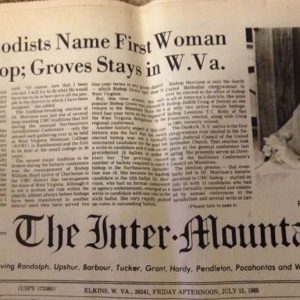
    Martha earned the right and the rite of stoles the hard way. She’d been the first WV clergywoman elected as a delegate to General Conference, first leader of the Commission on the Status and Role of Women.  After years of leadership, she laid her right and the rite aside; no one took it from her.  I sat beside her in the chapel balcony when her name is read as “retired”.  “Why? Why now?”, I whispered. Her quiet answer has echoed through the years. “Sometimes you have to leave the church to save your soul.”


    Martha: a woman of the cloth

    a woman of coal

    a woman of Christ

    a child of God

    no matter what people say


    My task as preacher and liturgist is to protect and risk and witness. I ask Frank, who wears the dark suit of male/clergy/superintendence well, to read her obit, and speak of her worthiness, her work for the church, the conference, and unchurched world she’d served so well.  He speaks for her, but also for the many others who have served Christ in silence, lest they be called “unworthy”.


    I wear purple with a handmade stole of black with rainbow colors. I preach the gospel I find in the work she’s finished and left behind.  I touched lightly on the last memory I have of Martha’s conference leadership: a resolution providing funds for child care for women, lay and clergy, who serve on conference committees. She, without children, wants mothers with children to be able to serve.


    Her proposal sets off a fierce floor fight. Old patterns of motherhood and ministry are summoned to defend against this assault. Her primary opponent cites his wife’s “truly Christian” way of stay-at-home churching that is biblical and economical.  Martha has prepared for the battle well however; the proposal passes by a slim margin.


    The last liturgical act of the United Methodist clergy funeral is the awarding of The Circuit Rider plaque for the grave.  It is our Wesleyan story of service for all to read: where ever there was need, there was a Methodist.  The district Superintendent is assigned to hand this award to Martha’s oldest brother who will carry it to the graveside. He’s the pastor who lost the floor fight years before. It heals that old wound to hear him speak so well of Martha, and to see the reluctant paternal side of her house receive the gift of her ministry.


    The coming parting of the United Methodist ways may be delayed by this pandemic afflicting us now. I will, however, be grateful for God’s sense of humor and justice in gifting us with each other. May we all rest in peace and rise in power.

  • Doing Theology:  Jesus had a dog

    Doing Theology: Jesus had a dog


    Jesus had a dog. Period. I know I’ve just violated the major rule of communication.

    Don’t ever start with the Aha! conclusion; it may end up wagging the entire proclamation.  But, Jesus had a dog. I want to tackle the two complications in that simple relationship head on. Let’s start with the second one. Dog.


    I don’t have a long history of canine relationships. I didn’t have a dog for nearly 60 years. Maybe that was due to allergies, living in parsonages or perhaps an early exposure to Mother Jones’ famous labor speech given on the steps of the capital of West Virginia in the midst of the bloody coal wars.


    “The womanhood of this State shall not be oppressed and beaten and abused by a lot of contemptible, damnable blood-hounds, hired by the mine operators. They wouldn’t keep their dogs where they keep you fellows. You know that. They have a good place for their dogs and a slave to take care of them. The mine owners’ wives will take the dogs up, and say, “I love you, dea-h”. Now, my friends, the day for petting dogs is done; the day for raising children to a nobler manhood and better womanhood is here.”


    Given that history, how did I come to own a dog or as I’ve learned, how did a dog come to own us. That relationship started with a phone call from our son. Any call after midnight in a parsonage is usually bad news. What I hear is unexpected, “Mom, would you like to have a puppy?”


    No. I make that really clear. I have a two-hour commute to Drew, a long day of teaching, weekend preaching. No. I do not want a puppy. And the answer’s still no when he describes finding three really cute puppies dumped on the sidewalk in freezing weather. I make sympathy sounds, but I’m still very clear. No. No puppy, but I relent enough to offer to pay for their shots at a shelter. That ends the call, but not the conversation. In less than 20 minutes, he’s back on the line explaining all the shelters in WV are kill shelters. Three days and it’s deadline. He asks me to wake his dad up.


    It’s now 1:30am, and Bill’s just survived his charge conference, so I tell him he’s on his own. Just before I take the phone into the bedroom, he says, “Wait, Mom! What’s the name of Dad’s favorite woman philosopher?”  I give him the answer and walk the phone into the bedroom thinking it’s a good thing our son isn’t in the ministry.  He could sell anything.


    Twelve hours later a golden puppy with bright brown eyes and a name tag, “Hannah Arndt” arrives. We are now related to a dog and the household creed over our sink reads: “My goal is to be as good a person as my dog already thinks I am.”


    Given that canine relationship, I come to the story of the Syrophoenician woman, Jesus and dogs with a different relationship. Matthew 15:21-28 is the text and I want us to concentrate on relationship that involves recognition in this story. It’s a Christological question, even though we’ve got this week’s sound bites from the White House about a former employee who’s been dismissed with an uncomplimentary canine term that works like a dog whistle for some in the pack.


    I want to keep your eyes on Jesus. This is the time, the place, this request for healing is where you need to figure out who he is. Who is this Jesus? If you read this encounter as evidence of Jesus’s divinity, this means he’s testing this desperate mother. He uses a playful pet name, and reminds her of her place to challenge her to rise to the occasion of radical trust. If you receive this text as evidence of Jesus’ humanity, this wise, and witty woman teaches him about the true nature of his mission. It’s a complex choice about relationship, and I find Kathryn Tanner theological answer helpful.

    “Jesus performs divine works in a human way (saves us by living a human life); and performs human works in a divine way (lives a human life in a way that saves.).[i]


    But somewhere in that doctrinal divide I want to remind you that Jesus had a dog.

    So that brings me to the first part of my proposition: Jesus. My matriarchal tribe was more into the third person of the Trinity. We nodded at incarnation but it was pneumonology, the Holy Spirit in which we lived, and moved and had our being.  We were raised on the miraculous. It was like having manna for breakfast.


    Jesus seemed to be a somewhat disembodied relationship, although I lost track of the country church revivals where my sisters and I sang “What a Friend we have in Jesus”. Maybe it was simply because I didn’t have a brother.  I had no lived relationship, no way to recognize him.  I carried no Jesus pictures in my head, only songs about him, meek and mild.


    Recognition is at the core of relationship. We recognize when we identify someone from having encountered them before. To “recognize” means to know again. So, my problem with Jesus in this text was the same problem I once had with dogs. I was missing personal memories, relationship in time and space. I had no ability to recognize who I’d not encountered.  And then, that changed. How? How did God, dog, and Jesus get connected?


    One change came from reading about traditional attitudes about dogs in Hebrew scriptures. “Jewish tradition does not expressly prohibit the keeping of dogs as pets, but biblical and rabbinic sources do include numerous references that associate dogs with violence and uncleanliness and frown on the practice of keeping them in one’s home.”  So, dogs are for the most part portrayed negatively in scripture, and sometimes dogs get linked to prostitution. So, they were scum, dirty, dangerously, needy, outcast, definitely not welcome under the table.

    Who does this remind me of? Something about Jesus’ relationship with the needy, the outcast? Would the one who ate with sinners draw the line with dogs? And why does Jesus talk about dogs and children, why does he put them together when he says “No”. Puppies and kids. What does he make of this clever, desperate mother turning the tables on him, “Lord, even the crumbs, Lord, will be enough.”

    Here’s what I know about this relationship, only because I know a dog and because I know Jesus had a dog. I think he laughed when he heard what she said. I think he laughed because he remembered feeding some scrappy mutt under the table. Jesus had a dog. Of course, he did, some outcast, abandoned, unwanted scrap of fur. He’d once fed a dog under his family table. That sounds just like Jesus I’d been expecting.  He remembered that.  He recognized that relationship, and then he laughed, and then he healed the child and blessed her mother.

    Jesus had a dog. I have a dog. Relationship. Schleiermacher was right, faith is “dependence, absolute dependence”. What a friend I have in Jesus. In that knowing, in that relationship, in that recognition, in the encountering now and before, we come to this table, this table of grace. We know Jesus now; we recognize him now and we will know him when he comes again.


    Here, let me show you how this gospel works and then you are invited to come to the table where there’s plenty of grace to go around.

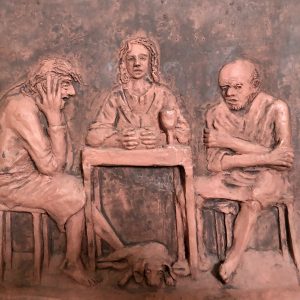
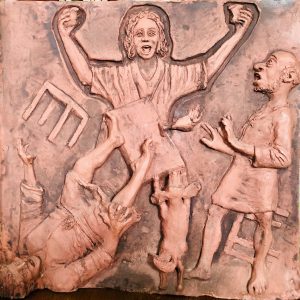
    Look, it’s an image of the Inn at Emmaus. There’s a dog asleep under the table. The disciples are discouraged, in grief. But if you turn sculpture around, you’ll see what happens when the bread is blessed and broken. One disciple falls off his chair; the other can’t believe his eyes. Only the dog is jumping for joy.


    “They recognize him in the breaking of the bread.”


    I believe I will recognize my Friend when we meet again. Eugene O’Neill says it best.

    “No matter how deep my sleep I shall hear you, and not all the power of death can keep my spirit from wagging a grateful tail. I will always love you as only a dog can.

    [i] Kathryn Tanner, Jesus, Humanity and the Trinity., p.21

  • Dreaming in Delaware: St Valentine and Augustine

    Dreaming in Delaware: St Valentine and Augustine


    February 14th brings a mixed bag to the table of Time: beheaded saints, chocolate addiction, an ancient Roman celebration of fertility and a billion valentine cards. This is a day when roses rule, although promises about rose gardens aren’t kept. The following poem and quotes from Augustine are intended as a tonic for those suffering from the chill of doubt that leads to frozen despair, be it about the future of the United Methodists or the United States.


    The last thing I need in a valentine

    is some under-clad cupid

    trying to puncture an over-worked will

    and the last reserves of control.

    Unbuttoned hope just leads to exposure.

    Any extremity of emotion

    brought on by Hallmark

    deserves all the frostbite it finds.


    Life’s temperature gauge

    has been down so long

    Zero is up.

    No plaster saint can convince me

    there’s a point to hearts and flowers.

    Even chocolate loses its appeal

    when you pack it in your pocket

    and get stuck in a snowdrift for days.


    When the threat of brimstone

    begins to make sense

    and headlines the news

    it’s time to rekindle Pentecost’s fire.


    Didn’t he say

    “Keep the peace and pass the salt?”

    Or was it

    “Hold your salt and pass the peace?”


    Didn’t he promise

    the Spirit would find us

    stiff as a board,

    stranded on ice,

    frozen with fear and snow blind?


    Check the calendar.

    When can we turn up the heat?


    Isn’t this the season

    our ears should start to tingle

    and our hearts get strangely warm?

    Heather Murray Elkins Copyright 1994


    [i]St. Augustine Concerning Faith of Things Not See


    There are those who think that the Christian religion is what we should smile at rather than hold fast, for this reason, that, in it, not what may be seen, is shown, but men are commanded faith of things which are not seen. We therefore, that we may refute these, who seem to themselves through prudence to be unwilling to believe what they cannot see, although we are not able to show unto human sight those divine things which we believe, yet do show unto human minds that even those things which are not seen are to be believed…


    If this faith be taken away from human affairs, who but must observe how great disorder in them, and how fearful confusion must follow? For who will be loved by any with mutual affection, (being that the loving itself is invisible,) if what I see not, I ought not to believe? Therefore will the whole of friendship perish, in that it consists not save of mutual love. For what of it will it be able to receive from any, if nothing of it shall be believed to be shown?


    [i] http://www.newadvent.org/fathers/1305.htm?xid=PS_smithsonian

  • Buying the World and Keeping it Company: a feminist reflection on soda

    Buying the World and Keeping it Company: a feminist reflection on soda

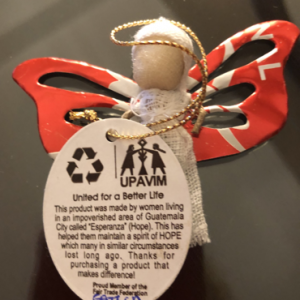
    “Buying the World and Keeping it Company: a feminist reflection on soda” is a performance paper designed to incorporate research on the history of a carbonated beverage and its corporate influence on American identity, patterns of consumption, and global economics. The paper is structured as a socio-poetic reading of a text and an object, a recycled Coke angel from the Coke Store Museum made by women in Guatemala.


    Process of presentation/paper

    The first action of the presentator is to invite each member to select one recycled angel from a bowl decorated with bottle caps. The name of the woman written on each recycled angel. Each member is invited to read the name of the woman who created the angel aloud.
    After the naming, the clip of 130 years of Coca-Cola advertising is shared with the gathering https://www.cnn.com/2016/05/06/living/gallery/coca-cola-ads/index.html.

    At the conclusion of the clip and any discussion, the paper presentation begins. Sections of the paper are to be read aloud by several readers with the poetic section read by a single reader.


    Participants are invited to reflect on the readings or on the meanings that their recycled angel now conveys. This portion of the presentation is closed by inviting all participants to read the final section of the poem “How can one human need…”in unison.

     

    A journey to this manger begins in the jungle

    of concrete or kola nut, tenement or kapok tree.

    Cocacolonization draws the map wide.

    Honduras, El Salvador, Columbia, we know,

    (but less from Mexico). India is on the rise,

    and the great wall of China has fallen.

    From the east again

    come seekers more desperate than wise.

    World War II

    When war broke out and American troops were sent overseas, the Coca-Cola company vowed that any American in uniform should be able to get a Coke for five cents wherever they were. As a result, the company built bottling stations in the Pacific and on the Western front.

    Germans recognized Coke to be a “Jewish-American” drink. In response, the Nazi regime only allowed Coke in the country if it displayed a swastika on the bottle, which it did. In the Soviet Union, war hero Marshal Georgi Zhukov loved the drink, but Soviet leader Joseph Stalin viewed it as an American imperialist symbol. As a solution, Coca-Cola developed a clear version of the drink bottled with a white cap and red star to not appear like the well-known American drink.

    On the Pacific front of the war, Coke had a tough time reaching the troops. To address the issue, the company created portable soda fountains that were distributed throughout the islands on the Pacific Ocean. Asian countries experienced Coca-Cola. According to the company, the drink spread throughout the islands because, “Coke symbolized the American way of life.”

    Throughout the war, Coke dispersed ads for their soda all over the world. The majority of the ads displayed an American soldier drinking a soda with the natives of that country. If the ad was in a country outside of the United States, it was written in the native language of that country. Popular ads had positive images of Americans with Coke in New Zealand, Russia, the Philippines, Newfoundland, Italy, England, and in Poland. According to Coca-Cola, “From the jungles of the Admiral Islands to the officer clubs in the Riviera,” Coke and America was there. [i]


    Miller-lite knights of whiteness counsel the King.

    “Send them back to the jungles again.

    Guatemala is for all who seek asylum.”

    It’s the pause that refreshes,

    not a cause that oppresses children in cages.

    It’s the real thing.


    Washington — The Trump administration on Thursday began deporting migrants who sought refuge in the U.S. to Guatemala, the first step in the implementation of a controversial agreement with the Guatemalan government aimed at requiring asylum-seekers from other countries to request protection in the Central American nation.


    The first asylum-seeker deported by the U.S. under the bilateral accord, a man from Honduras, arrived in Guatemala City on Thursday morning, the country’s interior minister said. More migrants from neighboring Honduras and El Salvador are expected to be rerouted to Guatemala in the coming days after the U.S. government deems them ineligible for asylum in the U.S. and instructs them to seek protection there.


    Enrique Antonio Degenhart Asturias, the interior minister, said Thursday marked the beginning of the “operative stage” of the accord with the U.S., telling reporters in the capital that his government is expecting more arrivals of Honduran and Salvadoran migrants deported by the U.S. next week. He said Guatemala will take steps to gradually increase the number of foreign asylum-seekers it will receive.[ii]


    Santa’s on his way

    riding high on caffeine addiction.

    He’s slip-sliding away in an old sleigh

    fueled by blue gold and holiday fiction.

    The secret’s in the sauce:

    outsource the resource, market new schemes.

    Teach every hilltop, each valley, each stream

    to sweetly sing in harmony:

    “Here’s to America’s dream.”


    “Coke positioned itself as more than just a soft drink company; it was an essential contributor to community development, providing not simply an enhancement of public services but a replacement of government goods altogether. To fix growing infrastructural problems, Coke contended, Americans should put their faith in private industry, in companies like Coca-Cola, whose staggering net profits, $ 422 million in 1980, were a testament to its masterful ability to transform natural resources into valuable goods. As the American public lost faith in city managers, they drank more Coke…By 1986, Coke could rejoice that “right now, in the United States, people consume more soft drinks than any other liquid—including tap water.”


    Roger Enrico, then president and CEO of Pepsi-Cola Worldwide Beverages, praised the industry hallmark, exclaiming that same year, “You choose soft drinks—more often, these days, than you pour yourselves a glass of water or any other beverage—because soft drinks have become a part of American life.” What Coke came to realize was that the public would indeed consume repackaged public tap water distributed by a trusted brand, something the company did not think was possible back in the 1970s. Executive C. A. Shillinglaw had proposed the idea of going into the bottled tap water business in 1971, arguing that “the future quality of the public water supplies in the U.S. will continue to deteriorate, thereby generating for bottled water an increasing physical quality advantage.” The key, according to Schillinglaw, was to develop a “national trademark for drinking water” that “need not necessarily be tied to water from a single source.” He suggested the use of “factory purified water.” But critics within the company had doubts this would fly. After all, why would people pay for a product that they could easily get out of their tap at virtually no cost?”[iii]
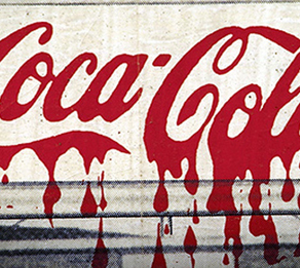
    A mural in Guatemala, a country where Coca-Cola has been accused of anti-union violence.

    Perhaps the best-known casualty of Coca-Cola’s 124-year expansion is Isidro Gil, a union leader whose face, heart, and groin absorbed a total of 10 bullets. The year was 1996. Gil had been lobbying Colombian Coke bottler Bebidas y Alimientos de Urabá for both higher wages and protection from paramilitary hit men who had already assassinated several of his associates, and who had once played soccer in the town square with an elderly man’s head. The killers had also been seen sharing Cokes with the bottling plant’s manager. In the span of a single day, they murdered Gil, burned the union hall, and forced the remaining members to resign or flee.

    Was Bebidas behind the violence? Had Coke’s Atlanta headquarters known of the threat but failed to intervene? Was Coke actually responsible for Isidro Gil’s death? Michael Blanding’s The Coke Machine—part nonfiction narrative, part history of the Coca-Cola Company and the many crimes it has been accused of—works hard to provide answers. Along the way, Blanding explains how a little-known medicinal drink grew into one of the world’s most recognized brands, a symbol of both the gleaming mechanisms of free markets and the controversies they sometimes spark.[iv]


    So what good are these born-again angels

    looking a lot worse for their wear?

    Recycled wings. Thin as gauze gowns.

    The gods must be crazy.

    Where is there power in recycled things?

    How free is a market or thought, speech or land

    if everyone’s wearing a brand?

    Sept. 20, 2018

    The sexual assault accusation against Judge Brett M. Kavanaugh, President Trump’s nominee for the Supreme Court, has prompted unavoidable flashbacks to the confirmation process of Judge Clarence Thomas in 1991.

    During the televised hearings, which lasted three days, Anita F. Hill, who then taught at the University of Oklahoma’s law school, detailed allegations of workplace sexual harassment by Judge Thomas, who was her supervisor at two government agencies. And Judge Thomas forcefully denied the accusations, claiming they played into stereotypes of black men.

    The astonishing testimony aired Ms. Hill’s accounts of crude behavior and vulgar language, the likes of which had never before been discussed in the buttoned-up hearing rooms of the United States Senate. The Senate Judiciary Committee’s dismissive treatment of Ms. Hill by the all-male, all-white Senate Judiciary Committee empowered a wave of women to run for state and national office.

    On Thursday, Christine Blasey Ford, 51, a California-based psychologist who has accused Judge Kavanaugh of sexually assaulting her at a booze-filled high school party, said she would testify before the committee so long as senators offer “terms that are fair and which ensure her safety.” As Judge Thomas did in the ’90s, Judge Kavanaugh, 53, has categorically denied the accusations and said he will testify before the committee…

    Ms. Hill, who was then 35, first testified before the committee on Oct. 11, 1991. Speaking in a calm, even tone, she detailed her accusations of sexual harassment by Judge Thomas, who oversaw her work at the Department of Education and the Equal Employment Opportunity Commission.

    Ms. Hill said that Judge Thomas had repeatedly asked her to go out with him in a social capacity and would not take no for an answer. She said he would talk about sex in vivid detail, describing pornography he had seen involving women with large breasts, women having sex with animals, group sex and rape scenes…

    “It would have been more comfortable to remain silent,” she said. “But when I was asked by a representative of this committee to report my experience, I felt that I had to tell the truth. I could not keep silent.”

    After Ms. Hill’s opening statement, Senator Joseph R. Biden Jr., the Delaware Democrat who was then chairman of the committee, began questioning her on the specific locations of her harassment allegations. She mentioned the “incident of the Coke can,” which — as she had described a half-hour earlier — involved Judge Thomas asking her who had put pubic hair on his can of cola.

    Mr. Biden asked, “Can you describe it, once again, for me please?”

    After a sigh, Ms. Hill did.[v]


    It’s the drink for every season;

    you don’t need a reason.

    The Yes Girl’s outrageously easy, two cherries on top;

    the Ritz Boy’s a real soda jerk.

    They recycle jokes about coke cans and thirst;

    turn pubic hairs into public heirs

    of the highest court in the land.

    It’s got a nice ring.  “Can’t beat the real thing.”


    “Yesterday, at the Women’s Forum of New York’s Breakfast of Corporate Champions, Coca-Cola CEO Muhtar Kent praised Trudeau for his 50 per-cent female cabinet, then continued to say, ‘If you’re a male and you’re at the top, you have to be a feminist, and you have to be proud of being a feminist. Being a declared feminist—I’d even go as far as to positively discriminate, to put it in people’s annual assessment.’ Much like Trudeau, it seems Kent has been a champion for women: Since he became the leader of the soda Goliath, he’s doubled the number of women on the board and increased the external hiring of women by 15 percent, according to Time. He’s also helped launch the 5by20 program, an initiative that aims to provide economic empowerment to 5 million women by 2020. Already, about 865,000 women in 52 countries have participated in the entrepreneurial program, Time reports…[vi]


    How can one human need face an empire of greed?

    There’s no wining with one.

    But what if there’s two, and then three, and then four,

    then a score, then hundreds, then thousands,

    then millions and more

    who risk thirsty tongues,

    trash corporate cupids,

    treasure truth in the flames,

    and if seraphim call,

    answer by name.


    Heather Murray Elkins Copyright 2019  Epiphany


    [i] https://en.wikipedia.org/wiki/.Cocacolonization

    [ii] CBS News, by Camilo Montoya-Galvez, updated on: November 22, 2019/3:09 pm

    [iii] Citizen Coke: The Making of Coca-Cola Capitalism by Bartow J. Elmore
    http://a.co/iwt2lVt

    [iv] The Atlanta, Health, “The Pause That Represses? Coca-Cola’s Controversies,” Daniel Fromson, October 18, 2010.

    [v] “Anita Hill’s Testimony and Other Key Moments by Julia Jacobs, From the Clarence Thomas Hearings

    [vi] The Conversation, Coca-Cola CEO Muhtar Kent Says: “You Have to Be a Feminist”, Jillian Kramer, November 20, 2015.

  • Older and Wiser

    Older and Wiser


    My wish for this year: 20/20 vision. I’m old enough to know that what I know I need to know better. We need deeper insight, depth perspective, more peripheral vision. In church and society, in climate and culture we need a lens that does not distort the imago Dei, the essence of all being. Perhaps we need to have our vision corrected by the Huichol practice of creating God’s Eyes. It was a “crafty” discipline of weaving a connection between humans and the Holy. It formed a protection for the wearer as well.


    Since my sight is blurring with glaucoma, I decide to mark the start of this year with a celebration of aging, of becoming a crone. The Cambridge Dictionary gives me a choice with two worldviews about the process: “an unpleasant or ugly old woman or “in stories, an old woman with magic powers”.


    I consult my mirror. I do look better these days because my vision is worse, but I decide that I’m going with both definitions.  I pick the first because I was taught that the best way to survive a curse is to breathe it in, absorb it in the bloodstream, and then let the Spirit convert it into a breath of fire.  My present sense of age connects the first to the second definition. I’m being screened via criminal checks and fingerprinting to be able to read to Delaware children. I’ve learned that one way is to learn is through nursery rhymes. The one that comes to mind is by Longfellow, (not Mother Goose).


    “There was a little girl

    who had a little curl

    Right in the middle of her forehead;

    And when she was good

    She was very, very good,

    But when she was bad she was horrid.”


    That’s a perfect match for my current hairstyle, and lifestyle.  Once upon a time I dyed my hair bright red to cope with the accusations of being a Sophia/Wisdom heretic. (See my essay “Dancing the Hula in Heaven” in my book, Holy Stuff of Life.)  The 2019 UMC General Conference decision to “discipline” those who don’t fit, or persist in resisting the Traditionalist interpretation of our faith tradition made me want to pull out my hair, so I permed it into a perpetual swirl. it’s a little Medusa, a little Byzantine angel look.  I like the range that offers: very, very good, and horrid. Sometimes my one action provokes two very different reactions.


    The dictionary definition doesn’t include an important directive. You don’t just “crone” yourself. It requires communal action.  I’m in an in-between time and place, suspended between communities of work and faith. Where will I find like-minded seekers of wisdom?


    “Wisdom cries aloud in the street, in the markets she raises her voice;

    at the head of the noisy streets she cries out;

    at the entrance of the city gates she speaks…” Provers 1:20-21


    A voice from the past summons me. Bishop Susan Morrison sends me a Halloween card and an invitation to Rehoboth Beach. We have a history. Women clergy could be easily counted in the 70’s. I was the worship leader for the Jurisdictional Conference where she was elected the first woman bishop in the NE Jurisdiction.   A storm is building in her conference over Wisdom’s Feast, when I preside at a communion service drawn from those scriptural Wisdom texts.
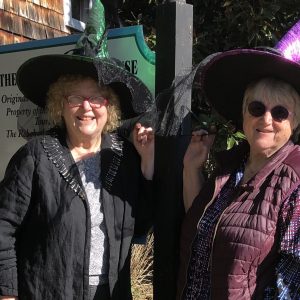

     

    The Re-Imagining Conference, held to celebrate the UN Decade of Women is the spark that us used to create a wildfire. The IRD (Institute of Religion and Democracy, an NGO, with its roots in the John Birch Society) is ready with a torch. The threat of heretical women will fire the base, and so it goes. Some of us hold a press conference to offer theological and emotional support for women church leaders who are under fire. I bring a large processional God’s Eye created for the UMC Fellowship and Bishop Susan carries it through public space and into the press conference. God’s Eye, for holy connection and protection, but scorch marks, the burned over districts can be seen in the cross and flame pains of our present church.


    Wisdom is calling. I arrive, hat in hand, literally. When a bishop says to bring a hat, you do, and I happened to have just what was needed for a time of croning. Beside the historic site in Rehoboth where the Bishop would stay in the days of Camp Meetings, two old women don their hats and smile.


    “On the heights beside the way, at the crossroads she takes her stand.” (Proverbs 8:2)

  • Bean Soup

    Bean Soup


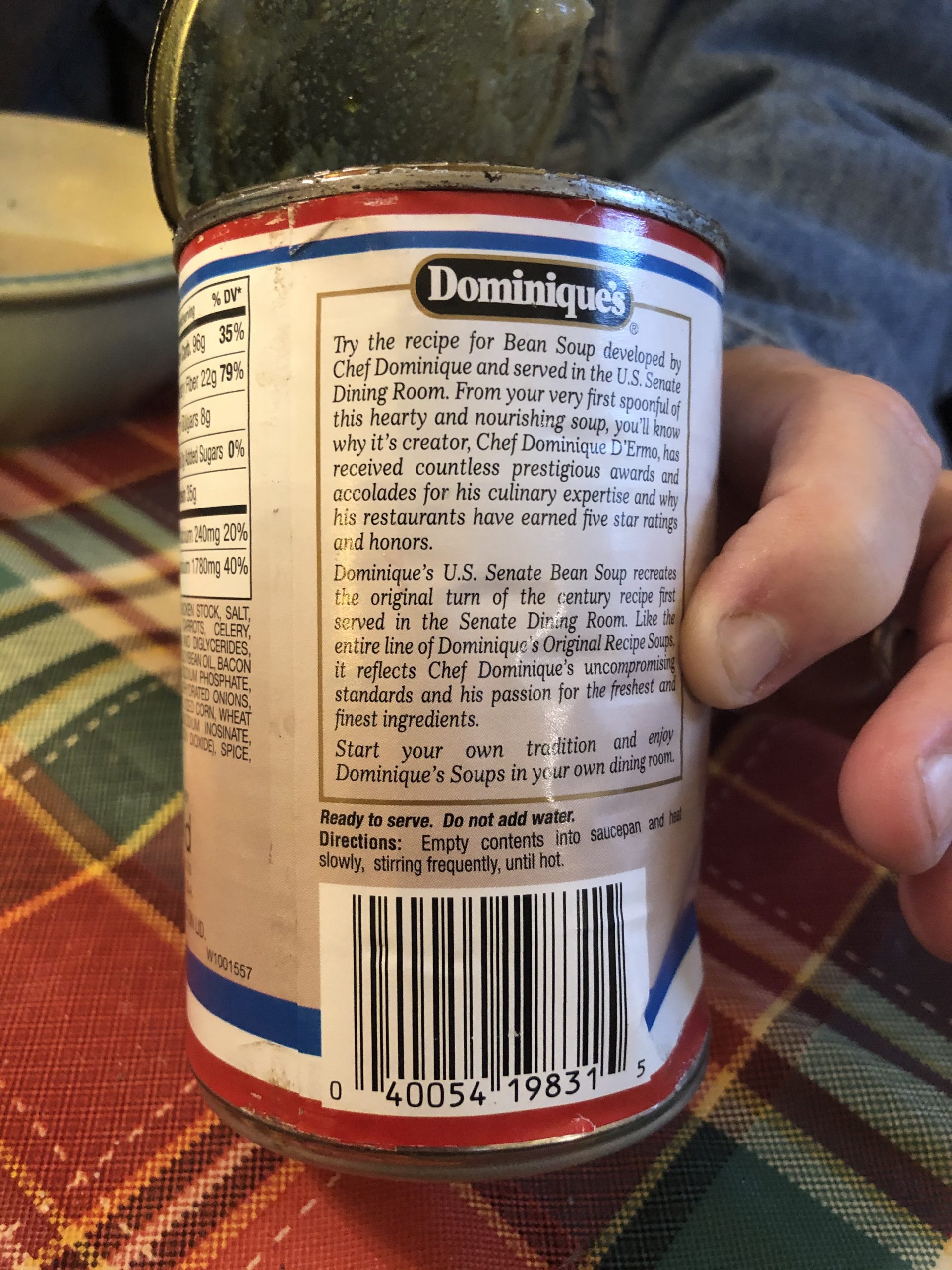
    Is there a recipe for Bean Soup for the Soul?  I start the search at our kitchen table in Delaware as Bill recounts a rare memory of visiting the US Senate with his father who had served as a clerk. They ordered bean soup for lunch. That taste memory sent us on a quest up the Amazon, and there on our doorstep appears a case of Dominique’s U.S. Senate Bean soup, a recipe served to sitting Senators since the turn of the century.


    But is this the Bean Soup for the Soul? The impeachment of a president, the senatorial responsibility of impartial judgement is enough to chill the blind statue of Justice. The cold winds of war (Iraq/Iran) and its rumors take the shiver down to the bone.


    Perhaps it’s time to check the records of the body that has been bean fed since 1900.  The best history of the Senate was written by one of its own, Sen. Robert C. Byrd, The Senate:1789-1989. It’s on hand because Byrd was one of Almost Heaven’s finest left-handed fiddle player and politician. It’s also on the shelf because it was a Christmas gift to our son when he was working on his MA in Political Science. Most importantly it’s the work of a man transformed by his service in the Senate. “Senator Byrd reflects the transformative power of this nation,” stated NAACP President and CEO Benjamin Todd Jealous. “Senator Byrd went from being an active member of the KKK to a being a stalwart supporter of the Civil Rights Act, the Voting Rights Act and many other pieces of seminal legislation that advanced the civil rights and liberties of our country.


    An honorable body, then, sharing soup and service, the Senate, forged by dreams of democracy and moral virtues of reasoned debate and principled compromise for the public good. Surely what the Senate serves, be it soup or statutes, should be good for the American soul. But if history is written by the winners, then a cautionary quote from the losing side is needed. I let the Senate’s historian, the Senator from West Virginia speak.


    We Stand Passively Mute Wednesday 12 February 2003

    To contemplate war is to think about the most horrible of human experiences. On this February day, as this nation stands at the brink of battle, every American on some level must be contemplating the horrors of war.

    Yet, this Chamber is, for the most part, silent — ominously, dreadfully silent. There is no debate, no discussion, no attempt to lay out for the nation the pros and cons of this particular war. There is nothing.

    We stand passively mute in the United States Senate, paralyzed by our own uncertainty, seemingly stunned by the sheer turmoil of events. Only on the editorial pages of our newspapers is there much substantive discussion of the prudence or imprudence of engaging in this particular war.

    And this is no small conflagration we contemplate. This is no simple attempt to defang a villain. No. This coming battle, if it materializes, represents a turning point in U.S. foreign policy and possibly a turning point in the recent history of the world.

    This nation is about to embark upon the first test of a revolutionary doctrine applied in an extraordinary way at an unfortunate time. The doctrine of preemption — the idea that the United States or any other nation can legitimately attack a nation that is not imminently threatening but may be threatening in the future — is a radical new twist on the traditional idea of self-defense. It appears to be in contravention of international law and the UN Charter. And it is being tested at a time of world-wide terrorism, making many countries around the globe wonder if they will soon be on our — or some other nation’s — hit list. High level Administration figures recently refused to take nuclear weapons off of the table when discussing a possible attack against Iraq. What could be more destabilizing and unwise than this type of uncertainty, particularly in a world where globalism has tied the vital economic and security interests of many nations so closely together? There are huge cracks emerging in our time-honored alliances, and U.S. intentions are suddenly subject to damaging worldwide speculation. Anti-Americanism based on mistrust, misinformation, suspicion, and alarming rhetoric from U.S. leaders is fracturing the once solid alliance against global terrorism which existed after September 11…

    We are truly “sleepwalking through history.”


    Sleepwalking through history.  Iraq. Iran. Afghanistan. Impeachment papers submitted to the Senate. Perhaps I should back up and read Byrd’s history of The Senate of the Roman Republic. It might help answer a question, “Are we still a republic?”  I settle for his closed-door impeachment statement that was released into Congressional Record, February 12, 1999


    “Mr. Chief Justice:

    Be assured that there will be no winners on this vote. The vote cast by every Senator will be criticized harshly by various individuals and sundry interest groups. Yet, it is well for the critics to remember that each Senator has not only taken a solemn oath to support and defend the Constitution, but also to do ‘impartial justice’ to Mr. Clinton and to the nation, ‘So help me, God’. The critics and the cynics have not taken that oath; only Senators have done so. Carrying out that oath has not been easy. That oath does not say anything about political party; politics should have nothing to do with it.

    The frenzy of pro-and-con opinions on every aspect of this case emanating from every conceivable source in the land has made coming to any sort of ‘impartial’ conclusion akin to performing brain surgery in a noisy, rowdy football stadium. It will be easy for the cynics and the critics who do not have to vote, to stand on the sidelines and berate us. But only those of us who have to cast the votes will bear the judgment of history.

    Mr. Chief Justice, none of us knows whether the attitudes of the American people will take a different turn after this trial is over and this drab chapter is closed. ‘Fame is a vapor; popularity an accident; riches take wings; those who cheer today may curse tomorrow; only one thing endures–character!’ It is the character of the Senate that will count. And while the politics of destruction may be satisfying to some, the rubble of political ruin provides a dangerous and unstable foundation for the nation.

    And yet we must move ahead. The nation is faced with potential dangers abroad. No one can foresee what will happen in Russia or in North Korea or in Kosovo or in Iraq. To remove Mr. Clinton at this time could create an unstable condition for our nation in the face of unforeseen and potentially dangerous happenings overseas.

    Preceding Senators have sounded the clarion note of separation of powers! I have sounded that same trumpet many times when the line item veto was before the Senate, but to no avail. Some of the voices that have rung throughout this chamber in these deliberations, were curiously still on that occasion. The Supreme Court of the United States saved the Constitution and struck that law down. But the Supreme Court has no voice in the decision that confronts the Senate at this hour. It is for the Senate alone to make. When these Senate doors are flung open, we must hope that the vote that follows will strengthen, not weaken, our nation.

    Let there be no preening and posturing and gloating on the White House lawn this time when the voting is over and done. The House of Representatives has already inflicted upon the President the greatest censure, the greatest condemnation, that the House can inflict upon any President. And it is called impeachment! That was an indelible judgment which can never be withdrawn. It will run throughout the pages of history and its deep stain can never be eradicated from the eyes and memories of man. God can forgive us all, but history may not.

    Within a few hours, the mechanics of this matter will finally be concluded. But it will not yet be over. For the nation must still digest the unpleasant residue of these events. Mr. Chief Justice, hatred is an ugly thing. It can seize the psyche and twist sound reasoning. I have seen it unleashed in all its mindless fury too many times in my own life. In a charged political atmosphere, it can destroy all in its path with the blind fury of a whirlwind. I hear its ominous rumble and see its destructive funnel on the horizon in our land today. I fear for our nation if its turbulent winds are not calmed and its storm clouds somehow dispersed. In the days to come, we must do all that we can to stop the feeding of its vengeful fires. Let us heap no more coals to fan the flames. Public passion has been aroused to a fever pitch, and we as leaders must come together to heal the open wounds, bind up the damaged trust, and, by our example, again unite our people.”

    “For the nation must still digest the unpleasant residue of these events.” It will take more than bean soup to heal these open wounds, but we can stop feeding hatred’s fire.

  • Dreaming in Delaware: Rooted in Holy Ground

    Dreaming in Delaware: Rooted in Holy Ground


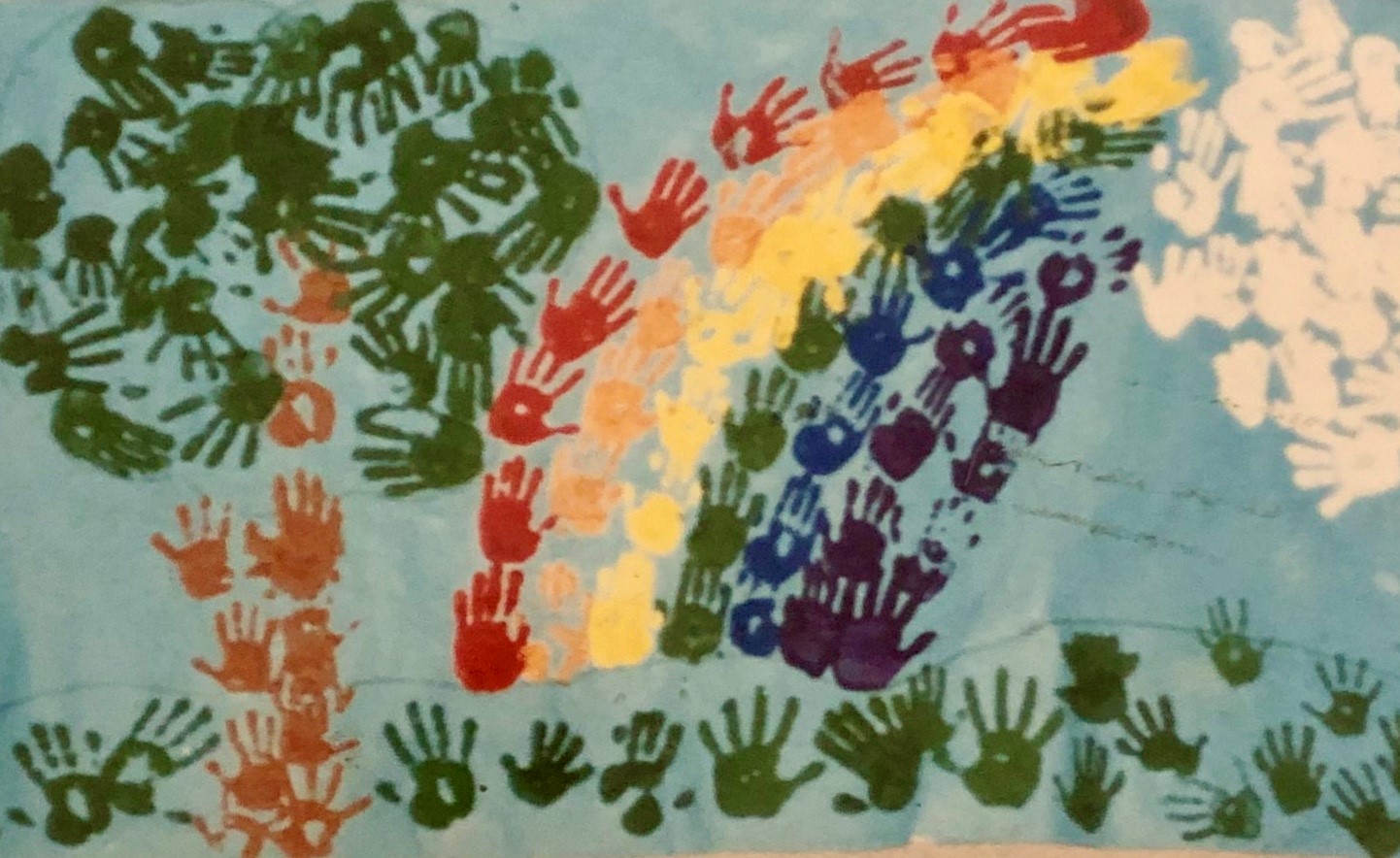
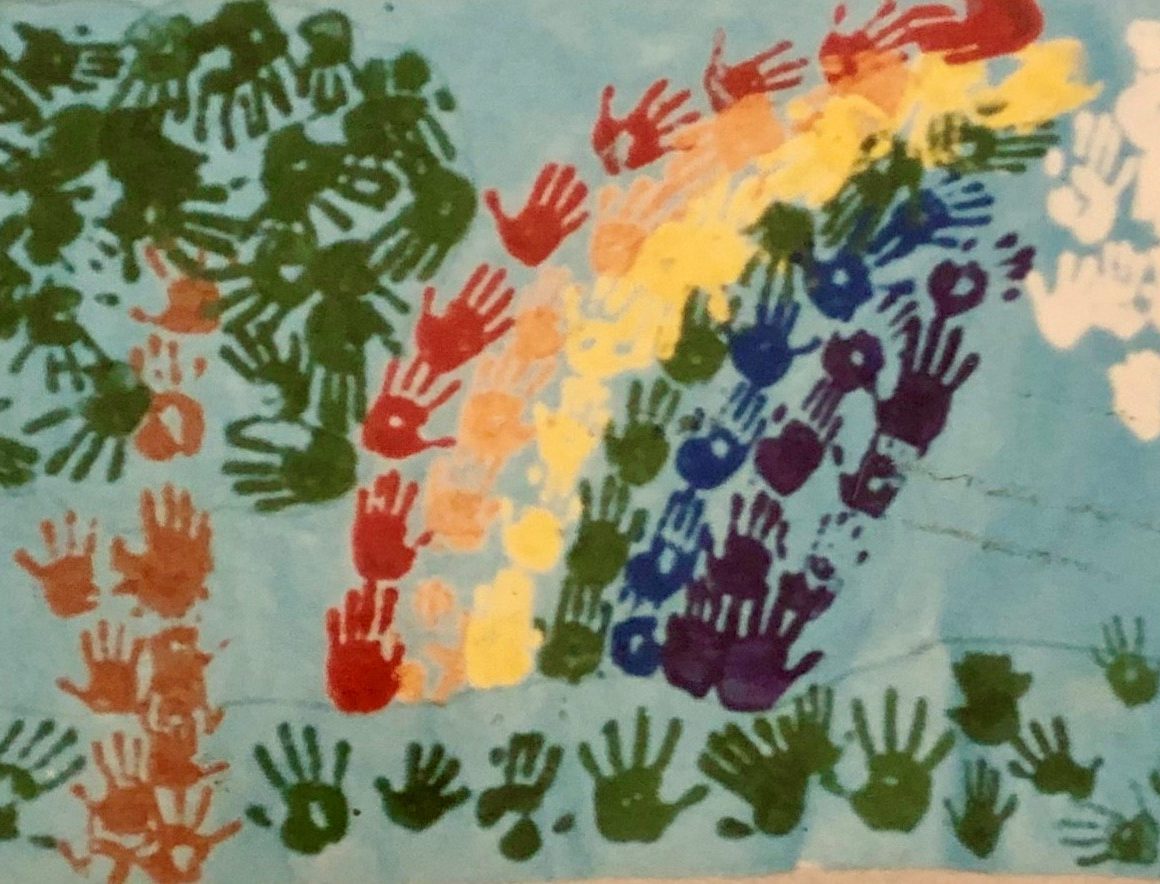
    We’re waiting for Someone. Lively conversations swirl across the aisles as we wait as politely impatient as a gathering of Christian educators can be. The children scattered among us actually seem more relaxed. We’ve got convictions, we believe whole-heartedly in education be it public school or Sunday School. We’ve passed under a banner to take our seats, “Hand in Hand with Children” and a tree, a cloud and a rainbow formed from children’s hands sets the theme. 

    When our Someone enters, the room goes silent then explodes with the sound of clapping. We’re on our feet, putting our hands together for the man making his way to the platform.  Mister Rogers has arrived. A longish introduction is forgiven once he scans the room and greets us. What he says is ordinary, but what happens isn’t. Regardless of our age, we’re transformed into children on the edge of our seats with wide-open eyes and eager ears. I have to remind myself to breathe.  

    Mister Rogers reminds us why we are where we are, and in reminding, recalls us to our Calling.  “Anytime that you are with a child, remember that the space between you is Holy Ground!” What he says is simply true and so that truth endures.  

    We’re rooted in Holy Ground. Every child. Anytime. Remember. I hear his voice as I read the Isaiah passage in this season: “Then a shoot will sprout from the stump of Jesse; from Jesse’s roots, a branch will blossom.” (Isaiah 11: 1) Grafted onto this text is the story that he tells us in closing. Mister Rogers shares how he began to write children’s operas. It started with sharing with his son at bedtime. At the age of four, his son is in awe of trees, God and Trees are really real to him and are Holy One, so he creates a song/prayer for his son.   He asks us if we’d like to hear it. His rhetorical questions are never a matter of rhetoric.  “Yes”, we say, “O yes!”, and Mister Rogers begins to sing. “Tree. Tree. Tree. Tree…”

    He sings the word “Tree” 12 times.  That’s it. That’s all.  One song. One prayer. One word and a melody I teach my students to sing 30 years later.  Tree. Tree. Tree.

    I find the evidence rooted everywhere at Drew University, long known as “the Forest”. We have acorns carved in our chapel higher than the candles or the cross and it’s not uncommon to find organic altars like this one offered by unknown Drewids. 

    “Tree. Tree. Tree”. This is Holy Ground: a tree, a child, a prayer to sing. This makes theological sense out of an image of a human fingerprint and an image of a tree ring.

    Imago Dei.

    And this next image tragically captures what happens when someone attempts to destroy this Imago Dei in every child born and all creation.

    Mister Rogers embodied this intimate life-giving relationship, this holy ground between each and every child, tree, neighborhood, culture and faith tradition.  D.L. Mayfield writes of the Christmas window Rogers designed for Hallmark. “He went back to his home in Pittsburgh and concocted a design plan. His window front display would be this: a Norfolk Island pine tree, the height of a three- or four-foot-tall child. No ornaments or decorations, just a simple green tree, planted in a clear glass Lucite cube so that onlookers could see the roots of the tree. And in front of it there was to be a plaque that simply said: “I like you just the way you are.”[i]

    In this season when trees come inside, rootless and ready to be decorated top to bottom, may Isaiah and Mister Rogers remind us of our need for holy ground and the Child who is our Tree of life.       


    [i] D.L. Mayfield, “Mister Rogers wasn’t just nice: He wanted to take down consumerism., The Washington Post, 11/22/2019

  • Dreaming in Delaware: in the nick of time

    Dreaming in Delaware: in the nick of time


    It’s a matter of faith to believe in the seasoning of time.  This wisdom is hard won. Ten days of tubes and treatments, tests and a portable“throne” is an eternity but each day becomes a season of healing.


    I find myself using a phrase from the 16th century : “in the nick of time”. It means:  at the crucial moment, at the exact instant at which something must take place. 


    Bill’s hospitalization is in the nick of time. The word “ acute” is listed five times beside his conditions. When something is measured by a “nick” that means it’s precisely where it should be. Bill is exactly where he should have been (hospitalized) for the sake of where he needs to be (home).


    Timing is everything. Was. is. Will be.  Was hospitalized in the nick of time. Is discharged late last night. Will be making his first visit to a dialysis center today. 


    In the nick of time, precisely where prayer and medical care needed to be, there is and was, and will be. Amen.


    We will, as the psalmist sang, learn to “number our days”, but we can not count all the blessings and acts of kindness. They are more than the grains of sand, be it hourglass or beach. And best of all, when we awake, God is with us. 


    Time is not running out. It’s being fulfilled.