Blog

  • Holy Days in the Apple Pi Inn: Maundy Thursday

    “Jesus, knowing that the Father had given all things into his hands, and that he had come from God and was going to God, got up from the table, took off his outer robe, and tied a towel around himself. Then he poured water into a basin and began to wash the disciples’ feet and to wipe them with the towel that was tied around him. “John 13:3-5

    There’s a towel hanging in Mary Jane Bee’s kitchen. She was my great great grandmother who owned this hotel (now Apple Pi Inn) from 1875 to 1883. It started out as a cloth calendar, a means of telling time. It tells more than that, but I’ll let my Mother fill in some of the details. On the back of the frame she wrote, “Embroidered by Winifred Eleanor (Bee) Hoyt Murray. I used an old calendar’s illustration (1984) but when it was readied, the glass broke. In May 1986, Floyd of Roberts’ store cut a glass for it. Bob Murray helped put it in the frame on June 2, 1986 which his grandson Murray Mace had painted the week before.”

    This is what I know: my mother embroidered a cloth calendar that many women used as dish towels after the year was over. What I don’t know is why. Was it because she loved the dogwood blossoms? Was the prayer one she needed to see every day? Did she know it was written by Reinhold Niebuhr? Did my father tell her he learned it as a soldier during World War II and the Korean War? It was in the Federal Council of Churches prayer book provided for army chaplains and servicemen in 1944. Did she find the calendar/towel at the Salvation Army? Did those who read it on the kitchen wall know they were in the company of AA and all prayer warriors who fight against addiction? This is one prayer they frame in their hearts.

    I don’t know the answer to these questions. But what I do know is that I wouldn’t name this calendar/towel the “Serenity Prayer”. This kind of language is risky business. Be careful what you pray for. A towel is what I have to tie around myself if I want to follow Jesus? This is the only vestment of ministry I will be measured by: a towel? Even harder to admit for those of us who are addicted to being in charge, those of us who need to be needed, is the towel’s dirty Not-Secret: Someone else will have to wash our feet.

    So there it hangs: the hardest prayer, the tie that binds.

    God, grant me the serenity to accept the things I cannot change; 
    Courage to change the things I can;
    And the wisdom to know the difference.
    Do I hear an Amen?

    Holy One, embroider this prayer on my heart.

  • Holy Days in the Apple Pi Inn: Palm Sunday

    Holy Days in the Apple Pi Inn: Palm Sunday

    Palm Sunday is often Parade Sunday in small churches with a strong Sunday school tradition. This is one time that kids can be heard as well as seen, according to the scriptures. Real palm branches aren’t required; green paper works just fine as long as it’s being waved about by children who are actually encouraged to run up and down the aisles and make loud noises. Children in parades are the holy stuff of Palm Sunday, along with a lot of singing, sometimes dancing, and definitely the sound of clapping hands. Not even grumpy grownups can resist a great Palm Parade.

    But why a parade, aside from the fact that there’s one in the scripture lesson for this Sunday? Someone special was coming. Someone who made a difference between down and up. Someone who changed a loss into a win. An ordinary somebody who’d become extraordinarily important to their friends, their neighbors, their hometown, and not to stretch the point, the entire nation.

    That’s what made the first Palm Parade different from all the others. Somebody who was SOMEBODY was coming to town. Every corner, every window, every sidewalk would be decorated. There would be banners, and signs, and definitely ribbons. There would be clapping and waving and definitely dancing in the streets.

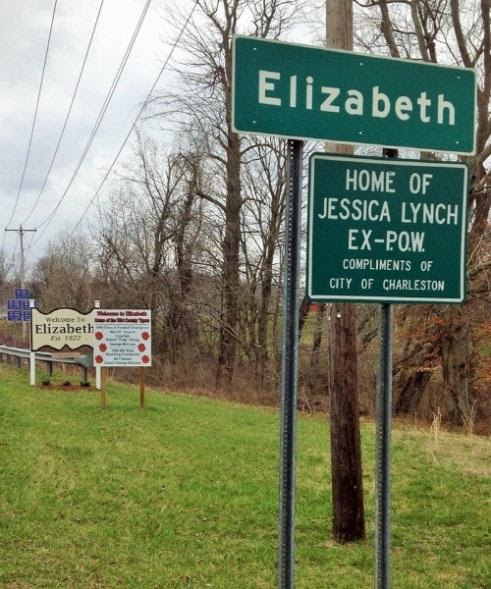
    I saw that kind of parade once: the Wirt County homecoming parade for Jessica Lynch, July 22, 2003. She was an American soldier, POW/MIA, a national icon, but in her own words, “I’m just a country girl at heart.” A country girl who dreamed of being a kindergarten teacher and enlisted in the Army so she could afford go to school. In the years since her rescue, Jessica finished her first college degree, did her teacher training in the same elementary school she attended as a child in Wirt County, and is a teacher. That’s a West by God Virginia tradition: serve your country and get an education. In the years since that parade she has continued to educate her community about service, and struggle, truth and virtue. I pass the road sign with her name on it and remember her friend, Lori Ann Piestewa, a fallen hero, a Hopi warrior. I remember her because Jessica doesn’t let us forget Lori Ann or any of the others who continue to put themselves in harm’s way in a war that isn’t over.

    I think about the yellow ribbon that I took down after the parade that day. I keep it with my Easter things. Wasn’t he was just a country boy? He spoke a truth that the Powers That Be didn’t like. He loved the little children, all the children of the world. He offered his life, not for a nation, but for us, all of us, red and yellow, black, and white. He shows us the truth that lasts, the truth that takes a lifetime to learn: love is stronger than death. That’s the lesson. That’s why we call him, “Teacher”.

  • A Maundy Thursday Handwashing and Table Service

    A Maundy Thursday Handwashing and Table Service


    Handwashing is an ancient human gesture embedded in daily practice. It can now be a matter of life and death during a time of contagion. We need literal as well as spiritual cleansing in these times. Holy Week scriptures offer us a story of compulsive washing, and a narrative of compassionate cleansing. Pilot, politician of an empire, publicly washes his hands, attempting to shed his responsibility for protecting the innocent.  He attempts to wash his hands of the whole affair.  In contrast, Jesus in the privacy of a home, takes a towel and washes the feet of his friends. That washing immerses them in his ministry, cleanses and empowers them to “do this” for others in memory of him.


    These two stories of washings invite us to baptismal renewal in this week and lead us to a Table. Jesus gathers his friends for a meal when life as they know it is ending. That Supper is a meal of memory and hope: the people pass over, from death to life, from slavery to a promise of freedom.  It is a meal of wonderous love and amazing grace, first offered in a home and then as the church expanded, in sanctuaries.  This can be a time to return to home as a sanctuary again.


    There is a tradition of handwashing in preparation for sharing in a sacred meal. Psalm 26 was once used sung by those who gathered in Jerusalem. Centuries later it was recited by priests preparing to preside in the sacrament of the bread of life.  They would pray these words in silence while preparing by washing their hands.


    I wash my hands in innocence, and go around your altar, O Lord, singing aloud a song of thanksgiving, and telling all your wondrous deeds. O Lord, I love the house in which you dwell, and the place where your glory abides. Do not sweep me away with sinners, nor my life with the bloodthirsty, those in whose hands are evil devices, and whose right hands are full of bribes. Psalm 26: 6-10


    These ancient words include the washing, the coming to the altar, songs of praise, and testimonies to God’s redemptive work. There is a plea for personal safety and a fierce call for justice, all connected to washing and the sacrament of holy communion.


    There is also another Table, the Love Feast, where Christians have gathered to celebrate the presence of Jesus, our brother, savior, friend in testimony, song, praise and praise. A Love Feast traditionally includes a foot washing (hand washing in this service), the greeting of peace; confession of sin, expressions of faith, and praise through songs and testimony.


    This service of washing and the Table offer us hospitality and reconciliation with God and with each other.  A Love Feast can deepen our understanding of Holy Communion if the choice is to “fast” until the community can gather together again. United Methodists pastors should take this opportunity to share This Holy Mystery: A United Methodist Understanding of Holy Communion with their congregations.  If we cannot gather to celebrate Holy Communion in sanctuaries as in the past, this table service offers washing and a sacred meal at home.


    However, sharing on-line communion in homes with a pastor/presider could also be our Wesleyan heritage, particularly given the development of the itineracy as pastoral care in times of great need. Pastors need to keep informed to what their bishop is advising, especially as some bishops have revised their request for a moratorium. The bishops in the Western Jurisdiction write: “Especially in this time of physical separation from one another, Holy Communion can be a conduit of God’s healing power. We remain open to what God is teaching us in this moment. We believe in the importance of being community, present together at the Table of our Lord, repentant of our sin and seeking to live in peace with one another.” see http://www.calpacumc.org/news/western-jurisdiction-bishops-offer-guidance-for-the-observance-of-holy-communion.


    There are conduits and channels of grace through live-streaming, Zoom, or phone. Printed materials for this service can be mailed or emailed to members.  One essential reminder for any service at home at this time: one person can be a household, sheltering in place. Some liturgical settings are suggested, but a kitchen sink, a candle, towel, table, water, oil, and food are the only things required. This service is designed to be a spiritual exercise for one individual, or two or three gathered together, as well as a pastor connected to others via digital means.


    Maundy Thursday Hand Washing and Table


    Begin the service by lighting candles as the words are read.


    L: Blessed are you Holy One, our God, Creator of the universe.

    You form light and create darkness, make peace, and give life to all things. Isaiah 45:7


    Welcome (those at home or/and on-line)


    Song or reading 


    Prayer for Purity

    Almighty God,

    to you all hearts are open, all desires known,

    and from you no secrets are hidden

    Cleanse the thoughts of our hearts

    by the inspiration of your Holy Spirit

    that we may perfectly love you

    and worthily magnify your name,

    through Christ our Lord.  Amen.


    Silent Reflection


    Song of Assurance of God’s Love


    Pilate’s Basin

    This can be an antique pitcher with basin on a small table or a pitcher at the kitchen sink. The water is warm. There is scented soap with good hand towels, one for each participant. Children can help by handing out the towels. These words are said, “Remember, only Christ can wash away our sin.” One person pours the water as each in turn washes their hands. The Doxology or a song of praise can be sung during the washing and drying of hands.


    Baptismal Renewal Basin

    After this washing, move to a second pitcher and bowl at one end of the dining table. The pitcher/container could be clear glass and hold anointing oil or plain olive oil. The words are: “Remember, you are baptized and anointed by the Holy Spirit.” An individual will say, “Remember, I am baptized and anointed by the Holy Spirit.” After the oil is poured into each person’s palms held over the basin, they touch their own forehead, their heart, or smooth the oil into their hands saying, “Thanks be to God”.


    The Servant’s Basin

    The third pitcher and basin should be well-used, and the towels should be kitchen towels. The water in this pitcher is cold. Water is poured into your open hands with the words, “Do this in memory of the One who did this for you.”  The individual would say, “I do this in memory of the One who did this for me.” The group response is, “I will remember.” You are invited to use the towel as napkin and a symbol of service.


    If it’s a service of Holy Communion, the on-line presider/pastor can begin the Great Thanksgiving, leading the prayers while those at home are at table with individual cups and bread. Using an ordinary coffee cup for communion can “altar/alter” its meaning by lifting up the commonplace for holy use.  The Epiclesis, prayer for the Spirit may be prayed in union with the presider.  This is the prayer of those baptized by water and the Spirit; its language is plural; it binds the whole body of Christ into service.


    L: Pour out your Holy Spirit on us gathered here,

    and on these gifts of bread and wine.

    Unison:

    Make them be for us the body and blood of Christ,

      that we may be for the world the body of Christ,

      redeemed by his blood.


    By your Spirit make us one with Christ,

      one with each other,

      and one in ministry to all the world,

      until Christ comes in final victory,

      and we feast at his heavenly banquet.


    If the Table is a Love Feast celebrating Christ and the priesthood of all believers, the food that you find comforting should be shared. A reading from scripture or the Covenant Service can be done before eating. The sharing of recipes and stories, along with favorite table graces follows. Invite those present to respond to the question: “What does it mean to me to serve Christ?”


    Christ has many services to be done.

    Some are easier and more honorable,

    others are more difficult and disgraceful.

    Some are suitable to our inclination and interests,

    others are contrary to both.

    In some we may please Christ and please ourselves.

    But then there are other works where we cannot please Christ

    except by denying ourselves.

    It is necessary, therefore,

    that we consider what it means to be servant of Christ.[i]


    “Directions for Using a Towel” can be used as meditation on the meaning of the hand towel or as a closing reading before the benediction.


    Directions for Using a Towel


    To be used for:

    Drying dishes.

    Wiping eyes.

    Mopping spilled milk.

    Coping with sighs.

    Cleaning stains.

    Creating scandal.

    Holding on when it’s too hot to handle.


    Washing feet.

    Softening jars.

    Binding wounds in a world of scars.


    Better than Bounty, thin as skin.

    Don’t give it up, or throw it in;

    It simply grows more holy over time.


    For when the One

    that death could not defeat

    arrives,

    the towel will be our sign.

    All grave and dusty sins are washed away.

    God takes us by the hand and helps us rise.[ii]


    Table Fellowship


    Blessing


    [i] Wesley Covenant Prayer adapted by Heather Murray Elkins ©2002 The Holy Stuff of Life, all rights reserved.

    [ii] Ibid.


    [i] Wesley Covenant Prayer adapted by Heather Murray Elkins ©2002 The Holy Stuff of Life, all rights reserved.

    [ii] Ibid.

  • Wearing Purple

    Wearing Purple


    The hearse I’m riding in is a classic model: long, low to the ground, gunmetal grey. It has seat belts but the funeral director didn’t buckle up, so I assume we won’t need them.  We’re traveling about 10 miles an hour on an upgraded cow path, a gravel trail that follows the curve of a West Virginia hill. The grave site is at the top of a hill overlooking a large pond with winter geese and a milk carton camera-ready herd of grazing cows. We talk as he steers around the ruts that are softening in the mild February sunlight.  He appreciates the appeal of the old-fashioned term: “undertaker”, although he prefers “Director”.  I say I understand but “undertaker” is a word that suits his profession and well as my own: to undertake good goodbyes.


    This is a young man who understands how to turn endings into beginnings. He inherited his father’s farm and leased his legacy for a different kind of crop.  Turning a pasture into a graveyard is a practice that dates back to the Civil War. Churchyards couldn’t hold all the dead, or the trauma from the bloody loss of so many young men.  Idyllic pastoral scenes straight out of Psalm 23 were planted in villages and cities, a landscape of loss.  Not everyone came equipped with cows, of course.  It’s a view I can appreciate, and wonder if Martha, the guest of honor at this parting ritual, would have appreciated the irony of holy cows and country roads at her end.


    I’m wearing a purple dress under the severely gray overcoat. It felt like a necessary gamble, given what “they” say about purple. A few may remember the poem, “When I am old, I will wear purple.” Far more are suspicious of my choice of clerical attire, being supporters of the ban of a book, The Color Purple. The ban started in 1984 and continues into the present which is definitely not excepted or accepted.


    When I come into the funeral home and see the photo of Martha in her Geneva gown and her purple stole, I smile and hang up my coat with sense of conviction.  I wear purple for Martha today because it means more than I know or need to say. Purple: it’s Lent. Purple connects some of the women in the room to the rite of ordination, to be a woman of the cloth. Purple connects Martha to Lydia, a fashion designer, an early convert to Christ, a founder of mission and churches, a woman of means.


    It is also a dangerous color. Jerry Falwell has just denounced Tinky Winky, the purple baby-show character for being gay. that wears purple. You can literally hear the unspoken as I greet my clergy colleagues and members of Martha’s family. “Does this mean she’s a lesbian? Does this mean she thinks lesbians should be ordained? Was Martha a lesbian?


    The answers to the questions are: No. Yes. I don’t know. She never said. No one ever said. I assume they assume I know. Not being told gives me the ability to be dove-open and snake-smart. I mix it up. Purple is the color of lent, of Lydia, of bishops, of lesbians, of lesbian bishops, and the color of atonement. There’s the purple cloak of Pilot, the color of advent and expectation, the purple prose for when I am old. I will wear purple then. I wear purple now.


    I am sure the community of friends will try to decide what it meant; the community of family will not mention it at all, but nod at each other as if they knew.


    I wear a stole I found on the way. It was waiting for me in Almost Heaven.  It’s a woven black background shot through with primary colors. It’s hand-made by a woman to be worn by a woman. Its purpose is warmth as well as beauty, and that makes it holy and human. It also makes sense of stole-wearing. I need its protection and its authority. The theological meaning is woven into those human needs as a second layer against cold funeral wind.


    Martha earned the right and the rite of stoles the hard way. She’d been the first WV clergywoman elected as a delegate to General Conference, first leader of the Commission on the Status and Role of Women.  After years of leadership, she laid her right and the rite aside; no one took it from her.  I sat beside her in the chapel balcony when her name is read as “retired”.  “Why? Why now?”, I whispered. Her quiet answer has echoed through the years. “Sometimes you have to leave the church to save your soul.”


    Martha: a woman of the cloth

    a woman of coal

    a woman of Christ

    a child of God

    no matter what people say


    My task as preacher and liturgist is to protect and risk and witness. I ask Frank, who wears the dark suit of male/clergy/superintendence well, to read her obit, and speak of her worthiness, her work for the church, the conference, and unchurched world she’d served so well.  He speaks for her, but also for the many others who have served Christ in silence, lest they be called “unworthy”.


    I wear purple with a handmade stole of black with rainbow colors. I preach the gospel I find in the work she’s finished and left behind.  I touched lightly on the last memory I have of Martha’s conference leadership: a resolution providing funds for child care for women, lay and clergy, who serve on conference committees. She, without children, wants mothers with children to be able to serve.


    Her proposal sets off a fierce floor fight. Old patterns of motherhood and ministry are summoned to defend against this assault. Her primary opponent cites his wife’s “truly Christian” way of stay-at-home churching that is biblical and economical.  Martha has prepared for the battle well however; the proposal passes by a slim margin.


    The last liturgical act of the United Methodist clergy funeral is the awarding of The Circuit Rider plaque for the grave.  It is our Wesleyan story of service for all to read: where ever there was need, there was a Methodist.  The district Superintendent is assigned to hand this award to Martha’s oldest brother who will carry it to the graveside. He’s the pastor who lost the floor fight years before. It heals that old wound to hear him speak so well of Martha, and to see the reluctant paternal side of her house receive the gift of her ministry.


    The coming parting of the United Methodist ways may be delayed by this pandemic afflicting us now. I will, however, be grateful for God’s sense of humor and justice in gifting us with each other. May we all rest in peace and rise in power.

  • Holy Days in the Apple Pi Inn: Spring Cleaning

    Holy Days in the Apple Pi Inn: Spring Cleaning

    Cleaning up is not a task limited to or initiated by a season in my experience. Spring Cleaning, however, seems to be inscribed in some corner of a rural chromosome or perhaps immersed in the sacramental memory of baptism. The first day of spring arrives, and an impulse to engage in obligatory and repetitive gestures of cleansing begin to surface. I’m good at suppressing those urges until early summer, but this maddening March weather changed everything.

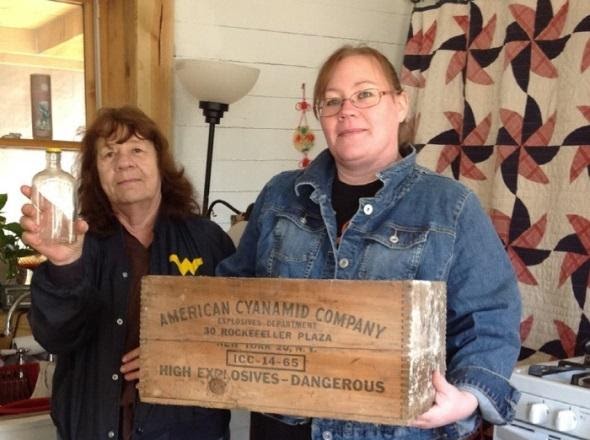
    The tin roof on the country kitchen had outlived its usefulness. Built shortly after the end of the Civil War, it sagged like an old feather mattress over the antique stove and the assorted relics of forgotten sinners stored in the kitchen. (Note the Glasgow whiskey bottle and a packing box of explosives held by Libby and Melissa.) This structure had been built to keep the cook and the heat in the kitchen, out of the main house. Now it serves as a collection site for whatever was left over by whoever left it behind. It is a perfect staging ground for a conversation about “bricolage: a limited, heterogeneous repertoire of inherited bits and pieces.”(Levi-Strauss, The Savage Mind)


    The clearing/cleaning of this building was at the bottom of a long list of salvific action. It shot to the top when the replacement tarp gave way. My hope for a leisurely Antique Roadshow adventure was soaked under a torrent of melted snow. A call for help brought neighbors. Spring cleaning became a communal act of salvation and cleansing. “O my God,” was the constant refrain, but it was uttered with a wide range of tone and expression. “What is it?” was usually answered with a “Better save it,” and even the old joke about Prince Albert in a can held a great sense of timing.

    Of course, a new roof and sunny weather doesn’t solve the problem of what to do with the stuff that’s now drying out on the porch. But it’s only the first day of spring. I have until June 21, the first day of summer, to sort that out.

  • Holy Days in the Apple Pi Inn: St. Patrick’s Day

    Holy Days in the Apple Pi Inn: St. Patrick’s Day


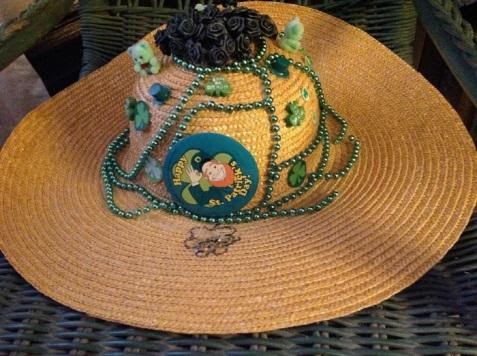
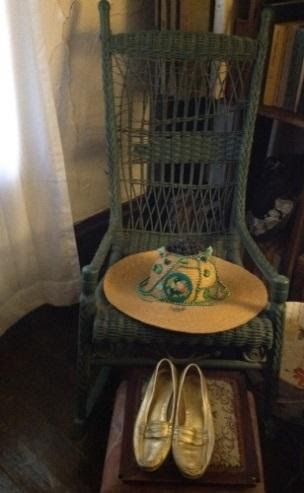
    There’s an old green rocker in the corner of the Apple Pi Inn that is good at telling time. Today it says, “Here’s your hat, St. Pat. What’s your hurry?” It invites you to sit awhile and smile at the tiny green teddy bears, the sparkling beads, the hat-tipping leprechaun and the bright eyed saint who knew how to see the mystery of Trinity in the green green fields of home. 

    This is my Mother’s last hat, decorated by a friend, for the “wearing of the green” to church, or the bank, or wherever there were children. It hung on a clothesline that stretched down the hall, waiting for its day to arrive. It was in good company, with more than forty others that she owned, hung in chronological order, from the 4th of July one with 16 American flags to her Valentine Day’s headgear of cupids armed with charms and arrows.(There was even an Earth Day hat decorated with fast food trash that made you want to recycle it.) The St. Pat hat was waiting its turn to be worn, admired, grinned at, talked about, and photographed with its wearer, a 93 year old talkative elf.

    But there’s a time to keep and a time to lose. March 9th 2012 was her last day this side of forever. Her four closest friends donned one of her hats to walk as honorary pallbearers, and placed the St. Patrick hat on her coffin. If you look closely at the picture of the chair you’ll also see the gold shoes she claimed she’d wear when she danced her first jig in heaven. 


    Christ be with me, Christ within me 
    Christ behind me, Christ before me
    Christ beside me, Christ to win me
    Christ to comfort and restore me.


  • Holy Days in the Apple Pi Inn: Super Pi Day

    Holy Days in the Apple Pi Inn: Super Pi Day


    What time is it? 3/14/15 9:26:53
    Month. Day. Year. Hours. Minutes. Seconds.
    I look in the round face of time hanging on the wall.
    I study all the geometric shapes that fill the chairs.
    I note the sounds that spill across the coffee cups.
    I trace the faces, count the fingers that set the table.
    It’s time to consider the ratio
    between the diameter and the circumference
    of a circle.
    If no building could stand,
    no bridge sustain,
    no construction endure
    without the precision of PI
    (be it apple, or cherry or peach)
    will this circle be unbroken?


    Only if 
    only as
    the ratio between the diameter
    and the circumference of the heart
    keeps expanding.

    Heather Murray Elkins, copyright 3/14/15


  • Holy Days at the Apple Pi Inn: Johnny Appleseed Day

    Holy Days at the Apple Pi Inn: Johnny Appleseed Day


    Is there any way to remember into the future?  Yes. Plant trees now. From Kenya to Kentucky, this is a holy human action that roots us in the present and branches out to a future only God can see.


    Here is an Appleseed service that can be part of an entire worship event, or as a ritual on its own.  Invite children to carry in baskets of apples at the beginning, and lead the group in singing the first verse known as the Appleseed Grace.  Distribute the apples at the conclusion of the litany, or give apples after people receive communion.


    Leader: A sower went out to sow.

    Sing:

    “Oh, the Lord is good to me,

    and so I thank the Lord,

    for giving me the things I need;

    The sun and the rain and the apple seed.

    The Lord is good to me.”
     

    People: Keep us as the apple of your eye.

                 Hide us in the shadow of your wings.

    Leader: You can count the seeds in an apple,

    People: but who can count the apples in a seed? 


    Reader 1:

    Apple Facts and Seed Stories

    The Apple is a fruit of the tree, Pyrus Malus. It’s usually grown in temperate regions, and introduced to America from England in 1629. It’s become a classic image of excellence in education and A “is for apple” is posted in countless classrooms in this country for almost two centuries. An apple for a teacher was once a way for a student to say “Thank you” but apple-polishing is not advised by one’s peers, unless of course you’re talking about iphones or computers.


    The connection between eyes and apples and pupils is also a traditional one.  Hear the words of the psalmist: “Keep me as the apple of your eye…”  In the nineteenth century “apple of your eye” also meant “pupil”. The pupil of one’s eye was named from the Latin word, “pupilla”. When Romans looked into someone’s eyes they saw a tiny reflection of themselves, like a child, so seeing one’s self was always a learning experience. To see eye to eye is to see as we are seen, the Apostle Paul writes. We are made in the image of God, and we are seen as the pupil, in the apple of God’s eye.

    Sing:

    “Oh, and every seed I sow,

    Will grow into a tree.

    And someday there’ll be apples there,

    for everyone in the world to share.

    Oh, the Lord is good to me. “


    Apple Theology:

    Traditionally scholars have translated the fruit of “the knowledge of good and evil” as an apple. Biblical botanists think the fruit was probably a pomegranate, an apricot or a fig. Who connected apples and snakes? Hard to tell, but in medieval days, red was the mythological color for sexuality.


    I earned an A in Apple theology my second year in seminary, but the lesson was learned down on the farm. Reading week in institutions of higher education is still geared to a largely forgotten agricultural calendar, but it gave me the excuse to head for the hills of West Virginia.  I arrived in time to help with picking, pealing, canning, freezing apples.  The old apple tree beside the farmhouse had survived a fiery trial when the house was destroyed.  Its apples weren’t large, but made good pies.  It was the stuff of legend; claims to kinship with Johnny Appleseed were part of the mythmaking mischief of my Grandfather, A.E. Hoyt.   The apple orchard by the barn had been planted in honor of my parents’ 25th anniversary, although the fruit fed more deer than humans. It’s also where we sowed my dad’s ashes when it came time for his planting.


    I pulled up a chair beside Grandma’s rocker that was in the shade and we peeled and sliced through most of the morning.  I regaled her with stories of my misfit days at a southern bastion of righteousness.  She mainly listened.  I seem to have gotten the talkative genes from my grandfather’s side.  In the middle of a long pause, she suddenly said, “It wasn’t an apple.”  It didn’t exactly make sense since we were surrounded with apples, but you can say whatever whenever it strikes your fancy if you’re past 90.

    Since I’d been telling stories about my Old Testament class, perhaps what she’s doing is exegesis, scripture interpretation.  “You mean, it wasn’t an apple in the Garden of Eden?” “Right.  It wasn’t an apple.”


    It wasn’t, at least according to scriptural sources, but I had to go to seminary to learn that it was probably a fig, or a pomegranate.   How did she arrive at her conviction?

    “Why wasn’t it an apple?” “Because you can trust an apple.”  That’s certainly a bottom line.  God, Mother, and apple pie suddenly has a context.  My curiosity gets stronger than a sense of discretion. What did she think it was, since it couldn’t be an apple?


    “A banana,” she said with a perfectly straight face. I managed to put my paring knife down before I collapsed in hysterical laughter.  Visions of Mae West and the Marx Brothers cavorting in the orchard! I finally catch my breath when she bushwhacks me again.  “How else do you explain the fall of Man?”


    Leader: You can count the seeds in an apple,

    People: but who can count the apples in a seed? 


    Reader 2:

    “An apple a day keeps the doctor away.” This folk wisdom contains some of the apple’s attributes as a healthy food. They lack fat, sodium and cholesterol. They’re packed with nutrients such as thiamine, riboflavin, and phosphorous. They are now known to be fortified with quercetin, a flavonoid that may help prevent cancers of the lungs, skin, and colon. Fiber. Iron. Natural sweeteners. Calcium. But in case you need a little sugar you can have: apple betty, apple butter, apple cider, apple cobbler, apple crisp, apple cake, apple compote, apple dumplings, apple fritters, apple juice, apple jack, apple pie, pudding, and preserves. You can medicate yourself with baked, bleached, cooked, crab, dried, fried, candied, caramel, stewed or plain fresh apples. Just what the doctor ordered.

    Sing

    Oh, the earth is good to me,

    And so I thank the earth,

    For giving me the things I need

    The sun and the rain and the apple seed,

    The earth is good to me.


    Sowing Seeds

    A sower went out to sow.  Farming’s tough. Being land-based in a culture that commutes or “on-lines” for a living is hard to sustain. Staying rooted in a socially tornado time is tough. Farming is an industry that regularly suffers from “acts of God”: tornados, droughts, frost, floods. Add agrobusiness, unforgiving banks    It is rough, and tough, and folks whose Apple plugs in will ever understand how addictive digging in the dirt can be.


    So what’s the good news in this story about seeds? It’s all good seed.  The trustworthiness of God is underlined in that one small fact: all the seed is good, capable for bringing a new creation to light and life.  There are no bad seeds in this story.A sower went out to sow…


    But folks who farm might ask a question about God’s intentions when they get to the rocky soil.  He should have known better? You don’t normally sow wild oats, or hybrid corn in some stranger’s field.  You sow what you know, your own ground.  So why did the sower throw good seed on hard ground. Hope is easily sprouted, but hard to harvest. Why risk the very source of your survival? Why throw good seed on stone hard ground?


    I once asked an old WV farmer who answered to the name “Grandpa Cabbagehead” why the sower threw perfectly good seed on stony soil.  He asked me a question as a way of answering. “How long do you plan to be farming?”  “That,” he said, “is the right question to ask.”


    How long do you plan to be farming? A seed encounters a rock. Spouts roots, creeps into cracks, struggles for room, dies. What happens to the rock?  One very small piece is cracked open.  It’s the first step in a rock becoming soil. That sower was sowing for the future that may be a long time coming, but she’s making room for a harvest that someone will see.


    Reader 3:

    Apples don’t normally escape from orchards and grow in the wild.  An unexpected presence can usually be explained by the bees, except of course, for the ones planted by humans like the real-life legend named John Chapman, best known as Johnny Appleseed.

    There’s an old poem, one verse of which runs:

    “And if they inquire whence came such trees,

    Where not a bough once swayed in the breeze,
    The reply still comes as they travel on,
    “Those trees were planted by Appleseed John.”


    Apples require several years to reach bearing age. Very fruitful trees are slower to come into fruit than trees that bear normally. Prepare the soil in fall for a spring planting. For fertilizing good news, see Luke 13: 6-9. Aged manure is advised. If you want to prune an apple tree you need to prune when you first plant it and then repeat yearly. Thin out weak and tangled branches to let sunlight into the center. You’ll need to go easy on the old-timers if they haven’t been tended to in some time.  Don’t try to force an old tree into a new shape, but you can prune it along the lines it’s been growing into over the years.


    Reader 4: 

    If you ever wonder if the Creator likes variety, make a list of apples: Akane, Ben Davis, Cortland, Dolgo Crab, Empire, Golden Delicious, Granny Smith, Gravenstein, Grimes Golden, Jonagold, Liberty, Limbertwig, Macoun, McIntosh, Newtown Pippin, Northern Spy, Red Delicious, Rome Beauty, Shockley, Spartan, Stayman, Winesap, and last, but not least, the Yellow Delicious, courtesy of West by God Virginia and Johnny Appleseed.

    Sing:

    “Oh, the Lord is good to me,

    and so I thank the Lord,

    for giving me the things I need;

    The sun and the rain and the apple seed.

    The Lord is good to me.”
     

  • Doing Theology:  Jesus had a dog

    Doing Theology: Jesus had a dog


    Jesus had a dog. Period. I know I’ve just violated the major rule of communication.

    Don’t ever start with the Aha! conclusion; it may end up wagging the entire proclamation.  But, Jesus had a dog. I want to tackle the two complications in that simple relationship head on. Let’s start with the second one. Dog.


    I don’t have a long history of canine relationships. I didn’t have a dog for nearly 60 years. Maybe that was due to allergies, living in parsonages or perhaps an early exposure to Mother Jones’ famous labor speech given on the steps of the capital of West Virginia in the midst of the bloody coal wars.


    “The womanhood of this State shall not be oppressed and beaten and abused by a lot of contemptible, damnable blood-hounds, hired by the mine operators. They wouldn’t keep their dogs where they keep you fellows. You know that. They have a good place for their dogs and a slave to take care of them. The mine owners’ wives will take the dogs up, and say, “I love you, dea-h”. Now, my friends, the day for petting dogs is done; the day for raising children to a nobler manhood and better womanhood is here.”


    Given that history, how did I come to own a dog or as I’ve learned, how did a dog come to own us. That relationship started with a phone call from our son. Any call after midnight in a parsonage is usually bad news. What I hear is unexpected, “Mom, would you like to have a puppy?”


    No. I make that really clear. I have a two-hour commute to Drew, a long day of teaching, weekend preaching. No. I do not want a puppy. And the answer’s still no when he describes finding three really cute puppies dumped on the sidewalk in freezing weather. I make sympathy sounds, but I’m still very clear. No. No puppy, but I relent enough to offer to pay for their shots at a shelter. That ends the call, but not the conversation. In less than 20 minutes, he’s back on the line explaining all the shelters in WV are kill shelters. Three days and it’s deadline. He asks me to wake his dad up.


    It’s now 1:30am, and Bill’s just survived his charge conference, so I tell him he’s on his own. Just before I take the phone into the bedroom, he says, “Wait, Mom! What’s the name of Dad’s favorite woman philosopher?”  I give him the answer and walk the phone into the bedroom thinking it’s a good thing our son isn’t in the ministry.  He could sell anything.


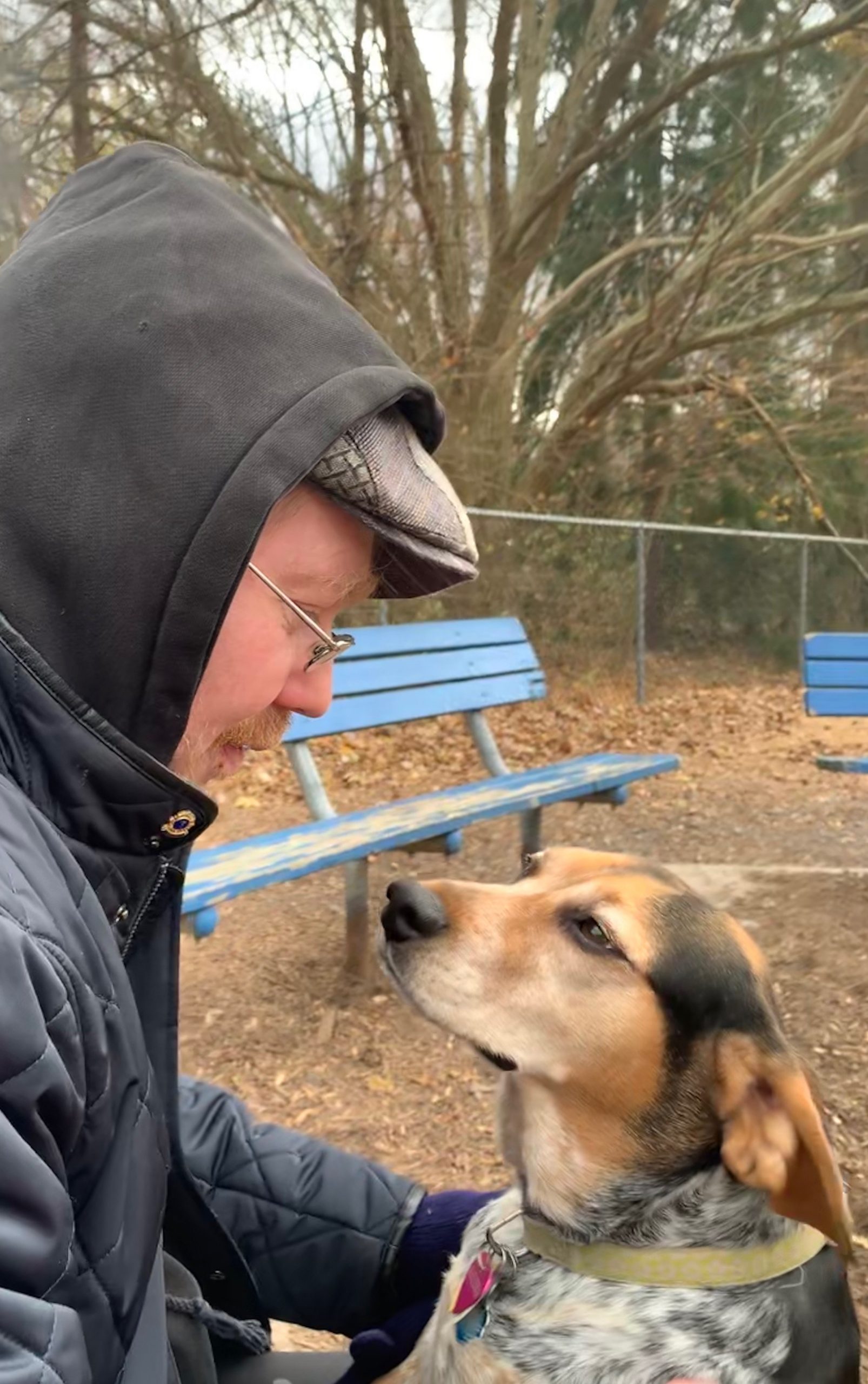
    Twelve hours later a golden puppy with bright brown eyes and a name tag, “Hannah Arndt” arrives. We are now related to a dog and the household creed over our sink reads: “My goal is to be as good a person as my dog already thinks I am.”


    Given that canine relationship, I come to the story of the Syrophoenician woman, Jesus and dogs with a different relationship. Matthew 15:21-28 is the text and I want us to concentrate on relationship that involves recognition in this story. It’s a Christological question, even though we’ve got this week’s sound bites from the White House about a former employee who’s been dismissed with an uncomplimentary canine term that works like a dog whistle for some in the pack.


    I want to keep your eyes on Jesus. This is the time, the place, this request for healing is where you need to figure out who he is. Who is this Jesus? If you read this encounter as evidence of Jesus’s divinity, this means he’s testing this desperate mother. He uses a playful pet name, and reminds her of her place to challenge her to rise to the occasion of radical trust. If you receive this text as evidence of Jesus’ humanity, this wise, and witty woman teaches him about the true nature of his mission. It’s a complex choice about relationship, and I find Kathryn Tanner theological answer helpful.

    “Jesus performs divine works in a human way (saves us by living a human life); and performs human works in a divine way (lives a human life in a way that saves.).[i]


    But somewhere in that doctrinal divide I want to remind you that Jesus had a dog.

    So that brings me to the first part of my proposition: Jesus. My matriarchal tribe was more into the third person of the Trinity. We nodded at incarnation but it was pneumonology, the Holy Spirit in which we lived, and moved and had our being.  We were raised on the miraculous. It was like having manna for breakfast.


    Jesus seemed to be a somewhat disembodied relationship, although I lost track of the country church revivals where my sisters and I sang “What a Friend we have in Jesus”. Maybe it was simply because I didn’t have a brother.  I had no lived relationship, no way to recognize him.  I carried no Jesus pictures in my head, only songs about him, meek and mild.


    Recognition is at the core of relationship. We recognize when we identify someone from having encountered them before. To “recognize” means to know again. So, my problem with Jesus in this text was the same problem I once had with dogs. I was missing personal memories, relationship in time and space. I had no ability to recognize who I’d not encountered.  And then, that changed. How? How did God, dog, and Jesus get connected?


    One change came from reading about traditional attitudes about dogs in Hebrew scriptures. “Jewish tradition does not expressly prohibit the keeping of dogs as pets, but biblical and rabbinic sources do include numerous references that associate dogs with violence and uncleanliness and frown on the practice of keeping them in one’s home.”  So, dogs are for the most part portrayed negatively in scripture, and sometimes dogs get linked to prostitution. So, they were scum, dirty, dangerously, needy, outcast, definitely not welcome under the table.

    Who does this remind me of? Something about Jesus’ relationship with the needy, the outcast? Would the one who ate with sinners draw the line with dogs? And why does Jesus talk about dogs and children, why does he put them together when he says “No”. Puppies and kids. What does he make of this clever, desperate mother turning the tables on him, “Lord, even the crumbs, Lord, will be enough.”

    Here’s what I know about this relationship, only because I know a dog and because I know Jesus had a dog. I think he laughed when he heard what she said. I think he laughed because he remembered feeding some scrappy mutt under the table. Jesus had a dog. Of course, he did, some outcast, abandoned, unwanted scrap of fur. He’d once fed a dog under his family table. That sounds just like Jesus I’d been expecting.  He remembered that.  He recognized that relationship, and then he laughed, and then he healed the child and blessed her mother.

    Jesus had a dog. I have a dog. Relationship. Schleiermacher was right, faith is “dependence, absolute dependence”. What a friend I have in Jesus. In that knowing, in that relationship, in that recognition, in the encountering now and before, we come to this table, this table of grace. We know Jesus now; we recognize him now and we will know him when he comes again.


    Here, let me show you how this gospel works and then you are invited to come to the table where there’s plenty of grace to go around.

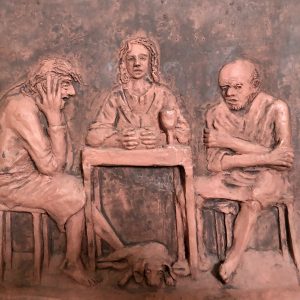
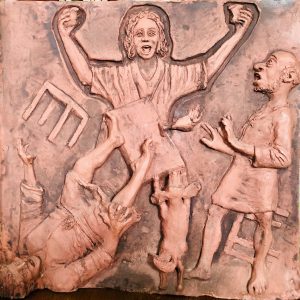
    Look, it’s an image of the Inn at Emmaus. There’s a dog asleep under the table. The disciples are discouraged, in grief. But if you turn sculpture around, you’ll see what happens when the bread is blessed and broken. One disciple falls off his chair; the other can’t believe his eyes. Only the dog is jumping for joy.


    “They recognize him in the breaking of the bread.”


    I believe I will recognize my Friend when we meet again. Eugene O’Neill says it best.

    “No matter how deep my sleep I shall hear you, and not all the power of death can keep my spirit from wagging a grateful tail. I will always love you as only a dog can.

    [i] Kathryn Tanner, Jesus, Humanity and the Trinity., p.21

  • Holy Days in the Apple Pi Inn: Ash Wednesday

    I found a rusty horseshoe buried at the bottom of a storage box on the second floor. It once was nailed on the north wall of the long dining room. Perhaps it came from the days when this Inn/Hotel needed stables or once cars arrived, it might have been used for a game of horseshoes. What I remember is that it was nailed up wrong, with all the luck running out. Perhaps that’s why it was relegated to obscurity. Somebody lacked horsesense, and lack of horse sense can serve to remind us of our human failings on this frozen Ash Wednesday. As Luther writes: “So man’s will is like a beast standing between two riders. If God rides, it wills and goes where God wills: as the Psalm says, ‘I am become as a beast before thee, and I am ever with thee.”


    On the Slavery of the Will

    I suffer from nostalgia
    for a horse drawn age
    when human hearts
    could count
    on being mounted.

    Divinity driven
    thoroughly bred
    outlaws once
    could be corralled.

    By the light
    of the medieval moon
    God or the Devil
    would croon,
    “Back in the saddle again.”

    Better to be spurred
    by absolutes,
    than harnessed by ambition
    or made to chaff at bits
    without a destiny in hand.

    Ghost ridden by our godless state
    our head strong heart less age
    stampedes toward the sunset
    where four tall horseman wait.

    And yet and yet
    along the way
    a change of mount is tied.

    A bared back rider waits
    to draw us with the spirit’s tether
    and harness hearts to holy need.

    Light is the reign
    and firm the seat
    to mount such change
    in metaphor in deed.