Month: June 2020

  • Holy Days in the Apple Pi Inn: An Anniversary of a Promise

    Holy Days in the Apple Pi Inn: An Anniversary of a Promise


    An anniversary is a way of telling time (returning annually); it’s a word inherited from Latin through Middle English to arrive in the 21st century. Year (annus) + Past Particle of “to turn” (versus). There are anniversaries of weddings, wars, births, deaths, and every human activity that a community wishes to remember, a time “to turn” to as the years pass.

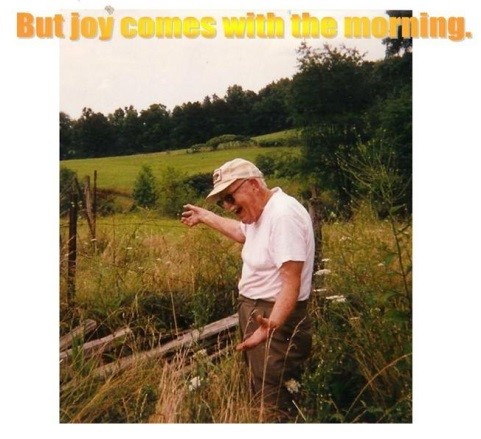
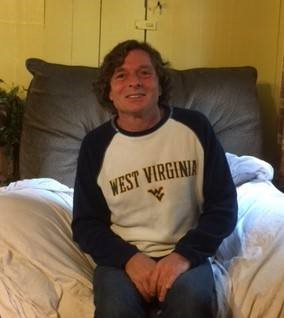
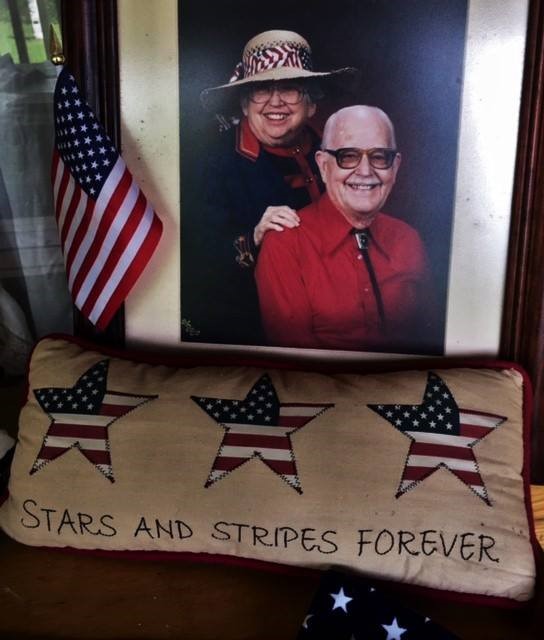
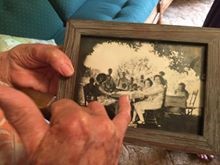
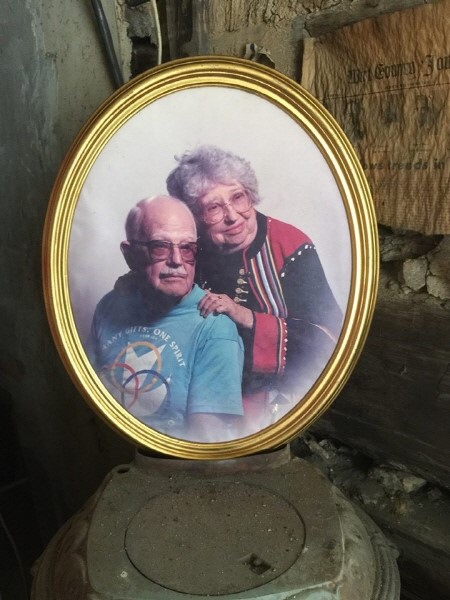
    Today I turn to the memory of wedding promises made over 70 years ago. Those promises directly connect to my being, since those words changed the legal, spiritual, social reality for those two people I call “parents”. I study their picture that rests in the Judge’s Room of the Inn on an old potbellied stove.* Did they know what they were saying those long years ago? The nation was at war; their minister an Army base chaplain; all the men were in uniform, ready to be deployed. Did they believe their promises would keep?

    Wedding vows are one of the few examples left of performative language: words that do what they say. The authority to “pronounce” the result of promises used to be more limited and less controversial. Judges, magistrates, and clergy would pronounce and the counting of anniversaries would begin. The Supreme Court opened the door and widened the wedding aisle this summer. Their decision created an anniversary that will be celebrated for years to come by communities wise enough to recognize the power of promises worth keeping.

    ” Will you love, comfort, honor, keep in sickness and in health, and forsaking all others, be faithful…as long as you both shall live.”

    I have spent this year sorting out what inherited bits and pieces of my parents’ promises to keep. What can be given away or thrown out? What is the rule of thumb that helps us to handle “tradition”? Every day can’t be an anniversary. Some memories should be forgotten. Surely it’s a safe bet to trash the odds and ends of coloring books stored a child’s set of plastic drawers stored in a shed.
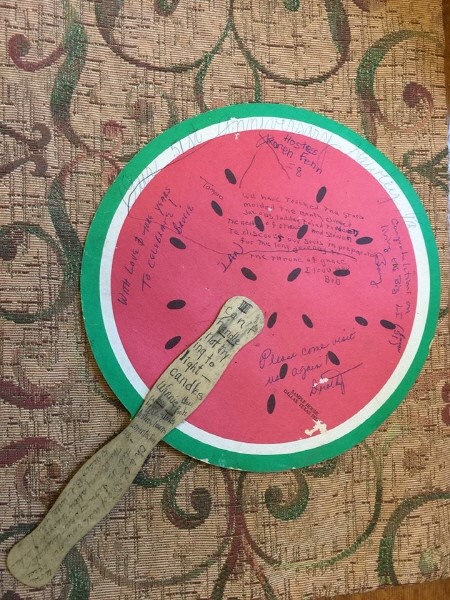
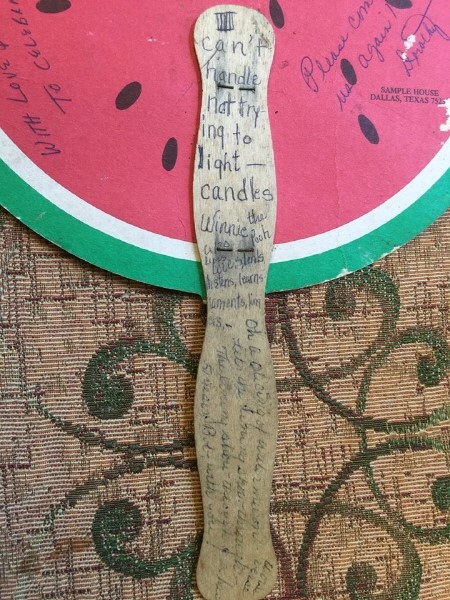
         

    It’s only my fondness for fans and watermelon that saved this relic of their 51st anniversary promises. I retrieved it from the trash and turn it over to find, written on the fan’s handle in my mother’s hand:
    “I can’t handle not trying to light candles. Winne the Pooh who lives, loves, lends, listens, learns, laments. . .” (Her last word is illegible.)

    Written in the left-handed block print my father had to learn when his right hand was severed by a hay baler is the following:

    “We have touched the stars,
    molded the earth, climbed
    Jacob’s ladder, tried to meet
    the needs of others, and striven
    to discover our souls in preparation
    for the long journey to
    the throne of grace.
    I love you. Bob. “

    Happy anniversary to all who keep such promises.

    *It took me 10 years to notice my father is wearing a Drew Theological School Orientation t-shirt in this photo.
  • Holy Days in the Apple Pi Inn: Honoring Fathers

    Holy Days in the Apple Pi Inn: Honoring Fathers


    The day to honor fathers is coming to a close. From handmade cards, to expensive tools, from home cooked meals to high end dining we search for ways to honor paternity. Honoring our fathers is a learned skill. The marketplace works hard to add price tags to the sound of children, young and grown, blessing those who fathered them.
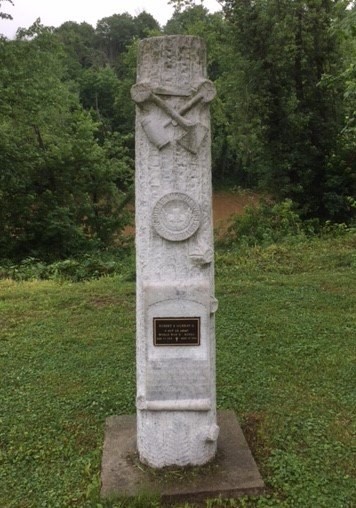
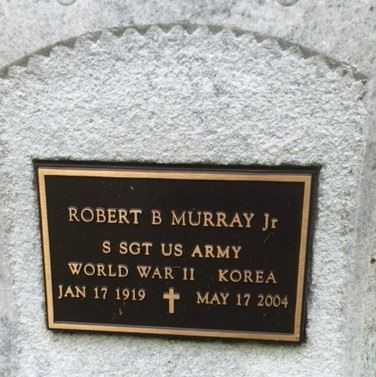
    How do we honor those to whom honor is due? If the words “good” and “father” belong together, you are blessed. So, how to remember and share the blessing? I sit on the back porch swing as the sun sets and study one memorial to our father. It is impressive, a monument in stone that witnesses to Robert Murray’s work in forestry, and the CCC, his lessons in ecology, his charter membership in the Resource, Conservation and Development Council for WV, and his bone-deep love of nature that he shared with his only brother, Bill.

    Visitors to the Inn compliment his daughters on how we’ve honored him. Sometimes I just nod, sometimes I confess that it isn’t exactly what it seems. It doesn’t mark his grave; it wasn’t his, originally. Our mother discovered it on sale, in Texas, a “returned” monument, so to speak. Somehow she talked a trucker into driving this 1,800 lb. stone tree from Texas to Elizabeth for free. I often wondered what my father thought of his future memorial, but he never said. The bronze plaque listing his service to his country was added after his death.

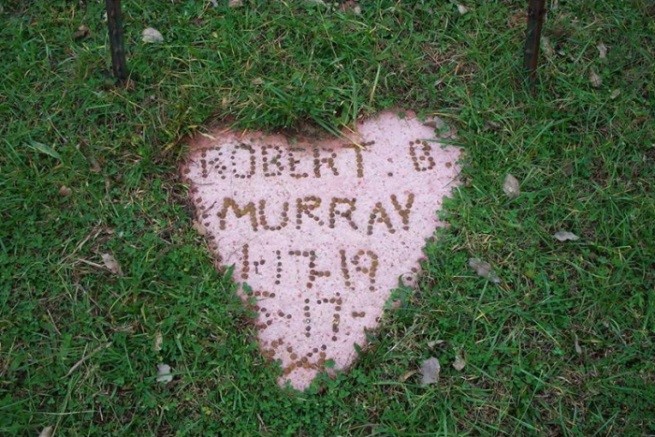
    His grave is not in town; it’s in the apple orchard on the Spring Creek farm. It’s where he asked us to put his ashes, and in WV, you can still pick your own resting place on ground that you know and love. This memorial is not impressive; it looks like the work of a child. It’s not high and lifted up; it’s so low to the ground you can mow over it. Ashes, then a crudely shaped heart made out of concrete, with a name spelled out in marbles made in WV. They shine when the early morning sun reaches them.

    Two different ways to honor. Two different spaces. Two holy human places. How do we honor those to whom honor is due? I know I’ve reached the time when I have to choose. Keep the Inn, my mother’s dream or the Spring Creek farm, my father’s legacy? The time to choose is coming, but tonight I just sit and swing.

  • Holy Days in the Apple Pi Inn: West by God Virginia Day

    Holy Days in the Apple Pi Inn: West by God Virginia Day

    June 20, 1863, President Lincoln signed a bill that authorized a new state in the Union: West Virginia. It was an action taken in the middle of a Civil War; its critics claimed it was unconstitutional. We seceded from the South, Confederate states who had already seceded. Some scholars insist that it was the Northern investors who were to blame or praise, wanting to side with the Union in return for control of the railroads, timber, mining, gas and oil. Some make the argument that the western part of Virginia had always been at economic and political odds with the Virginia establishment of church and state sanctioned slavery.

    It’s often overlooked that the first proposed constitution supported the Union with the condition that no blacks could reside in the state. Lincoln refused to sign until that condition was removed. The State Motto leaves the question of motivation open: Mountaineers are always free.

    My mother’s interpretation was a theo-poetic argument for Providence and freedom. It began with “In 1862 Abe Lincoln was mighty blue. . .” Her story/history would name the terrible losses at Antietam and claim that the offer of the economic and political resources of western Virginia convicted President Lincoln to issue the Emancipation Proclamation and create a new state. Anyone who came to visit the old Inn heard her recite that history at the front door, and if they disagreed, they were wise to keep their differences to themselves. I once had to rescue a Confederate re-enactor who’d come to the door to ask for water. She’d literally backed him into the corner, using her schoolteacher voice and finger to rebuke him for betraying the Union.


    The story/history of this Inn is rooted in the name and origin story of this state. Ephraim Bee was father-in- law to Mary Jane Bee who purchased the Inn after the death of her Confederate husband Josiah. Four of Ephraim’s sons served in the Civil War. Two fought for the North and two for the South. Ephraim was a blacksmith, an inn-keeper, a magistrate, and one of the First Legislators of the state. His fifth daughter was born on the day that Lincoln signed the state bill, so he named her West Virginia Bee. Little wonder we grew up saying, “West by God Virginia.”

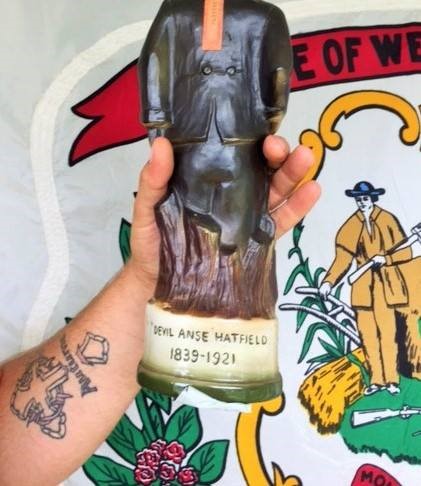
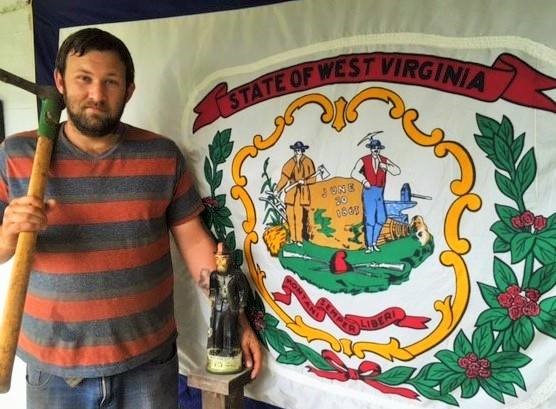
    What makes for a more perfect union in these days of stress and struggle? Hospitality, Humor, Honesty, and Humanity are the 4-Hs that can make this state great. I appreciate the presence in this old structure of mountaineers like Billy Jean LaCourse, descendent of the McCoys, who creates art and order in every corner he brightens, and Joey Hatfield, rural king of the meadow, mower, and weed whip. I treasure the strong women who make a way out of no way, women who refuse to let the dreams of freedom and public education die, women who stand at the locked down gates of tomorrow and declare: Mountaineers are always free!

    — with Katie Baters.


  • Mystery


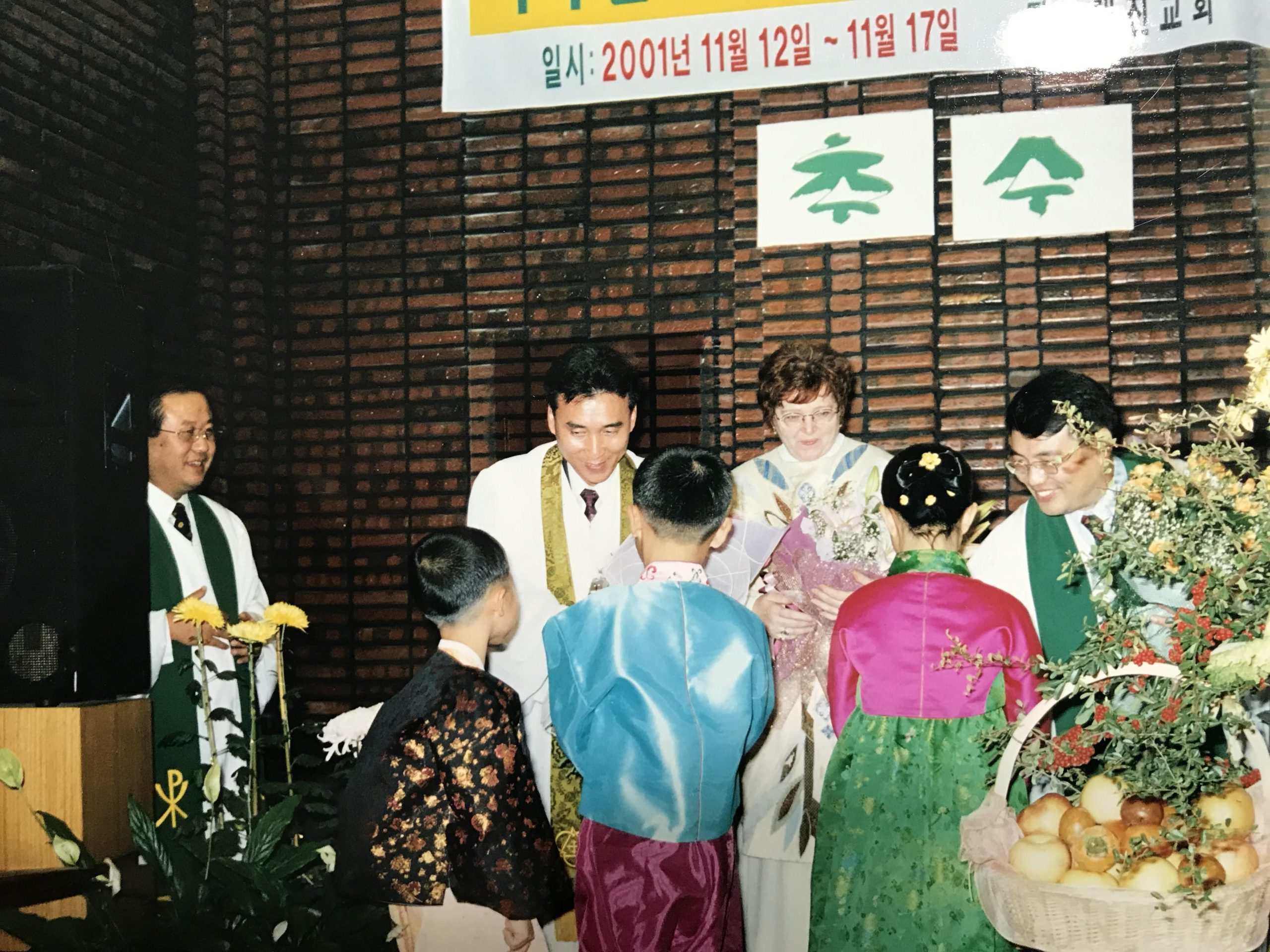
    Human life is a mystery, beginning to end. The only wise response I’ve learned to the question, “Why?” is also the best prayer, “Thank you.” Gratitude in the face of mystery is less an answer, more an attitude.  I learned this again in the Daejin Korean Methodist by the Eastern Sea. It is located on the top of a hill overlooking the last civic structure in South Korea, a lighthouse.  The beam from that lighthouse shines directly into the church’s windows, reminding the pastor, YeongSeop Jeon, of the Church’s mission, being a light for Christ so that those at sea can find safe harbor.

    It’s the time of Chuseok, traditional harvest and family festival. The Korean word for “give thanks” is displayed like a fine painting, and mounted at the front of the sanctuary. A community feast is going to follow the service. My translator and mentor in all things Korean is Dr. Sehyoung Lee, a Drew alum. The Thanksgiving liturgical design is very beautiful. A wooden stand that is used like a backpack by vendors is holding a rainbow of vegetables and fruit. There are clusters of red peppers, kimchi pots, drying herbs.

    It’s going to be a service of spoons. I’d learned something about traditional Korean spoons over the three months. In traditional Korean culture one has a lifelong relationship with a spoon. If it’s given as a gift to a child it’s a small size. When the child grew, the mother would take it to a metal worker and have the spoon handle extended, so it grows just like the child.  Korean spoons, even contemporary ones, have a more intimate connection in a person’s life than most of North Americans experience.

    I’ve asked the pastor to have each member of the congregation bring their spoon when they come to church this Sunday. Everyone arrives, spoon in hand…  They are mystified by the pastor’s request, but they’ve done what he asked. “What are the spoons for?” they ask at the door. Every one wants to know about the spoons. I say it’s a mystery. The laugh. They like this.

    I ask them to consider what it means when Jesus tells us, “Feed my lambs.”  I don’t need to remind them of what they know better than I do, that there are children and elders starving less than 20 miles away, separated from them by barbed wire and half a century of war. I plan to say grace, eucharistia, “Thank You” and ask for a blessing on our spoons.

    If the service started with a mystery, it deepened before the day was over. After an extraordinary meal for which I was very thankful, I was invited to tour the military facility that’s marks the line between two countries still at war. The 38th parallel was more than geography in the homes of Korean War veterans. I wanted to see a place that mattered more than words could express to my father. It meant more and less than “Thank you” in a war that wasn’t won, just put it on holding for more than half a century now.

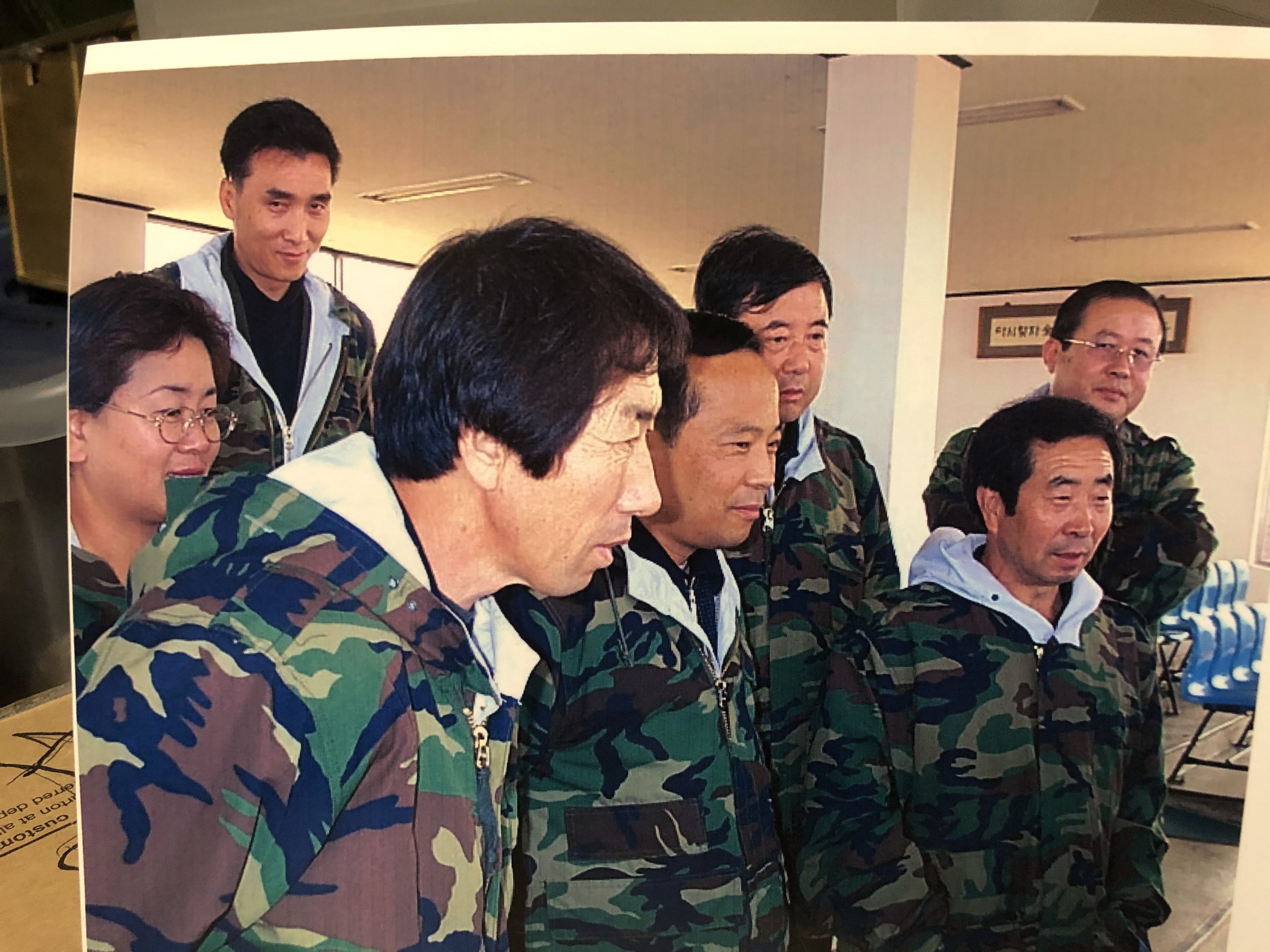
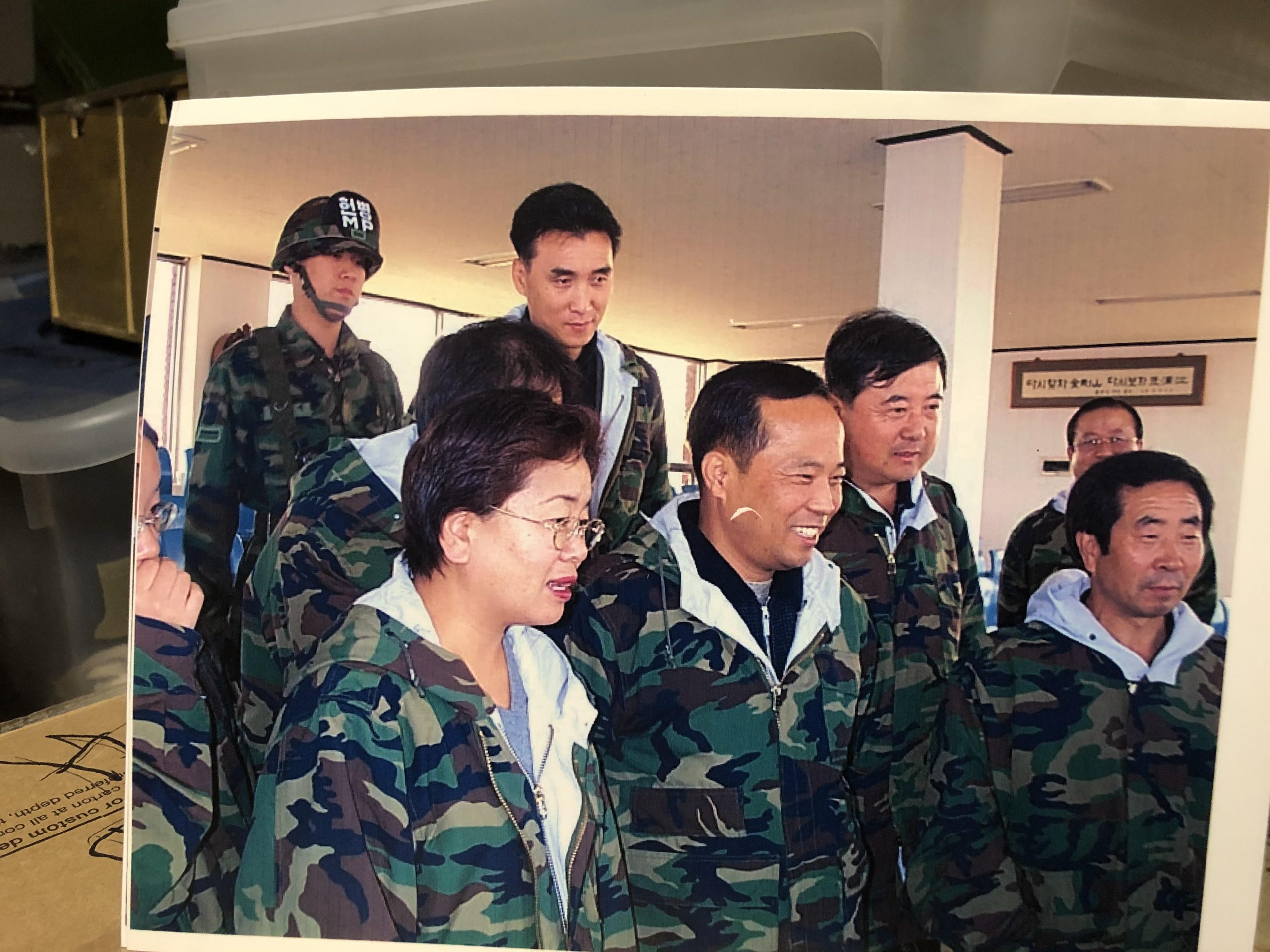
    A group of us caravanned together. Many Koreans aren’t permitted to visit until they are invited by an officer of rank. The station was on high alert. 9-11 had just happened the month earlier, and the streets of Seoul were lined with young soldiers guarding American-associated businesses. The landscape, edged by the Eastern Sea, was incredibly lush, and the sky as blue as blue can be. I walked from corner to corner in the tower behind bullet-proof glass, just looking at the beauty and the threat. Miles of barbed wire and thousands of explosives were surrounded by seemingly untouched shades of green.

    Pastor Jeon and his church leaders were talking as they looked through large telescopes that brought North Korea very close. The conversation flowed like a quiet stream, until suddenly the tempo changed. I didn’t understand a word, but I turned my camera and took a picture of them. Their body language and their language suddenly changed again so I took another picture. Some of them were laughing, some were shocked, some just looked mystified at whatever they were seeing through those lenses.


    After a moment, one of the men offered me a look. I took it and then stepped back very surprised, and red-faced. At the other end of that lens was a young North Korean man, stark naked. Dr. Lee filled in the background. A small North Korean boat had landed on a small island in the no-man’s area of the sea. Five or six soldiers got out and were walking around at the water’s edge. I realized why there were now red lights flashing in the tower. One of the men had unexpectedly taken off all his clothes and dove into the sea, swimming for the South Korea shoreline.

    It was very cold; the distance was over a mile, no one expected him to make it to shore. But there he stood, as naked and dripping wet as the day he was born. I could feel the hesitation in the tower.  For one brief moment, there was a pause in the business of war. It was only a moment. The alarms went off; the armed jeeps roared toward the beach; he would be shot. No one is allowed to defect on the 38th parallel.

    He stood there framed between sea and sky for a moment more, then he turned and dove back into the sea before the shooting started.  When he reached the island, he got out, got dressed, and he and the others got into the boat and rowed out of sight of the tower.

    What was that? What did it mean? What had he wanted?  We talked, I mostly listened all the way back to the church and all the way home. Did he do it as a dare? Had he hoped for a welcome? Did he want to stand for just a moment, as one human being, baptized by the sea and free.

    What I can say now, is that I said then. “It’s a mystery. Thank you.”


  • Holy Days in the Apple Pi Inn: Flag Day

    Holy Days in the Apple Pi Inn: Flag Day


    That the flag of the United States shall be of
    thirteen stripes of alternate red and white,
    with a union of thirteen stars of white in a blue field,
    representing the new constellation.

    It began with a resolution from the Continental Congress, June 14 1777. It took a hundred years to raise that flag as a celebration and children were the first to see it done. According to the CUS Department of Veterans, Flag Day programs were held all over the nation by the late 1800s. The purpose: making Americans of immigrant children; wrapping them in the flag, so to speak. That flag wrapping resolution was a different story/history for First Nations children.

    New York City has a claim to one of the earliest recorded celebrations: June 14, 1889, in a free kindergarten for the poor. What could helping the children of the poor and honoring the flag mean? What new constellations, what bright stars might be revealed in Camden or Clarksburg or any city in this nation if children never went to bed hungry?

    The Congress of 1949 and President “I’m From Missouri. Show Me” Harry Truman turned local customs of flag celebrations into national law: Flag Day. It’s hard to remember what those early lessons of citizenship meant. The flag covers everything from caskets to Kleenex these days. It’s a product in danger of being overexposed. Perhaps it’s time for the flag to be redeemed, in the Hebrew sense of that word. To redeem: to purchase back that which has been sold into slavery.

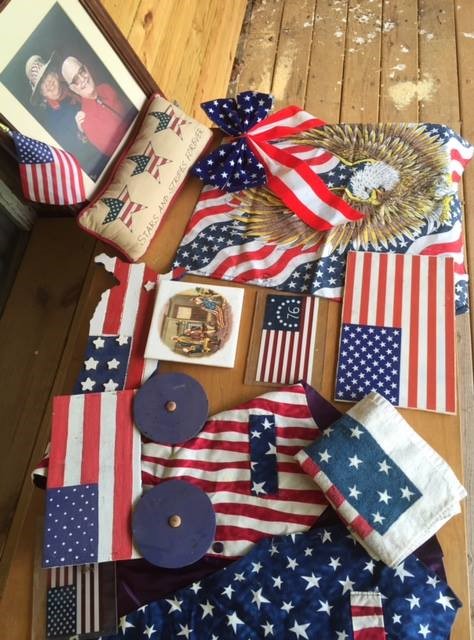
    I rummage through a box in the Teachers’ Room in the old Inn filled to overflowing with the red, white, and blue . I know I should get rid of this musty stuff, but tonight I place a picture of two teachers in its midst. They taught countless children about liberty and law, honor and self-respect. They knew a thing or two about how to raise a flag.


  • No Silver Bullets

    No Silver Bullets

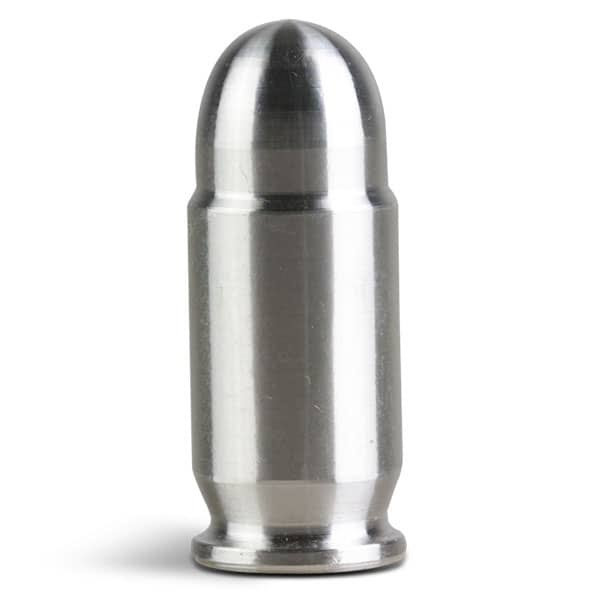
    What’s the market now for silver bullets? With all the weaponry on American streets, from batons, tear gas, water bottles, assault rifles, grenade launchers, and old-fashioned sticks and stones, why is it so hard to find a masked man with silver bullets?

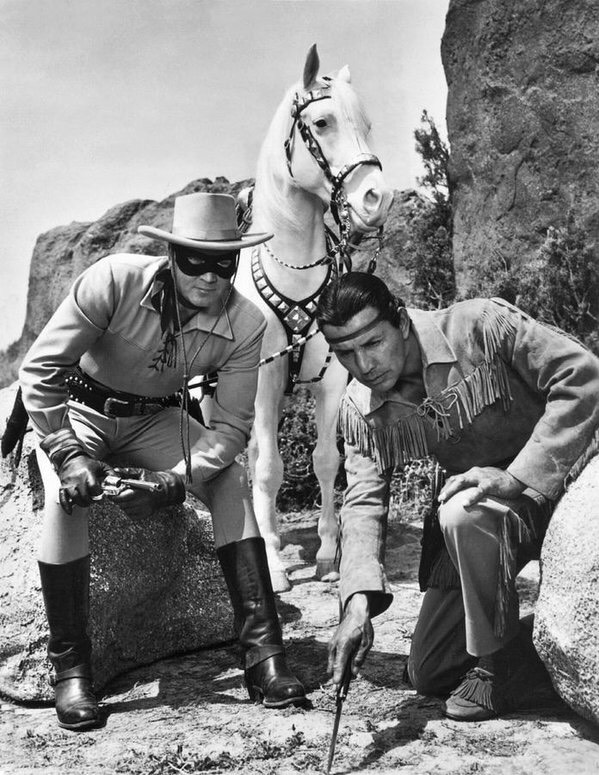
    We didn’t have a TV in our house growing up; long after it was considered a necessity, we hung out with the neighbors who felt sorry for us. That means what I saw stuck with me, so I can still hear this breathless voice plus sound track.  “A fiery horse with the speed of light, a cloud of dust and a hearty Hi-Yo Silver! The Lone Ranger! … With his faithful Indian companion Tonto, the daring and resourceful masked rider of the plains led the fight for law and order in the early western United States!”

    So where is that masked man and his far wiser companion? Fighting for law and order in the early west usually meant enforcing the Doctrine of Discovery. That was the law, but it was morally out of order. Subversive work to dismantle colonial structures needs activists/actors like Jay Silverheels who played Tonto. Tonto was a name that actually meant “Stupid”, but if stupid is as stupid does, Silverheels, a Mohawk Canadian, outsmarted them all. He was the first First Nations actor to portray an Amerindian. He received his own star on Hollywood’s Walk of Fame, was honored with a Life Achievement Award from The First Americans in the Arts and established a Community Center for Native Americans in LA.

    But back to needing a daring and resourceful solution to the dissolution of law and order we see in video clips or experience on the front-lines of demonstrations that start out peaceful and end up something else.  Maybe we don’t need a masked man.  Maybe we just need a silver bullet.

    Why silver? The Lone Ranger used silver bullets as a symbol of justice, as a reminder that life, like silver should not be wasted or thrown away. On the screen he never shoots to kill, just wounds those who are clearly “bad” guys. Never waste. Never shoot to kill.

    That what it meant in the days of Tonto and the Lone Ranger. A silver bullet now means an infallible means of attack or defense or a simple remedy for a difficult or intractable problem. Silver bullets are flying everywhere, and there’s more than wounding going on. The reality is that there are no infallible means of attack. Infallible means incapable of making mistakes. Tamir Rice could tell us about mistaking a toy for a weapon if he were still here. Breonna Taylor could tell us that locked doors are not infallible protection if she were here.  Violence is offered as a simple remedy by the Boogaloo Boys, or Alex Jones, as well as some who wear law and order badges. Many in the corridors of power as well some in the broken economies of city streets are target practicing on people who’ve lost the most.   When those with power believe we can do no wrong, that there’s nothing to apologize for, that the good guys, including God are always on our side, then we’re packing silver bullets.

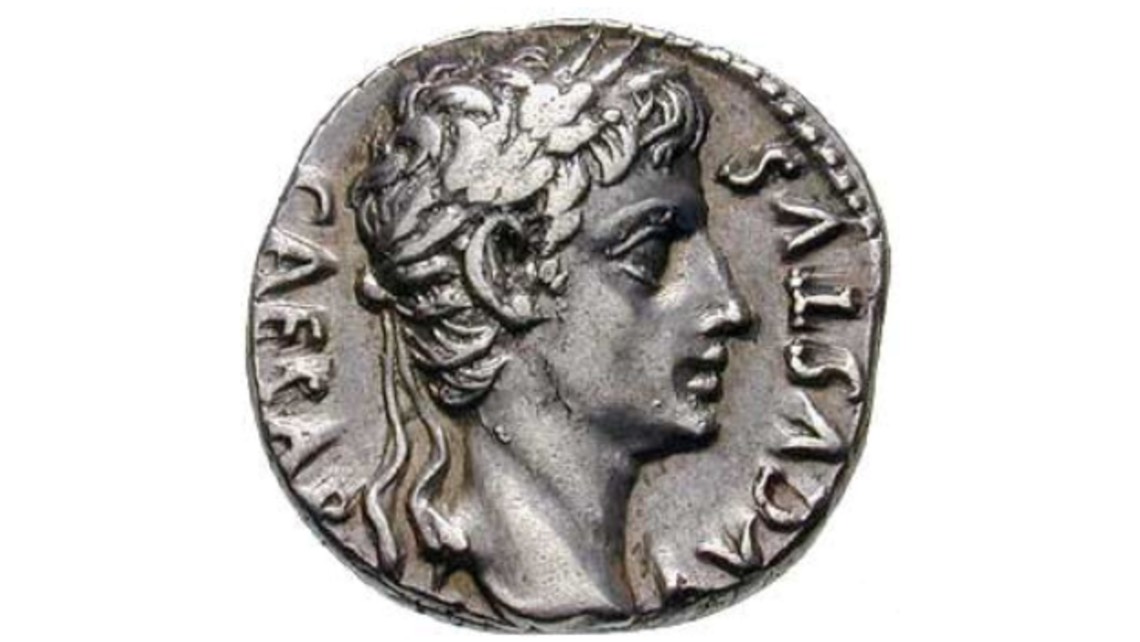
    Speaking of silver, a denarius (plural denarii) was an ancient Roman coin made of silver. It functioned like a dime or a quarter, a small part of a bigger currency or denomination. The smallest coin at the time was called the “as” or “asses” plural.  Think of a penny and dime in today’s marketplace. Once a denarius counted for 10 “asses”, just as dime equals 10 pennies. Its name means “contains ten”, but its silver content and its value went down over the course of the empire. By the time of the last emperor a denarius contained just 3 grams of silver.

    In Matthew 22:15-22 the religious authorities attempt to corner Jesus, push him into a shootout at the high noon of his ministry. Jesus sees them coming and says, “Show me the money”, and he’s handed a denarius.

    Whose image is this? Easy answer. Caesar sets the value because the Empire’s currency belongs to Caesar. It’s his silver. Give to Caesar the things that are Caesar’s. Silver coins. Silver bullets, Pieces of silver.

    But if you bear imago dei, if you’re imprinted with the name of the Beloved, then give God the things that are God’s. The early Christians had to answer a difficult question and there was only one answer: Who do you say that I am?  Remember what that answer cost them: Jesus is Lord; Caesar isn’t. That’s not a silver bullet. There is no silver bullet when it comes to the violence and mystery of the human heart. There’s no infallible means of attack or defense. Your metal will be tested by your willingness to put yourself in harm’s way for the sake of Love.

  • Holy Days at the Apple Pi Inn: A Stitch in Time

    Holy Days at the Apple Pi Inn: A Stitch in Time


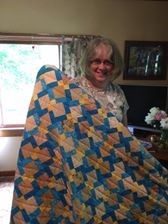
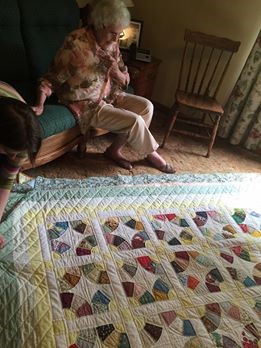
    June is unraveling as I look for the places in this old structure where repair is not an option but the question of survival. Foundation? Wiring? Siding? What can last another season? What needs saving now? I study the old quilts folded in drawers and envy those who could bind pieces of life together with a needle and thread. A stitch in time saves nine, but which “stitch” is the saving one?

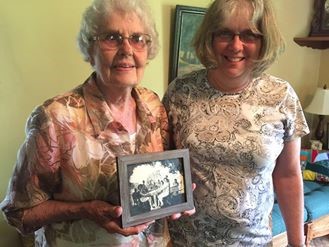
    Best to turn my attention to those who know about piecing life together. I visit Reberta and Lois, mother and daughter, retired teachers and artists of cloth. They hosted two of my students this summer and shared sharp wit and needle wisdom that they inherited from their mother’s mother’s hands.

    Here is a tie that binds time together. Here a construction of the gospel that wears well over time.

    The Quilters

    Blessed be the tie that binds:
    the heart
    the kindred mind
    the joy
    the inward pain
    the hope
    to meet again.

    They are were always:

    frontier followers
    pioneers in Jesus
    quilters of the call.

    They gather

    night and noon
    scraps of shadows
    snippets of light.

    They gossip for God
    stitch story skin
    quilt with gutstring
    unravel the tangles of shame.

    They trace the grace
    newly born
    freshly wed
    children’s children
    treasured dead.

    They bear but thimbles.
    They wear their needles bare.

    Quilters of the Call
    piece
    the four-square gospel,
    CrossXstitch

    truth in time.

    Copyright Heather Murray Elkins, 1985, Revised 2016. All rights reserved.


  • Altaring the World: Bits and Pieces

    Altaring the World: Bits and Pieces


    Sorting out stuff for a departure from this particular state (geography or mortality) is spiritually exhausting and a very dusty bodily experience. I have a life-long affinity for “bricolage”, a process by which one begins with bits and pieces of traditional linguistic material, arranges some of them into a structured whole, leaves others to the side, and ends with a language ready to use.[i]

    This affinity is turning into an affliction.


    I’m not sure I’m going to end up with a language ready to use while sheltering in the basement. I’m sorting out trash/treasure of the past to the ominous present and shattering sounds of the violence of the state.  I make lists when chaos threatens, so the listing begins:

    • Another! #$$\* box of Bill’s black notebooks – He only writes in the first 20 or so pages, but what I can decipher (dreams, philosophy, unfinished songs) are too good to throw away.
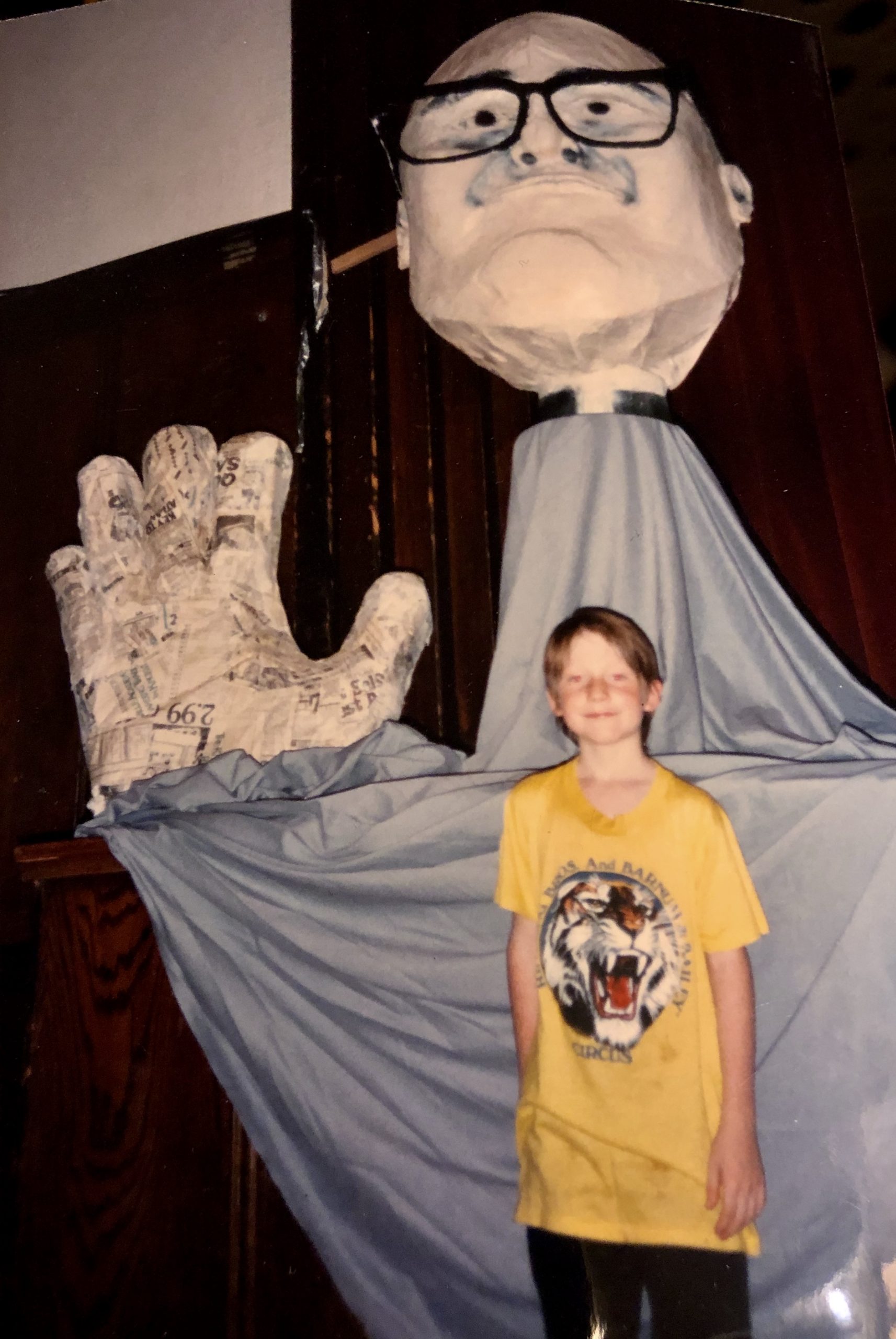
    • A picture from the Knoxville Fellowship with Daniel and the giant puppet of Bishop Oscar Romero he was helping to paint. – His last sermon before his assassination echoes in our streets “I want to make a special appeal to soldiers, notional guardsmen, and policemen: each of you is one of us. The peasants you kill are your own brothers and sisters.”
    • A copy of Weavings “Keeping the Door open for the Holy” is under the bookcase I move. – I read these words, written after the death of her husband, John, from Marjorie Thompson: “Sometimes staying open to the Holy is just the sheer tenacity of hope, a steady desire not to loves the thread of connection.”


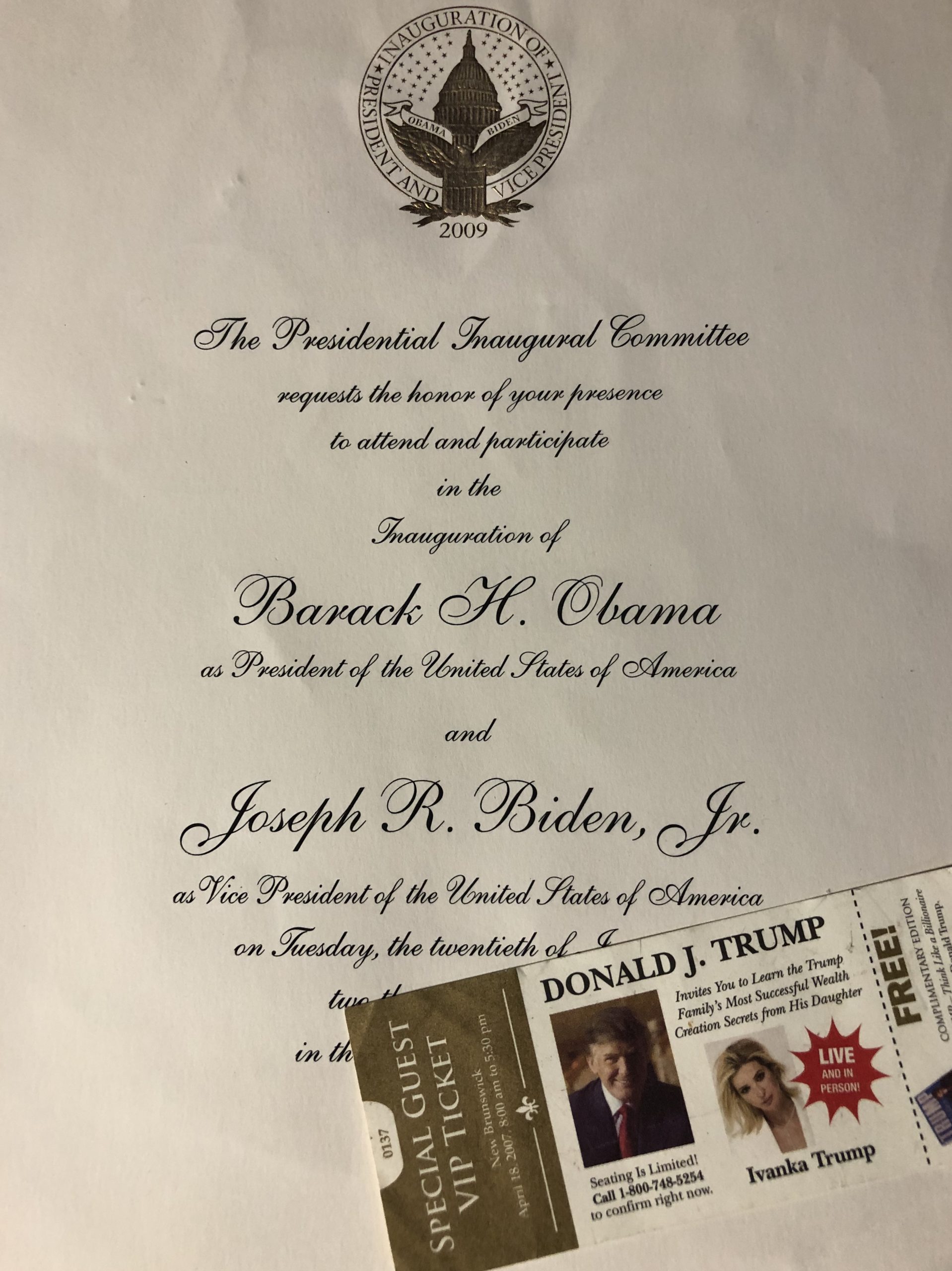
    The thread of connection can present a threat as well as a paradox.  How is it possible to have an invitation to the 2008 inauguration of Barack H. Obama and Joseph R. Biden, Jr. in the same box as a special guest VIP ticket from Donald J. Trump who “invites you to Learn the Trump Family’s Most Successful Wealth Creation Secrets from His Daughter, Ivanka.”  Whose stuff is this??


    I’ve always identified the Holy as having an impertinent sense of humor, but this verges on radical rearrangement of the universe. I move to the next to next to last box as I listen to President Obama’s Town Hall and then I see the quote about hospitality for presidents from WV’s governor, named “Justice” pop up on my Facebook feed. “We should absolutely welcome all but, you know, maybe not Barack Obama.” I find myself praying that the waters of justice roll down and streams of righteousness rise in West by God Virginia.


    So much for lists as a form of chaos control. The center isn’t holding, and that may be a very good thing. I’m not sure I’m ever coming up from this mess. I shut off Facebook and turn on Sweet Honey in the Rock, “We who believe in freedom cannot rest until it comes.”

    So, suck it up. I’ve got my marching orders. I move on to uncover the lost that will keep me found. A Carlyle Marney photo from Interpreter’s House that says everything there is to say about authentic ministry, one human being comforting another as they weep.  A poster/gift from Ada Maria Isasi-Diaz from an early women’s march: “Bread and Roses, Bread and Roses!” is wrapped up for the journey toward freedom. It will go a long way with the image of the hand-painted sign from this week’s protest: “All mothers were summoned when George Floyd called out for his Momma!”


    I open one of my Grandma’s last bibles and read: “He hath scattered the proud in the imagination of their hearts. He hath put down the mighty, from their seat: and hath exalted the humble and meek. He hath filled the hungry with good things: and the rich he hath sent empty away.”

    .


    [i] Claude Levi-Strauss, The Savage Mind , Chicago, University of Chicago. Press 1966, 74.