Author: Brian Allain

  • Advent 2020

    Advent 2020


    Advent. The candles and wreath are still packed in some unmarked box in the attic along with my liturgical motivation. I do appreciate the whimsy of the proposal to use 3 potatoes and 1 turnip with paper flames attached for households without 4 candles handy.

    I even envy those who’ve skipped ahead to Christmas via Facebook, but I’m even less inclined to wrap anything around a tree right now. It’s not a lack of thanksgiving; perhaps it’s a shortage of hope or maybe vitamin D.

    What did I hope for in November? A miraculous reunion of divided states of mind and heart? Perhaps. Having a Civil War scholar in residence kept the lid on that.  What about a miracle cure for what plagues us; a daring rescue by masked men and women of those foolish who refuse the common good and common sense?

    Maybe it’s simply that I can’t figure out how to recognize hope these days. Hebrews 11:1 “Now faith is the assurance of things hoped for, the conviction of things not seen.” (NRSV) There’s my problem: a lack of conviction.

    I’m interrupted in my writing by a question from William Wesley: “Do you believe that history is providential?” He tries on several answers as I ruminate. The sound of the trash truck interrupts as I rush to make sure the recycles are out. That done, I return to the task of the question of conviction. He’s reflecting on the Westminster Abby’s wall of modern saints. I’m not sure he noticed my absence, but he’s summoned Hebrews 12:1 into sight. “Therefore, since we are surrounded by so great a cloud of witnesses…”

    So great a cloud…now the fire station alarm goes off. We’re two blocks away, so it’s an undertone to our days and nights. I’m grateful that Hannah Arendt isn’t inclined to howl at the sound.  This alarm isn’t alarming to the humans in this house because, first, it’s not sounding for us, and importantly, there’s trouble but somebody’s coming to some body’s rescue.

    The fire departments here are all volunteer; even in Wilmington. President-elect Biden has the Secret Service now, but Delawarians have well-trained citizens, volunteers who come when called.  The sound convicts me; this is what I need: the assurance of things hoped for, a faith under restoration in this nation. When there’s a need, someone shows up. Will it work out? God knows, but it’s providence in action.

    I climb the attic stairs and open a box labeled “Fragile. Christmas.” At the top of the box, there’s a handmade sign, a Christmas gift from my sister, Brucilla Campbell, made when her times were hard and lean. Two purple angels frame these words: “Without hope, the soul would have no rainbows, and the eyes no tears.”

    Sometimes, even in Advent, there is “evidence of things not seen.” KJV


  • Talking Turkey

    Talking Turkey


    Meleagris. It’s the gobble genus; gobble being the native language of America’s fine feathered friend, the turkey. It’s not clear if there will be an official Presidential pardon this year, but the social media is stuffed with recipes for turkey alternatives. Good luck hunting a bird under 10 pounds in the grocery aisles.

    I’ve always sided with Ben Franklin’s spirited defense of turkey written in a letter to his daughter in 1784.  The turkey is “a true original native of America” and “a bird of courage that would not hesitate to attack a grenadier of the British Guards who should presume to invade his farm yard with a red coat on.”

    I can vouch for that. The back road from the Cokesbury parsonage led to a T with stop signs. My car had paint chips missing above the bumper due to the wild turkey that would launch an attack as soon as I slowed to a stop. It was as if I’d invaded his stomping grounds.

    There are turkey tracks across my landscape. Turkey is the centerpiece of my family thanksgiving. A bird big enough to fill the plates of family, neighbors, and often strangers. The wish bone is a prize, and the wish making and bone breaking a sibling ritual.

    Our living room in the desert north of Tucson is the place of origin of a church, now St. Marks UMC,  but between its hatching and its final settling in, the community roosted in a turkey shed.  The Meleagris were replaced with Methodists for a season. I remember wondering if we’d ever outgrow the teasing of being “turkeys”. The Holy Spirit occasionally appears in my dreams as a feathered being that’s not a dove.

    Manifest destiny isn’t a healthy theology for either native peoples or native birds. I try my hand at role reversal in a children’s play I write at Rough Rock on the Navajo Reservation. I remember their delight when Turkey Lurkey corrals the cowboys and banishes the BIA. Not great literature, but very good medicine.

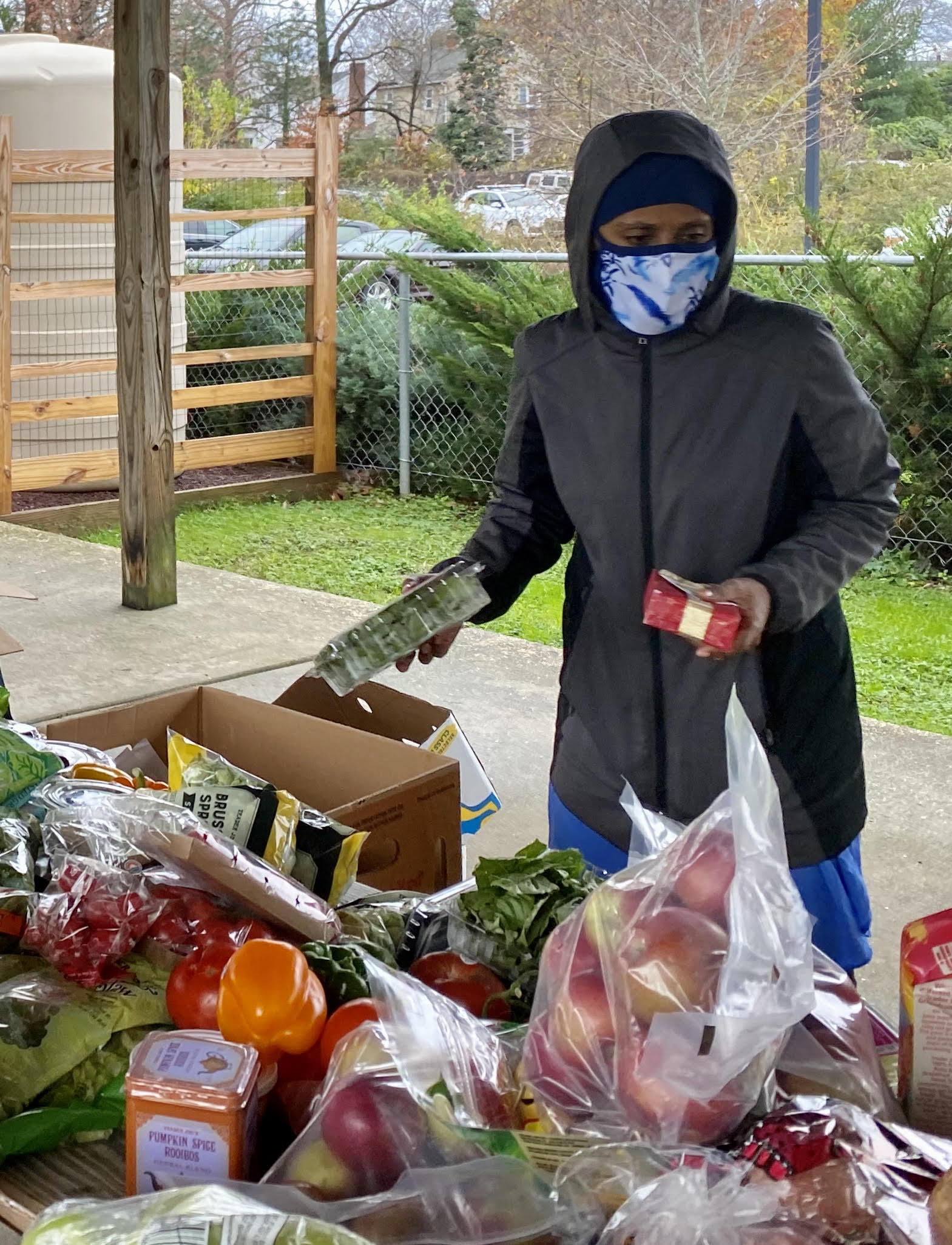
    This Covid season of caution has affected my relationship of Lions and Turkeys. I did not help pack Thanksgiving boxes; I just donated food. We quarantine because I want Bill and Daniel and Jess at our family table next year. I didn’t watch kids carry groceries into their neighbors, full of pride. But turkey was on the menu, cooked by Bellevue volunteers and food boxes were still faithfully packed to overflowing, then carried to cars along with Thanksgiving cards made by children.

    I look at the thanks giving that rests on my kitchen table: sliced turkey, organic potatoes, broccoli, celery, and bananas, all from local farmers. If talking turkey means telling the truth and the whole truth, so help us, God, Franklin was right. We can survive if we serve others. We can thrive if we trust and share. Courage is what America needs now.

  • Spoon Fed

    Spoon Fed


    We’re spoon fed at the start and at the finish, if justice and mercy have any say in the way the world turns.  Human life requires feeding in its beginning and to its end.  Somebody has to feed us or we wouldn’t be here. To be spoon fed should be celebrated but it’s a sign of vulnerability. It means we’re either too young or too infirm to feed ourselves, and yet a spoon is a revelation of a holy human relationship. To stretch out a spoon is to extend a table of hospitality in God’s name, and in my household of faith, for Christ’s sake.  Good spoon work requires remembering how we’ve been fed and blessing the hands that have fed us by feeding others. Memorial and thanksgiving form the centerpiece in this table of sacramental life. We need help, however, in our table manners.  We need daily reminders of how to say grace.

    We also need lessons on how to bless, not bite the hand that feeds us.  My best teacher of table manners was my mother’s mother, Flora.  At the age of 106, she’d moved from feeding to being fed.  She’s been the daily bread source of our young lives. She cooked plain, not fancy, until her late 80s. She moved from the stove to setting the table in her 90s.

    I’ve framed her final lesson. My older sister’s kitchen is filled with the noisy sounds and smells of a 3-generation thanksgiving dinner.  My oldest sister, Sandy Lee Mace, inherited our grandma’s care and cooking DNA. Brucilla Campbell, my younger sister adds the global and gourmet sense to dining. Wilson Cloudchamber, youngest of the Murray girls, is a true believer in organic life.

    I’m missing all of the above, so I do as I’m told:  feed Grandma. Turkey is now beyond Grandma’s ability or interest.  Long after other tastes have departed, the sense of bitter and sweet remains, so she’s having desert.  I spoon feed her ice cream, my attention elsewhere, until she stops the spoon. She traces the spoon to my fingers, then kisses my hand. She then returns to the ice cream.

    A gesture of gratitude. To kiss the hand that feeds you. To feed others as you have been fed-with a grateful heart. This is what Thanksgiving means. This is Eucharist. We are spoon fed, start to finish.

    Stirring Women


    We are stirred by a sense

       as common as spoons.

       Amen.


    We are capable

       of cupping God.

       So be it.


    We believe in the destiny of dining.

    We ladle grace like gravy

       over the bread of life.


    In a hard-to-handle time

       we are good at getting to the bottom,

       gripped in Necessity’s hand.


    We invent perpetual motion

       from a rounded shape

       and a hungry sound.


    Few if any

        are born to the taste of silver.

    Most acquire stainless steel.


    We inspect tear spots.

       and expect tarnish.  

    We polish tea spoons

       and offer sympathy

       with just a trace of acid.


    Let others sharpen their wits,

    pare away distinctions,

    separate the jointedness of time.


    We are spoon fed, start to finish.

    Stir, lift, and blend mercy

       served warm.


    Let us be good and godly as spoons.

       Amen.[i]


    [i] Heather Murray Elkins © 1987, revised 2005. Worshiping Women (Abingdon), 1995. All rights reserved.

  • Blessed is She who Believes

    Blessed is She who Believes


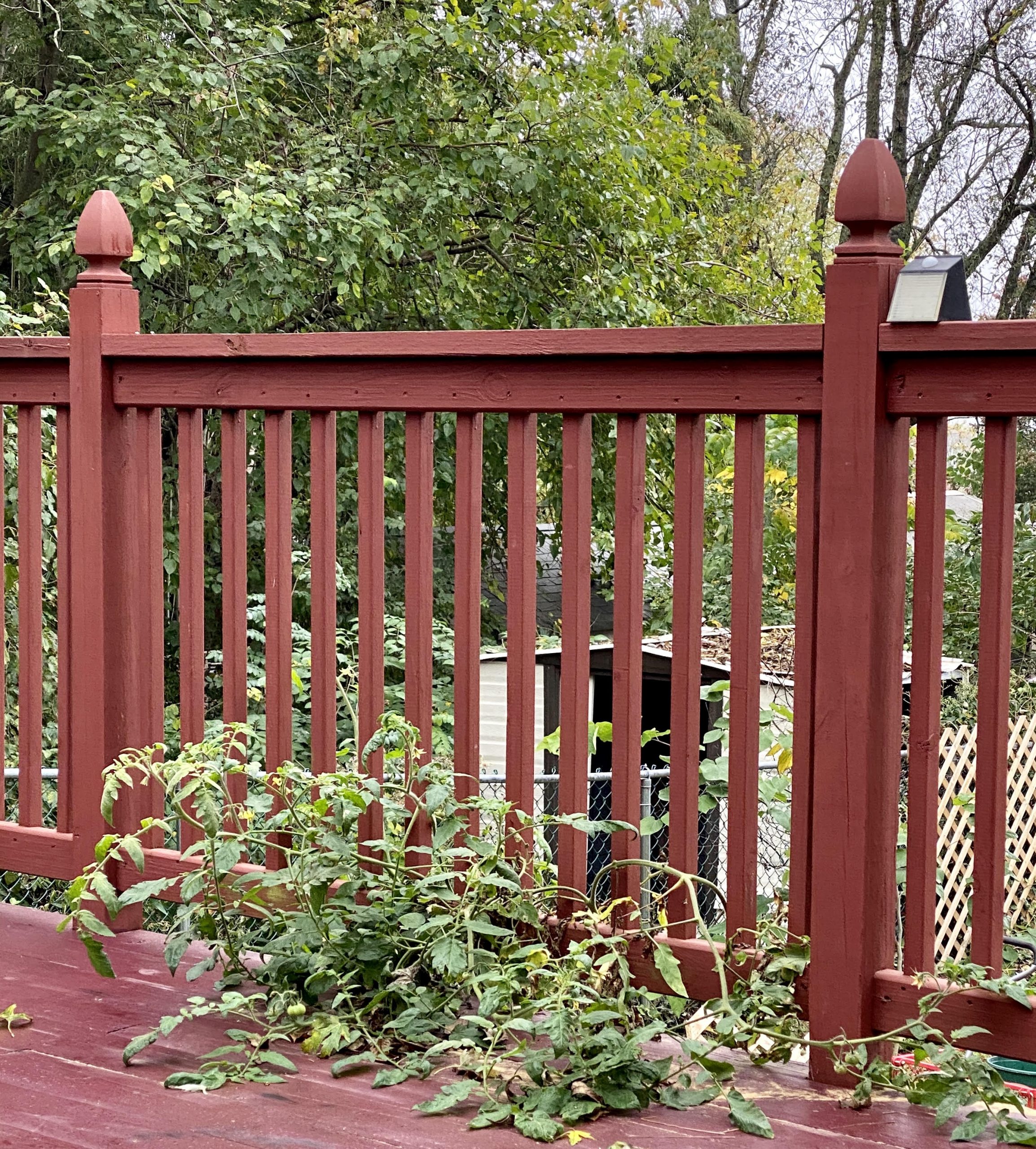
    Our back deck is now bedecked with a tomato plant that’s over 12 feet high. As a very novice gardener, I’d prepared for the three small plants I’d purchased with a reasonable support system. Two of them behaved nicely, reaching a modest height, producing medium sized fruit. One reached the end of its lattice and threw a green tendril skyward, latching onto a passing bee or sparrow, then letting go to land deckside up.


    I pinched back the pert yellow blossoms, as advised, but they seem to have resurrected themselves by morning. Perhaps that explains the name, “Nightshade”. I now count 7 new little tomatoes arranging themselves in the leaves and I worry about the odds of frost.


    Jack’s Magic Beans come to mind. Perhaps I should collect the seeds and store them in a safe place. Such extravagance, the green generative force of a single Solanum lycopersicum.


    But generative power is not limited to the ability to reproduce. There’s another kind of creativity I had the privilege to witness; a procreativity I was invited to participate in.


    It started with a tomato plant, a very tall plant on a porch. We’d just moved in next door, starting married life and two graduate degree program at Duke. We’d not met our neighbor, but I noticed that the plant was too tall for its pot. It kept falling over. I didn’t know it was a tomato plant; there weren’t any tomatoes, but I keep picking it up when it takes a header. It’s the only plant on the porch, and so it must matter to our unknown neighbor.


    On the fourth rescue, the neighbor arrives, a tall woman, with an extraordinarily warm voice and wide smile. She introduces herself and the plant. Her name is Helen and the plant is Sarah. I knew we were in the Bible belt when she explains that Sarah is apparently barren, but there’s always hope.


    I’m cheered up by the prospect of a down to earth neighbor with a sense of humor. I rattle on about the drama/trauma of being an Appalachian exile, literally just off the Navajo reservation, starting studies at Duke, the Harvard of the South. I don’t mention how newly married or how financially limited we are. I think Helen could see that for herself.


    I tell Bill we have a wonderful neighbor; she’s kind, funny, and she asks me to keep my eye on Sarah while I study.


    Imagine my surprise when I fill out my work/study forms and I’m called to meet the Dean of the Duke Chapel. When I enter his office, plush with plum colored carpet, and lined with books in high walnut shelves, Helen is sitting to the right of the Dean and smiling. Did I want to work as the Religious and Arts intern for the Chapel?


    Helen. Helen Crotwell. Associate Minister to Duke University. She of the tomato plant named Sarah. Generative within and beyond the structures of higher education and ministry. Her creativity and courage took her into civil rights work and peace work achievement, employee labor unions, and better wages, a center for Women’s Studies, an ecumenical network of chaplains, and of course, religion and the arts.


    My most singular memory of her “conceivability” was her work on the “Red Mass”, a yearly worship service designed for and inclusive of every judge in the state of North Carolina. It was her liturgical vision of peace and justice embracing in every small town and steepled courts in Carolina’s cities.


    This green life extravagance, this ability to originate can threaten those who rely on externalized authority.  Three months after I’ve left Duke Chapel for a WV parish I learn that the Dean of the Chapel has decreed that Helen is to be replaced by someone of junior rank and experience.


    Helen not only survives the forcible uprooting; she thrives as a pastor, is appointed Superintendent and then, shortly before her death, is nominated as a candidate for the UMC episcopacy.


    The antonym for generative is not “barren”; it’s consumptive. The opposite of a generative life is a consuming lifestyle or a wasteful heart.  “Don’t be afraid”, I tell my brave tomatoes, “Bloom and grow. You will not be forgotten.”


  • The Grist Mills of God

    The Grist Mills of God


    The stories I tell of an Apple Pi Inn are actually housed in the” Kanawha Hotel”; that’s its proper name on the National Registry. It began as a three-story, hand-hewn log structure built by Manlove Beauchamp in 1800 near a landing on the Little Kanawha River. It’s believed to be the oldest building in Wirt County, WV. Its documented past includes the white settlers’ period (1784) as a cabin, then a tavern, then a “hotel” that housed travelers until the early 1920s. Its style is called “vernacular architecture”. That seems a fitting description for the Apple Pi Inn: the use of local materials and knowledge with no “professional” oversight.


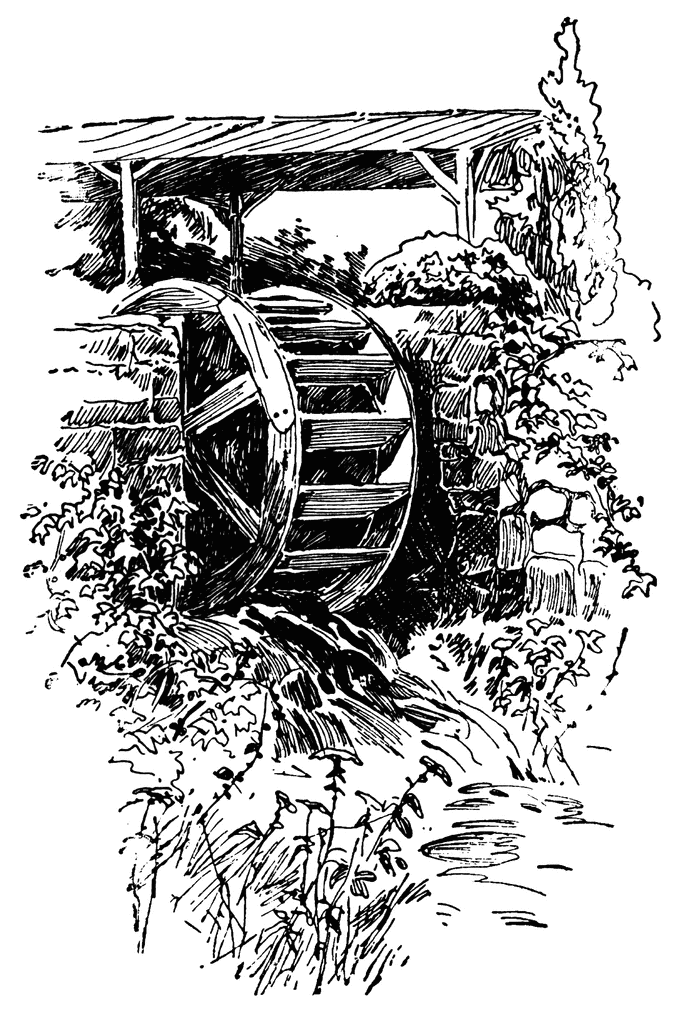
    The focus on local materials and knowhow is critical when it comes to survival. The Registry states: “As a stimulus to the milling industry, and to provide a more convenient way of getting bread stuff, the Beauchamps (brothers and father) made a wooden dam across the river…A structure to be used for milling purposes was built at the southern end of the dam. In it machinery was installed in such a way as to obtain the power created by the fall of the river water as it was diverted above the dam. With that power, the milling machinery was turned, and the stone burrs ground the corn into meal and the wheat into flour as the grains were passed through between them.”


    Down by the old mill stream was a water wheel, and stone burrs or millstones to create grist, the grain that’s separated from its chaff to produce flour or meal. Bread is a staple of life, grainy glue for community. Bread stabilizes life, so a grist mill requires life sustaining knowhow.


    This is why I’ve been following the bread crumbs back to a particular phrase used during my rearing: “The gristmills of God grind slowly, but always exceedingly fine.”

    It’s the wisdom saying that was used to sustain us when we encountered bare-naked evil or whenever the whirlwinds of chaos threatened to overwhelm.


    I know my maternal grandparents said it, since they’d reared us, but how did they acquire it as part of their local knowhow?  I try tracing the line back to its source. It survives as a “saying” only because someone writes it down. Its author is an unknown poet cited by Sextus Empiricus, a Greek philosopher and physician of the 2nd or 3rd c.  “The millstones of the gods grind late, but they grind fine.”


    I borrow one of Bill’s books on the history of skepticism to make sense of Sextus.  I get grist for the mill from his treatise, Against the Dogmatists. My summary: Don’t be dogmatic. Tranquility will follow suspension of judgment only if you do not grasp it. Freedom from the anxiety that an unanswerable question causes comes by refusing the question after carefully considering the contradictory answers.


    I’m still working hard, however, over grasping the meaning of God’s grist mills. The question the proverb raises is beginning to feel like a millstone. I learn Sextus’ writings, including this quote, were rediscovered in the 16th century. The phrase became a favorite of the Protestant Reformation, thanks to the reformer, Erasmus, and the Germans.  I track it into English through George Herbert in his collection of proverbs in 1652 “God’s mill grinds slow but sure.”


    The gods become God’s, but slow and late match up, as do small and fine, if you’re thinking about grinding grain. Henry Wadsworth Longfellow provides the clearest clue to its presence in my ancestors’ vernacular with his translation of a German poem:

    “The grist mills of God grind slowly, yet they grind exceeding small;

    Though with patience He stands waiting, with exactness grinds He all”


    Perhaps this is the schoolroom recitation that got ground down to my grands’ version of God’s inevitable justice that “grinds slowly but exceedingly fine.” Several old McGuffey Readers reside in the schoolroom of the Apple Pi Inn.


    The trail of grit ends here. I’m left with the task of separating wheat from chaff in this season of famine, this drought of wisdom. How can this national grinding away of life, liberty and the common good be evidence of God? Perhaps I’m turning into a skeptic in the modern sense of the word.  I certainly resonate with a quote from Plutarch’s On the Delay of Divine Vengeance: “Thus, I do not see what use there is in those mills of the gods said to grind so late as to render punishment hard to be recognized, and to make wickedness fearless.”


    As the results of this election grind on, setting people and things in opposition, I’m recalled to my senses. I go to the kitchen to open a new package of flour to make an apple pie, my one cooking skill retrieved during pandemic quarantine.  I read the label: organic wheat flour, organic malted barley flour. Contains: Wheat.


    “Truly, I tell you, unless a grain of wheat falls on the ground and dies, it remains only a single grain, but if it dies, it yields a rich harvest. ” (John 12:24)


    Trust the grinding. It will be exceedingly fine.

  • Portals and Passageways

    Portals and Passageways


    When is a door not a door.

    When it’s ajar.


    Crossing a threshold can be an unconscious act. We go through doorways countless times during a day. It can also require intense concentration and even prayer, particularly as age increases and ability goes in another direction.


    Moving into an unfamiliar space requires one to be doubly conscious of doors. Where are they? Where do they lead? I could tell when I’d been on the road too long. I’d wake up at night and have to turn on the light to find the bathroom door.


    Our shelter in the Covid storm is an old farmhouse that we share with our family, Daniel and Jess.  There are doors galore. There are antique pocket doors that once separated the dining room from the parlor.  First century Romans invented sliding doors, by the way.  All the other doors are hinged, some with the original 1907 brass.  Six doors lie between our bed, now in the place where the dining table once stood, and the half bath. You can count them on one hand, plus the thumb on the other.


    There’s the door to the country-long kitchen, the door to the enclosed porch/laundry room, the sliding glass door to the deck, two former doorways turned into shelves along the hall, and the final door to the commode.  Anyone who has accessibility issues will know what I’m talking about.  Only those who are “temporarily able” can afford to ignore counting steps or doors.


    Crossing these thresholds is part of a long-distance race for Bill now that he lives on a horizontal stage and plane of life.  I appreciate the fact that Germans invented revolving doors in 1881, but I don’t want to be stuck in this particular round and round.


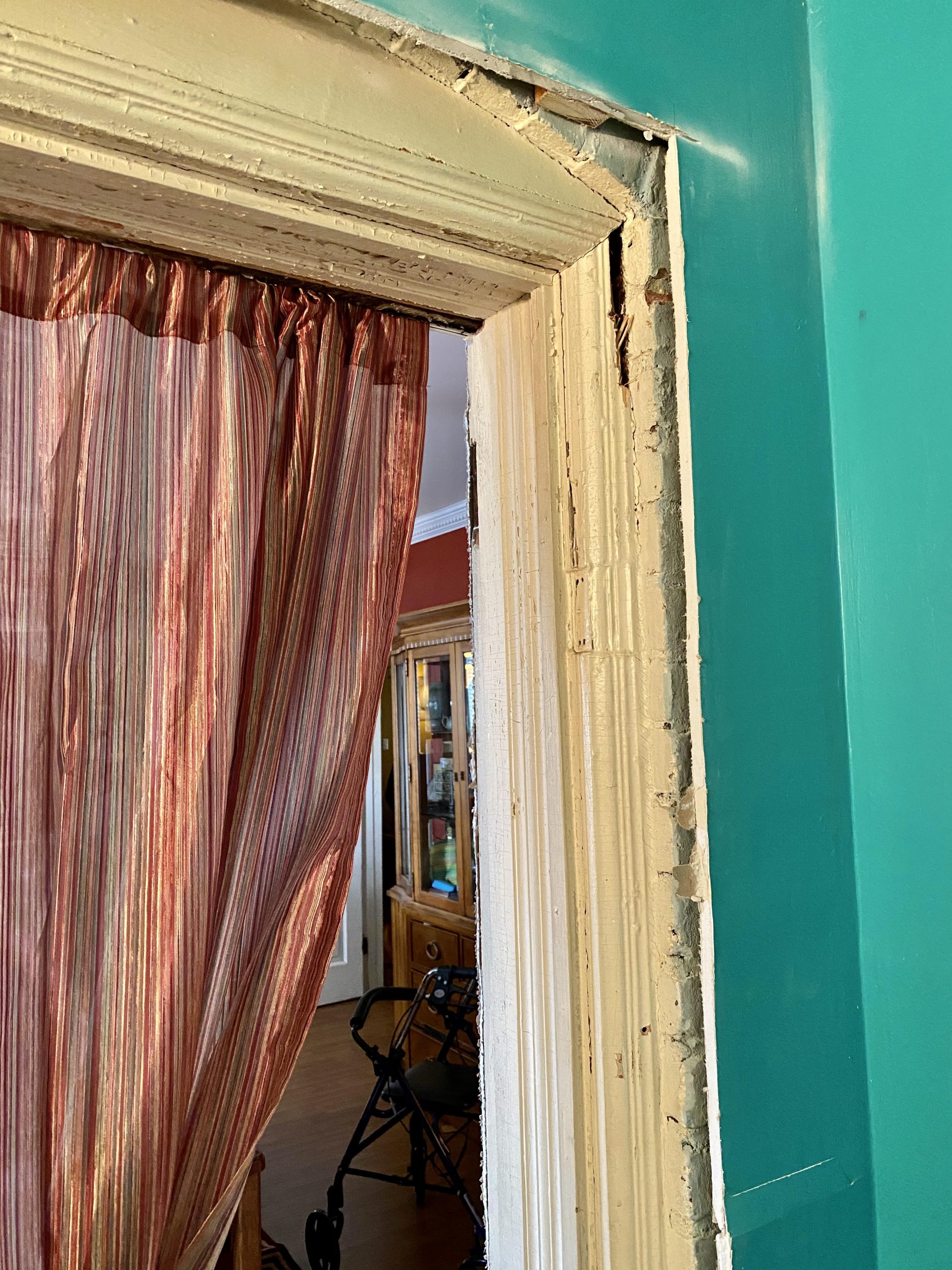
    Enter Danny, Bellevue’s master carpenter, and homo reparens (repairing human). He agrees to create a portal, make an opening in the wall between our former formal dining room, now bed chamber, and the “throne room”.  He picks a likely place on the bathroom side, marking a line in the smooth drywall.


    Five minutes later he’s hit a brick wall, literally.  Who knew, but then two inches to the left of his first cut is the edge of an old doorway. The frame is still standing, hidden between studs. We marvel at the revelation of this portal from the past.


    The door, Danny says, will take time. He wants to find one to match the old oak and the brick arch. I don’t mind. There will be time to ensure privacy, prevent unwanted attention, or sounds, drafts and odors. Perhaps I’ll even install a knocker or a doorbell when the door arrives so we can take turns announcing ourselves. A door is for providing security by controlling access.

    We need access, and behold, a passageway appears like an answer to prayer.


    Passageways and portals came first in human habitations; the earliest evidence of doors is found in Egyptian tomb paintings, dating only 4000 years ago. Some doors were not even proper doors, but for decoration, designed to represent a gateway to the afterlife. Thinking about this opens the door to a new reading of Revelation 3:7-8 for me.


    When is a door not a door? When it’s ajar.


    Rev. 3:8

    “I know all about you. And now I have placed before you an open door, which no one can close.

  • Telling Time

    Telling Time


    What time is it? I no longer check my cell, the kitchen clock, academic calendar, the clock in the car, or the chimes from Brother College tower. The sun wakes me, slipping through the leaves of the old white oak and the cracks of an old English stained-glass window. What time is it? Morning.


    I carry a cup of coffee out to greet the three tomato plants that have climbed leaf by leaf up to the deck from the garden box in the yard. They may make the roof before the first frost. Hannah is ready for our morning rounds. Coffee break over.


    We check the young cherry tree, first to be planted after unpacking. My earliest story/memory is a roped seat on a cherry tree and an old man singing as he helps me swing. What time is it? Long, long ago.


    The holly, state tree to Delaware, are as tall as the neighbor’s whirligigs. Someday we’ll have privacy as well as berries. Green new deals make good neighbors. Soon and very soon.


    The crepe myrtle is mustering a final blossom.  She’s new to me, planted on a whim, but I’m growing fond of the Advent purple she brings.


    The small red cedar has rooted in the corner of the yard after a risky transplant from a crack in the sidewalk.  Its survival and thrival consoles me as I note the open space against the sky. The neighborly giant white pine fell into the arms of the Sugar Maple, surrendering in the middle of the last storm, but sparing our fence. “Grow”, I say, to the small cedar, known as the pencil tree. “You can be a Christmas tree. We’ll decorate you with seeds for the birds and the squirrels every year.” Christmas is coming.


    I salute the old walnut tree that arches across the fence. I’ve come to make peace.  No need to swear under my breath as I dodge the green grenades that are lobbed into the yard. There are fewer than last fall when I had to put on a hard hat for the morning tour with Hannah.  I pull my red wagon next to the holly and begin to gather the nuts. Bill’s nifty-nabber, a tool for picking up stuff, makes the task easy when my back stiffens. It also helps me distinguish between darker nuts and dog poop. Hannah gets bored and goes back to the kitchen. It’s time for breakfast.


    The redbud gets a grateful nod as I pass. Its heart-shaped leaves are working hard on their appointed task: make the metal shed missing a side and part of the roof disappear. Nice neighbor. Very messy. Sometimes the wisdom to accept the things you can’t change means you block the view. This will take some time


    I come full circle and stop for a blessing by Mary who guarding a flowerless rose. She stands barefoot and expectant, arms open to the seasons of Falling and Rising. May there be time for every matter under heaven.


  • A Trail of Tears and Joy

    A Trail of Tears and Joy


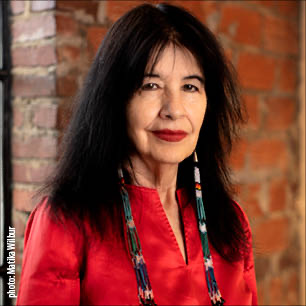
    Where does a story begin? I invite you to join me on the Trail of a story, a Trail of Joy and a Trail of Tears. I’m sitting in a classroom, not as teacher, but as a student like the others in the room. Joy Susan Harjo, poet, activist, musician, advocate , member of Cheyenne and Muscogee nations, has agreed to prepare us for a journey to Oklahoma, a place of birth and exile. How did we get there? With a UMC grant to invite Native American educators and leaders to teach the histories we never learned, and stories we did not know how to tell.


    She begins with her name and its meaning Harjo (“so brave you’re crazy”). She shares her story and it’s complicated.  She’s not a lawyer, but she’s the primary force field behind the legal challenge to the US’s oldest trademark and logo: the Washington Redskins. There are billions of dollars and millions of fans who are positioned on the field against her. I see where the “crazy” in her name comes from. The legal challenge has gone into overtime, she and her community began the challenge in 1987; this is now 2015.  Yards gained and then lost as court decisions are overturned and new trademark lawyers join the line. Who owns a label: Redskins?  Its origin stories are part of the legal and cultural argument. Those of us listening have read enough to know the Federal Government once paid a bounty for “red skins”: women, men, even babies. $5 in Idaho, less in California.


    So what’s in a name? A recognized social relationship. You may have wondered how a fight song ended up as a liturgical reading. Scalp ’em, swamp ‘um. Sons of Wash-ing-ton. Rah!, Rah!, Rah!

    Is it worth fighting over? We asked Joy. We’d read the articles about the death threats she received, the FBI protection she refused.  So crazy brave is this attempt to confront colonization.  She shared the questions she asks herself: “Who are we before and after the encounter” of colonization. And how do we imagine ourselves with an integrity and freshness outside the sludge and despair of destruction? I am seven generations from Monahwee, who, with the rest of the Red Stick contingent, fought Andrew Jackson at The Battle of Horseshoe Bend in what is now known as Alabama. Our tribe was removed unlawfully from our homelands. Seven generations can live under one roof. That sense of time brings history close, within breathing distance. I call it ancestor time. Everything is a living being, even time, even words.”


    Ancestor time. History within breathing distance. I was born in a tiny county in West Virginia, named for the lawyer, William Wirt, who took the case of the Cherokee to the Supreme Court and won. They won, but when a President can say, “But who’s going to make me follow the law?” everyone loses. President Jackson originally ordered the forcible removal of the Muscogee starting in 1836, and this was our national policy until all the Muscogee, Cherokee, Chickasaw, Choctaw, and Seminole land, homes, businesses and harvests had been confiscated. I share a painting, done by a Cherokee artist, of that terrible trail. If you look closely at the blanket covering the woman’s head, you’ll see that it’s made up of first class postage stamps, Liberty. Justice. all of them canceled.


    Joy’s people, her nation, were one of these “Civilized Tribes”, called Creek by the colonizers, Muscogee by themselves. Why civilized? They’d signed the treaty and kept it. They learned English, put on white settlers’ clothes and customs, traded hunting for planting, cotton for native plants, native prayer-chants for prayer books and traditional songs for Christian hymns. None of those forms of civilization protected them against the violence of manifest destiny and white supremacy. And so the forced march on the Trail of Tears began, over 5,034 miles. 15,000 forced to march, 3,500 of Joy’s people did not survive the exodus. 3,500 estimated lost, and that was only one of five nations.


    We, who are listening to her voice in the classroom, will travel to Oklahoma. We’ll be welcomed into a UM Muscogee church. They offer to sing for us one of the hymns they sang on that terrible trail, a song they sang as they were forced marched, as women were raped, and the old and the young died from hunger and cold and were left behind. We weep as they sing, for we all know the words and the tune.


    Those who survived were transplanted to Oklahoma where there were other native peoples. New treaties were made. This would be Indian Country forever, but… oil, and Congress’ homestead laws, the Land Runs, then statehood, and …you know how the story of broken treaties goes.


    In case you ever want to brush up on treaties, visit The National Museum of the American Indian in Washington DC. It located across from the Capital Building where every treaty must be ratified. Joy told us about the newest addition, the Treaty Room. She was the exhibit’s curator overseeing the displays, preparing for its opening. By the time you reached the end of the room, scanning every text, you’d realize the landscape of loss of this nation, ink trails of broken promises. Even broken, Joy believes they witness to remembrance and survival. “I feel strongly that I have a responsibility to all the sources that I am: to all past and future ancestors, to my home country, to all places that I touch down on and that are myself, to all voices, all women, all of my tribe, all people, all earth, and beyond that to all beginnings and endings. In a strange kind of sense writing frees me to believe in myself, to be able to speak, to have voice, because I have to; it is my survival.”


    And speaking of treaties, on July 8th, 2020, the Supreme Court(5/4) ruled that about half of the land in Oklahoma is within a Native American reservation. The court’s decision hinged on the question of whether the Creek (Muscogee) reservation continued to exist after Oklahoma became a state for the purpose of federal criminal law. The tribe said: “The decision will allow the Nation to honor our ancestors by maintaining our established sovereignty and territorial boundaries.” Of course, it might be important to remember that it’s President Jackson’s portrait that hangs in the Oval Office these days.


    Joy Harjo: So brave and so crazy. She’s named U.S. poet laurate in June 2019. So who’s crazy? Her peoples’ treaty is recognized by the Supreme Court on July 8th 2020 and the oldest US franchise formally retired the nickname “Redskins” on July 13th 2020 leaving the song’s title and its role in team lore undetermined at this time.


    Touchdown!
  • Bingo

    Bingo


    Bean counting is not normally how you want to spend your time, and being called a “bean counter” is definitely not a compliment. It usually means you’re stuck with tedious tasks or being ignorant in money-making matters. That is, unless you know the history of Bingo.  Track it back to 1530, Italy, and you’ll find a game of chance that is still played every Saturday, but they don’t bet with beans any more.

    Fast forward to France and the late 1770’s and it’s called “Le Lotto”, and you have to be really well funded to count French beans. Even the Germans get into the bean business, but they actually use it to teach counting, history, and spelling to children. When Le Lotto immigrates to the US in 1929, Georgians call it like they see it: “Beano”.

    It’s still a game of beans, played at carnivals and country fairs.  If the dealer calls your winning numbers, you shout: “Beano!”. So, what happens when a New York toy salesman, a Jewish immigrant from Poland, who’s down on his luck, sits down at a carnival with a handful of beans?

    Bingo. Or more precisely, Bingo!!! Edwin Lowe prints up cards. He tests the new game, and some unknown woman shouts out “Bingo!” instead of “Beano” and so the game goes on. Lowe leaves nothing to chance. He hires a math professor to multiply the combinations, prints over 6,000 different kinds of cards so there will be less conflict when two or more players shout “Bingo!!”

    So how does a bean counting game become a major fund raiser for churches and non-profits? A Catholic priest from Pennsylvania and a now-wealthy Jewish toy manufacturer from New York work it out in the early 1930s.  Bingo becomes the game of chance that builds sanctuaries, repairs convents, buys school books, and keeps the lights on for too many non-profits to count.

    Since I was raised and remain in the Wesleyan tribe, we don’t do Bingo. It’s gambling! We still ban it, although we tend to overlook raffles for homemade quilts and apple pies.  It’s my life as a Delaware Lion that gets me into this game of chance and charity.  The Belleview Community Center is the center of a lively nonprofit: education, recreation, prevention, farmers’ market, family support, and on the third floor, a Lion’s Den whose rent is met by service as callers for weekly Bingo.

    Bingo people are dedicated, to say the least. They show up on good days and hard times. When a hurricane turns off the town lights, the Center generator fires up, and people gather for comfort and counting. When Covid first kicks in, there’s a lull, then masks are on, hand sanitizer is handed out with bingo cards, and distance is maintained. Bingo!

    Calling Bingo requires social skills. It’s more than just reading numbers and balancing balls. You need to know what’s what and who’s who. You have to care about human beings who dream of life finally adding up.  You have to see them armed with bingo markers, looking for more than being bean counters. Bingo can be addictive, but so is the need for community in this time of isolation.

    Bill Gadola, a Bellefonte Lion, is one of the best callers in this game of chance and charity. His Bingo service is, as church folks would say, a calling. He’s a Volunteer Services Administrator. He studied nursing and rehabilitation; he’s an advocate for seniors and those who need a helping hand.  Add up those numbers and what you get is a winner. Bingo!!


  • A Squirrel, The Sacraments and Saint Francis

    A Squirrel, The Sacraments and Saint Francis


    I stop to shop because the humming bird wind chines are just what I need to listen to, if not acquire. My rule, which my husband doesn’t believe I follow, is to inspect an object on sale closely and then walk around and look at other things.  If it still seems to be speaking to me after three tours around the store, then home we go together.  This visit doesn’t take three turns.  I’ve wandered out to the backyard of this side-of-the road garden store and found what I’ve come for. It isn’t a what; it’s a who, St. Francis. The 6-foot plastic saint has seen better days. He’s suffering from sunstroke, blue eyes faded, his fair complexion freckled by missing paint; his hands seem to be suffering from leprosy. To add insult to injury, the two birds that traditionally perch on St. Francis have taken flight. There are bird feet shaped holes on his shoulder and in his outstretched hand. Perhaps they were stolen, or maybe the birds didn’t like his preaching. in any case, he’s wingless.

    There’s no price tag, so I’m hopeful. Unfortunately, the owner hasn’t missed my shock of recognition. Even after pointing out the flaws, the price is out of reach, particularly since plastic can’t be used to purchase even a plastic saint. I promise Francis I’ll be back.

    It takes a little longer than planned. All my appeals to the dean go unanswered. There seems little interest in having St. Francis occupy a corner in our chapel. Terry Todd, colleague and conspirator, provides the bond money and I do the four-hour drive to rescue a saint.

    The saint’s arrival creates a cascade of transformations. Bon Jeong Koo, student and professional artist, heals Francis of leprosy and decorates his robe with every creature he’d seen in the forest of Drew. Deer, butterflies, robins, and of course, squirrels. It’s his contribution to the Ministry and Imagination class taught by me and Lynne Westfield and it is art and imagination and ministry.

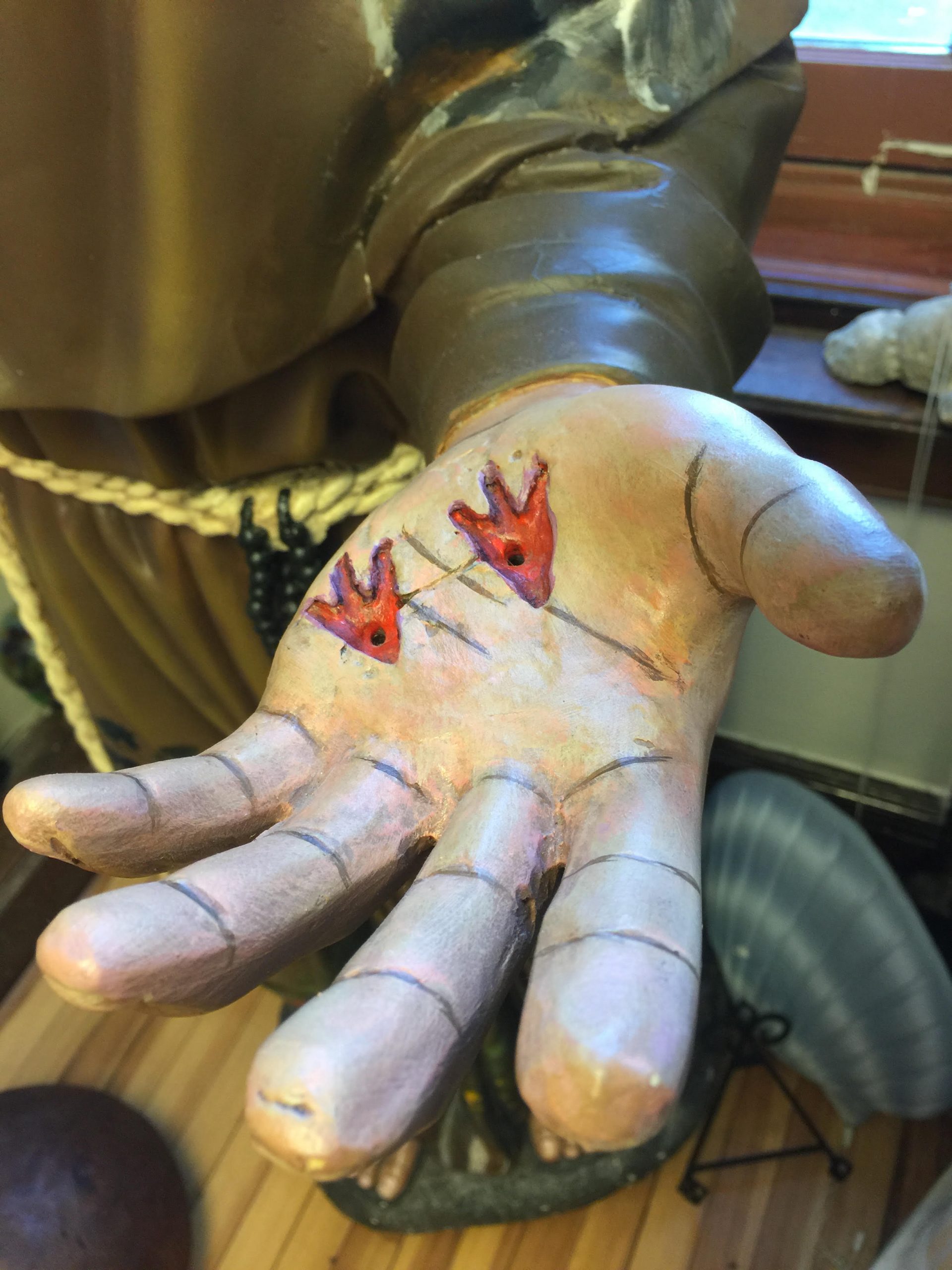
    What is most striking to me is how Koo solves the problem of the missing birds. The holes in the shoulder he fills in and paints over. The imprint of bird feet on the saints outstretched palm have not been filled in; they’ve been painted a scarlet red, a virtual wound. When I ask why, Koo simply answers, “It’s the kind of stigmata he’d have.” Exactly. Bird-shaped wounds belong to this saint who began his lonely ministry by preaching to the birds since no human wanted to hear him.

    St Francis welcomes all who come by our office doors, but since he’s so lifelike, the shock doesn’t wear off. We agree to let him live in my office until needed for public display. Working late one evening I learn he’s been about his ministry. One of the cleaning staff asks if he could visit St. Francis after he finishes his rounds. I think he’s probably thinking it’s better to ask, since I know he has the keys. “He’s my saint, see.” he says, anxious that I’ve taken offense. I tell him I’m delighted, and to visit St. Francis whenever he can.

    I start reading up on the saint since he’s actually got my back. The more I read, the more restless I get with his fair skin, light hair, and blue eyes. There are written records about his laughing brown eyes and earth-toned hands. A blue-eyed boy will not do. A second artist/scholar comes to the rescue, Richard Romero. He understands the problem, and a trans-ethnic transformation takes place. Brown skin, brown eyes, and the tonsure disappears. When I ask he says, “This is a young Francis.”

    He seems ageless. He moves through Seminary Hall, following a call to be an instrument of peace, an advocate for eco-justice, a reminder of the communion of saints and the beauty of creation and creatures bright and beautiful, great and small.  This Forest Saint is known to possess a strange sense of humor. He like dressing up and startling strangers and friends alike.

    When I finally take my leave from the Forest, I read him a poem, source unknown, that I’ve read to him before.


    Squirrel Poem by St. Francis of Assisi (I just discovered this poem by St. Francis of Assisi)

    THE SACRAMENTS

    I once spoke to my friend, an old squirrel, about the Sacraments –

    he got so excited

    and ran into a hollow in his tree and came

    back holding some acorns, an owl feather,

    and a ribbon he had found.

    And I just smiled and said, “Yes, dear,

    you understand:

    everything imparts

    His grace.”


    We understand. Everything imparts Love’s grace.