Blog

  • Holy Days in the Apple Pi Inn: Mothers’ Day

    Holy Days in the Apple Pi Inn: Mothers’ Day

    In my Mothers’ house are many rooms, and each is many stories high.

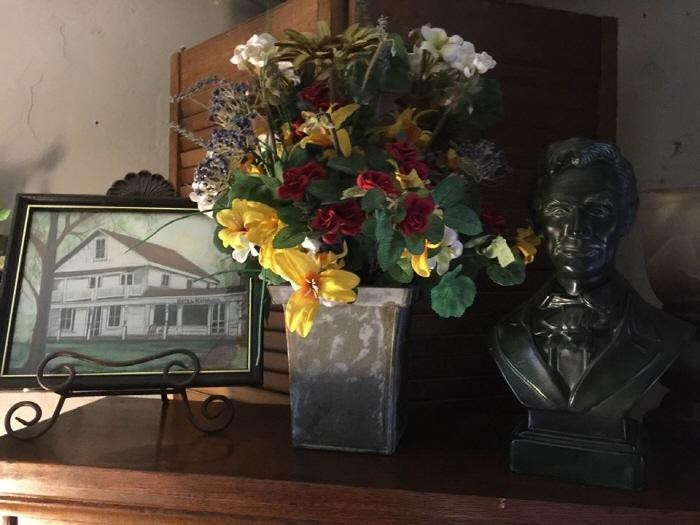
    In 1875 Mary Jane Bee, a widow of a Confederate Captain, purchased the old Tavener House in Elizabeth, WV. She and five of her children ran this as an Inn for travelers on the Little Kanawha River. Oil men, circuit riders, salesmen, circuit judges, English fox hunters, even delegates for the Republican Senatorial Convention in 1894 found room in this Inn/Hotel.

    I write this history in the long dining room where meals were served “home style.” I wonder about this great great great Grandmother Bee and her skills as a mother, cook, book keeper, gardener, peace keeper, and hostess. Her only known portrait shows a woman with a fierce eyes and a strong jaw. I ponder over one daughter’s decision to marry a guest, a itinerate painter. Was young Emma tired of all the fuss and buss of a noisy Inn where patrons often spent the nights playing poker? Did she long for a room of her own with a view?
    The painter she married was a “rambling man” and Emma died young, leaving my grandfather, Arthur Edward Hoyt, at age 14, to raise his younger brother and sister. Whatever memories connected Emma’s children to this place got embedded in an odd verse of song, sung to my grandfather by his artfully father, “Three little girls in blue, lad. Three little girls in blue. I painted the others, but married your mother and then we drifted apart.”

    My family story and this structure of hospitality also drifted apart, in 1883 only coming together again in 1983 when my mother read an account of the Kanawha Hotel that listed its owners. She recognized Mary Jane’s name, remembered the odd song her father had sung to her about his parents’ meeting, marriage, and separation.

    “That’s my house, my hotel!” my mother declared to the startled beautician who was cutting her hair. And with my father’s help, it became her hotel, her house, her history classroom, her story, and her stage for entertaining whoever loved old stuff and wild West Virginians.

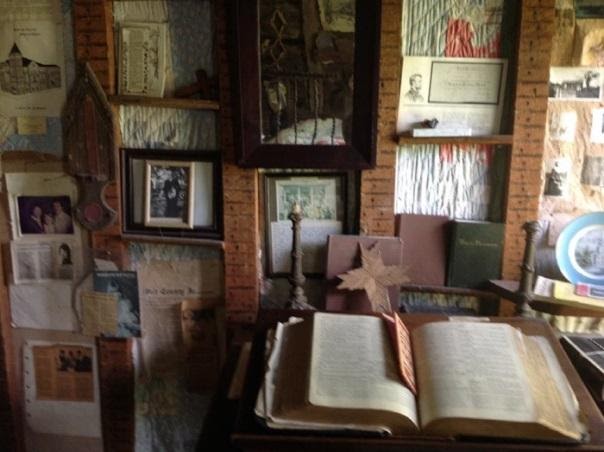
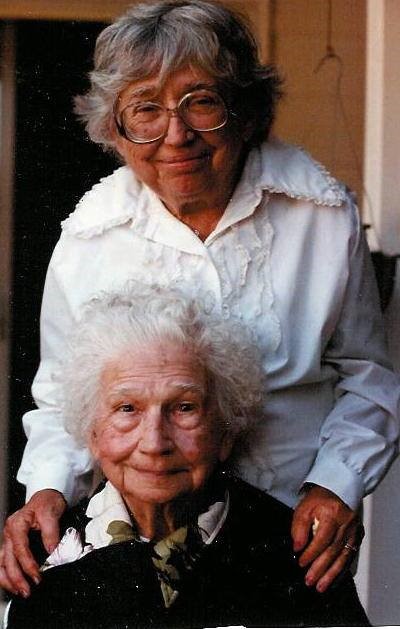
    Her own mother, Flora Belle, wife of A.E. Hoyt, lived out the last decade of her 106 years in this space, cared for by my older sister Sandy and her saint of a husband, Roy Lee. Mary Jane’s bedroom is where our mother’s mother passed into “her Father’s House”. It is also where my mother’s casket was placed at her request, although the funeral director thought it strange to hold the visitation in what was like a museum filled with dusty old stuff and perhaps a ghost or two. “Not to worry,” I told him, “there will be plenty of Holy Spirit to go around.”

    I’ve spent my sabbatical re-membering these Mothers and searching for the narrative structures that make Time both human and holy. This Sunday is the West Virginian day of days. (See Ann Reeves Jarvis, her daughter, Anna, and the1908 Mother’s Day celebration in a Methodist church in Grafton, WV).

     

    Sitting on the porch swing, looking at the river, I take comfort in the promise Jesus makes in the gospel of John: “I go to prepare a place for you.” May there always be room in the Inn for every mother’s daughters and sons.

    Heather Murray Elkins © Mother’s Day 2015
  • Northern Prayers

    Northern Prayers


    They warned it would be a long process; they were right. Getting permission to get into prison takes time. Fingerprinting, training sessions, waiting to have paperwork cleared, waiting to be scanned, a whole lot of waiting is involved. It gave me time to get acquainted with the six Drew male MDIV students brave enough to take a course on creative writing. I had to have 6 seminarians enroll in order to offer a class for the 15 + Northern State Prison men, and I was actually surprised to find us all behind bars.


    I’d designed the course with the Edna Mahan women in mind, since I doubted our laser-focused want-to-be theologians, biblical scholars, historians and sociologists would take a detour into the fine arts. Five of the students I’d had in a required class; one was new to me and Drew.


    He looked like he might need a distraction, following the graphic tour we’d gotten of the weapons that can be made out of stuff like spoons and pens. We leaned against a wall, and I asked him why he’d signed up for the course. He was a new spring admit, from South Korea, taking a not-required course in creative writing. The answer still brings a smile. His advisor, now a dean, had been a student of mine years before. He’d instructed this young man that he was to take any course that I offered, but, he said, “No one told me I’d have to go to prison.”


    This was a first for him, so I didn’t tell him that this was the first time a Drew woman faculty had been permitted to offer a course for credit at Northern.  I comforted myself that this had been done many times in other places, and I hoped the course title, borrowed from Deena Metzger, “Writing for Your Life” would be descriptive, not proscriptive.


    It was. It still is. Their voices, their faces, the intensity of their language, their persistence against all odds. The room we were in was dominated by a ventilation system that sounded by a wounded dragon; we had to shout to be heard over its mechanic wheezing. But the writing assignment transformed the irritating sound into a ventilator named Holy Spirit, designed to keep us alive and so we thrived.


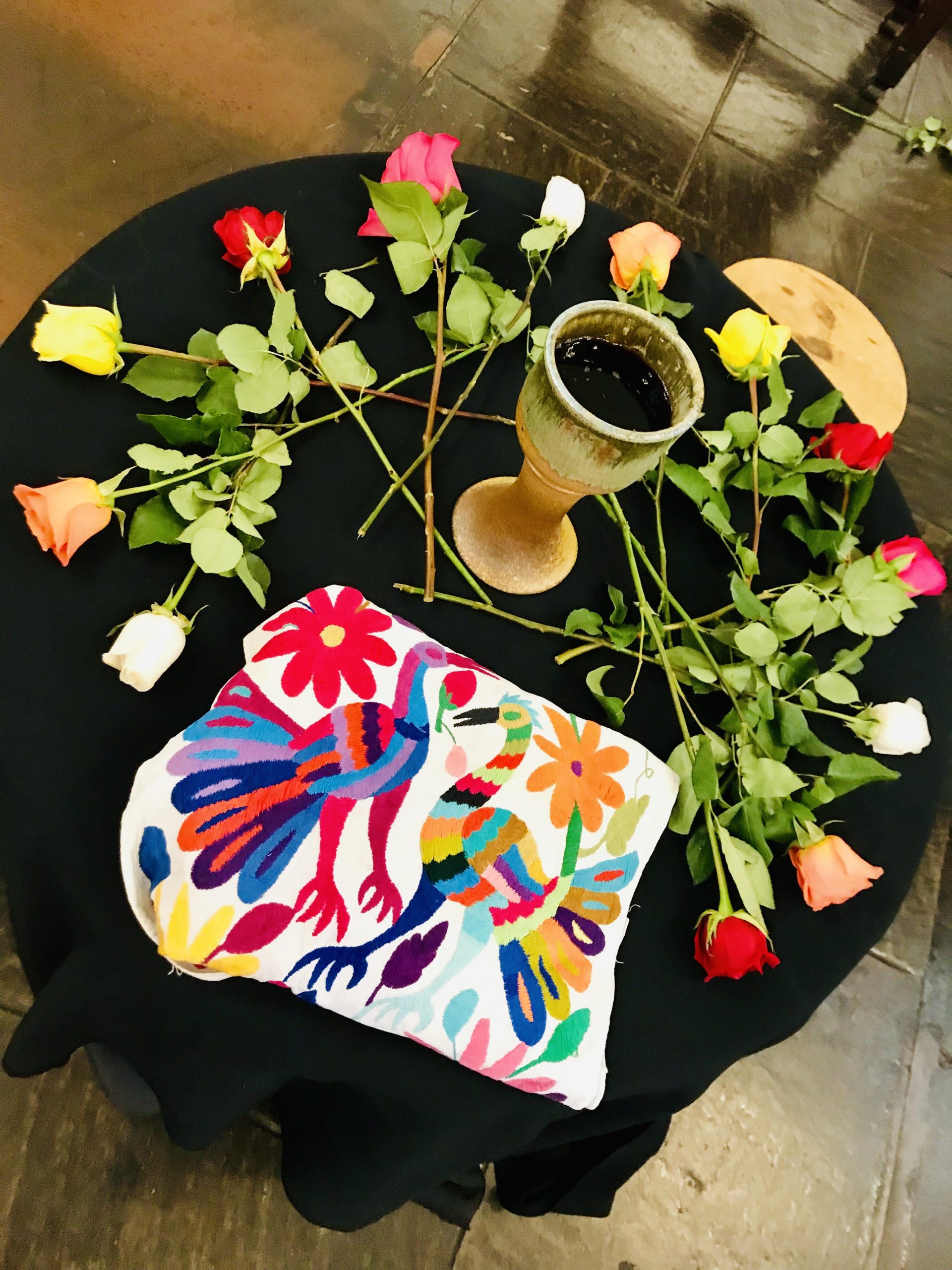
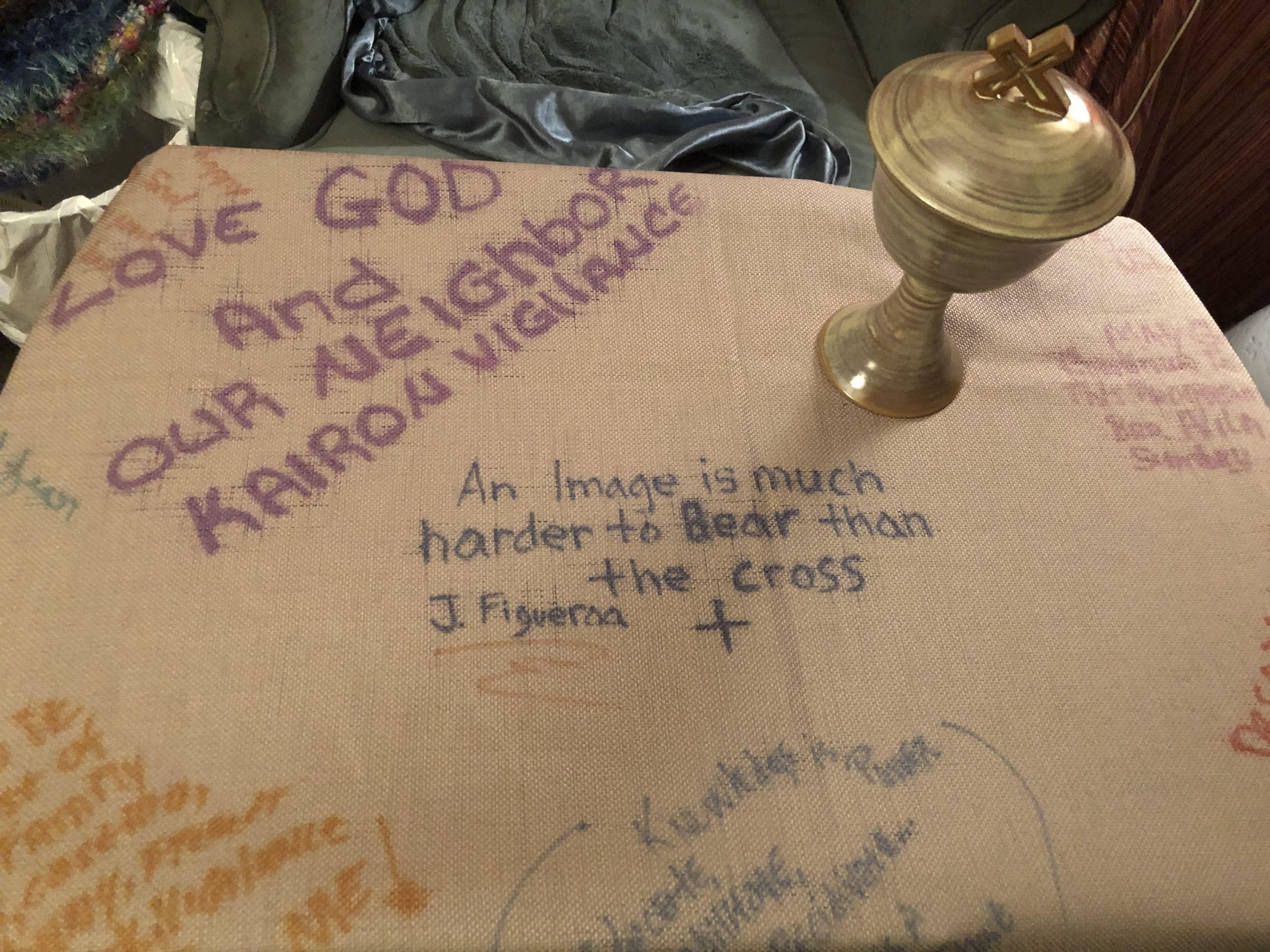
    Nothing but books and non-tractable pens were allowed in or out, except, on the last day of class, in some mysterious oversight, a table cloth the color of the uniforms was allowed.  One table cloth passed through the gates, and when I carried it out again, it held messages from the men who were writing for their lives.


    I post this picture of the cloth, and a prayer. I see the name of Northern State Prison on the list of Federal Prisons where Covid-19 numbers are exploding.


    Praying for their lives.


    Jesus, you are with our brothers as you promised. In their living, in their suffering, in their dying, you are there. For some, they are with you today in paradise. For some, they are with you today in loving service to others. For all, forever, you are with them in ways known and unknown, seen and unseen. When the gates of life open again, let us join you, so that where you are, we may be also.

  • Holy Days in the Apple Pi Inn: Floralia, The origin of May Day, the goodness of flowers

    Holy Days in the Apple Pi Inn: Floralia, The origin of May Day, the goodness of flowers

    It was once the custom to deliver a basket of flowers to the neighbors, ring the bell, and run. It is also a time to consider the questions of justice and labor, for we will reap what we sow.

    Flora,
    a photo of a rose,
    the memory of your hand
    reminds me
    of a planting springtimes ago.

    A family crisis is in bloom.
    Our drama of odds
    our trauma of ends turns toxic
    and finds its way home.

    Mayday! Mayday! Mayday!

    My chore in the chaos?
    Keep watch on the meadow. Clean out the spring.
    My part in the chorus?
    Plant peas and potatoes, sensible things.

    It’s hard to stand guard over Spring.
    I tire of bland basics.
    I weary of row upon rows:
    I long for rings, rings of roses,
    But who will conspire?
    Who will plant dangerous things?

    At ninety-three
    you sit supreme in the swing
    holding court on the porch with a calico cat,
    a kind of coon dog,
    and several stray bees.

    I help you and the shovel ,
    out of the shade.
    The decision’s been made.
    We go in search of the roses.

    You sit. I dig.
    You nod. I dig deeper.
    You sigh. I keep digging.

    “You work too hard.
    You know, you work too hard.”

    It’s the first of May, Flora, .
    The green roots of nature
    and the red roots of labor
    tangle together in this country’s side.

    I work among ghosts of victory gardens.
    My fingers trace your calloused hands
    on the worn handle, in the dark leaves,
    under this green piece of land.

    Should well-soiled hands receive a living wage?
    Each turn of my spade reveals roots of your labor.
    New things grew tender under your sun.
    You were a May Day Queen and Sage.

    Under the half-dead apple tree
    on the first day in May
    we spend an afternoon
    as if Time is not Money
    but Free.

    “M’aidez!” Grandma. “M’aidez”.
    Help me remember.
    Fall is falling and winter closes.
    Once we labored; it was spring,
    and together we planted the roses.

    Heather Murray Elkins (Copyright 2015)

  • Blood of truth

    Blood of truth


    Spring cleaning for retired teachers involves a lot of paperwork.  My files are stacked knee-deep in the attic, and every day I ascend to this upper room with hopes of reducing the paper weight.  It’s such slow going I consider opening the windows and pitching whole boxes into the recycling bin 2 floors below.

    A wise pastor’s wife, Donna Light, once gave me good advice that I’ve failed to follow. “If you move a box three times and don’t open it, don’t open it! Give it away.”

    My curiosity gets the better of me. I’ll quickly scan and then discard, I say. What actually happens is I drown in inky memories, pulled under by a textual undertow. I’m swept away in the outgoing  jtide of scribblings and scraps, undated prayers and forgettable sermons. Beached at the end of the day, I descend, with little to show to the trash keepers.

    Here’s one undated prayer of thanksgiving that floats on today’s surface. It’s based on my reading of the prayer-book of Serapion of Thmuis, a 4th century Egyptian bishop. It was assigned during my graduate days at Drew.

    This prayer over a cup filled with the blood of truth offered as medicine for sin imprinted on my memory, and resurfaced years later in a communion prayer.

    The blood of truth. Medicine for sin, not for censure or reproach.

    I still need this. Back it goes in the files and out to whoever else may need its blessing.

    +++

    Holy and blessed is the mighty savior

    You raised up for us,

    Jesus, Mary’s child,

    who opens the way of salvation,

    and leads us home.

    Healing the sick, feeding the hungry,

    defending the defenseless,

    Christ crosses boundaries

    teaching us how to live and forgive.

    By the mystery of his incarnation, death, and resurrection

    Christ is with us at Table, in Word, and by the Spirit

    as we proclaim the mystery of love and faith…

    Christ has died. Christ is risen. Christ will come again.

    God of compassion,

    let your holy Word come upon this bread and cup

    that it may become the blood of Truth;

    and may all who communicate

    receive this medicine for life

    for the healing of every sickness,

    for the strengthening of all virtue,

    not for censure or reproach.

    We invoke You, the uncreated,

    through the Only-begotten, in the Holy Spirit.

    I stretch out a hand and pray that your hand of Truth

    may be stretched out

    and blessing given to this people

    for the sake of your loving kindness.

    God of compassion and mystery,

    may your hand of piety and power,

    sound discipline and all holiness bless us,

    and continually preserve us to perfection

    through your only-begotten Jesus Christ,

    in the Holy Spirit, both now and to all ages of ages. Amen.  [i]

    Now with the confidence of the forgiven, let us sing.


    [i] Based on the Euchologion of Serapion


  • Holy Days in the Apple Pi Inn: Earth Day

    Holy Days in the Apple Pi Inn: Earth Day

    Two 50 lbs. sacks of Kentucky 31 grass seed are stacked under the Angel Well house waiting for a sower and a sunny day. The Earth Day forecast was Cloudy, but a hard rain is falling, so the grass seed will have to wait a little longer. The patch of earth behind the Inn has been cleared of the rubble created by re-construction that went from the roofs to the floorboards. It took five dump truck loads to reveal the ground again. It’s hard to know when it’s a time to keep and when it’s time to let go. The ground needs breathing room; there are apple trees to plant, and the grass is waiting, so it’s time to sow.

    Grass for holding the earth in place. Grass for the four-leggeds to roll in. Grass for greening the gray. Grass for all the grave matters of life. I turn to the poetics of the unknown prophet of Exile, beginning in the book of Isaiah, chapter 40.

    A voice says, “Cry!”
    And I said, “What shall I cry?”
    All people are grass,
    their constancy is like the flower of the field.
    The grass withers, the flower fades,
    when the breath of the Lord blows upon it;
    Surely the people are grass.
    The grass withers, the flower fades;
    but the word of our God will stand forever. Isaiah 40:6-8

    I study the Angel Well house, the sacks of grass, the stacks of straw.
    If the blistering heat of our Deathbreath continues,
    where will the Word of God stand,
    how can it take root
    if the earth is missing?

  • Holy Days in the Apple Pi Inn: Lincoln and Lilacs

    Holy Days in the Apple Pi Inn: Lincoln and Lilacs


    “When lilacs last in the dooryard bloom’d”…


    I planted two lilacs today. The planting was scheduled to mark the 150th anniversary of Lincoln’s death this last Wednesday, but the post office delivered them to a surprised someone in Elizabeth New Jersey. My new order arrived today, just as the rain stopped, so my older sister and I prepared a place they can call home. I didn’t say why I’d ordered them, but she recited the first line of Whitman’s lament for Lincoln as we cleared away the clover and the dandy lions. Lilacs for Lincoln. They’re planted on either side of a squared space of brick, right in front of the parlor window. My younger sister laid the brick in her season of owning this old inn. It’s been waiting for its purpose and the lilac anniversary provided it. Soon and very soon a hand carved statue of Lincoln will stand here between the lilac bushes. He was the authorizer of our identity as a state. He signed the Emancipation Proclamation and approved a new state almost in the same breath. West-by God-Virginia. We seceded from the Confederacy. Mountaineers are always free.

    That history is harder to decipher these days. Every Pioneer Day, for example, an entire regiment of Confederate re-enactors set up camp by the Elizabeth Courthouse. A mock battle is fought between the Rebels and the Yanks. The Rebels always win. This year a young Union officer was shot and fell right beside the sign that reads “Little Kanawha Hotel, 1800”. It helps to know that winners and losers brush themselves off, put their weapons down, and have a beer together. It also is important to keep track of the number of Confederate flags displayed year round in trucks and homes. It’s still the war that everyone refers to as “The War,” and discussions about seceding from the Union aren’t just history lessons. Putting a statue of Lincoln in the front yard will be our way of joining the conversation.

    The lilacs’ late arrival formed a strange time warp between the 150th anniversary of Lincoln’s death and the 20th anniversary of the Oklahoma bombing. Before he drove the truck/bomb into the city, Timothy McVeigh donned a T-shirt bearing an image of Lincoln and the words, “Sic semper Tyrannis”.”This always to tyrants!” is what Brutus shouted during Caesar’s assassination. John Wilkes Booth shouted those words after he shot Lincoln. They were/are the Virginia state motto.

    Will the rare sweet fragrance of “with malice toward none, with charity for all” survive our smoky choke hold of violence, our love of uncivil wars?

    The leaves on the small plants droop, then straighten as they settle in at the Apple Pi Inn. What state will we be in when these lilacs first bloom?

    When lilacs last in the dooryard bloom’d,
    And the great star early droop’d in the western sky in the night,
    I mourn’d, and yet shall mourn with ever-returning spring.

    Ever-returning spring, trinity sure to me you bring,
    Lilac blooming perennial and drooping star in the west,
    And thought of him I love.

    O powerful western fallen star!
    O shades of night—O moody, tearful night!
    O great star disappear’d—O the black murk that hides the star!
    O cruel hands that hold me powerless—O helpless soul of me!
    O harsh surrounding cloud that will not free my soul.

    In the dooryard fronting an old farm-house near the white-wash’d palings,
    Stands the lilac-bush tall-growing with heart-shaped leaves of rich green,
    With many a pointed blossom rising delicate, with the perfume strong I love,
    With every leaf a miracle—and from this bush in the dooryard,
    With delicate-color’d blossoms and heart-shaped leaves of rich green,
    A sprig with its flower I break.
    Walt Whitman

  • Holy Days in the Apple Pi Inn: Easter Eve

    Holy Days in the Apple Pi Inn: Easter Eve

    The upstairs rooms in this old Inn are named, decorated, and dedicated. There’s a judge’s room, an oilman’s room, a school room, an angel room, and so on. I visit the preacher’s room as this Easter day comes to a close. It is filled with treasures that are difficult to distinguish from trash unless you know the story. Methodist preachers stayed here during the early days of its life as an Inn. Baptist preachers from the family tree smile from their frames on the wall. I see going away gifts from churches I once served, and hymnals of all shapes, ages, and denominations.

    Easter is almost over. I watch the dust motes dance and remember with gratitude all those country preachers, all those pastors of small congregations, all those who began the day saying, “Christ is risen!” then waited for a response that means the church is still alive.

    For those who rose long before sunrise to be sure there were enough song sheets…
    For those who proofread the flower list one last time…
    For aging sopranos who find just the right notes for a joyful noise…
    For those who count the heads in the pews just in case they need a miracle of loaves 
    at the communion table…
    For all who have a love/hate relationship with lilies…
    For all who hope that this year’s Easter sermon will raise the dead…
    Let angels guide you to your rest this night 
    and tomorrow may you rise.

  • Holy Days in the Apple Pi Inn: Holy Saturday

    Holy Days in the Apple Pi Inn: Holy Saturday

    Any sign of life? I’ve waited to ask that question all through this icy winter and stormy spring. The problem is, I don’t know what I’m looking for. There’s been a memory wipe of gardening wisdom between my mother’s mother, Flora Belle, and me. She had two green thumbs and all the rest of her fingers knew how to help things grow. So, I’m in the dark on this bright Saturday as I search for signs of life in the dogwood I planted last fall. Is a small brown bud a good sign? How many dead branches can a life survive?

    It was a summer leftover, a Charley Brown kind of a bush. It was definitely on sale; the compost pile was its next stop. I would have, should have kept walking, but looking at it made me sad. That small sad added to my deep sigh over the death of my son’s beloved West Virginia coon dog. That good dog had gotten him through college, graduate school, and into a job. I’d promised him that we’d plant a memory tree down by the riverside of the old inn. I’d gone shopping for a pine tree, but providence kept pinching me. “Rescue dogwood to honor a rescue dog.”

    The dogwood legend belongs to this wholly human Saturday. A giant green tree is turned into a means of state-sanctioned torture and death. In shame it begs its Creator to remove its power, reduce its “treeness” so it could not be used for harm again. These are the embroidered blossoms that decorate my mother’s calendar/towel. Perhaps the petals are evidence of forgiveness, as the story goes.

    So what are the signs of life, and when is hope ridiculous? I can’t answer that. Not today. Maybe tomorrow.


  • Holy Days in the Apple Pi Inn: Siblings Day

    Sibling: “each of two or more children or offspring having one or both parents in common; a brother or sister.”
    We found common ground
    when we finally agreed
    after years of fuss
    that each of us
    had been clearly reared
    by dearly different 
    parents.

  • Holy Days in the Apple Pi Inn: Good Friday

    Holy Days in the Apple Pi Inn: Good Friday


    What makes this Friday sad?
    Good wood and nails are turned into torture.

    What makes this Friday Good?
    Our rubble reveals the old rugged cross.

    What makes this Friday glad?
    All will be well in the strong hands of God.