Blog

  • Holy Days at the Apple Pi Inn: July and Founding Fathers

    Holy Days at the Apple Pi Inn: July and Founding Fathers

    What connection is there between the origin myth of a nation and character of the founding “father”?  It was a question to consider in July as i I stir up 217 years of dusty memory of our repair of this Inn.  An old print of George Washington hangs in what we are calling “the parlor”. The old wire had rusted, and a new discovery was made when I turned it over. On the back was recorded the name of the framer.  (I note that once Elizabeth WV was prosperous enough to have a jeweler who also framed art) The name and signature of the teacher and the signatures of the 5th and 6th graders in 1933 were neatly arranged in rows.
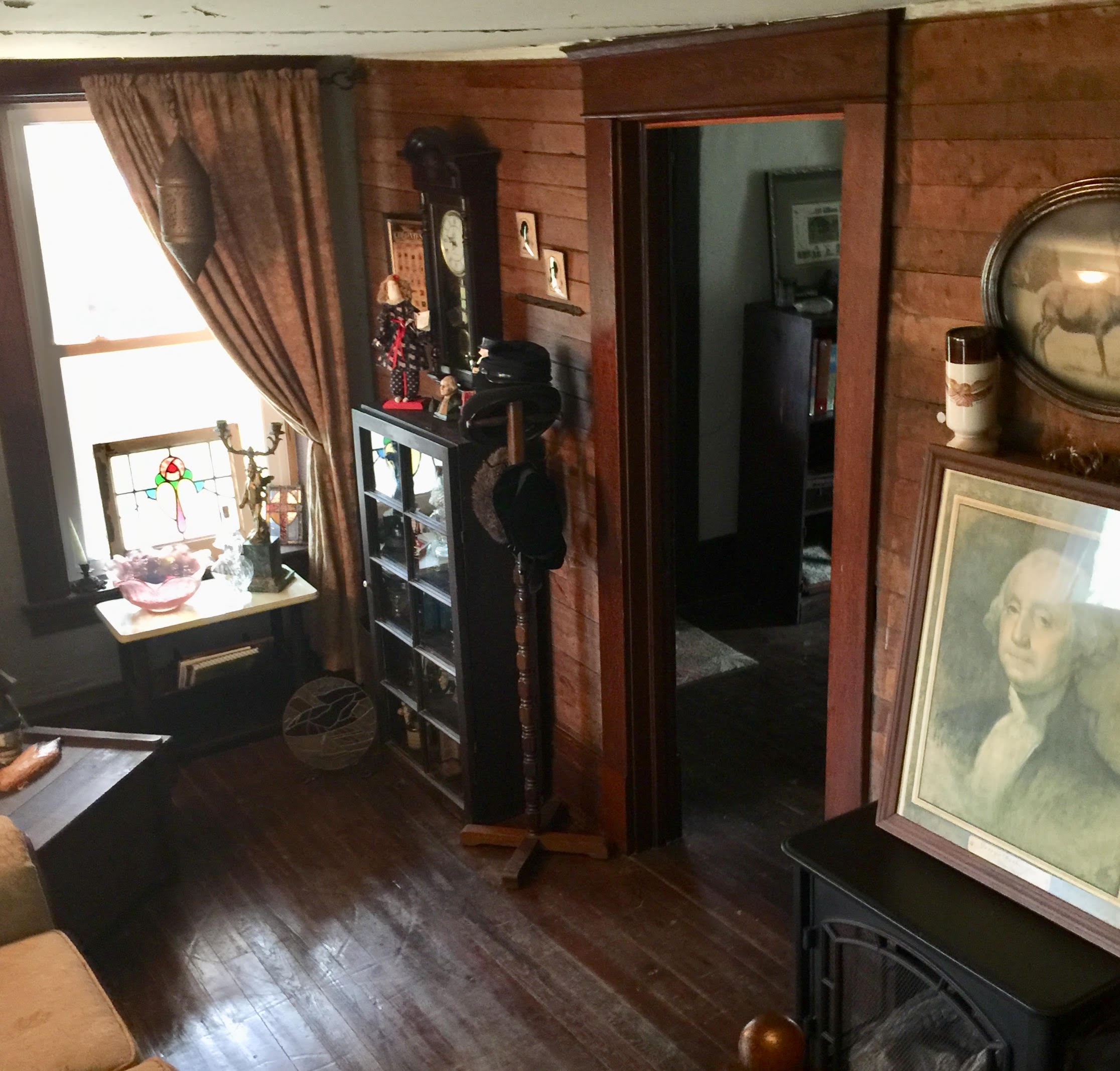
    The print hangs in the part of the Inn built the year after Washington died in 1799. This territory was part of Virginia then, and it was here the future father of our country learned some hard lessons about failed diplomacy, broken treaties and military readiness during the French and Indian Wars.
    I study the nearly illegible names and wonder what origin stories they learned about this nation and its founding father.  Did they know he owned slaves?  Did they learn that he refused to be king, that he believed in the Constitution and the potential of a self-governing people? Did they realize what a gift he gave a new nation by voluntarily leaving the high office he held?
     Did they honor July as the month to celebrate independence from tyrants?  Did they know that July was the month named in honor of the dictator perpetuo, Julius Caesar, by the Roman Senate after his death in 44 BC?
    That’s a conundrum. Why would you name a month, a public way to tell time, for a dictator?  It was a Senate conspiracy that led to Caesar’s downfall.  I follow the question down the rabbit hole of Wikipedia to recover the information that July was originally called, “Quintilis” meaning “fifth” and it was part of Rome’s earliest calendar attributed to Romulus, one of the twin brothers credited with creating Rome.
     That city, nation, empire’s origin story included fratricide. Romulus kills Remus to become the Founding Father of Rome. (Some of this mixed motive fascination is personal. American Express, whose icon is a Roman centurion, has been been used far too often for Inn repair.)
    George Washington. Julius Caesar. Romulus. July. What lessons should we be learning? How should we tell time? I return to the language of the founding document. “We, the people of the United States, in order to form a more perfect union, establish justice, ensure domestic tranquility, provide for the common defense, promote the general welfare, and secure the blessings of liberty to ourselves and our posterity, do ordain and establish this Constitution for the United States of America”
     I rehang the old print with a hope and a prayer.
  • It is what it is

    It is what it is


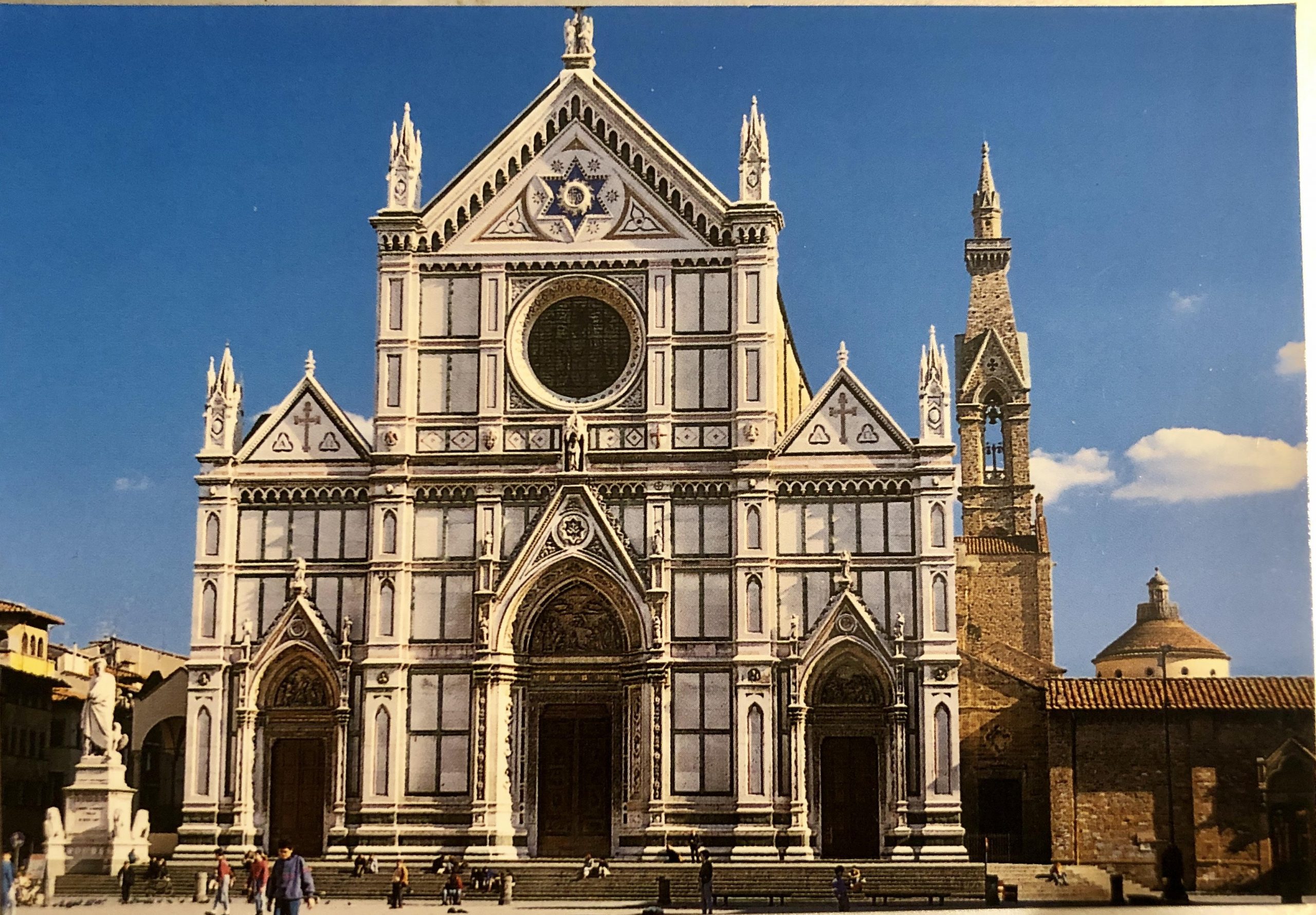
    Say “Florence” and the walls of quarantine disappear.  All it takes is the name to fire those neurons and I’m back in the city of Dante and Machiavelli, Masaccio, Da Vinci, the Basilica of Santa Croce, Il Duomo. and the Uffizi.

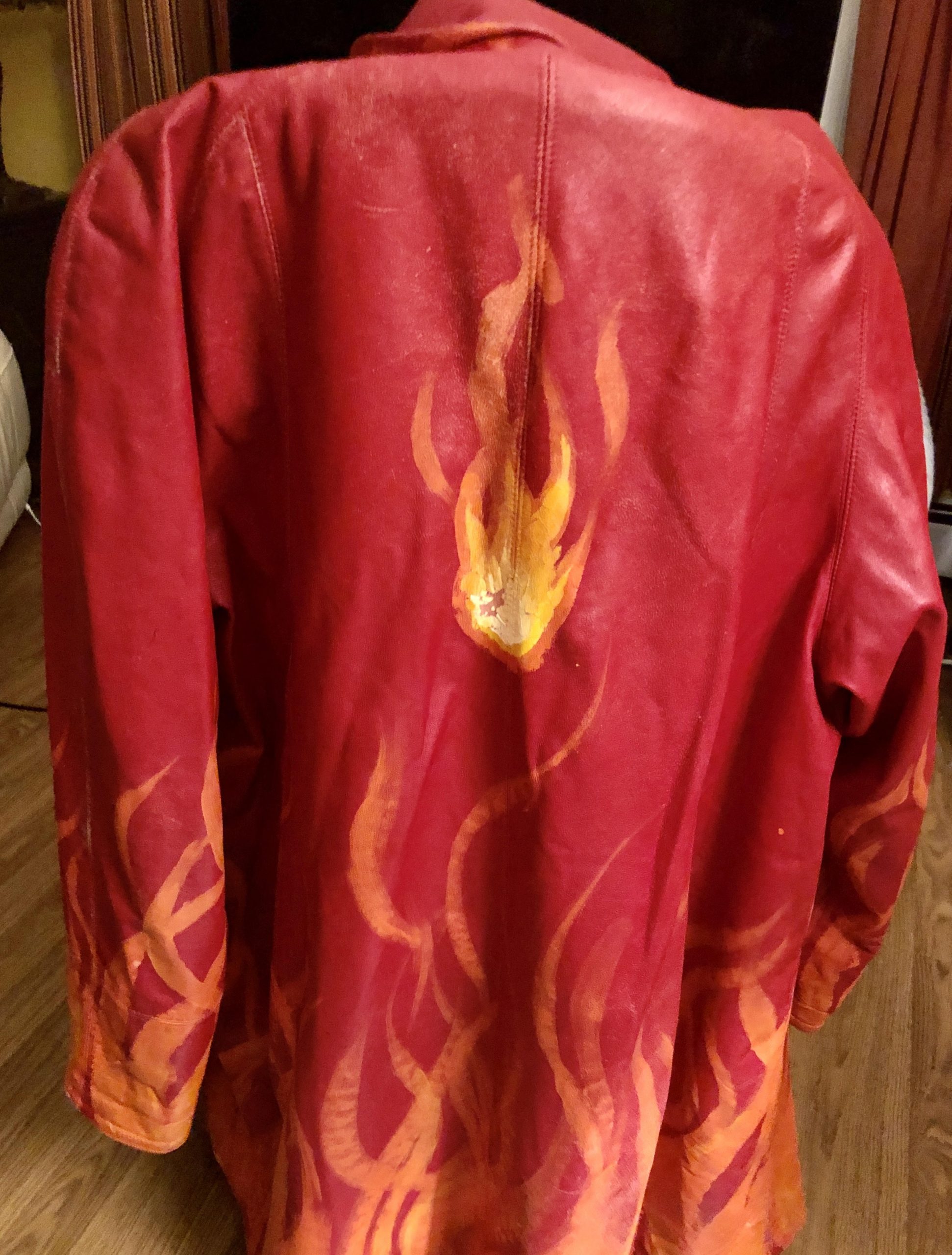
    Once would not have been enough to form the synapse. It took two travel seminars and a graduate course on the Renaissance.  The postcards, art histories and the random pieces of brick that I collect are great place holders in my memory bank.  The hot-wired connection however, is the red leather coat I bought in the marketplace. This Very Red leather Florentine artifact has weathered well over the last 25 years.

    It’s so very red that some years later I took a notion to turn it into a fashion statement for Pentecost. It might have also had something to do with commissioning Bonjeong Koo, a new theological student who was already a known artist. I’d run out of wall space, but here was a very red canvas.

    “Pentecost”, I said, when I handed it over. I know international students carry the weight of two worlds, so I didn’t expect to see the end result at week’s end. Very Red and now on fire.  He’d covered the tear in the pocket with flames and the back of the coat was like looking into a bonfire. I considered my first reaction, then dismissed it. The flames were going the wrong way, but I could easy explain. Pentecost. It will be what it is.

    One thing about a visual symbol, though. It makes a public showing but everyone who sees it forms their own meaning. It is what it is only if there’s a general consensus about what the “it” is.  I had to learn this the hard way. Whenever I’d wear the coat in a public space, I’d have unusual conversations with guys, usually guys with a lot of tattoos, who were also wearing leather. They all wanted to know where I got the coat and how much I paid for it. Some of them asked to take pictures so they could find their own painter.


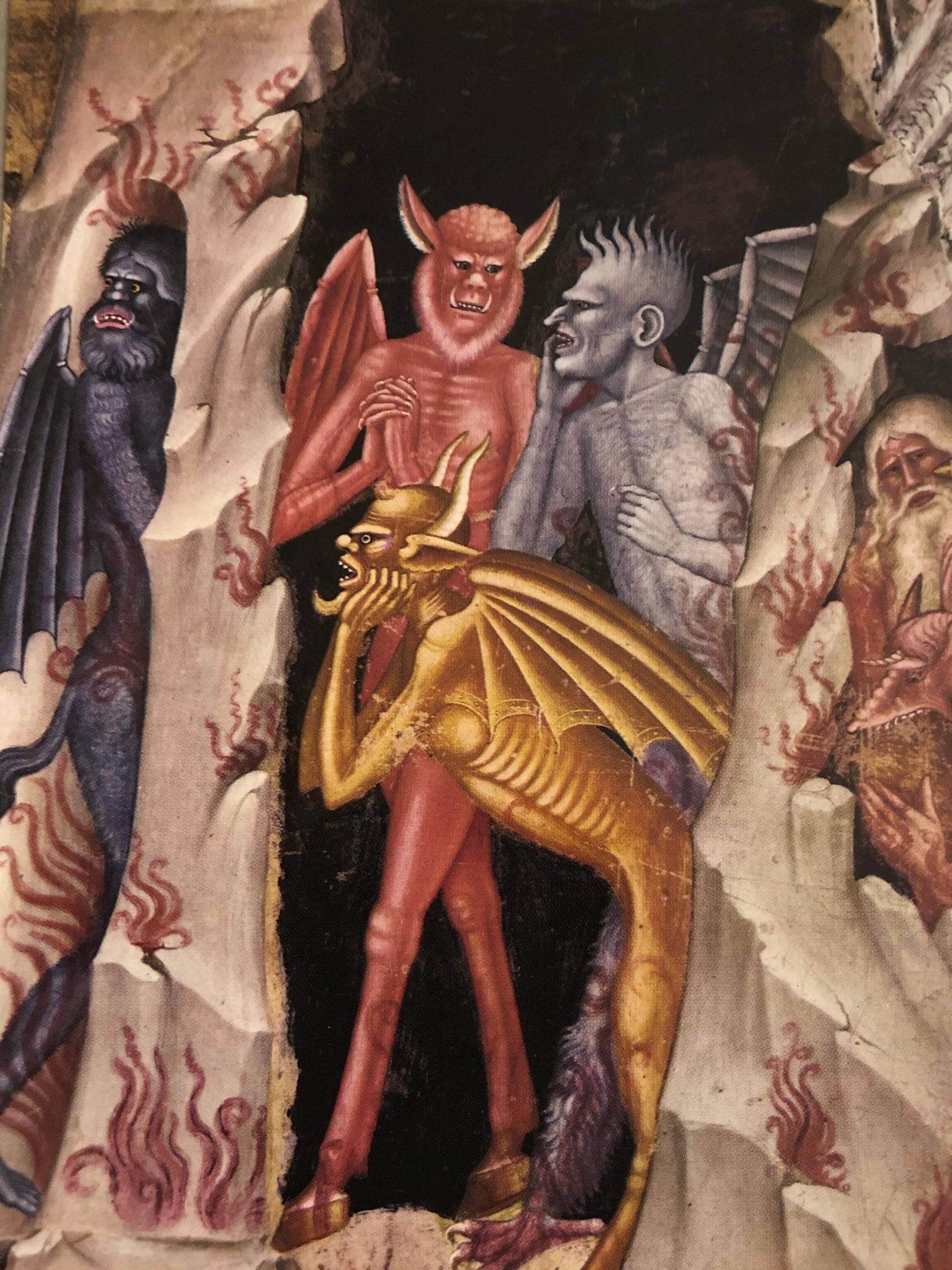
    I’m absolutely sure they didn’t see my coat and think, “Pentecost”. It was more like the painting in S.M. Novella, titled “The Descent of Christ into Limbo”.

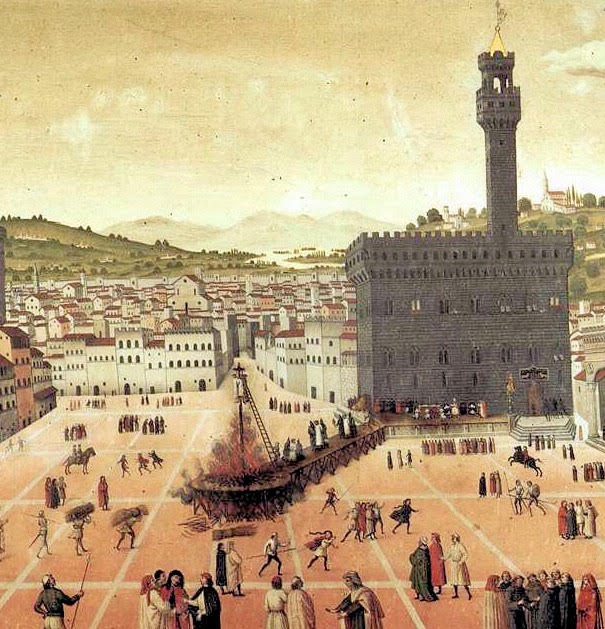
    It also reminded me of the bonfires of vanities, and Girolamo Savonarola.  It is what it is until it isn’t.

    I read the on-line conversations about replacing the UMC logo of the cross and the flame. The rhetoric is heating up. The cross is/was a symbol of the sacrifice of Christ and the flame is/was a symbol of Pentecost. Add to that Wesley’s Aldergate experience of having his heart “strangely warm” with two flames being the two ecclesial bodies that formed the UMC—The Evangelical United Brethren and the Methodist Church.

    Edward J. MIkula and Edwin H Maynard created the image in 1968 in celebration of this new birth of a church, but Rev. Edlen Cowley’s essay “Time for Cross and Flame to go” reminds us of another origin story: https://www.umnews.org/en/news/time-for-cross-and-flame-to-go?

    The Birth of a Nation by D.W. Griffith depicts the lost cause revisionist history. A burning cross means “Klan”. The film turned fiction into fact and fact into a force for white supremacy.

    It is what it is. A teenage BLM organizer in his small town found a burning cross on his lawn last week, placed by his neighbor.  Bonfires of this vanity won’t be easily smothered. Pray for rain.

  • Rubbish Removal

    Rubbish Removal


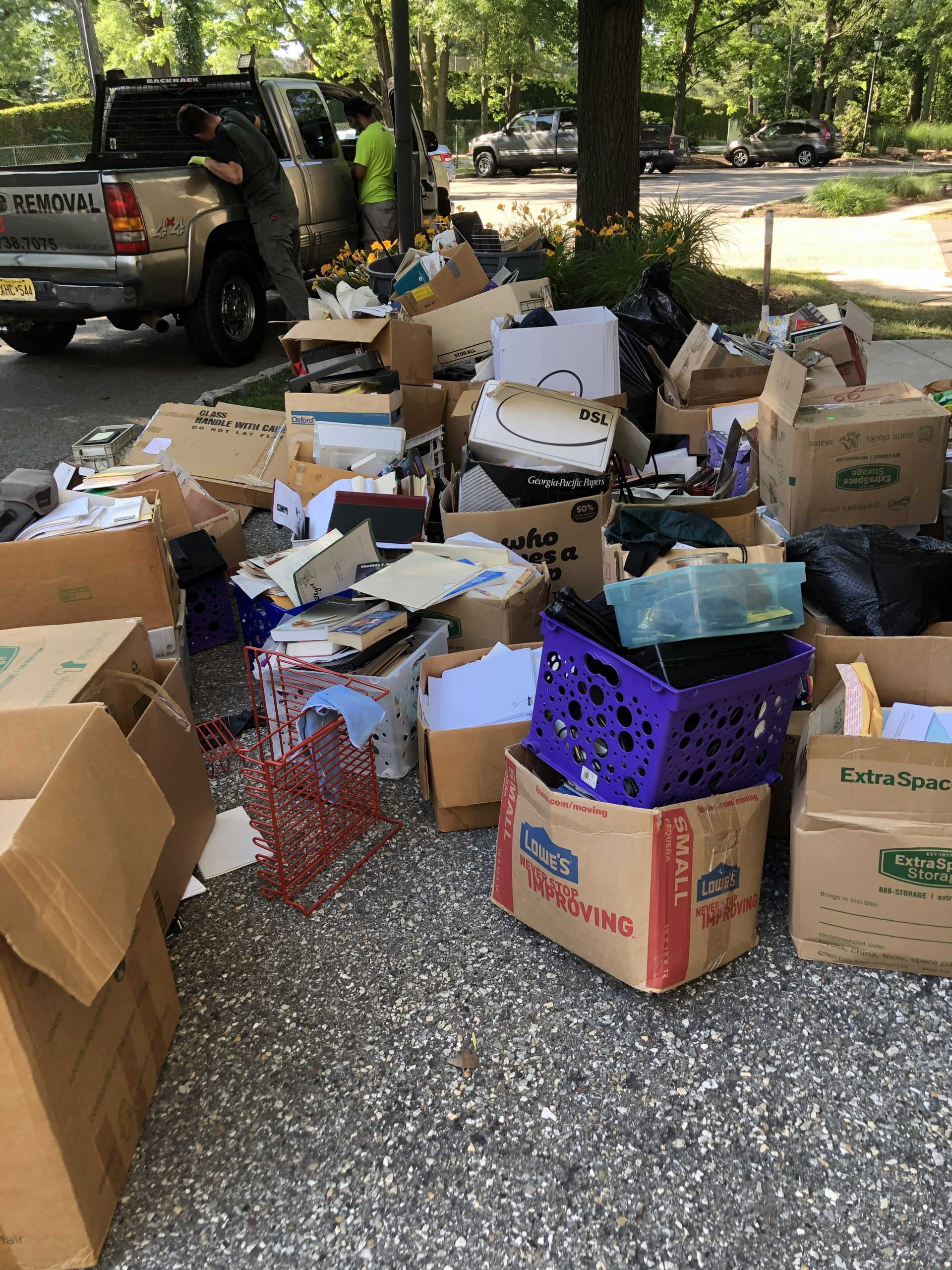
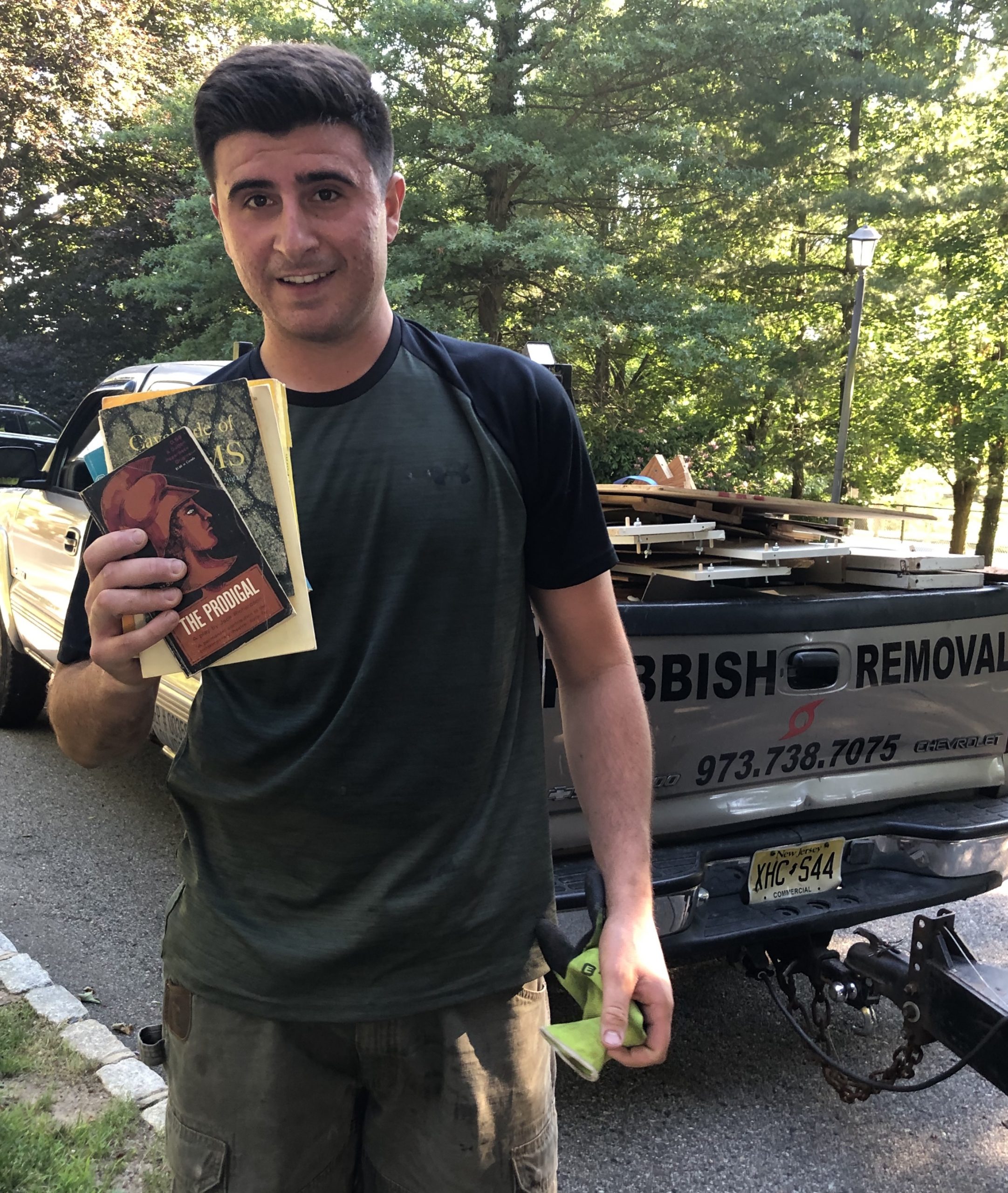
    Rubbish. It accumulates with and without our help. In corners and in conversation we litter our lives. Some rubbish can be clearly identified; trash is trash, but we may need lessons in how to sort trash these days. Recycling is not simple; single-stream or source separated?


    So, God don’t make no junk, but we two-legged do. The really tricky part about rubbish isn’t the unimportant stuff we insist on keeping. It’s the stuff other people dump on us. We store it in the back rooms of our minds: the times we feel discarded, labelled “worthless”; the shame that never disappears, names that demean, denial of dreams, the refusal to listen, the pain of having your truth declared nonsense. That’s rubbish!


    It’s not passive stuff. Refuse piles up in your corner, fills your foundation, it takes on a life of its own. It subdivides and multiplies when you’re not watching. If there’s a line, it will erase it; it crosses boundaries. The noun becomes a verb. You can rubbish someone, criticize severely and reject as worthless. To rubbish is to deny the holy humanity of another.


    So, what’s the solution? Who you gonna call? The Rubbish Removers. No, seriously, been there. Done that. They arrive and cart away all your rubbish, no questions asked. You pay by the yard. They load, and then it’s gone.


    Of course, if you’ve got live wires buried in the ruble, they can’t help with that. You’ve got to call a higher power to break the connection. It’s hard work, disconnecting from rubbish. I found myself still wired over a scholarship I didn’t get. The short version of the story involves a doctoral scholarship, my application, and a dean. You had to apply, send your essay to your MDIV alma mater; they select several for consideration and send them (application + essay) on to the UMC committee.


    I’m desperately needy, and I have original research and great recommendations. The date comes and goes and no news. Not good, not bad, nothing. I call the Dean of Duke’s office to check, and his assistant says, “Not a problem. We’ve got all of them here in the files. We received yours.” When I tell her the filing deadline was past, I get silence and then a brisk, “I’ll let him know.”


    I didn’t freeze up; I call the head of the Committee and asked if they’d received any applications from Duke. The answer was no, but the awards have been announced and that is that. My response must have been more than “Thank you.”. The next day I answer the phone and discover I’m talking to the Dean of Duke Theological School.


    I listen politely, more than a little surprised that he actually called. What I’m hearing is his calm and kind explanation that my work had simply not measured up to the other Duke graduates who’d applied. It was not worthless; it just wasn’t good enough.

    I let him finish, wait to get my breath, and then say, “Rubbish. Let me tell you what actually happened.”


    I’m calm; I have a deep cold snake state I get in when I’m really angry. There were other applicants who were overlooked; others who might have needed the money more than I did. There’d been a mistake. He made a mistake. Mistakes happen. Mistakes are not fixed by lying.


    He’s quiet, then asks, “What is it that you want?”  I’m not sure what he expects, but it isn’t my answer. “What have you done to the Apostles’ Creed?”


    He repeats my question like I’ve lapsed into gibberish. “Forgiveness of sins,” I say. “Why have you, a dean of a theological school, forgotten that part of the Creed?”


    A long pause is followed by one concession, “Mistakes have been made.” He agrees to let the unknown others in his file know what actually happened to their forms.


    So that was that. Rubbish and being rubbished reminds me how desperately I need to believe in “the forgiveness of sins”. Forgive us our sins as we forgive others is a terrifying prayer. The Rubbish Removers can’t budge this stuff. Only the Beloved, whose last human prayer was, “Abba, forgive them. They don’t know what they’re doing.”


    I believe. Help my unbelief.

  • I Confess

    I Confess

    I confess. I’ve been convicted by a jury of my possessions. I’m addicted to stuff that is stuffed with stories. It’s been one year and one day since my transplant from the Forest in the Garden State began and I’m finally down to packing my last box in the Copperbeech basement. It’s a scene straight out of Star Wars, treading on trash as the walls and the timeline compact together.  I dream of shouting “It is finished!” as I head south but the truth is, there’s a basement and a storage unit stuffed with stuff waiting to be sorted in Delaware.


    If I ever doubted the truth of Purgatory, I’m now a true believer.  Try sorting through 36 years of bankers’ boxes filled to the brim with charge conference papers, old syllabi, check stubs, because there might be an insurance policy, a marriage license, forgotten poems, and photos of loved ones long gone. There’s a reasonable explanation. Bill would serve a church without a parsonage, so we’d live at the edge of Drew. He’d get a new church appointment with parsonage and we’d store whatever we didn’t have time to sort in our Copperbeech basement and move out. People expect pastors to live in parsonages, so my brief interlude of walking to work to teach was very brief indeed. I’ve lost track of all the Drew faculty, staff, graduate students and alums over the years who’ve been sheltered in the place that housed our tangible memories.


    The extent of my addiction was sobering. Basement shelves stacked and stocked. Boxes of stuff and stuff that had escaped confinement. If it was just paperwork I could blame it all on Bill’s omnibus filing system, but there’s stuff stuff. For example: 3 slow cookers, 3 electric drills, 3 wooden rockers, 3 CD players witness to my trinitarian world view, or my poor memory. There are also God knows how many paintings, videos, church bazar Christmas decorations, and unidentifiable things that some future archeologist will simply label “ritual object”.


    I’m forced to puzzle over what to keep and what to lose. I’m grateful whenever I don’t remember how this (fill in the blank) got in the basement. Out it goes. Some artifacts, however, have memories stuck on with super glue. Example:

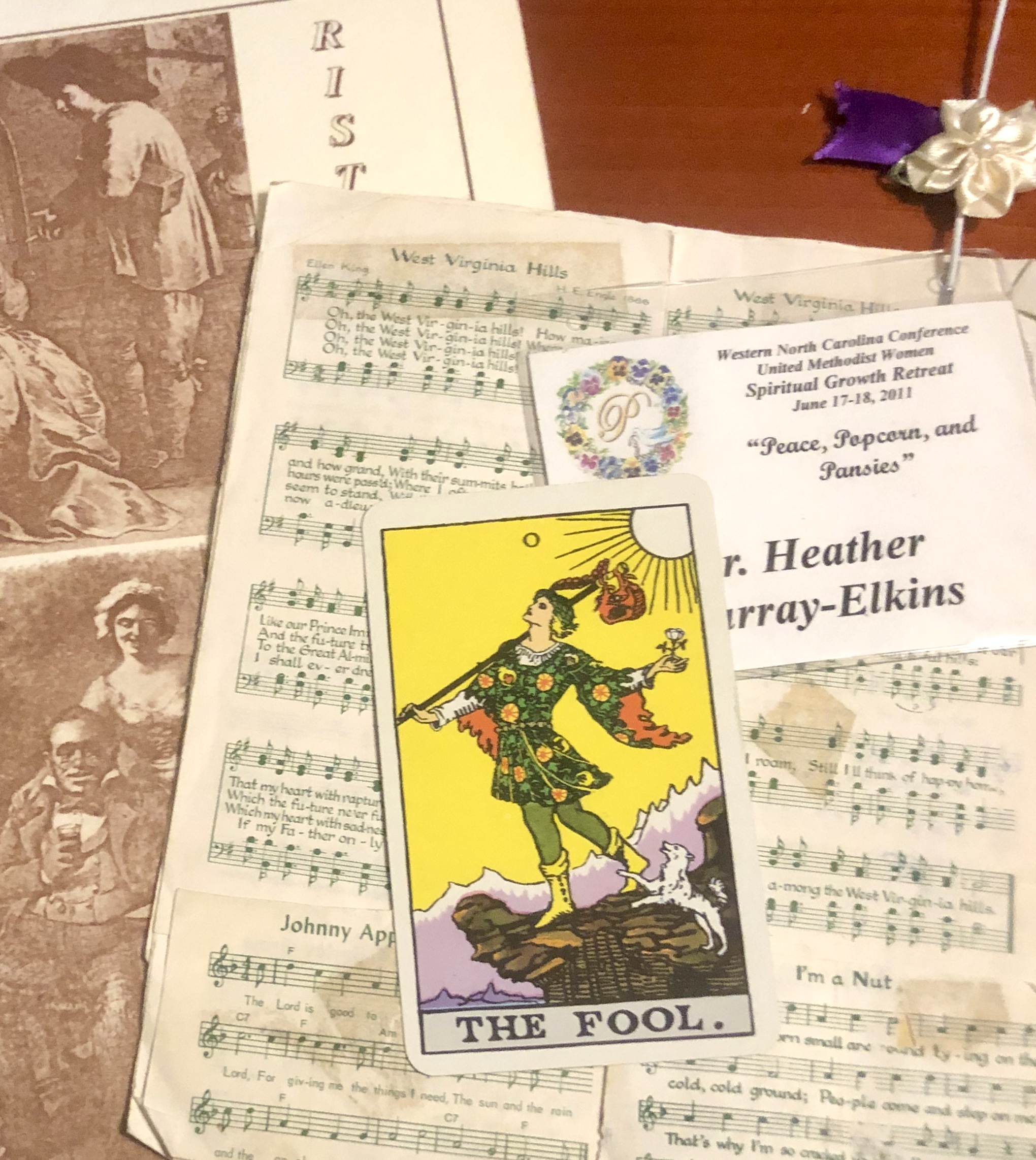
    • A laminated menu from my first travel seminar to Florence with Bert Thompson. We followed the trail of Bard’s last book, Humanists and Reformers. The class dined at the restaurant that once housed Dante and I left with a text that promised a taste of Paradise.
    • Pages from a camp songbook pasted together by my mother. These are some she would require visitors to the Old Hotel to join in her in singing as part of her tours. The collection speaks for itself: “The West Virginia Hills”, the “Johnny Appleseed song”, and one of her favorites, “I’m a Nut”.
    • A name tag from a conference that caused me several sleepless nights. The Western North Carolina Conference of the United Methodist Women set the theme: “Peace, Popcorn, and Pansies”. I’d agreed before the title reached me. My careful questions about the origin of the theme provided little help. My presentations have not survived, although I remember something about the Native American origin of popcorn, the painful history of Chief Junaluska and the trail of tears. Somewhere in there was a description of how popcorn actually works (water in the kernel + fire=pop!) I think we ended up with repentance, forgiveness, baptism and the Holy Spirit.
      • The Pansies presentation was last. Bright and brave blossoms. The flower symbolizes love and admiration; its origin from the French word, “pensee”, to think. I don’t think they’d thought it through, though. It’s also used to mean “coward” or “queer”. I invited them to think about it with a story about a volunteer gardener who kept the UMC church yard blooming like a place out of Homes and Garden even though, even though, the Discipline 304.3 states, “Homosexuality is incompatible with Christian teaching”.
    • The last of this collection is the Tarot card of the Fool. It must have fallen out of one of my youngest sister’s boxes that I’ve stored over the years. A barefoot beggar, a vagabond, can either mean creativity or chaos, spontaneity or stupidity.

    I consider my options; it may be a mixed bag for me. From Paradise Lost to pansies to popcorn, I’m a Nut. It’s time to travel with less baggage. I thank my object lessons and gently place them in the To Be Recycled Bin.


  • Holy Days in the Apple Pi Inn: The First Sunday

    Holy Days in the Apple Pi Inn: The First Sunday


    If you are a United Methodist clergy person under appointment, the first Sunday in July is often the first day of the rest of your life, or at least your life until you’re appointed elsewhere. The First Sunday is your formal introduction to a new community/church/ministry/parsonage/school and all the other support relationships such as dentists, doctors, plumbers, and farmers’ markets and good barbers.

    That “firstness” was our shared experience of ministry and marriage since 1978. Bill and I shared “firsts” as pastors until we traded Almost Heaven for the Garden State. That marked my transition from pastor to pastor’s wife. My work at Drew was rarely recognized as “ministry” in the 10 small congregations who needed someone to work with the children, the choir, the UMW and so on.

    This was the First Sunday in 36 years when we are not being introduced to a new community of faith. Bill celebrated this First Sunday by sitting on a porch drinking coffee and reading the Sunday paper, (although he made an appearance at this Sunday evening Bible Study.)

    I debated the choice of the two UMC churches I’ve attended during my sabbatical. Pisgah (pronounced Pisgee by the folks who know best) is a small country church with a talent for evangelizing visitors and a gifted Sunday School teacher for the “old folks”. They were having their First Sunday with a new pastor so I make my way to the town church in Elizabeth whose pastor is very Wesleyan when it comes to the Table.

    His gift for presiding reveals the real Presence too often concealed by bad theology or poor table manners. I can participate in the under sung praise songs that the young adults prefer, knowing there will be prayers from the early church, a Trinitarian thanksgiving and at least one traditional hymn that everyone knows by heart. I go looking for Mystery in the midst of the ordinary as a participant, not a leader of worship.

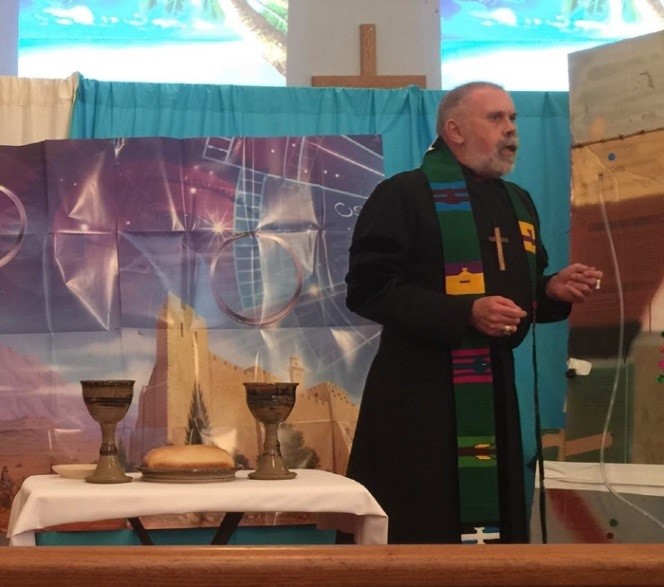
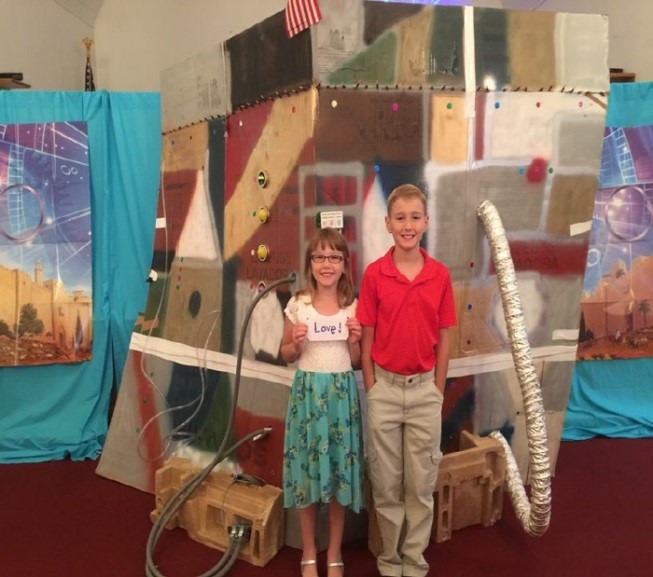
    The surprise/mystery is waiting in the sanctuary. The altar/table has been transformed into a Time Machine. It’s not a Cokesbury made-to-order VBS poster, but a three dimensional hand-made creation. I double-check my guess about what the creation is with the two little girls in the pew in front. A time machine, it is.

    I encounter the second mystery on the small table covered with white linen. Christ’s table is waiting. I think about Augustine’s insight into the time and space mystery of Sacrament: ” remembering into the future”. That is the reality of Reality. Christ’s table is the real time machine. As it was in the beginning, is now, and ever shall be, world without end. This is the First Sunday of the rest of our lives.


  • Holy Days in the Apple Pi Inn: The Fourth of July

    Holy Days in the Apple Pi Inn: The Fourth of July


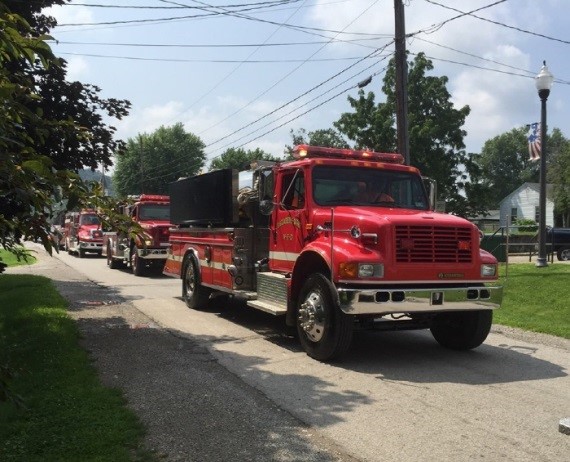
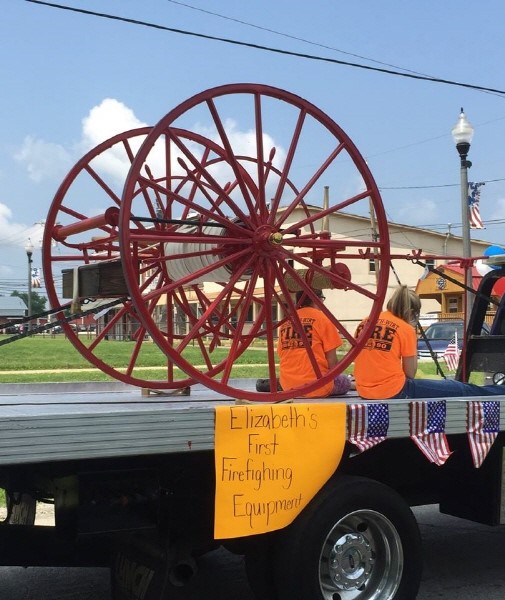
    Fire is the essence of the Fourth. This day in Elizabeth begins with the parade, a tradition that persists in face of erosion of the public square. In this place the parade itself marks the public square, circling the courthouse twice for good measure. Fire and those who fight it keep the heartbeat of the county going. Fire engines lead the way and the children who ride inside the cab toss smiles and candy to those who wait on the sidewalks.. There are old cars, and a newly crowned princess. The new recruits in the marching band make a fine showing until the drum major turns right as the firetrucks go left. They catch up again at the corner and fall in behind Smoky the Bear.

    Eight well-polished fire engines are announced by sirens that disturb as well as reassure. It reminds me of one of Bishop William Boyd Grove’s sermons heard years ago. The paradox of the siren’s sound is the paradox of prayer. We hear it and know it means trouble. “Lord, have mercy!” We pray for whoever needs both help and mercy. We hear the siren again and then we pray, “Lord, have mercy.” knowing that help is already on the way.

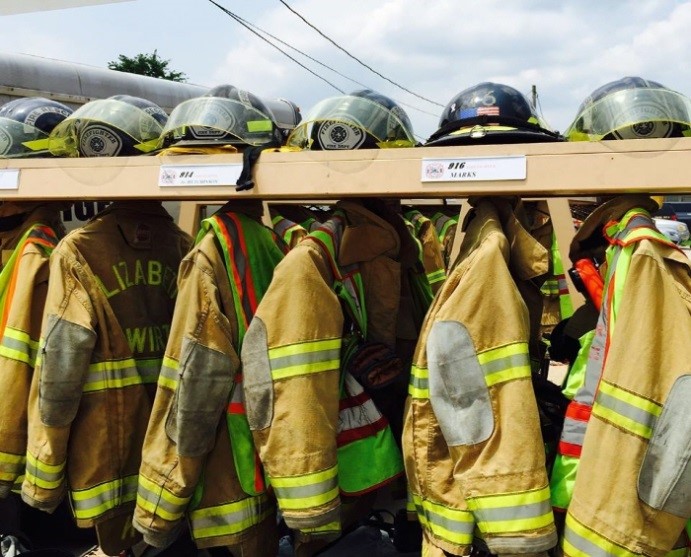
    The trucks are red, the T-shirts orange, the color of fire. These volunteers begin their training early. It’s an equal opportunity opportunity for the young in a community that’s short on jobs. Dedication and discipline are the bottom line, not educational or economic advantages. Volunteer Fire Departments makes it possible to live in small communities with a sense of safety. It helps to know your Good Samaritan lives next door.

    After the parade is over, there’s homemade ice cream, pies and cakes, hot dogs, and hot gospel groups, as well as the chance to win door prizes. When night falls, the fire lights up the sky, with fireworks that signal the end of the holiday. When this new station, built by volunteer labor, is completed, and the weight bearing beams that form its cruciform structure is concealed by brick and mortar, this community will remember where to find its heart.


  • Holy Days in the Apple Pi Inn: Half Way Day

    Holy Days in the Apple Pi Inn: Half Way Day


    Thursday, July 2, is Half Way Day in this year, 2015. Half a year come and gone. Half a loaf, half a glass, half a chance. The half way mark on a life can trigger a sense of encouragement or depression, or often a mixture of both. The “miles to go before I sleep” are shorter; the list of “promises to keep” is longer. How do we learn to number our days, so that, as the psalmist writes, “we may gain a heart of wisdom”? (Ps 90:12)

    I make a list of things done and things undone, and in this, the sins of omission seem heaviest as I contemplate the calendar. So much to do; so little time. I decide to revisit what was seen as essential at the first half of the year: the bathroom. I never underestimate water. Indoor plumbing is still a near miracle in my experience of old parsonages. I contemplate the regal toilet, marvel at the accessible shower, the handy gas heater, the original logs, and the sink that actually drains. My sister Sandy and her husband Roy Lee have helped to turn a disaster zone into a delight. The only problem we haven’t figured out is what to do with the stained glass door outside entrance. We forgot to lock it when we held a planning meeting for a mission project, and the new Baptist minister made his entrance through that door. He grinned when I asked if approaching the “throne of grace” required humility so all was well in the end.

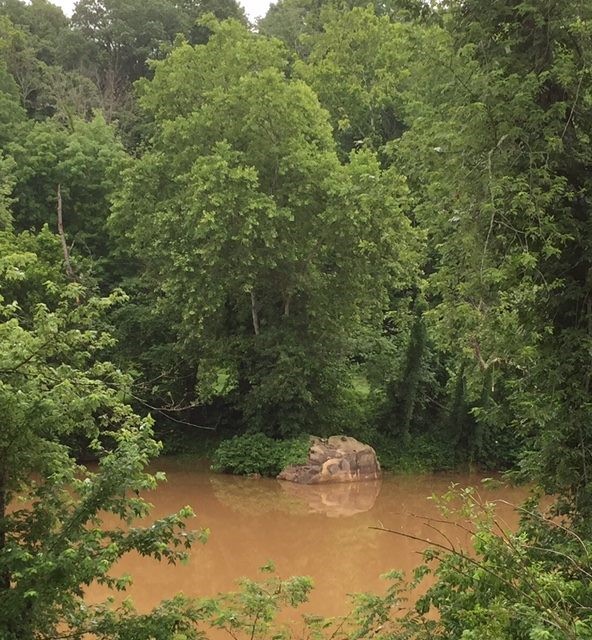
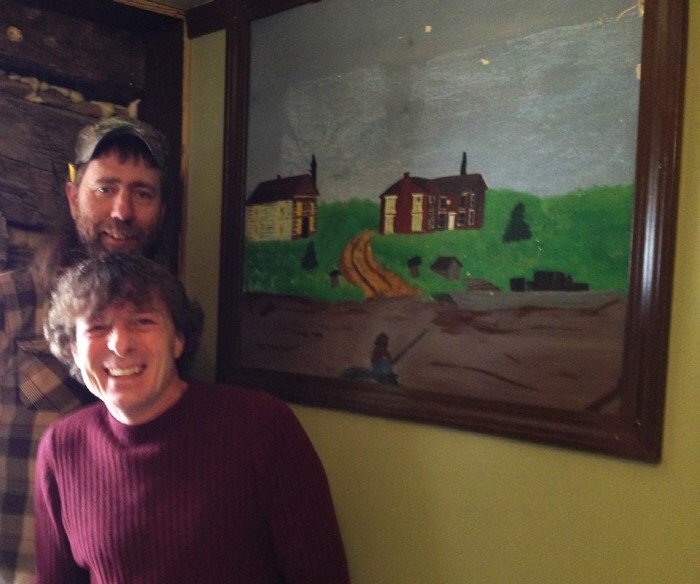
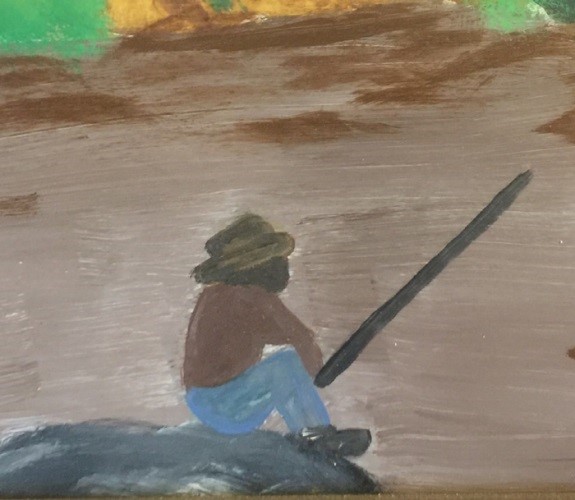
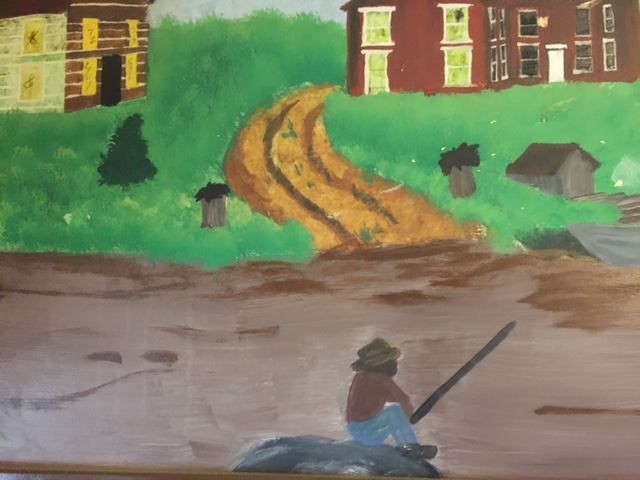
    We (meaning Billy, Darrell and Chuck) preserved a piece of folk art on the wall. It was literally painted on the wall by a homeless artist that Mother housed years ago. It’s his vision of the early days of Elizabeth with the 3 story log “hotel”, and the now-museum brick house. Included is the rock and a fisherman across the river where the ferry used to run.

    It took a lot of “figurin’” to replace old drywall and save that painting. Billy the artist, Chuck the can-do guy, Darrell, the get it right man. I don’t know how many hours it took them to save that little piece of visual history that isn’t good art. On this Half Way Day, however, it is worth every minute it cost.

    Here’s a high water mark on this Half Way Day, a way to tell time in a gospel fashion. When people ask, “Why is this here?” I say, “It’s a sign that the kingdom of heaven is coming near.” Someday, when the sun is too hot, the day too long, the hope too thin, there’ll be a voice that says, “Follow me. It’s time to go fishing.” (Mt. 17-19)

    — with Billy Jean.

  • Holy Days in the Apple Pi Inn: An Anniversary of a Promise

    Holy Days in the Apple Pi Inn: An Anniversary of a Promise


    An anniversary is a way of telling time (returning annually); it’s a word inherited from Latin through Middle English to arrive in the 21st century. Year (annus) + Past Particle of “to turn” (versus). There are anniversaries of weddings, wars, births, deaths, and every human activity that a community wishes to remember, a time “to turn” to as the years pass.

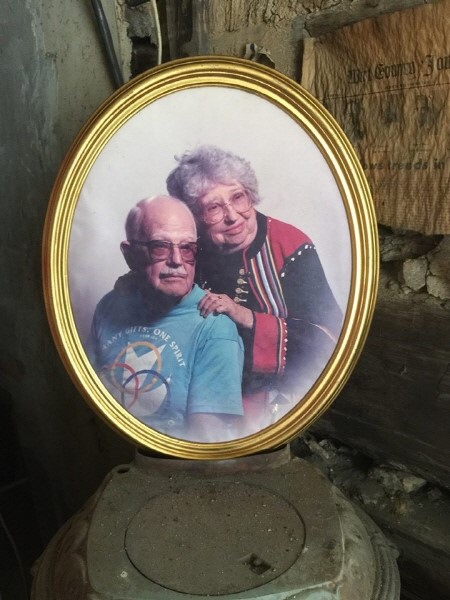
    Today I turn to the memory of wedding promises made over 70 years ago. Those promises directly connect to my being, since those words changed the legal, spiritual, social reality for those two people I call “parents”. I study their picture that rests in the Judge’s Room of the Inn on an old potbellied stove.* Did they know what they were saying those long years ago? The nation was at war; their minister an Army base chaplain; all the men were in uniform, ready to be deployed. Did they believe their promises would keep?

    Wedding vows are one of the few examples left of performative language: words that do what they say. The authority to “pronounce” the result of promises used to be more limited and less controversial. Judges, magistrates, and clergy would pronounce and the counting of anniversaries would begin. The Supreme Court opened the door and widened the wedding aisle this summer. Their decision created an anniversary that will be celebrated for years to come by communities wise enough to recognize the power of promises worth keeping.

    ” Will you love, comfort, honor, keep in sickness and in health, and forsaking all others, be faithful…as long as you both shall live.”

    I have spent this year sorting out what inherited bits and pieces of my parents’ promises to keep. What can be given away or thrown out? What is the rule of thumb that helps us to handle “tradition”? Every day can’t be an anniversary. Some memories should be forgotten. Surely it’s a safe bet to trash the odds and ends of coloring books stored a child’s set of plastic drawers stored in a shed.


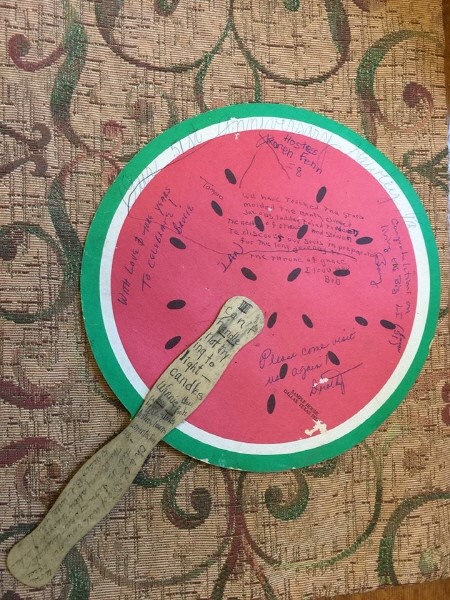
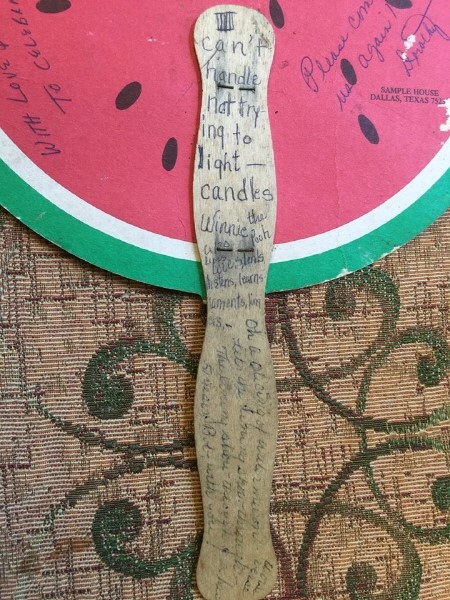
    It’s only my fondness for fans and watermelon that saved this relic of their 51st anniversary promises. I retrieved it from the trash and turn it over to find, written on the fan’s handle in my mother’s hand:
    “I can’t handle not trying to light candles. Winne the Pooh who lives, loves, lends, listens, learns, laments. . .” (Her last word is illegible.)

    Written in the left-handed block print my father had to learn when his right hand was severed by a hay baler is the following:

    “We have touched the stars,
    molded the earth, climbed
    Jacob’s ladder, tried to meet
    the needs of others, and striven
    to discover our souls in preparation
    for the long journey to
    the throne of grace.
    I love you. Bob. “

    Happy anniversary to all who keep such promises.

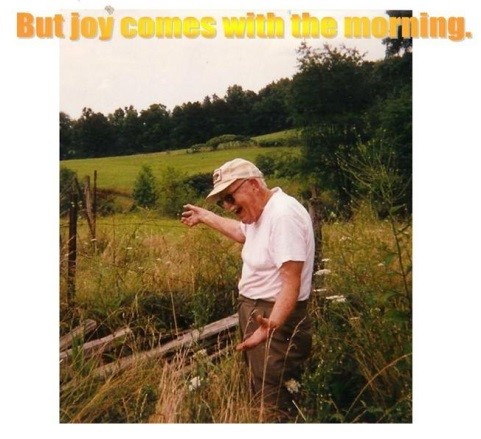
    *It took me 10 years to notice my father is wearing a Drew Theological School Orientation t-shirt in this photo.

  • Holy Days in the Apple Pi Inn: Honoring Fathers

    Holy Days in the Apple Pi Inn: Honoring Fathers


    The day to honor fathers is coming to a close. From handmade cards, to expensive tools, from home cooked meals to high end dining we search for ways to honor paternity. Honoring our fathers is a learned skill. The marketplace works hard to add price tags to the sound of children, young and grown, blessing those who fathered them.
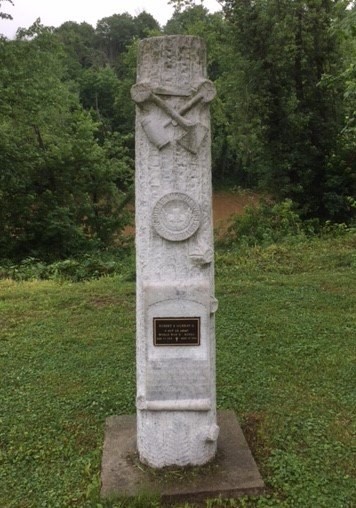
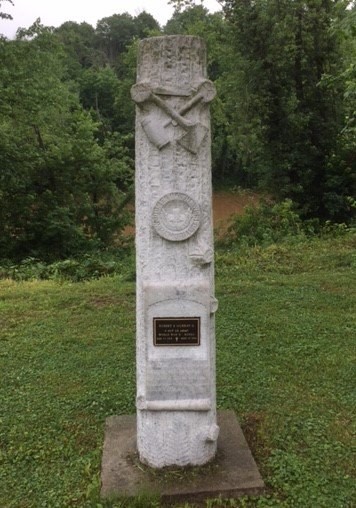
    How do we honor those to whom honor is due? If the words “good” and “father” belong together, you are blessed. So, how to remember and share the blessing? I sit on the back porch swing as the sun sets and study one memorial to our father. It is impressive, a monument in stone that witnesses to Robert Murray’s work in forestry, and the CCC, his lessons in ecology, his charter membership in the Resource, Conservation and Development Council for WV, and his bone-deep love of nature that he shared with his only brother, Bill.

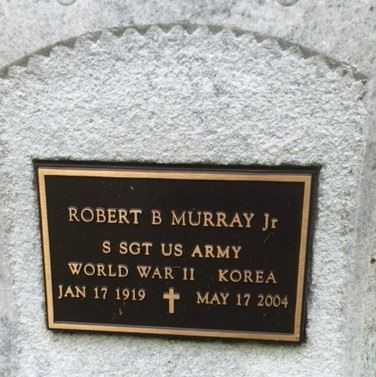
    Visitors to the Inn compliment his daughters on how we’ve honored him. Sometimes I just nod, sometimes I confess that it isn’t exactly what it seems. It doesn’t mark his grave; it wasn’t his, originally. Our mother discovered it on sale, in Texas, a “returned” monument, so to speak. Somehow she talked a trucker into driving this 1,800 lb. stone tree from Texas to Elizabeth for free. I often wondered what my father thought of his future memorial, but he never said. The bronze plaque listing his service to his country was added after his death.

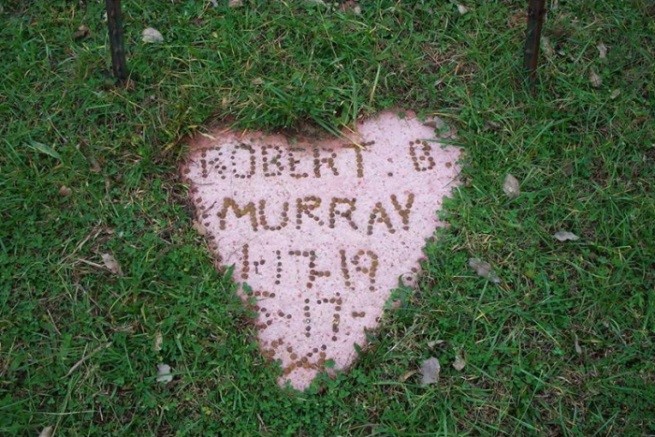
    His grave is not in town; it’s in the apple orchard on the Spring Creek farm. It’s where he asked us to put his ashes, and in WV, you can still pick your own resting place on ground that you know and love. This memorial is not impressive; it looks like the work of a child. It’s not high and lifted up; it’s so low to the ground you can mow over it. Ashes, then a crudely shaped heart made out of concrete, with a name spelled out in marbles made in WV. They shine when the early morning sun reaches them.

    Two different ways to honor. Two different spaces. Two holy human places. How do we honor those to whom honor is due? I know I’ve reached the time when I have to choose. Keep the Inn, my mother’s dream or the Spring Creek farm, my father’s legacy? The time to choose is coming, but tonight I just sit and swing.

  • Holy Days in the Apple Pi Inn: West by God Virginia Day

    Holy Days in the Apple Pi Inn: West by God Virginia Day

    June 20, 1863, President Lincoln signed a bill that authorized a new state in the Union: West Virginia. It was an action taken in the middle of a Civil War; its critics claimed it was unconstitutional. We seceded from the South, Confederate states who had already seceded. Some scholars insist that it was the Northern investors who were to blame or praise, wanting to side with the Union in return for control of the railroads, timber, mining, gas and oil. Some make the argument that the western part of Virginia had always been at economic and political odds with the Virginia establishment of church and state sanctioned slavery.

    It’s often overlooked that the first proposed constitution supported the Union with the condition that no blacks could reside in the state. Lincoln refused to sign until that condition was removed. The State Motto leaves the question of motivation open: Mountaineers are always free.

    My mother’s interpretation was a theo-poetic argument for Providence and freedom. It began with “In 1862 Abe Lincoln was mighty blue. . .” Her story/history would name the terrible losses at Antietam and claim that the offer of the economic and political resources of western Virginia convicted President Lincoln to issue the Emancipation Proclamation and create a new state. Anyone who came to visit the old Inn heard her recite that history at the front door, and if they disagreed, they were wise to keep their differences to themselves. I once had to rescue a Confederate re-enactor who’d come to the door to ask for water. She’d literally backed him into the corner, using her schoolteacher voice and finger to rebuke him for betraying the Union.


    The story/history of this Inn is rooted in the name and origin story of this state. Ephraim Bee was father-in- law to Mary Jane Bee who purchased the Inn after the death of her Confederate husband Josiah. Four of Ephraim’s sons served in the Civil War. Two fought for the North and two for the South. Ephraim was a blacksmith, an inn-keeper, a magistrate, and one of the First Legislators of the state. His fifth daughter was born on the day that Lincoln signed the state bill, so he named her West Virginia Bee. Little wonder we grew up saying, “West by God Virginia.”

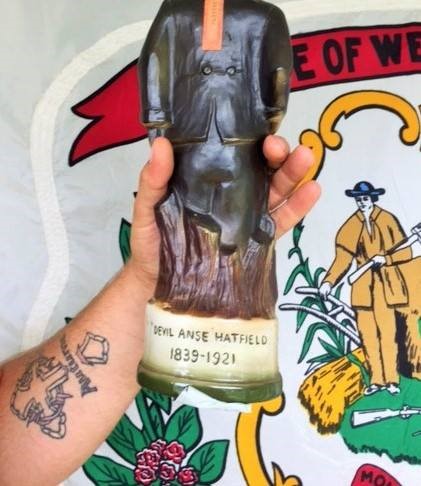
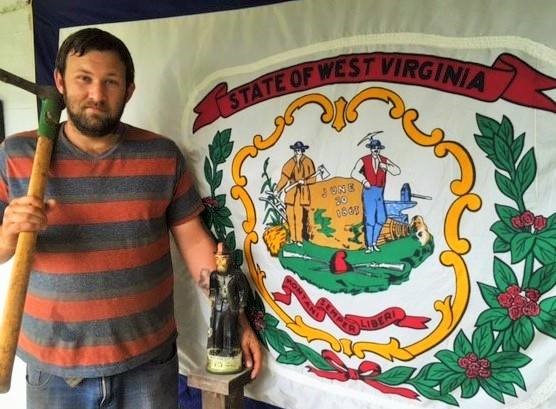
    What makes for a more perfect union in these days of stress and struggle? Hospitality, Humor, Honesty, and Humanity are the 4-Hs that can make this state great. I appreciate the presence in this old structure of mountaineers like Billy Jean LaCourse, descendent of the McCoys, who creates art and order in every corner he brightens, and Joey Hatfield, rural king of the meadow, mower, and weed whip. I treasure the strong women who make a way out of no way, women who refuse to let the dreams of freedom and public education die, women who stand at the locked down gates of tomorrow and declare: Mountaineers are always free!

    — with Katie Baters.