Category: Dreaming in Delaware

  • A Trail of Tears and Joy

    A Trail of Tears and Joy


    Where does a story begin? I invite you to join me on the Trail of a story, a Trail of Joy and a Trail of Tears. I’m sitting in a classroom, not as teacher, but as a student like the others in the room. Joy Susan Harjo, poet, activist, musician, advocate , member of Cheyenne and Muscogee nations, has agreed to prepare us for a journey to Oklahoma, a place of birth and exile. How did we get there? With a UMC grant to invite Native American educators and leaders to teach the histories we never learned, and stories we did not know how to tell.


    She begins with her name and its meaning Harjo (“so brave you’re crazy”). She shares her story and it’s complicated.  She’s not a lawyer, but she’s the primary force field behind the legal challenge to the US’s oldest trademark and logo: the Washington Redskins. There are billions of dollars and millions of fans who are positioned on the field against her. I see where the “crazy” in her name comes from. The legal challenge has gone into overtime, she and her community began the challenge in 1987; this is now 2015.  Yards gained and then lost as court decisions are overturned and new trademark lawyers join the line. Who owns a label: Redskins?  Its origin stories are part of the legal and cultural argument. Those of us listening have read enough to know the Federal Government once paid a bounty for “red skins”: women, men, even babies. $5 in Idaho, less in California.


    So what’s in a name? A recognized social relationship. You may have wondered how a fight song ended up as a liturgical reading. Scalp ’em, swamp ‘um. Sons of Wash-ing-ton. Rah!, Rah!, Rah!

    Is it worth fighting over? We asked Joy. We’d read the articles about the death threats she received, the FBI protection she refused.  So crazy brave is this attempt to confront colonization.  She shared the questions she asks herself: “Who are we before and after the encounter” of colonization. And how do we imagine ourselves with an integrity and freshness outside the sludge and despair of destruction? I am seven generations from Monahwee, who, with the rest of the Red Stick contingent, fought Andrew Jackson at The Battle of Horseshoe Bend in what is now known as Alabama. Our tribe was removed unlawfully from our homelands. Seven generations can live under one roof. That sense of time brings history close, within breathing distance. I call it ancestor time. Everything is a living being, even time, even words.”


    Ancestor time. History within breathing distance. I was born in a tiny county in West Virginia, named for the lawyer, William Wirt, who took the case of the Cherokee to the Supreme Court and won. They won, but when a President can say, “But who’s going to make me follow the law?” everyone loses. President Jackson originally ordered the forcible removal of the Muscogee starting in 1836, and this was our national policy until all the Muscogee, Cherokee, Chickasaw, Choctaw, and Seminole land, homes, businesses and harvests had been confiscated. I share a painting, done by a Cherokee artist, of that terrible trail. If you look closely at the blanket covering the woman’s head, you’ll see that it’s made up of first class postage stamps, Liberty. Justice. all of them canceled.


    Joy’s people, her nation, were one of these “Civilized Tribes”, called Creek by the colonizers, Muscogee by themselves. Why civilized? They’d signed the treaty and kept it. They learned English, put on white settlers’ clothes and customs, traded hunting for planting, cotton for native plants, native prayer-chants for prayer books and traditional songs for Christian hymns. None of those forms of civilization protected them against the violence of manifest destiny and white supremacy. And so the forced march on the Trail of Tears began, over 5,034 miles. 15,000 forced to march, 3,500 of Joy’s people did not survive the exodus. 3,500 estimated lost, and that was only one of five nations.


    We, who are listening to her voice in the classroom, will travel to Oklahoma. We’ll be welcomed into a UM Muscogee church. They offer to sing for us one of the hymns they sang on that terrible trail, a song they sang as they were forced marched, as women were raped, and the old and the young died from hunger and cold and were left behind. We weep as they sing, for we all know the words and the tune.


    Those who survived were transplanted to Oklahoma where there were other native peoples. New treaties were made. This would be Indian Country forever, but… oil, and Congress’ homestead laws, the Land Runs, then statehood, and …you know how the story of broken treaties goes.


    In case you ever want to brush up on treaties, visit The National Museum of the American Indian in Washington DC. It located across from the Capital Building where every treaty must be ratified. Joy told us about the newest addition, the Treaty Room. She was the exhibit’s curator overseeing the displays, preparing for its opening. By the time you reached the end of the room, scanning every text, you’d realize the landscape of loss of this nation, ink trails of broken promises. Even broken, Joy believes they witness to remembrance and survival. “I feel strongly that I have a responsibility to all the sources that I am: to all past and future ancestors, to my home country, to all places that I touch down on and that are myself, to all voices, all women, all of my tribe, all people, all earth, and beyond that to all beginnings and endings. In a strange kind of sense writing frees me to believe in myself, to be able to speak, to have voice, because I have to; it is my survival.”


    And speaking of treaties, on July 8th, 2020, the Supreme Court(5/4) ruled that about half of the land in Oklahoma is within a Native American reservation. The court’s decision hinged on the question of whether the Creek (Muscogee) reservation continued to exist after Oklahoma became a state for the purpose of federal criminal law. The tribe said: “The decision will allow the Nation to honor our ancestors by maintaining our established sovereignty and territorial boundaries.” Of course, it might be important to remember that it’s President Jackson’s portrait that hangs in the Oval Office these days.


    Joy Harjo: So brave and so crazy. She’s named U.S. poet laurate in June 2019. So who’s crazy? Her peoples’ treaty is recognized by the Supreme Court on July 8th 2020 and the oldest US franchise formally retired the nickname “Redskins” on July 13th 2020 leaving the song’s title and its role in team lore undetermined at this time.


    Touchdown!
  • Bingo

    Bingo


    Bean counting is not normally how you want to spend your time, and being called a “bean counter” is definitely not a compliment. It usually means you’re stuck with tedious tasks or being ignorant in money-making matters. That is, unless you know the history of Bingo.  Track it back to 1530, Italy, and you’ll find a game of chance that is still played every Saturday, but they don’t bet with beans any more.

    Fast forward to France and the late 1770’s and it’s called “Le Lotto”, and you have to be really well funded to count French beans. Even the Germans get into the bean business, but they actually use it to teach counting, history, and spelling to children. When Le Lotto immigrates to the US in 1929, Georgians call it like they see it: “Beano”.

    It’s still a game of beans, played at carnivals and country fairs.  If the dealer calls your winning numbers, you shout: “Beano!”. So, what happens when a New York toy salesman, a Jewish immigrant from Poland, who’s down on his luck, sits down at a carnival with a handful of beans?

    Bingo. Or more precisely, Bingo!!! Edwin Lowe prints up cards. He tests the new game, and some unknown woman shouts out “Bingo!” instead of “Beano” and so the game goes on. Lowe leaves nothing to chance. He hires a math professor to multiply the combinations, prints over 6,000 different kinds of cards so there will be less conflict when two or more players shout “Bingo!!”

    So how does a bean counting game become a major fund raiser for churches and non-profits? A Catholic priest from Pennsylvania and a now-wealthy Jewish toy manufacturer from New York work it out in the early 1930s.  Bingo becomes the game of chance that builds sanctuaries, repairs convents, buys school books, and keeps the lights on for too many non-profits to count.

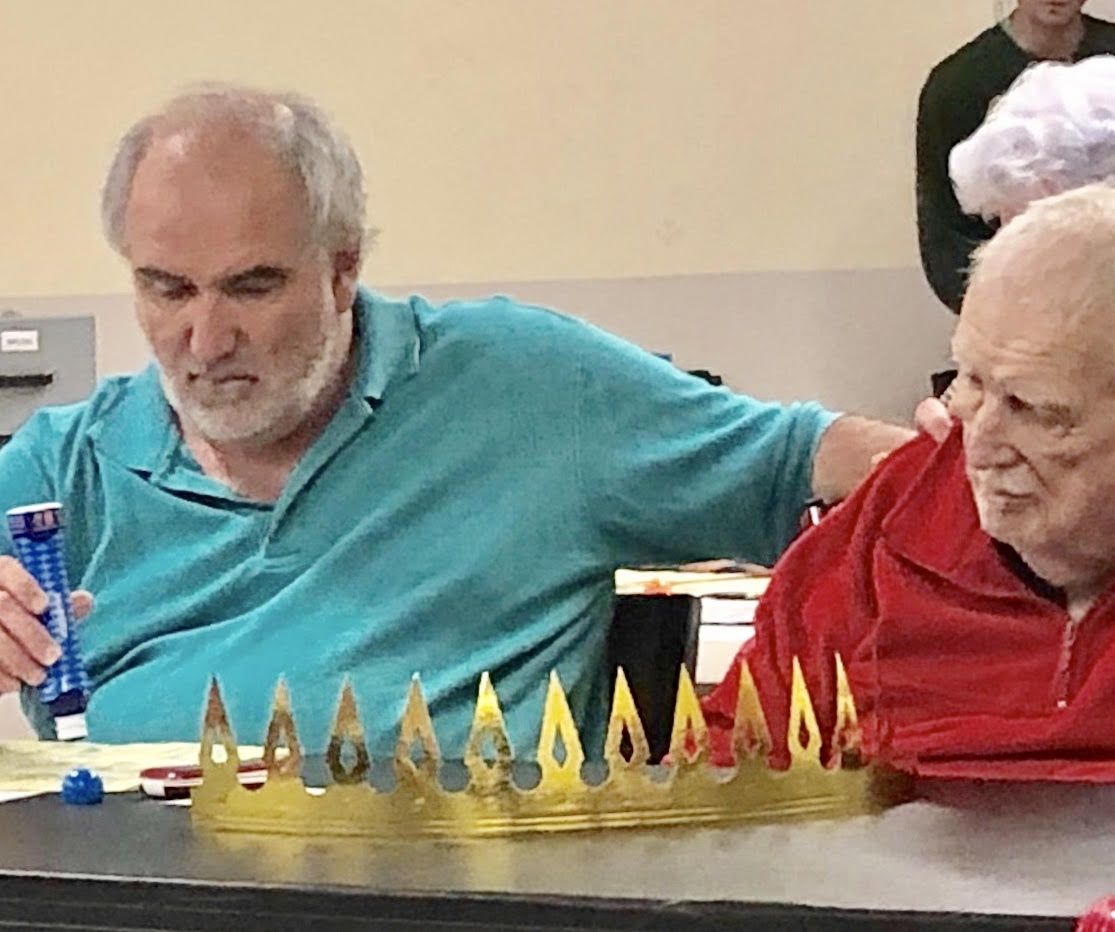
    Since I was raised and remain in the Wesleyan tribe, we don’t do Bingo. It’s gambling! We still ban it, although we tend to overlook raffles for homemade quilts and apple pies.  It’s my life as a Delaware Lion that gets me into this game of chance and charity.  The Belleview Community Center is the center of a lively nonprofit: education, recreation, prevention, farmers’ market, family support, and on the third floor, a Lion’s Den whose rent is met by service as callers for weekly Bingo.

    Bingo people are dedicated, to say the least. They show up on good days and hard times. When a hurricane turns off the town lights, the Center generator fires up, and people gather for comfort and counting. When Covid first kicks in, there’s a lull, then masks are on, hand sanitizer is handed out with bingo cards, and distance is maintained. Bingo!

    Calling Bingo requires social skills. It’s more than just reading numbers and balancing balls. You need to know what’s what and who’s who. You have to care about human beings who dream of life finally adding up.  You have to see them armed with bingo markers, looking for more than being bean counters. Bingo can be addictive, but so is the need for community in this time of isolation.

    Bill Gadola, a Bellefonte Lion, is one of the best callers in this game of chance and charity. His Bingo service is, as church folks would say, a calling. He’s a Volunteer Services Administrator. He studied nursing and rehabilitation; he’s an advocate for seniors and those who need a helping hand.  Add up those numbers and what you get is a winner. Bingo!!


  • A Squirrel, The Sacraments and Saint Francis

    A Squirrel, The Sacraments and Saint Francis


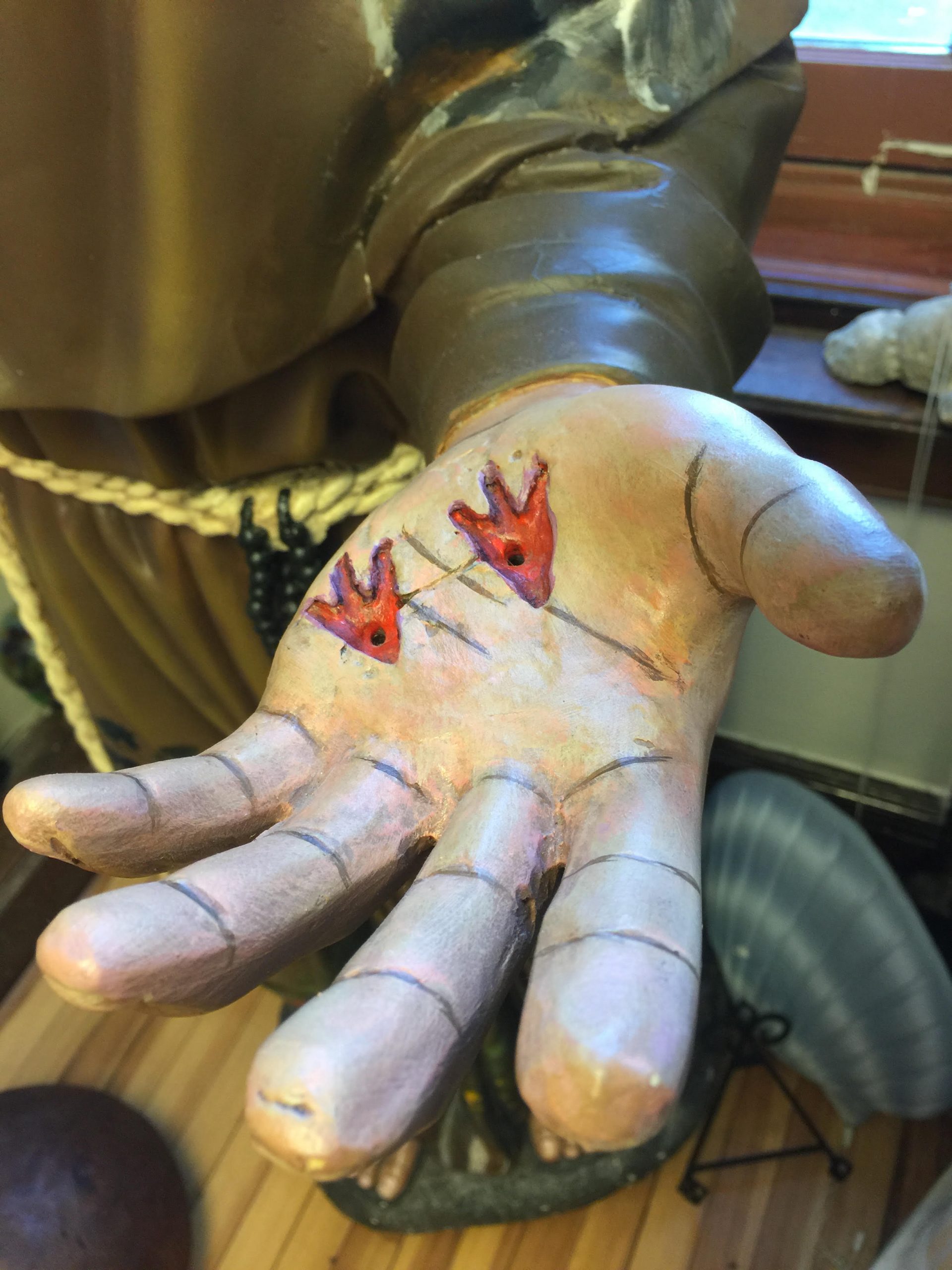
    I stop to shop because the humming bird wind chines are just what I need to listen to, if not acquire. My rule, which my husband doesn’t believe I follow, is to inspect an object on sale closely and then walk around and look at other things.  If it still seems to be speaking to me after three tours around the store, then home we go together.  This visit doesn’t take three turns.  I’ve wandered out to the backyard of this side-of-the road garden store and found what I’ve come for. It isn’t a what; it’s a who, St. Francis. The 6-foot plastic saint has seen better days. He’s suffering from sunstroke, blue eyes faded, his fair complexion freckled by missing paint; his hands seem to be suffering from leprosy. To add insult to injury, the two birds that traditionally perch on St. Francis have taken flight. There are bird feet shaped holes on his shoulder and in his outstretched hand. Perhaps they were stolen, or maybe the birds didn’t like his preaching. in any case, he’s wingless.

    There’s no price tag, so I’m hopeful. Unfortunately, the owner hasn’t missed my shock of recognition. Even after pointing out the flaws, the price is out of reach, particularly since plastic can’t be used to purchase even a plastic saint. I promise Francis I’ll be back.

    It takes a little longer than planned. All my appeals to the dean go unanswered. There seems little interest in having St. Francis occupy a corner in our chapel. Terry Todd, colleague and conspirator, provides the bond money and I do the four-hour drive to rescue a saint.

    The saint’s arrival creates a cascade of transformations. Bon Jeong Koo, student and professional artist, heals Francis of leprosy and decorates his robe with every creature he’d seen in the forest of Drew. Deer, butterflies, robins, and of course, squirrels. It’s his contribution to the Ministry and Imagination class taught by me and Lynne Westfield and it is art and imagination and ministry.

    What is most striking to me is how Koo solves the problem of the missing birds. The holes in the shoulder he fills in and paints over. The imprint of bird feet on the saints outstretched palm have not been filled in; they’ve been painted a scarlet red, a virtual wound. When I ask why, Koo simply answers, “It’s the kind of stigmata he’d have.” Exactly. Bird-shaped wounds belong to this saint who began his lonely ministry by preaching to the birds since no human wanted to hear him.

    St Francis welcomes all who come by our office doors, but since he’s so lifelike, the shock doesn’t wear off. We agree to let him live in my office until needed for public display. Working late one evening I learn he’s been about his ministry. One of the cleaning staff asks if he could visit St. Francis after he finishes his rounds. I think he’s probably thinking it’s better to ask, since I know he has the keys. “He’s my saint, see.” he says, anxious that I’ve taken offense. I tell him I’m delighted, and to visit St. Francis whenever he can.

    I start reading up on the saint since he’s actually got my back. The more I read, the more restless I get with his fair skin, light hair, and blue eyes. There are written records about his laughing brown eyes and earth-toned hands. A blue-eyed boy will not do. A second artist/scholar comes to the rescue, Richard Romero. He understands the problem, and a trans-ethnic transformation takes place. Brown skin, brown eyes, and the tonsure disappears. When I ask he says, “This is a young Francis.”

    He seems ageless. He moves through Seminary Hall, following a call to be an instrument of peace, an advocate for eco-justice, a reminder of the communion of saints and the beauty of creation and creatures bright and beautiful, great and small.  This Forest Saint is known to possess a strange sense of humor. He like dressing up and startling strangers and friends alike.

    When I finally take my leave from the Forest, I read him a poem, source unknown, that I’ve read to him before.


    Squirrel Poem by St. Francis of Assisi (I just discovered this poem by St. Francis of Assisi)

    THE SACRAMENTS

    I once spoke to my friend, an old squirrel, about the Sacraments –

    he got so excited

    and ran into a hollow in his tree and came

    back holding some acorns, an owl feather,

    and a ribbon he had found.

    And I just smiled and said, “Yes, dear,

    you understand:

    everything imparts

    His grace.”


    We understand. Everything imparts Love’s grace.

  • A Hard-Shell Faith

    A Hard-Shell Faith

    The harder the road, the slower I go. The heavier the burden, the more my turtle sensibility surfaces.  The more I age, the younger my sense of story, so, these are the days of Dr. Seuss.


    On the far-away island of Sala-ma-Sond,
    Yertle the Turtle was king of the pond.
    A nice little pond. It was clean. It was neat.
    The water was warm. There was plenty to eat.
    The turtles had everything turtles might need.
    And they were all happy. Quite happy indeed.

    They were… until Yertle, the king of them all,
    Decided the kingdom he ruled was too small…


    Since North America was first known as Turtle Island, it’s important to explore this tale about tyranny. What? Why? When? What causes a lust for power? Why do some, perhaps most of us, enable it? When is enough enough?


    My throne shall be higher!” his royal voice thundered,
    “So pile up more turtles! I want ’bout two hundred!”

    “Turtles! More turtles!” he bellowed and brayed.
    And the turtles ‘way down in the pond were afraid.
    They trembled. They shook. But they came. They obeyed…


    If the political is personal, a far from childish challenge confronts me in every line. How many turtles am I willing to turn into bricks for a privileged view? And since the personal is also political, what will move me to get out from under unjust economic and social burdens.


    “Hooray!” shouted Yertle. “I’m the king of the trees!
    I’m king of the birds! And I’m king of the bees!
    I’m king of the butterflies! King of the air!
    Ah, me! What a throne! What a wonderful chair!
    I’m Yertle the Turtle! Oh, marvelous me!
    For I am the ruler of all that I see!”

    Then again, from below, in the great heavy stack,
    Came a groan from that plain little turtle named Mack.
    “Your Majesty, please… I don’t like to complain,
    But down here below, we are feeling great pain.
    I know, up on top you are seeing great sights,
    But down here at the bottom we, too, should have rights.
    We turtles can’t stand it. Our shells will all crack!
    Besides, we need food. We are starving!” groaned Mack.

    Yertle, the Turtle by Dr. Seuss

    So, is this the world we live in, turtles all the way down? In the Ojibway story of the beginning the turtle is the earth-diver. The supreme being sends the turtle into the primal waters to find bits of mud with which to build the earth. Creation emerges from the watery deep beings and potential forms linger asleep or suspended in the primordial realm. The earth-diver is among the first of them to awaken and lay the necessary groundwork where the coming creation will be able to live.

    Can we use a sanctified imagination to deepen our understanding? Might we risk diving deep and surfacing with a new sense of creation? One where creature/human/animal are names for the holy, holy, holy by virtue of the Creation and, still more, of the Incarnation.

    Is Christ not our earth-diver, the first to awaken, the first born of creation? Did the Holy Human One not dive into the waters of chaos to lay the groundwork for the new heaven and the renewed earth. This is my hard-shell affirmation of faith: Earth-diving Emmanuel. God is with us, even here on Turtle Island.


  • Thy Rod and Thy Staff

    Thy Rod and Thy Staff


    When our routines are forcibly rerouted, detoured into unfamiliar landscapes, old body memories surface to help us find our way. For me, an old song often rises as I “lay me down to sleep”. The 23rd Psalm is less a song, more a chant without a tune. I hear my grandmother under my voice like an echo. I’d learned it by heart from her during the shadows of my asthmatic nights. The synaptic links are always in the grammar of the King’s English with an Appalachian accent.


    I find myself asking a child’s question again: Why do we need two sticks? Why a rod and a staff? We’re to be grateful for both, but why? If you’re trying to walk at night, and you can’t see where the road is, you definitely need one good walking stick.


    My question stemmed from having another scripture verse vigorously applied. “Spare the rod and spoil the child.”  Our parents weren’t enlightened about corporal punishment. They would have appreciated knowing that a shebet, or “rod” could be used for fighting, ruling, walking, sometimes writing, and definitely punishment. A handy thing, a rod, particularly when a shepherd has sheep who often go astray.


    I learned much later that a staff, matteh, was what Moses used. Staff turns to snake and then back again. Getting water from the rock in the wilderness. Parting the Red sea. Jewish midrash traces the staff from Moses who shared it with Aaron (same staff/rod) and later David used it on Goliath. It remained in the keeping of the kings of Judah until the destruction of the First Temple when it disappeared.


    I go hunting for an answer for the rod/staff dilemma on YouTube. Rabbi Zelman, teacher of Drew’s rabbi, Deborah Smith, as well as mentor to my sister, Tamara, offers a solution via story. It’s like a child, he says, whose mother has been gone a long time. The child gives in to the temptation of the unguarded cookie jar, but drops and breaks it into pieces just as the mother returns. The mother smacks the child who says, “Oh! I’m so glad you’re here.” Discipline and comfort, see. The rod and the staff.


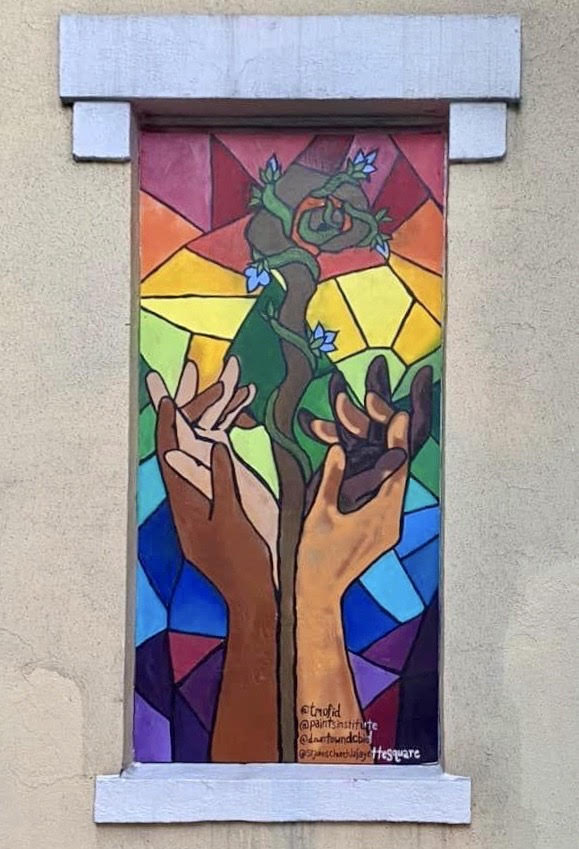
    This doesn’t remove all of my hermeneutic of suspicion, but it does prompt me to consider again the image of the shepherd’s staff that’s painted on one of the plywood windows of St. John’s Episcopal Church, across from the White House. The painting was done through a partnership with the P.A.I.N.T.S (Providing Artists with Inspiration in Non-Traditional Settings). The justice-themed murals decorate the plywood panels put up following the George Floyd protests. The church windows had been broken in the midst of what had started as a peaceful demonstration against police killing of George Floyd.  The National Guard and security forces set off explosions, fired sting balls and tear gas to clear the peaceful protestors and clergy so that the President could hold up a bible in front of the church.


    I study the hands that are holding a flowering staff. Many hands. Multi-hued. They are lifting up the Shepherd Staff as well as the community. In this time of valleys and shadows, Thy Rod which is also Thy Staff, confronts and comforts me.


  • Signal Lights

    Signal Lights


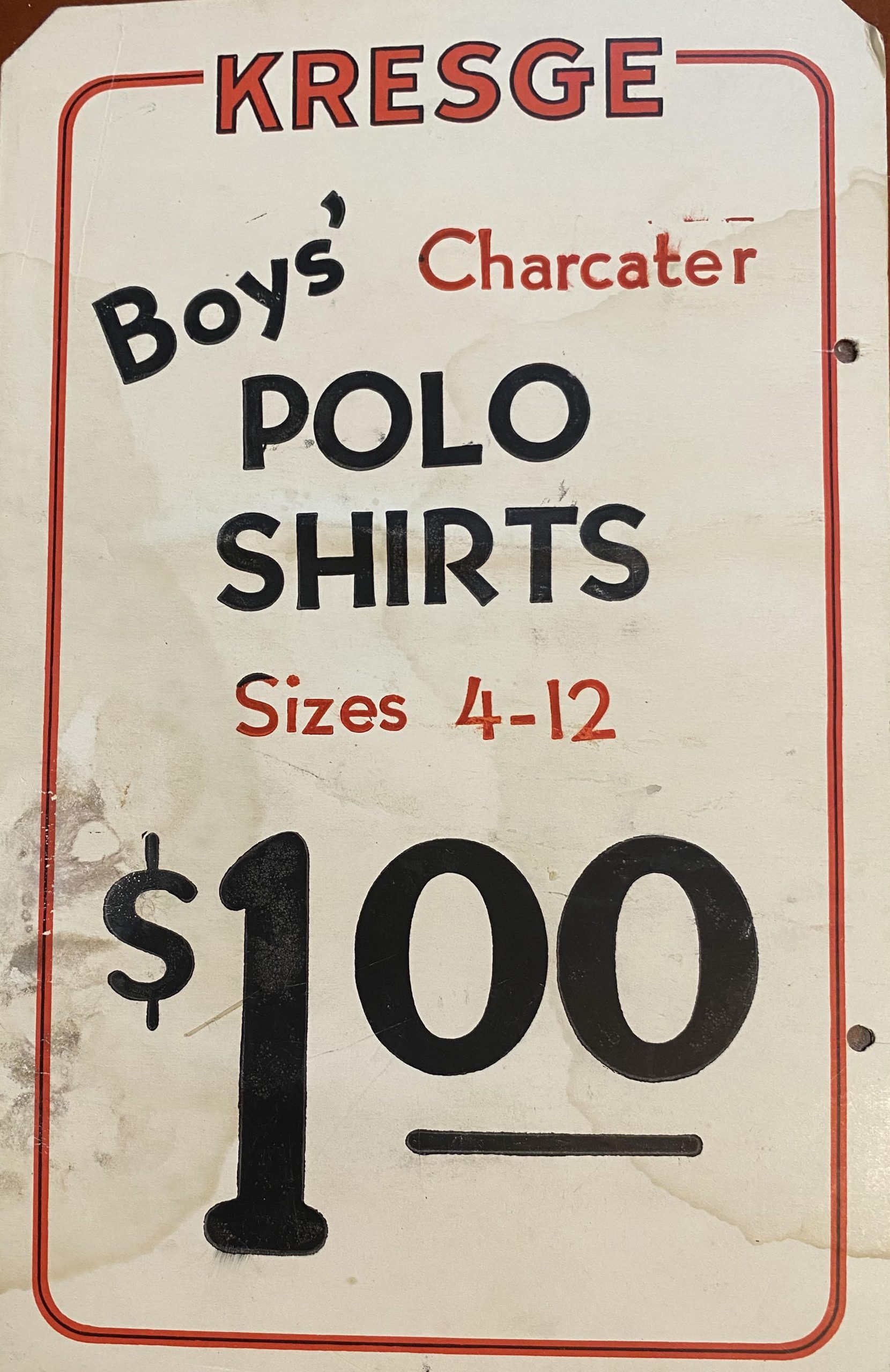
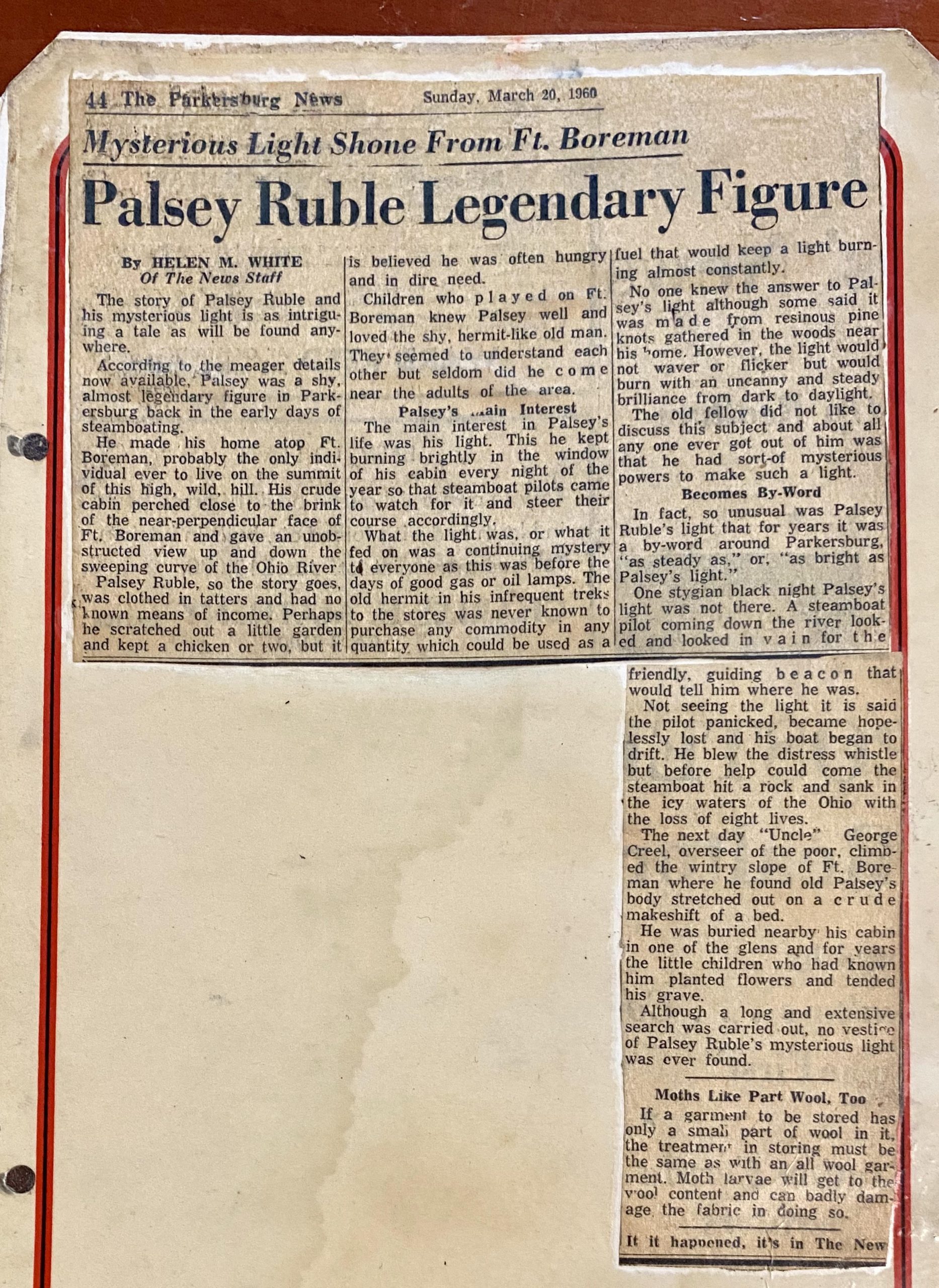
    It was a gift. It was a burden. It threw a bright light. It cast a long shadow. It came to me in a simple way. It has remained with me for sixty years, convoluting my consciousness. It’s a news clipping, March 20, 1960, The Parkersburg News, West Virginia. It’s laminated for some mysterious reason on the back of a Kresge’s sign offering boys’ character polo shirts for $1.


    Great Aunt Bess, who wore yellow ribbons in her hair at 98 and sang “Sweet Little Buttercup” every time she came down the stairs to welcome company, is responsible for this in my life. One Saturday morning, she lifted this from the rubbly treasures of her house and put it in my hands. “Here, dear, learn something.” And so I have, for better for worse.


    This is an old news story about a signal light and a sandbar. In the early days of steamboats that carried cargo and delivered a love of river adventures to Americans, there lived a man named Palsey Ruble. He did not captain the big paddle wheelers; he never rode on the Queens of the waterways. He lived beside the Ohio, high on a bluff overlooking Fort Boreman. Helen White, writer of the article describes it.  “His crude cabin perched close to the brink of the near-perpendicular face of Ft. Boreman and gave an unobstructed view up and down the Ohio. River.” This was then, Western Virginia, before the war that created West by God Virginia.


    Palsey Ruble, as the story goes, wore rags, and came to town so rarely that few self-respecting grownups ever greeted him by name. But their children knew him, not being concerned with sensible behavior, they would play at the foot of his high hill.


    A strange man. Outcast and rejected. Perhaps a man of sorrow and acquainted with grief, but also a man with a secret. Palsey Ruble had a light. A signal light. A light that came from his single window and shone so brightly over the river below that the steamboat pilots came to watch for it and steer their course accordingly. They would take their soundings to check for the treacherously fluid sandbars and they would watch for Ruble’s light.


    A light in the darkness, a steady presence that burned night after night from dark to daylight. A signal light for the boats that passed below him on their way to places far beyond his sight. A steady beam in the dark. After a time, Ruble’s light entered the language of the community in a way that he did not. “Steady as a Ruble light” they would say or “bright as Palsey’s beacon.”


    His light. A simple thing. A secret thing. No one knew how it came to be or what made it burn so bright. This was before the days of good gas or oil lamps. Perhaps it was a candle but everyone agreed it never flickered. It never wavered. It burned brilliant in the darkness, and disappeared at dawn. The children teased for an answer. Some adults nosed a question at him when he came to buy supplies from town, but he never explained the source; he never revealed the secret. The most he would say was that the light came from a mysterious power known only to him.


    One night. the light was gone. A steamboat pilot coming down the river searched in vain for Palsey’s beacon. The light was gone. Without the light or a moon to guide, the pilot panicked and the boat began to drift. The distress whistle sounded again and again but before help could come, the boat hit a sandbar, then pulled loose by the current, slammed into the rocks and sank in the icy waters. Eight lives were lost.


    The next day, George Creel, the overseer of the poor, climbed the wintry slope of Fort Boreman. He found Palsey’s body stretched out on a makeshift bed. They buried him in the glen, near where the children played and the children decorated his grave for years. His cabin was searched his cabin and the surrounding cliff and down to the river’s edge.  The source of Ruble’s Light was never found.


    An old story. An odd story, given to a ten-year old to learn from. How it drifted from its moorings and lodged on my sandbar of memory, I can’t explain. I only know it gathered light as well as shadows as I grew.


    Listen to the sound of its sounding:

    What is the role of an artist who is a believer?

    To illuminate truth.

    What is the source of that light?

    If we know, we cannot tell. It is mystery.

    It comes to; it does not come from the artist.

    It makes us transparent to the world. It throws the world into shadows.

    It burns us without our permission.

    It is all we know of God.

    Does holding the light create an outcast?

    Yes and no. Yes and no.

    We burn for the sake of the neighbor, who may think us strange.

    We catch fire from commonplace things.

    We are not capable of sensible living.

    We belong to this time, this place, this household of faith, but why are we so lonely,

    ill at ease, used, but not blessed, needed but not nurtured.

    Why do just the young in heart, those innocent of power,

    why do just the children know us by name?


    Does the light give you power? Why pretend that the world does not see you?

    How to account for the arrogance of art or any claim to guide the destiny of others by the light of sheer dreams?


    Palsey Ruble, break your silence. Did you ask for the light? Did you know what it meant? Was it enough to quietly stand and shine into a darkness that both needed and rejected you?

    Did you turn bitter from the slights, the disrespect of others? Did you plunge your light into icy despair? Did you go from holding the light to claiming the light? Did it light your way to heaven? Did it burn you into hell?


    And speaking of signal lights and sand bars, are there some so gifted among us, that when their light falters, when their life fails, we who depend on their guidance go adrift and drown? Is it better to travel in darkness than to seek the light at all?


    A story from the past that troubles the face of these waters, but alongside that story, I’ll line out a song. A song written when steamships carried our cargo of dreams, our common good of community.  It’s a song we still sing in West by God Virginia, even though it’s not in the hymnal any more.  It sounds best sung with the hills on one hand and the river on the other.


    Brightly beams our Father’s mercy

    From His lighthouse evermore,

    But to us He gives the keeping

    Of the lights along the shore.


    Dark the night of sin has settled,

    Loud the angry billows roar;

    Eager eyes are watching, longing,

    For the lights along the shore.


    Refrain:

    Let the lower lights be burning!

    Send a gleam across the wave!

    Some poor fainting, struggling seaman

    You may rescue, you may save.  Phillip Bliss, 1871


    Here is a sounding of hope, a song to help us lay our burden down. We are called down by the riverside. We are keepers of the lower lights, called to light the shorelines, brighten the edges of chaos.  There’s a desperate need of our lower lights. There is someone you may rescue. Hold your light steady and let it shine!  Trust that God’s searching beam of Mercy will illuminate our dark night of the soul, guiding us home through the storms. Christ is the Light that encounters darkness and is not overcome.


  • Beauty

    Beauty


    The task is trash. The Cause: #KeepingDelawareBeautiful . That translates as: City Clean Up.

    The call to serve comes from Governor John Carney. Since Lions have a nose for need, Bellefonte Lions/Leos and Zakat Leos gather, channeled by Shirlle “Diamond” Hogans and Hayat Nasru Omar. We join other volunteers along with Senator Tizzy Lockman and Councilwoman Michelle Harlee. This will be a very public clean-up of these public streets.


    I gear up for the assignment. My mask is a going-away present from my Drew Korean students, matched with Walgreen gloves, a yellow Lion vest, and Bill’s high-end pickup stick. I want to make some small difference in the midst of this whirlwind that’s trashing city streets, smashing lives, and wrecking dreams for liberty and justice for all. Collecting garbage isn’t glamorous, but it’s essential to beauty and community.


    I sit on a concrete stoop, admiring the occasional flower in the black iron window boxes and the old bricks that frame this Wilmington neighborhood. We wait through the short speeches, and official thanks for our assignments. Since the city workers did a good job before the volunteers arrive, we go looking for streets that need some TLC.


    I think about those who live in the neighborhood, wonder what they make of us, a band of masked trash collectors.  I know some neighbors have donned city vests to volunteer.  One grandma, wearing a tee shirt celebrating her grandson’s graduation, nods approval from her stoop.  It’s important to resist the temptation to think about the lives behind the doors as dependent upon those more fortunate. This is a form of “cleaning up” that trashes; a false charity that contaminates.  If we mistake ourselves as the cleaner-uppers, the givers of beauty, as if we are more powerful, competent or self-sufficient than those who live behind the doors we pass, then this is not, nor will it ever be, the beloved community.


    I get a lesson on this from Bill’s “nifty-nabber”.  With its long handle and delicate rubber tips I can pick up straw wrappers, cigarette butts and even the tell-tale postage-stamp size plastic baggies that once held heroin.  What I can’t do is put whatever I pick up in a trash bag by myself. The handle is too long.  I need someone to hold the bag or the work is pointless.  A Leo named Adam comes to my aid and we teamwork the corner until it’s clean.


    You can’t fix this kind of trash by yourself.  Creating and sustaining community needs two or three somebodies, or better still a neighborhood, a village, a city, a nation who wants to thrive as well as survive.  Shared power, generosity, creativity, love and human imagination are required for beautifying Delaware, or any state of affairs.


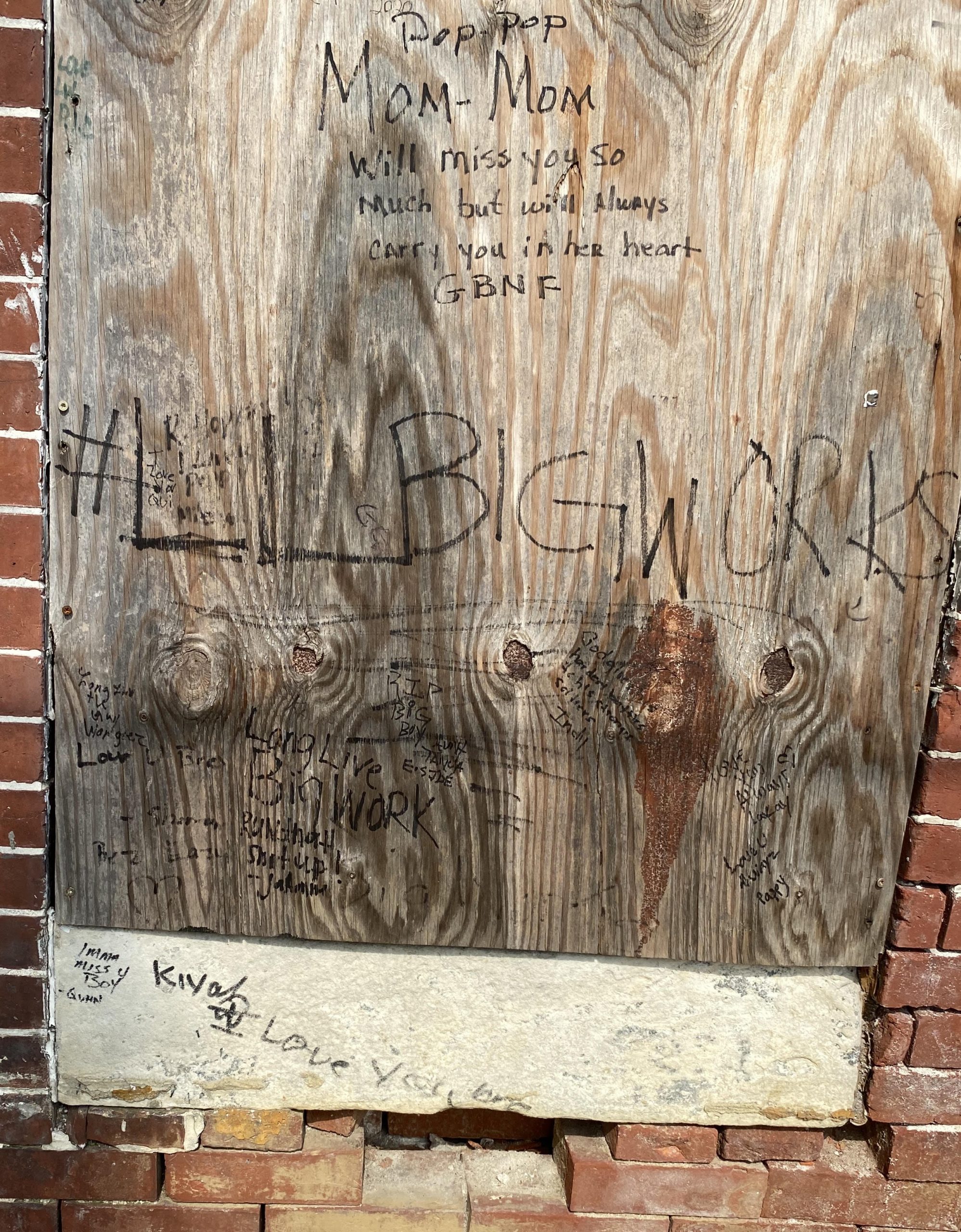
    And speaking of beauty, love, and human imagination, I discover a threshold for these on the corner of 10th and Bennett. It’s a boarded-up doorway.  It’s also a plywood love letter, written out loud/proud with magic markers.

      U, Fat Dad-

    Wife


    Pop-Pop,

    Mom-Mom

    Will miss you so

    much but will always

    carry you in her heart.  GBN

    #Runitup 4 POPPY             LOVE YOU Cuzin

    love ya Ba!

    R.I.P. Last Side 4 ever

    long live Big Work!!  R.I.P. BIG BOY


    And at the edge of a knothole are these words:

    God gives his hardest battles to his strongest soldiers.” 


    The hardest battles… Delaware is the first state to ratify the US Constitution. What does it mean to “beautify”?  Keats wrote: “Beauty is truth, truth beauty, –that is all ye know on earth and all ye need to know.” In front of this battleground doorway of love and loss, I think I hear Lincoln. “To dedicate ourselves to the unfinished work which they who fought here have thus far so nobly advanced… and resolve that this nation, under God, shall have a new birth of freedom, and that government of the people, by the people, for the people, shall not perish from the earth.”  With resolve then, there’s clean-up work to be done.

  • Up a Tree

    Up a Tree


    “The true meaning of life is to plant trees, under whose shade you do not expect to sit.”

    – Nelson Henderson


    When this season of panic/pandemic is a memory, I will sit in the shade and tell of the time when I was “up a tree”.  “Up” is an exaggeration, as is the size of the shade, since the trees I mention are still saplings. But they have taken root and produce green evidence of life so I will start the story now.


    Our Delaware yard was not treeless before we arrive, far from it. A giant white oak shelters birds and shades our deck. in a neighborly way. There’s a tall sugar maple that extends its welcome over the fence to the right, backed up by sky-touching white spruce. Then there’s the black walnut tree that dominates three yards with its green assault weapons. Several branches loom over the back fence and Hannah dodges the rain of walnuts to do her business. I check their whereabouts after every storm. As Frost wrote, something there is that doesn’t love a wall.”  It’s only a matter of time.


    So, all our trees are borrowed.  I start to read Isaiah as the quarantine descends and when I reach Isaiah 55:12 “For you shall go out in joy and be led forth in peace; the mountains and the hills before you shall break forth into singing, and all the trees of the field shall clap their hands,” I realize what I need to do. Plant trees. I want to hear clapping when the all clear signal comes.


    I get stern instructions from Wangari Maathai: “Until you dig a hole, you plant a tree, you water it and make it survive, you haven’t done a thing. You are just talking.” That sets me on a search for what might survive the old black walnut toxins in the soil.  I plant three redbuds to redeem the disheveled shed of our Walnut neighbors.  A cherry tree takes root where it may throw shade in all the right ways. I have no idea how beautiful a crepe myrtle will be, but I like the sound.


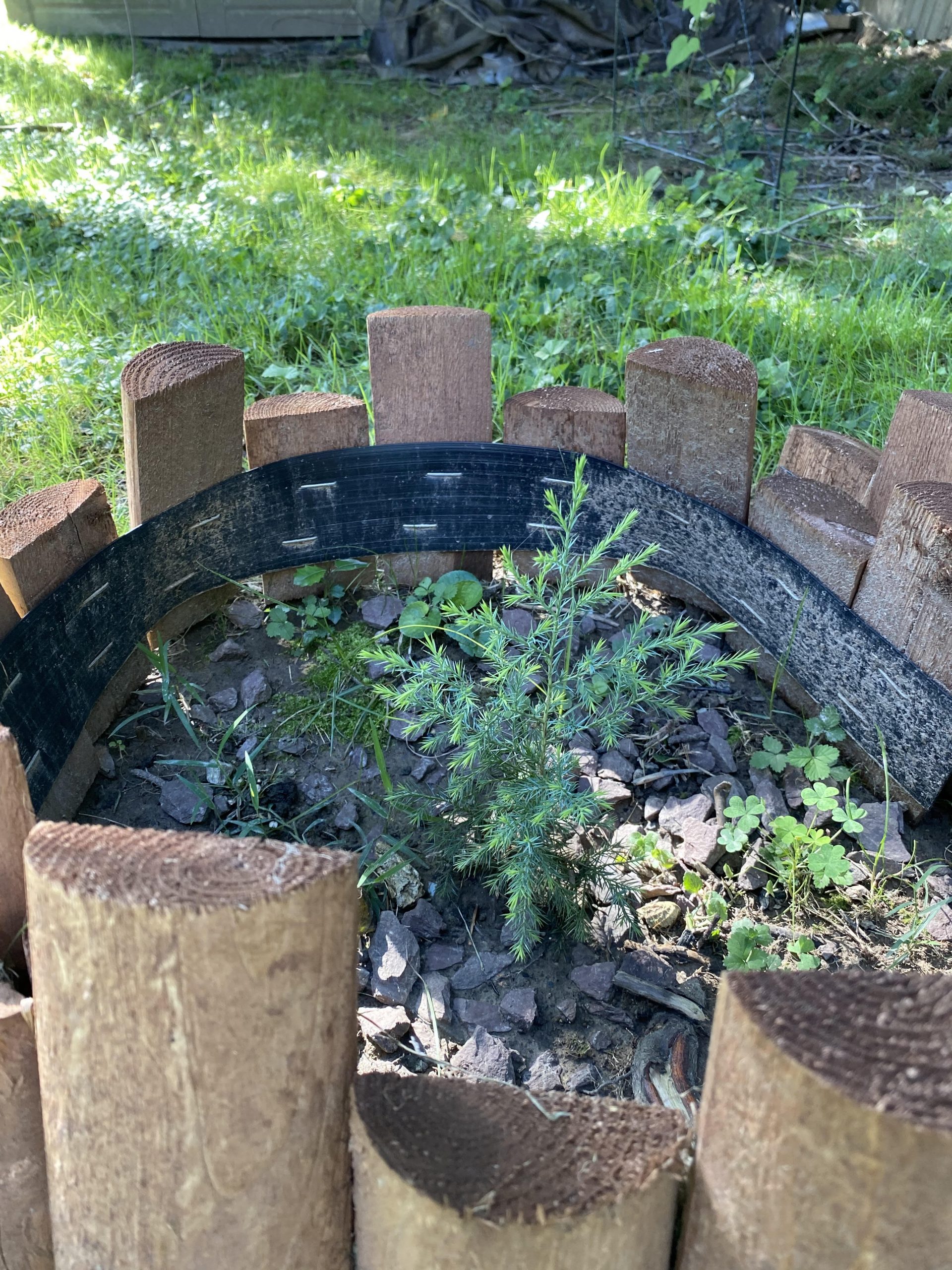
    An unexpected tree presents itself to the search. I find an Eastern red cedar struggling to survive in a crack by the trash can. I transplant it and visit every morning to celebrate its green immigrant life. I now have a trove of trees, a rooted treasure according to Martin Luther: “For in the true nature of things, if we rightly consider, every green tree is far more glorious than if it were made of gold and silver.” Martin Luther. I count the trees like coins:

    • Red cedar
    • White oak
    • White spruce
    • Silver maple
    • Cherry
    • Redbud
    • Black walnut


    I unearth a Bristlecone Pine seed germination kit in a can, saved from a trip to Ellis Island 14 years ago. A Bristlecone is one of the earth’s most ancient living organism. This pine can “make its home in an extremely hostile environment, but also its astounding longevity and amazing hardiness makes it perfect for ornamental planting in a diverse range of climates”. I consider the invitation: “Grow a Tree: world’s oldest living thing.” Should I add to my treasury of trees?


    I decide to wait until another season when there are immigration laws that honor Ellis Island and all those transplanted lives that help to green this nation. The ecology of trees makes the political personal.  “A nation that destroys its soils destroys itself. Forests are the lungs of our land, purifying the air and giving fresh strength to our people.” Franklin D. Roosevelt


    I swear I can breathe easier now.  “Trees exhale for us so that we can inhale them to stay alive. Can we ever forget that? Let us love trees with every breath we take until we perish.” Munia Khan.   With every breath, then. Every breath.


  • Untitled post 398


    It’s a first date disaster. It began with a phone invitation to a place I have on my wish list: Ghost Ranch. The caller reminds me that we’d met at a friend’s house, and that he’d seen a play I’d written that was produced at the University of Arizona.  After a pause he asks if I want to go to a party. I remember him. In fact, our first meeting was difficult to describe, plus, I have less than 2 hours to get ready. Nevertheless, I accept the offer. Ghost Ranch makes it all worthwhile.


    Having to climb in the driver’s seat to steer while he pushes his old blue VW to jumpstart the engine didn’t dampen my party spirit. Ghost Ranch, a desert dream of mystery, wealth, and legend. I have to move a green book from the passenger side. It’s stuffed with notes, Tractates Logico-Philosophicus, and the spine’s been mended. I have to ask. His answer covers the distance we travel through the desert, starting with the explanation about the relationship between language and reality, and science somewhere in the middle. I did appreciate the notion that the “limits of my language are the limits of my world”, although I have to guess at the speed limit since the speedometer was broken.


    As we pull up to the entrance I’m  startled by the gun-bearing guard, but Bill casually gives the name of the band leader, George Hawke of Dusty Chaps and we’re waved in. I’m grateful that’s it’s gotten dark, and that there’s a convenient incline to park on. I didn’t want to have to be pushed into gear parked beside the Mustangs, Corvettes, and Jaguars.


    I can hear the band and the exuberant sounds of a pool party inside the high adobe walls. It was like jumping into the deep end when we walk through the gates. Three thoughts immediately test the limits of my language. One, there are armed men sitting along the adobe walls that enclose us. Two, I’ve never seen so many wet naked bodies, ever. Three, I’m definitely overdressed.


    A waiter, also overdressed, asks what I want to drink. I don’t remember my answer. I’m spellbound by the game of naked water chicken. Bill makes a beeline to the band, now on break, then comes back to ask how I want my steak. I check for any signs of discomfort with the surroundings but it’s as if he doesn’t notice the background, just wants to know if I caught the lyrics to the last song they played.


    When he departs for the steaks, I stand, clutching a glass and wondering when the police are going to show up and arrest everybody. Alcohol is the least addictive item on the menu. I don’t want to end up a victim in a hail hell of bullets. Getting ghosted at Ghost Ranch wasn’t my idea of a good time. Months later, the news breaks that the sheriff’s department is on the Bonanno Family payroll. Those armed men sitting on the walls are the law.


    I think about my options. Calling a cab isn’t one. I decide to try to blend in with the band fans, most of whom are still dressed and dry. On my way I’m accosted by a very tall, very blond, very wet, very naked, very stoned man who loudly demands to know, “Who says God is a dog? Who says God is a dog?”  I think he literally spits out the question or maybe he’s just dripping on me.


    That was it. My seminary days will be years in the future, but bad theology, aggressively delivered is my bottom line. Bill arrives with the steaks, and I say, “I want to go. Now.”


    He takes it well. just asks me to hold the steaks while he gets the engine going. In the silence, I’m thinking about another Wittgenstein piece of wisdom “If a question can be framed at all, it is also possible to answer it.”


    I can’t begin to frame a question, but Bill can. Which part of Dante’s Divine Comedy do I prefer: Hell, Purgatory, or Paradise? Thinking of my recent experience, I say, “Purgatory”. That gets us to Milton’s Paradise Lost, and then the character of Satan, and I listen to a brilliant commentary and wonder if I’ve finally met an alien.  This, I think, is definitely a first and a last encounter.


    Then, as we begin our descent into the valley, he shifts a gear, rolls down the window to catch the midnight smell of sage, takes my hand, and says, “Tell me a story.”   And so it begins.


  • The Writing’s on the Wall

    The Writing’s on the Wall


    Our days in Delaware begin with a grand view, a three story farmhouse built on the last rise before the slope leading down to the river. You can’t see the river now, due to neighborhoods built after the wars. Farm land was drawn into a village, and then a suburb, and then absorbed into a city.  We settle into a finished basement that had once been a dream space for teenagers. It’s got a big screen, a projector, leather theater seats, lighted movie posters, a real popcorn machine, as well as a small kitchen, a bedroom and a bath.


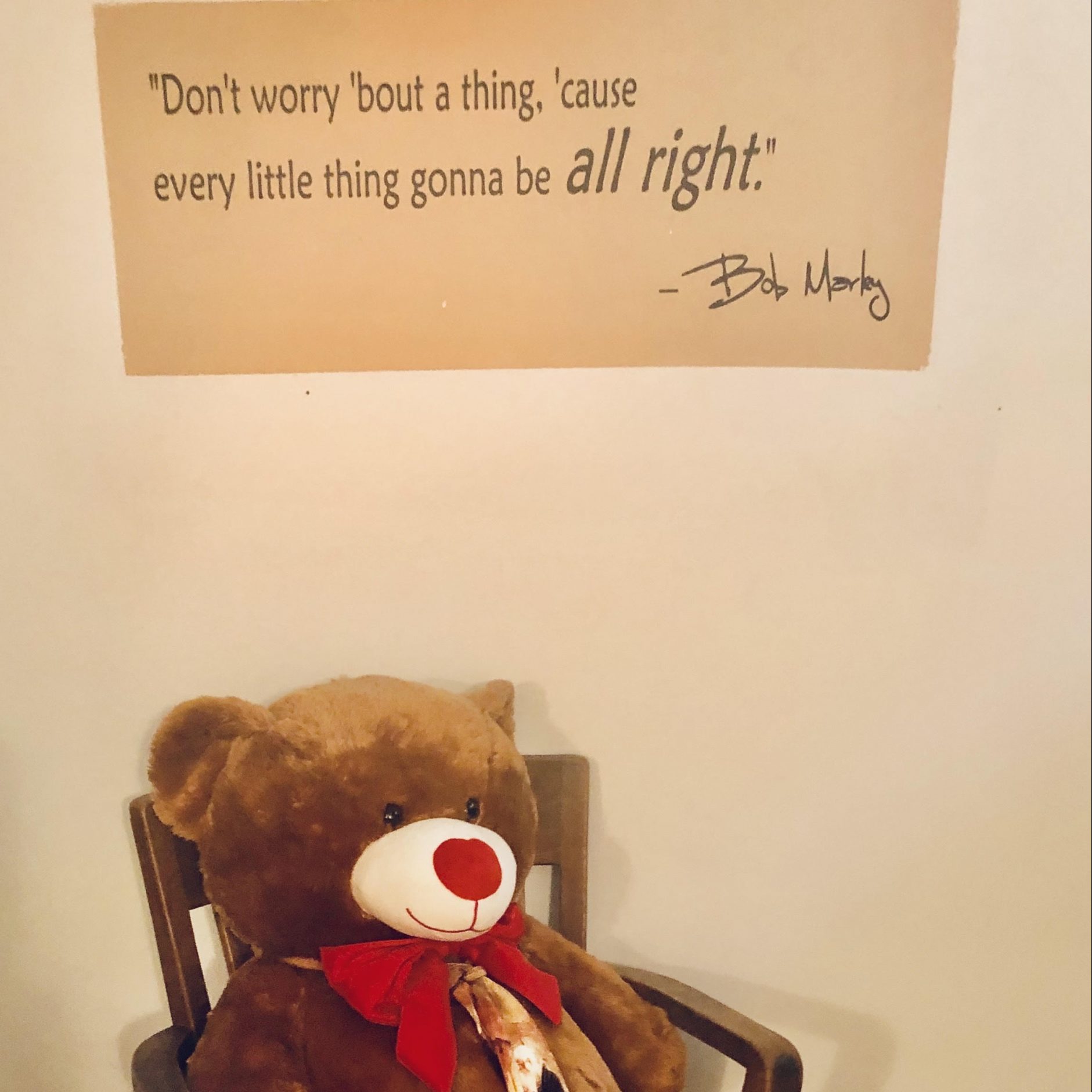
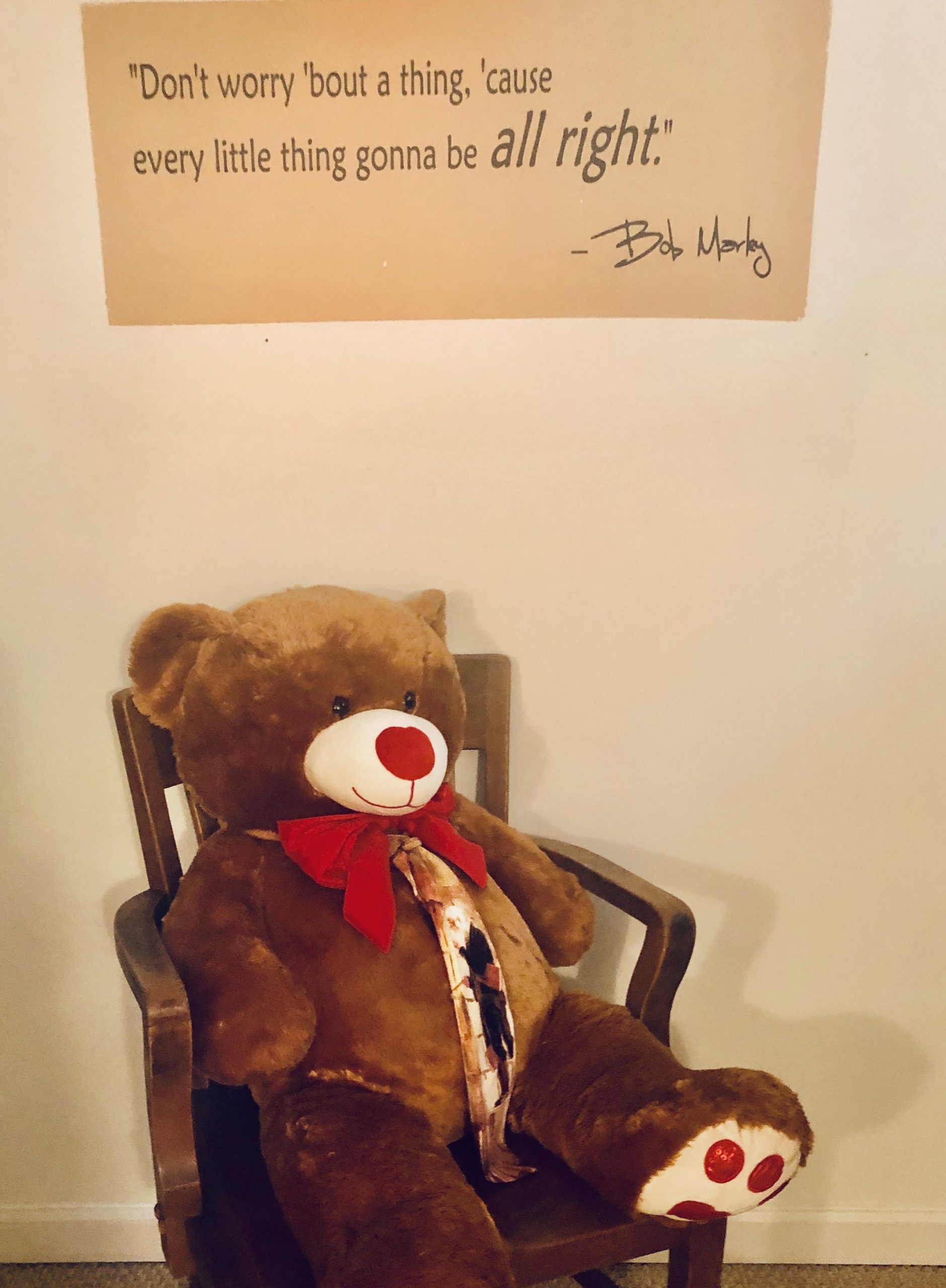
    Dr. Who, Guardians of the Galaxy and Lion King posters decorate the space and date the previous owners’ life style and ages. One wall facing the mirrors features another art form; words of a song written in long hand:

    “Don’t worry ‘bout a thing, ‘cause

    every little thing gonna be all right.”      Bob Marley


    I reflect on this text reflected in the mirror while brushing teeth and hair as the tune blows through. Handwriting on the wall usually means a premonition about failure or disaster. Is this description or invocation? Truth or fiction? Every thing? Every little thing?  When, when is it gonna be all right, or even a little bit right?


    My hermeneutic of suspicion calls up another tune/text that gets mixed with Bob Marley.

    “And the sign said: ‘The words of the prophets are

    Written on the subway walls and tenement halls

    And whispered in the sound of silence.’”

    Bill is critically ill; it’s a primary motivation for our move to Grandview. As the pandemic rolls in, and the circle of life gets smaller, he contextualizes the writing on the wall.

    “So, I am forced to cope: frequent hand washing, and limited demonstrations of affection. From time to time I fear I have become what I used to criticize in my English relatives. I’ve become distant, cool, and protective of social space (class). It is entirely possible that the English side of my DNA did not recognize social distancing, since they were never really that close.

    In these circumstances we are, without volition, in this together. So, though I regret these sacrifices, they are ones I am willing to make in order to “flatten the curve” of infections. Yet, my sacrifices are not as altruistic as I hope they appear. I pray that hospitals with limited capacities be spared the crush of infections that attends a pandemic, permitting adequate resources and time for those that do become ill.

    I am also hoping that, if and when that someone is me, there will be space and enough resources. So, when I feel a sense of altruism about being in this together, I know that I’m praying I won’t get stuck in the crush of traffic on the way to the hospital. I don’t want to discover that the only bed available is in the back of my truck and the only help comes from an exhausted nurse tasked to triage the old with “prior conditions” to the back of the line as the parking lot loudspeakers play Marley. “Don’t worry about a thing, ‘cause every little thing is gonna be alright.”

    Reading this reduces me to silence.  Even the silence is underscored by the sound of words written on a wall in the book of Daniel: “Meme, meme, tekel, upharsin.”  It’s one of two Aramaic sayings that I know. “You/we have been numbered; We/you were weighed. You/we are/will be divided because we/you have been found wanting.”


    Weighed and found wanting. The writing on the wall. But then, but then I remember the story of Bob Marley’s song, Three Little Birds. Bright little birds came to his window. Three small birds, feathered like angels, would visit his house on Hope Road every morning.

    (photo by Lon Oliver)

    Hope Road. If you live on Hope Road, every little thing is gonna be all right.  This is the word of the prophet written on the basement wall.  This is evidence that only those who live on the horizon of Hope Road can read: ”Now faith is the substance of things hoped for, the evidence of things not seen.”